BYOD iPhone Onboarding Checklist – Microsoft 365 Business Premium

bp1

Introduction
Bring Your Own Device (BYOD) policies allow employees to use personal devices (like iPhones) for work, offering flexibility and productivity benefits. However, every personal device connecting to company data is a potential attack avenue if not properly secured
[1]. It’s crucial to onboard iPhones with robust security measures so that company information remains protected. Microsoft 365 Business Premium provides advanced tools (Microsoft Intune for device/app management, Azure AD for identity and Conditional Access, information protection and more) to secure BYOD devices[2][3]. This checklist outlines detailed steps for initial setup of a BYOD iPhone and ongoing management practices to maintain security over time.

Key Terms and Concepts

Term Definition
BYOD (Bring Your Own Device) When employees use their personal devices (phones, tablets, laptops) for work purposes. The device is not company-owned, but is granted access to company resources.
Microsoft 365 Business Premium A subscription service that includes Office 365 apps, cloud services (email, OneDrive, Teams, etc.), and advanced security features (like Intune MDM/MAM, Azure AD Premium P1 for Conditional Access, Defender for Business, information protection with DLP and encryption). Tailored for small-to-midsize organisations, it helps protect user accounts, data, and devices.
Initial Setup The one-time configuration process during onboarding of a device. For BYOD iPhones, this includes registering the device, applying security settings, and installing required apps so it meets company security requirements from the start.
Ongoing Management Continuous practices after initial setup to ensure the device remains secure and compliant. This includes regular updates, policy enforcement, monitoring, user training, and incident response over the device’s lifetime in the organisation.

Why Secure BYOD iPhones?
Using personal iPhones for work introduces certain security risks that must be mitigated:

  • Data Leakage – Personal and business data coexist on BYOD devices, which can lead to accidental sharing or unauthorized access to sensitive company information[4]. For example, a user might inadvertently back up work files to a personal cloud or send corporate data via a personal app.
  • Lost or Stolen Device – If a BYOD iPhone is lost or stolen, company data on it could be exposed. Without proper controls (like remote wipe), confidential data might fall into the wrong hands[4].
  • Malware/Phishing Threats – Personal devices may lack the stringent safeguards of managed corporate devices, making them more susceptible to malware or phishing attacks that can compromise corporate data[4]. Users could unknowingly download malicious apps or click phishing links, endangering both personal and work data.
  • Compliance and Privacy – Regulated industries face challenges ensuring BYOD devices meet data protection standards. Blurred personal/work use can complicate compliance (e.g. with GDPR, HIPAA) and raise privacy concerns if devices are not handled correctly[4].
  • Human Error – Without adequate training, employees might use their personal iPhones in insecure ways (weak passcodes, connecting to unsafe Wi-Fi, etc.), inadvertently exposing company data[4]. A strong BYOD policy and user awareness are needed to minimize mistakes.

Given these risks, a zero-trust approach should be applied: assume no personal device is secure by default and layer multiple protections (strong authentication, device compliance enforcement, data protection policies, and user education)[1][2]. Microsoft 365 Business Premium equips organisations with the needed capabilities to implement this, such as enforcing multi-factor authentication, using Intune to manage or contain corporate data on the device, and applying data loss prevention. The following checklist is divided into two parts – initial setup and ongoing management – to ensure a BYOD iPhone is onboarded and maintained securely.


Initial Setup Checklist (BYOD iPhone Onboarding)

Preparation – IT Administration (before user enrolls device):

  1. Enable Multi-Factor Authentication (MFA) for User Accounts: Ensure the user’s Office 365/Azure AD account is protected with MFA. Enforce company-wide MFA as a policy so that even if an iPhone is compromised, an attacker cannot access the account without a second factor[1]. Have users install the Microsoft Authenticator app and register it for MFA on their account[5]. This significantly reduces the risk of account compromise.
  2. Configure Mobile Device Management (MDM) and App Management: Set up Microsoft Intune (part of Business Premium) to handle BYOD iPhone enrollments. This involves adding an Apple MDM push certificate to Intune (a prerequisite for managing iOS devices) and defining an enrollment policy for BYOD scenarios. Intune supports Apple User Enrollment (a privacy-friendly mode for BYOD) which creates a managed work partition on the device, or standard device enrollment for full MDM control[6]. Choose the approach that fits your organisation’s BYOD policy (User Enrollment or full MDM). If full device enrollment is not desired, plan to rely on App Protection Policies (MAM) without device enrollment[2].
  3. Set Compliance Policies in Intune: Define compliance requirements that the iPhone must meet to be considered secure. For example, require the device to have a passcode, block jailbroken devices, and enforce a minimum iOS version[7][7]. In Intune’s compliance settings for iOS, you can mark a device as non-compliant if it’s jailbroken[7], require encryption (which is automatic when a passcode is set on iOS)[7], and require the latest iOS updates (you can set a minimum allowed OS or build version)[7]. These policies ensure that only healthy, secure devices can access corporate data.
  4. Configure App Protection Policies (MAM): In Intune, create App Protection Policies for iOS targeting company apps (especially if you allow access without full device enrollment). These policies protect corporate data at the app level even on unmanaged devices[2]. Key settings include preventing backup of work data to iCloud, restricting copy-paste of data from work apps to personal apps, requiring app data to be encrypted, and requiring a PIN or biometric to open company apps[2][2]. For example, you might block saving corporate files to personal storage and only allow saving to OneDrive for Business or SharePoint[2]. Such controls ensure that even on a personal iPhone, company information stays within approved apps and cannot be easily leaked.
  5. Set up Conditional Access Policies: Use Azure AD Conditional Access to tie everything together. Create policies that apply to all BYOD mobile access – for instance, require that users accessing Exchange Online, SharePoint, Teams, etc., from an iOS device must use approved apps with app protection in place[2]. In Conditional Access rules, you can grant access only if the device/app meets conditions: e.g. Require app protection policy and Require approved client app (so that users must use Outlook mobile rather than any mail app)[2]. You can also require device compliance for certain sensitive apps if you choose to mandate full enrollment for those. These controls ensure that even if a user tries to use a personal app or an unsecured device, they will be blocked from company data – only the secured route is allowed.
  6. Communicate BYOD Policies to the User: Before onboarding, inform the employee of the BYOD usage policy. This should include what data the company can manage on their device, their responsibilities (e.g. maintaining a passcode, not disabling security), and privacy assurances. Make sure they consent to any management profiles to be installed and understand the consequences (for example, IT’s right to wipe corporate data if the device is lost or on separation). Clear communication and user buy-in will make the onboarding smoother[4][4].

Onboarding – End User Device Steps (actual device setup process for the user):

  1. Update iPhone to Latest iOS: Before connecting to corporate services, the user should update their iPhone to the latest iOS version. Current iOS updates include important security patches that help protect the device. (Intune’s compliance policy will require a minimum OS or show the device as non-compliant if it’s outdated[7].) Encourage enabling automatic iOS updates to keep the device up to date going forward. Also verify the device is not jailbroken or tampered (jailbroken devices will be blocked as non-compliant by policy[7]).
  2. Set a Strong Device Passcode (and Enable Touch ID/Face ID): The user must secure their iPhone with a strong passcode if not already done. A passcode (or biometric lock) is the first line of defense if the phone is lost. Not only does a passcode prevent unauthorized access, it also encrypts the device storage on modern iPhones – iOS automatically enables full-device encryption when a passcode is set[7]. Company policy may enforce complexity (e.g. no simple “1234”, minimum length, etc.)[7]. Advise the user to set a 6-digit or alphanumeric passcode and configure auto-lock (e.g. 1-5 minutes of inactivity) to reduce exposure.[7].
  3. Install Microsoft 365 Apps: Next, the employee should install the necessary work applications from the Apple App Store. At a minimum, this usually includes Microsoft Outlook (for corporate email/calendar), Teams, OneDrive/SharePoint, Office (Word/Excel/PowerPoint), and possibly Microsoft Edge for a secure browsing experience. Microsoft 365 Business Premium allows the user to sign into these Office mobile apps with their work account. Installing the official Microsoft apps is important – Conditional Access will likely require “approved client apps” for accessing company data[2]. (The organisation may also use Apple’s managed app deployment, but for BYOD it’s common to let users grab apps themselves from the App Store.)[1] Ensure the user has the latest versions of these apps.
  4. Enroll in Intune via Company Portal: The user must register the device with the company’s Intune MDM if required by policy. Have them download the Microsoft Intune Company Portal app from the App Store and sign in with their work Office 365 credentials[6]. The Company Portal will guide them through the enrollment process. This typically involves: granting the app the necessary permissions, downloading an MDM profile from Intune, and going to iOS Settings to install that profile (the user will see a prompt to install a management profile). Once done, the device is marked as enrolled and will show up in the company’s Intune console. At this point, any compliance policies (from step 3 of Preparation) are enforced on the device via Intune. For example, if the policy requires a passcode or certain OS level, the user might be prompted to set those to comply. Note: In some BYOD setups, full device enrollment might be optional – if the organisation is doing app-level management only (MAM), the user may skip full device enrollment. In such cases, simply logging into Outlook or another managed app will trigger application protection policies without installing a device profile. (For instance, upon first run of Outlook, the user might be asked to set a PIN for the app or enable Authenticator as a broker app for policy enforcement.) Ensure the user follows whichever flow your IT has defined.
  5. Sign In and Configure Work Apps: After enrollment, the user should sign into the Microsoft 365 apps using their work account (if they haven’t already during the Company Portal step). Upon login, the device will be evaluated by Conditional Access. If everything is in order (MFA done, device compliant or app protected), the sign-in will succeed and data will start syncing (emails, files, etc.). The user might see a few additional prompts as final configuration: for example, Outlook for iOS might prompt “Your organisation is now protecting its data in this app” and enforce a policy like requiring a separate app PIN or enabling encryption — these stem from the App Protection Policy applied[2]. The user should accept all prompts for permissions and policy enforcement (these are there to protect company info). At this stage, verify that email is working in Outlook (or the native Mail app if your policy allowed a managed email profile). If native Mail is allowed, Intune would have installed a managed email profile during enrollment; otherwise, the user will use Outlook.
  6. Verify Device Compliance and Security Settings: Once setup is complete, both the user and IT admin should double-check that the device is properly secured. On the iPhone, the user can open Company Portal app to see device status – it will show if the device is compliant or if any action is needed. The user should see that all requirements (like having a passcode, encryption, etc.) are met. The IT admin, on the Intune/Endpoint Manager portal, should also see the device listed under the user with a compliant status. This ensures that the iPhone is successfully onboarded under management. Additionally, test that security controls are in effect: e.g., try copy-pasting from a corporate app to a personal app – it should be blocked if App Protection is correctly applied, per policy[2]. Or confirm that if the user tries to use an unapproved email app, access to email is denied[2]. These validations confirm that company data on the BYOD iPhone is fenced off and protected as intended.
  7. Educate the User on Secure Usage: Finally, spend a moment to highlight to the employee how to use their newly set up device securely. Remind them of key points: Only use the approved apps (e.g. Outlook, Teams) for work data[2]; do not save work files to personal apps or personal cloud storage; be cautious of phishing messages or suspicious apps; and never remove the management profile or jailbreak the device. Also let them know what to do if something goes wrong – for instance, if they forget their app PIN or if the device falls out of compliance (Company Portal can show remediation steps – e.g., “update your OS to regain access”). User awareness at onboarding will reduce risky behavior later[4].

With these steps, the iPhone should now be securely integrated into the company’s ecosystem with appropriate protections. The device has MFA on the account, is registered or monitored by Intune, has all necessary apps under policy, and the user is informed of their role. Company data is now confined to secure applications and can be remotely wiped if needed, and the device’s integrity is continuously checked.


Ongoing Management Checklist (Maintaining Security Over Time)

Once a BYOD iPhone is onboarded, security is not a one-time set-and-forget task. Ongoing vigilance is required from both the user and IT to ensure the device continues to protect company information. The following are best practices and actions for ongoing management:

  • Regular Software Updates: Keep the iPhone OS and apps up to date at all times. New iOS versions often patch security vulnerabilities, so timely updates are critical. Encourage users to enable automatic iOS updates and periodically verify they are on the latest version. The IT team can make OS version part of compliance: Intune can flag devices that fall behind on updates as non-compliant (e.g. if below a minimum iOS or if an important security patch isn’t applied)[7]. Likewise, Microsoft apps (Outlook, Teams, etc.) should be updated via the App Store. Outdated apps or OS could become entry points for attacks. Maintaining up-to-date software ensures the device has the latest defenses.
  • Device Compliance Monitoring: Continuously monitor device compliance and health status. In the Intune/Endpoint Manager admin center, IT administrators should regularly check reports of device compliance, and remediate issues promptly. For example, if a device becomes non-compliant (perhaps the user disabled their passcode or the OS fell out of date), Intune can be set to send the user a notification or email. IT should follow up on these alerts to help the user fix the issue or to block access until it’s resolved. Microsoft 365 Business Premium also includes Microsoft Defender for Business, which can provide mobile threat detection. Admins can view device risk levels in the security portal – if a BYOD iPhone is flagged with a threat (say malware is detected, or it’s jailbroken), take immediate action (like locking the device from company data)[7][5]. Regular compliance audits ensure no device drifts into an insecure state unnoticed.
  • Enforce App Protection and Data Loss Prevention: The organisation should maintain and update its data protection policies over time. App Protection Policies (MAM) and Data Loss Prevention (DLP) rules need to stay aligned with evolving business needs. For instance, if new cloud apps are introduced, ensure your Intune app policies cover them or block them appropriately. Microsoft 365 Business Premium includes DLP capabilities to prevent sharing of sensitive info (like credit card numbers, client data) via email or cloud[3] – make sure these policies are enabled in Microsoft Purview Compliance Center. Over time, tune the policies based on incidents: e.g., if users are frequently tripping a policy erroneously, adjust it; if data leaks are observed in a channel not covered, extend the DLP coverage. Also, periodically review which apps are approved for corporate data. Remove any that are no longer needed and add new trusted apps as required, updating your Conditional Access “approved apps” list accordingly[2]. These ongoing adjustments keep your data protection current and effective.
  • User Training and Awareness: Continue to educate BYOD users about security. Initial training at onboarding isn’t enough; threats evolve and users might forget policies. Conduct periodic security refresher trainings or send out tips for mobile security. Emphasize practices like avoiding public Wi-Fi or using a VPN, not clicking suspicious links on the phone, and maintaining a strong device passcode. Reinforce the importance of not circumventing controls – for example, explain why copying data out of managed apps is restricted, so users don’t try risky workarounds. Keep an open channel for users to ask questions or report concerns about their BYOD device. Cultivating a security-aware culture helps counter the human error factor that is often the weakest link[4].
  • Periodic Access Review: IT should perform periodic reviews of enrolled BYOD devices and their access. Retire any devices that have not checked in for a long time or belong to users who have since left the company. Azure AD and Intune logs can indicate when a device last successfully met policy. If a device is inactive or the user no longer needs corporate access on it, it’s safer to remove organizational data from it. Also, confirm that only approved users/devices are accessing sensitive apps – use Conditional Access reports to see if any unknown or non-compliant devices attempted access. This regular housekeeping ensures only intended, managed devices retain access.
  • Lost or Stolen Device Response: Plan and practice an incident response for lost devices. If an employee’s iPhone is lost or stolen, act immediately: the user (or their manager) should notify IT at once as per policy. Using Intune, the administrator should perform a Selective Wipe on the device to remotely remove all corporate data from it. In a BYOD scenario, a selective wipe will delete company app data (email, files, Teams chats, etc.) but leave personal data intact. This ensures that sensitive information doesn’t remain on a device that could be in someone else’s hands. In some cases, if the risk is very high, a full device wipe might be warranted (with user consent as per policy). Additionally, the admin may choose to block or reset the user’s Office 365 sign-in sessions, and require password change, in case the device access could have been compromised. Users should also use Apple’s “Find My iPhone” to put the device in Lost Mode or erase it if possible. The BYOD policy should clearly state the steps for reporting and what actions will be taken[4]. Time is critical in these situations – having a predefined process helps protect data quickly.
  • Employee Offboarding (Device Separation): When an employee leaves the organisation or no longer needs to use a personal device for work, ensure their device is cleanly offboarded. This means removing corporate access and data: Intune’s Retire or wipe action should be used to remove all company apps, profiles, and data from the BYOD iPhone when the employment or BYOD usage ends. Azure AD device objects for that phone should be disabled/removed as well. The offboarding checklist should be part of HR’s exit process so it isn’t overlooked. Having clear protocols for data retrieval at employee departure is vital to prevent any lingering access to sensitive info[4]. Likewise, if a user replaces their phone or decides to opt out of BYOD, perform the same cleanup. Proper offboarding ensures that company information doesn’t remain on personal hardware indefinitely.
  • Policy Updates and Continuous Improvement: Finally, treat BYOD security as an ongoing program. Regularly revisit your BYOD policy and technical controls. As new iOS features or M365 features become available (for example, improved device compliance checks or new types of data encryption), consider adopting them. Stay informed on updates in Microsoft 365 Business Premium – Microsoft frequently enhances Intune, Conditional Access, and Defender capabilities. Also review any security incidents or near-misses involving BYOD devices to learn lessons: if, say, a user found a loophole to save corporate data to an unmanaged app, address it through tighter policy or user guidance. Aim to refine the onboarding checklist itself over time. Continuous improvement will keep the organisation one step ahead of threats.

By following this comprehensive checklist, an organisation can confidently allow iPhone BYOD usage while minimizing security risks. The initial setup establishes a secure baseline – enforcing strong authentication, isolating corporate data in managed apps, and ensuring the device meets security standards. The ongoing management then sustains that security posture through updates, monitoring, user awareness, and swift incident handling. This two-phase approach – onboarding + maintenance – is essential for a robust BYOD program. Microsoft 365 Business Premium’s toolset (Intune, Azure AD, Defender, and information protection features) plays a central role in implementing these steps, making it possible to protect company information on personal devices without unduly interfering in the users’ personal data and privacy. With the right configurations and practices in place, employees like those at Your Organisation can enjoy the convenience of using their iPhones for work, and the company’s data remains safe and under control. [2][2]

References

[1] Set up unmanaged devices with Microsoft 365 Business Premium …

[2] Enforce device compliance and app protection policies on BYOD with M365 …

[3] Set up information protection capabilities – Microsoft 365 Business …

[4] BYOD security risks: mitigation strategies for organizations

[5] Secure managed and unmanaged devices – Microsoft 365 Business Premium

[6] iOS/iPadOS device enrollment guide for Microsoft Intune

[7] iOS/iPadOS device compliance settings in Microsoft Intune
Script to report tenant devices

image

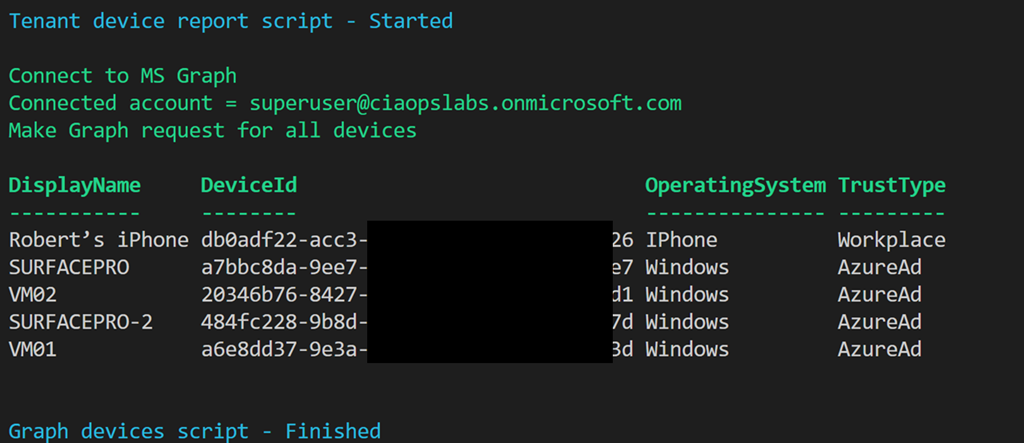
I have created a script that uses the Microsoft Graph to report devices for the tenant as shown above. You’ll find it here:

https://github.com/directorcia/Office365/blob/master/graph-devices-get.ps1

along with the documentation here:

https://github.com/directorcia/Office365/wiki/Report-tenant-devices

You will need to have the Microsoft Graph PowerShell module installed and up to date.

image

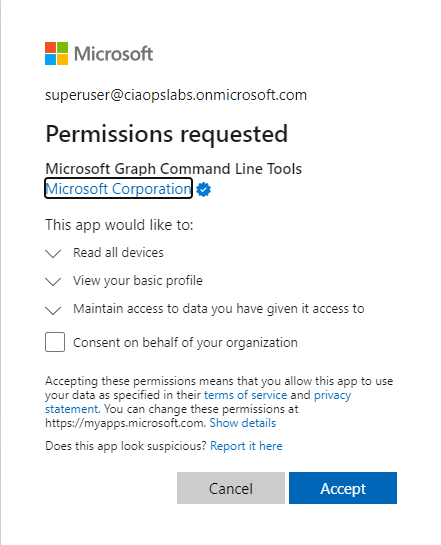
The first time you run the script you maybe prompted to login to your tenant and then you may also be asked to provide permissions as shown above. This script requires:

Device.Read.All

which you may need to consent to the first time.

After the script executes you should see an output as shown above showing the device, device id, operating system and tenant join type.

You can also use the –csv command line option to put the results to a CSV file in the parent directory.

Modern Device Management with Microsoft 365 Business Premium–Part 9

Previous parts in this series have been:

Office 365 Mobile MDM – Modern Device Management with Microsoft 365 Business Premium–Part 1

Intune MDM – Modern Device Management with Microsoft 365 Business Premium – Part 2

Intune MAM – Modern Device Management with Microsoft 365 Business premium – Part 3

Endpoint Manager – Modern Device Management with Microsoft 365 Business Premium – Part 4

Baselines – Modern Device Management with Microsoft 365 Business Premium – Part 5

Deployment – Modern Device Management with Microsoft 365 Business Premium – Part 6

Autopilot admin – Modern Device Management with Microsoft 365 Business Premium – Part 7

Autopilot endpoint – Modern Device Management with Microsoft 365 Business Premium – Part 8

In part 3 I talked about Mobile Application Management (MAM) and in the last part, I talked about Windows deployment using Autopilot, now it is time to look at deploying applications to devices via Endpoint Manager.

image

This tasks will be accomplished via the All apps option inside the Apps menu in Microsoft Endpoint Manager as shown above.

image

Here you’ll see a list of existing applications, but what you’ll typically need to do is select Add from the menu at the top to add a custom application.

image

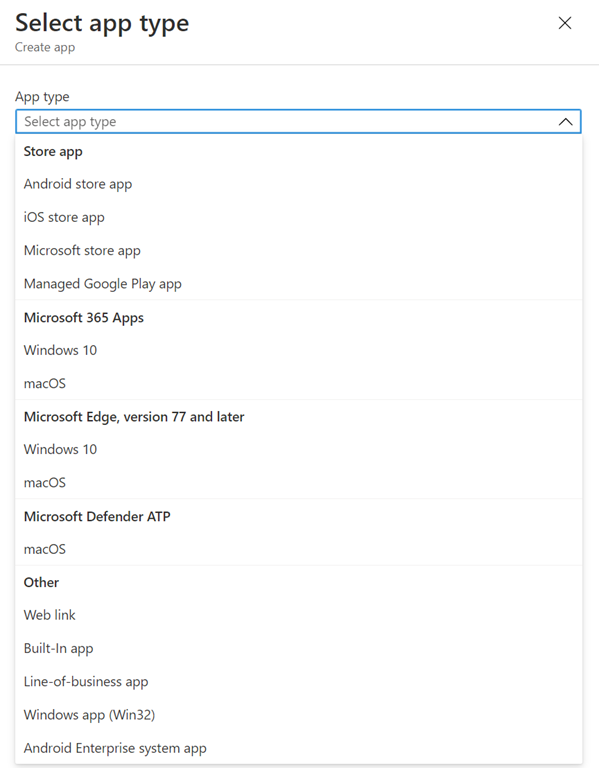
You’ll now need to select an app type, as you can see above, from the list that appears. Because we are dealing with applications across a wide range of platforms, you need to create a deployment policy for each app on each platform.

image

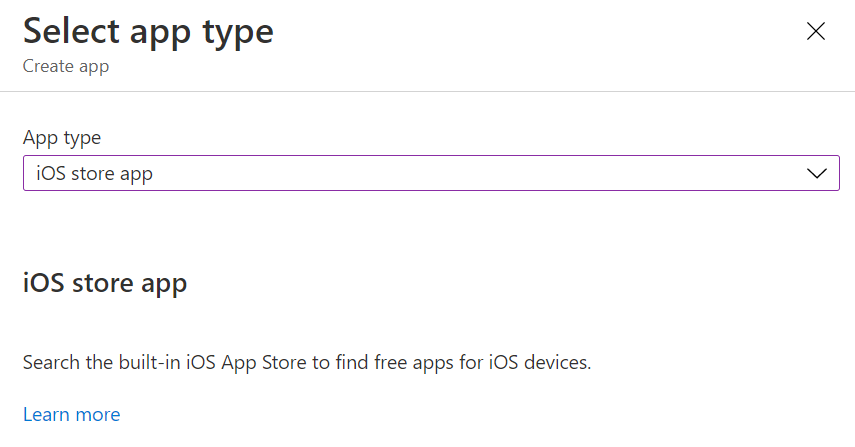
In this case, I’ll go with an application from the iOS store as shown above, just to keep things simple.

image

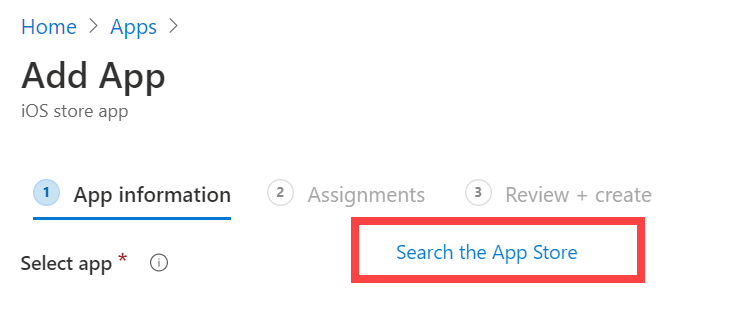
I’ll then need to select the link, as shown above, to Search the App Store for the desired application. Note that it doesn’t necessarily have to come from the store, but it is easier if it does.

image

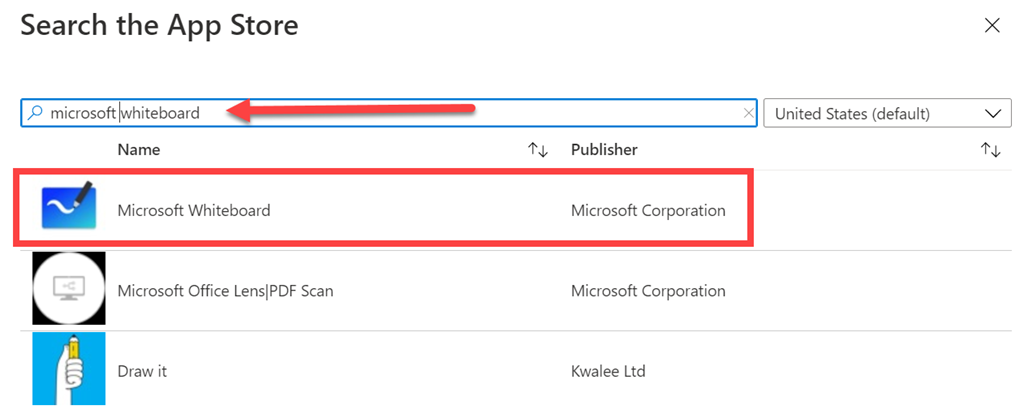
Here, I’ll locate Microsoft Whiteboard as shown above and select it.

image

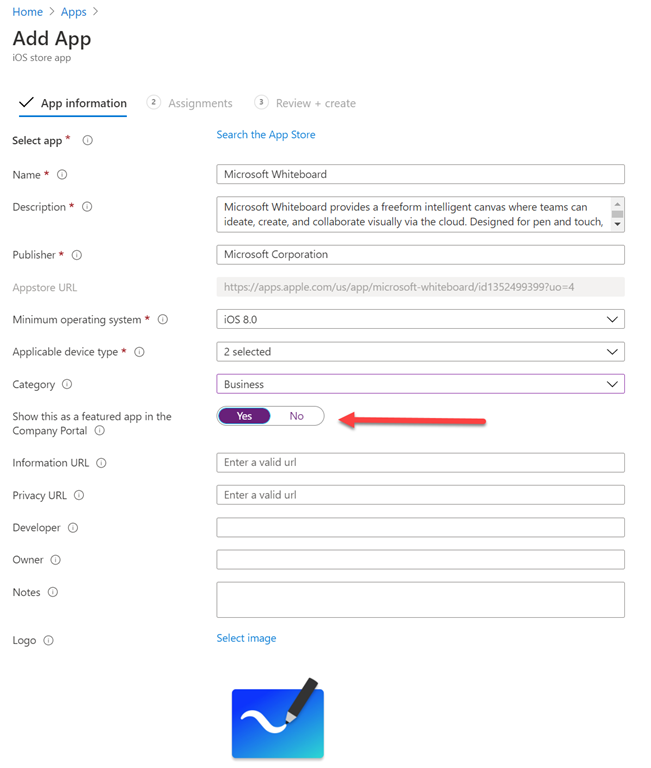
The details of the app are now populated as shown above. You can make any changes here you wish. Note, I have elected to feature this app in the Company Portal as well.

image

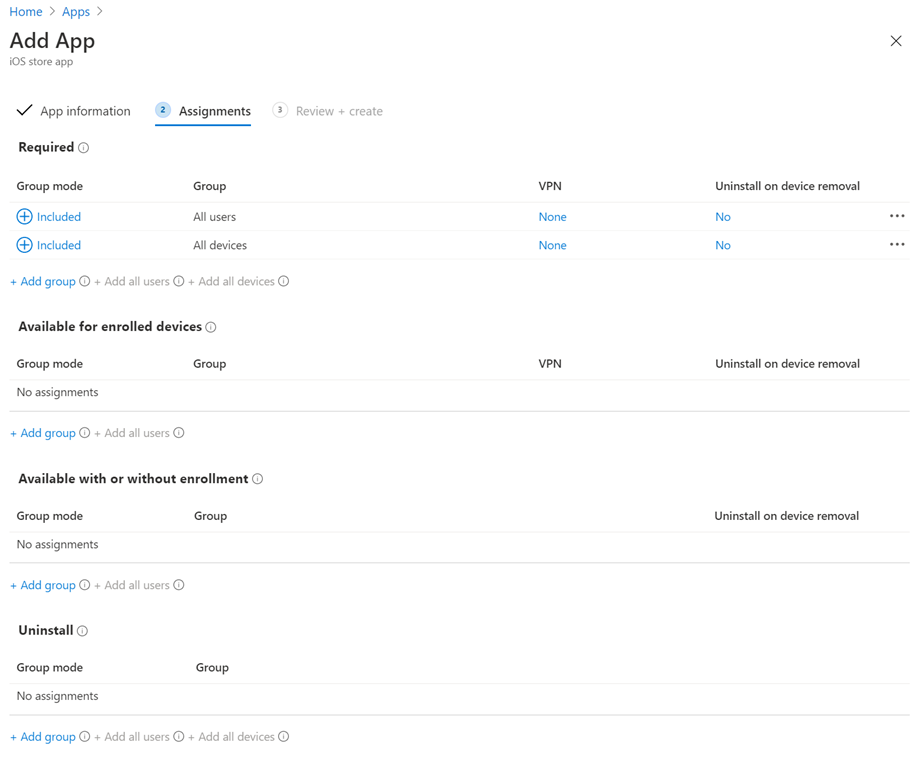
Next, I can target that application to be Required by users and or devices, which I have done as shown above. However, you see that it is possible to just make the application available (i.e. optional) for enrolled and non-enrolled devices as well as being able to uninstall the application if present.

image

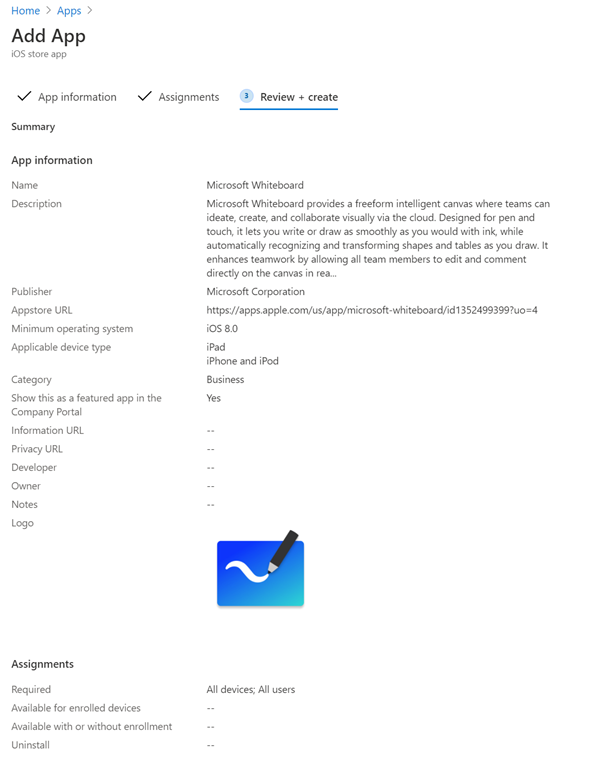
You can now review the application settings and then press the Create button to complete the policy process.

image

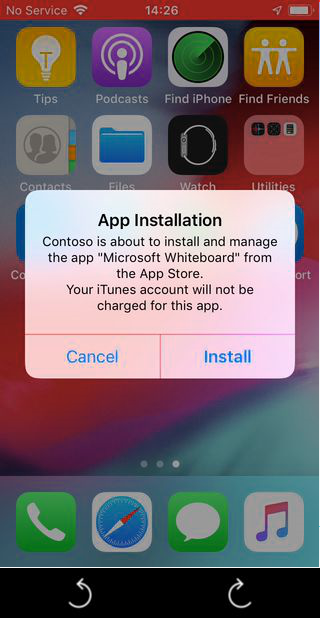
In a short amount of time the device will process that policy as seen above. Here the user will be prompted that a required application will be installed. Press Install on device to continue.

image

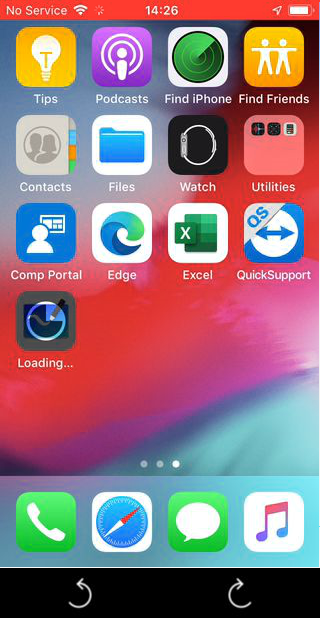
The application will be installed.

image

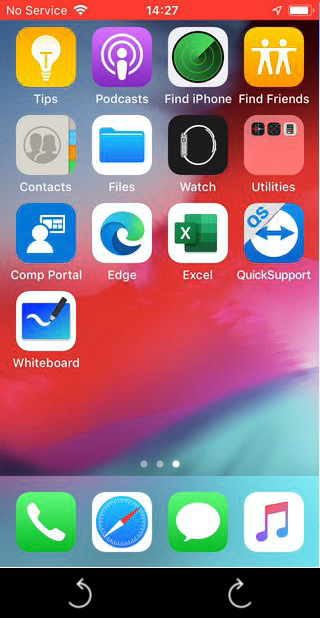
The application is now ready for use on the device.

image

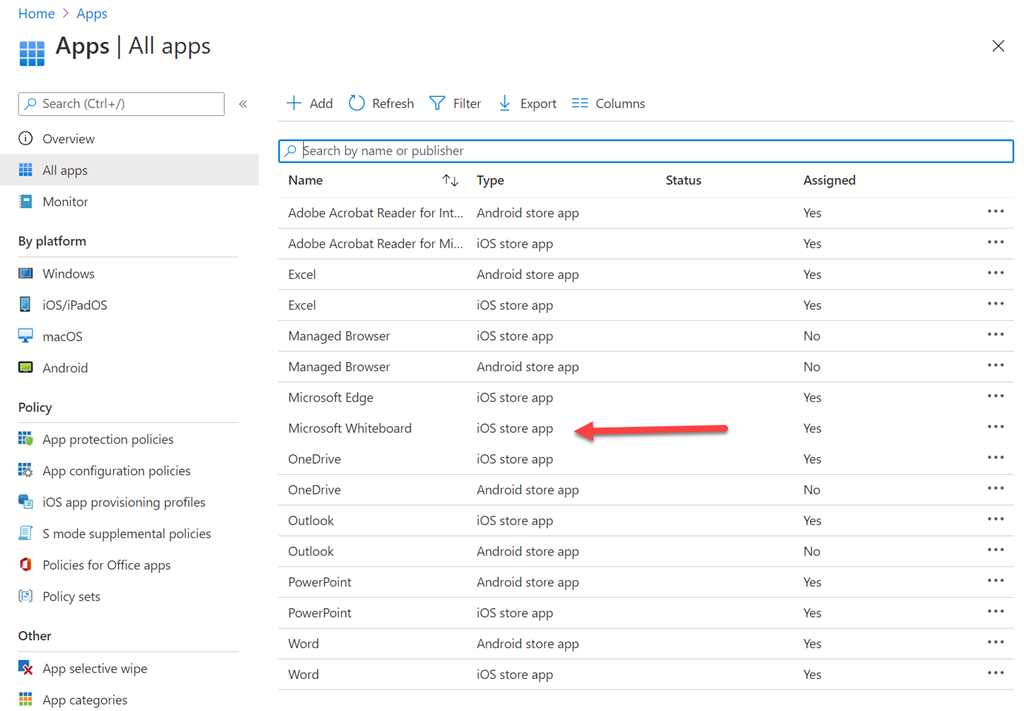
If you now look back at the All Apps area, as shown above, you should see the app that was just configured for deployment.

image

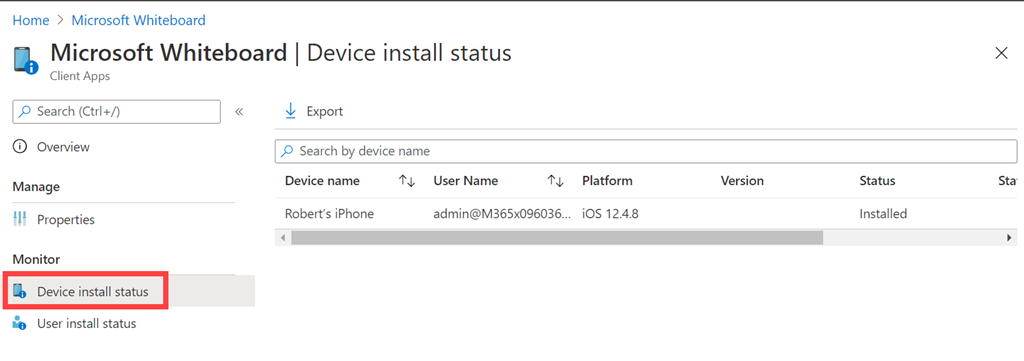
If you select this entry and then select Device install status, you should see a confirmation that the Status is installed as shown above.

image

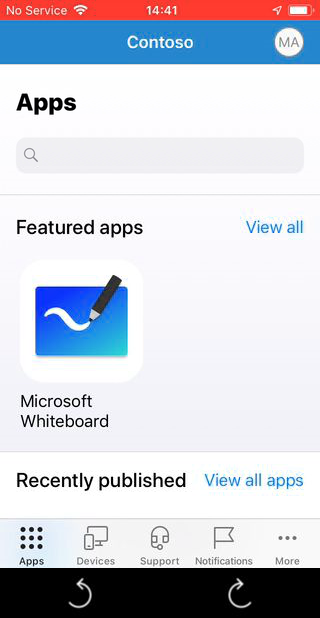
If you take a look inside the Intune Company Portal App, you see the app is featured as shown above. The application can now be installed directly from here as well if needed.

image

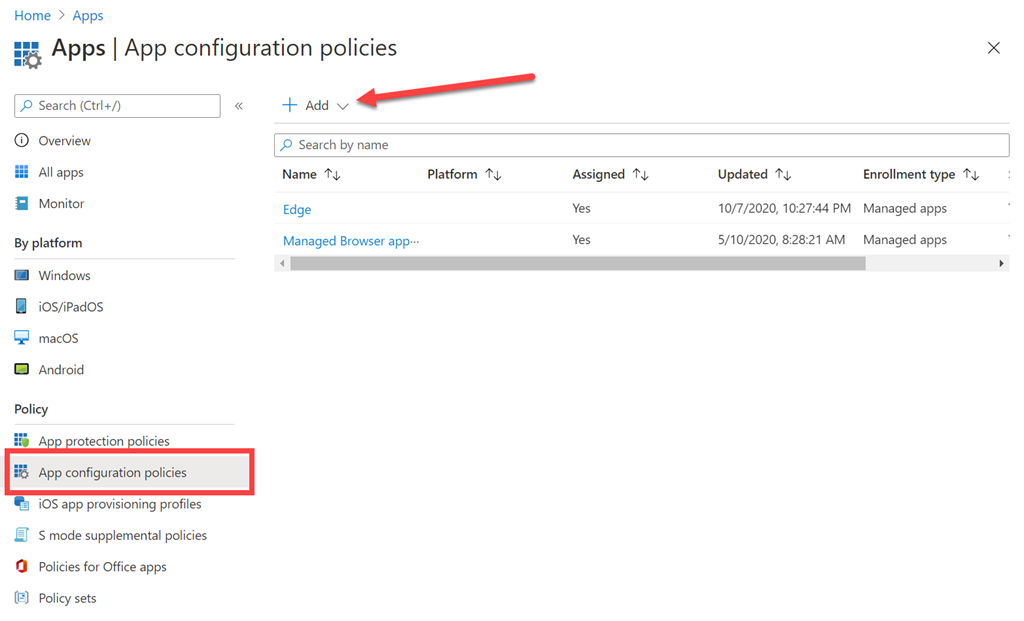
To configure the settings for applications that are deployed, navigate to the the App configuration policies option as shown above and select the Add button that appears on the right.

image

Here, I will select Managed devices from the drop down menu that appears.

image

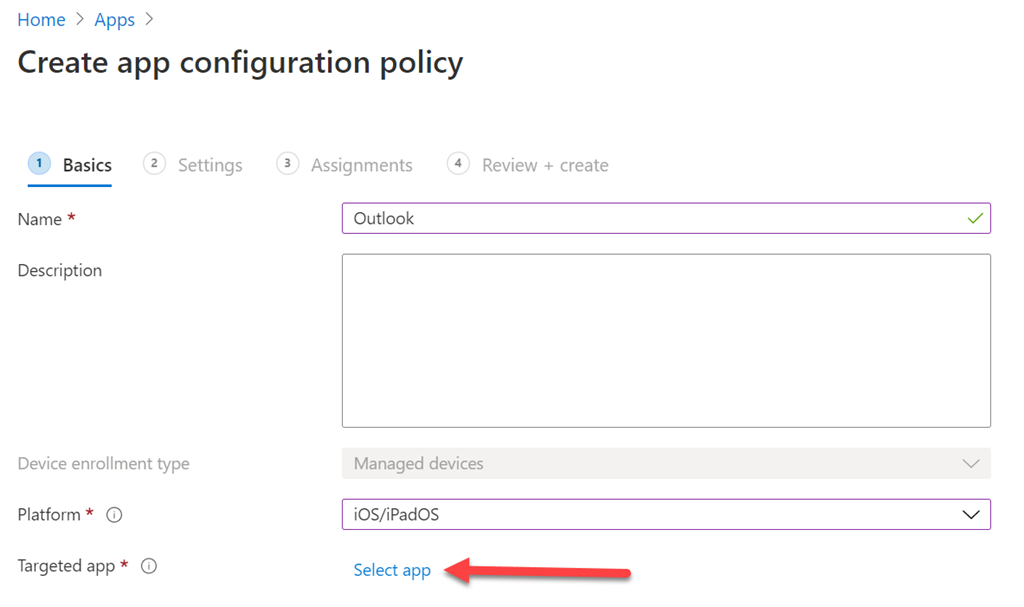
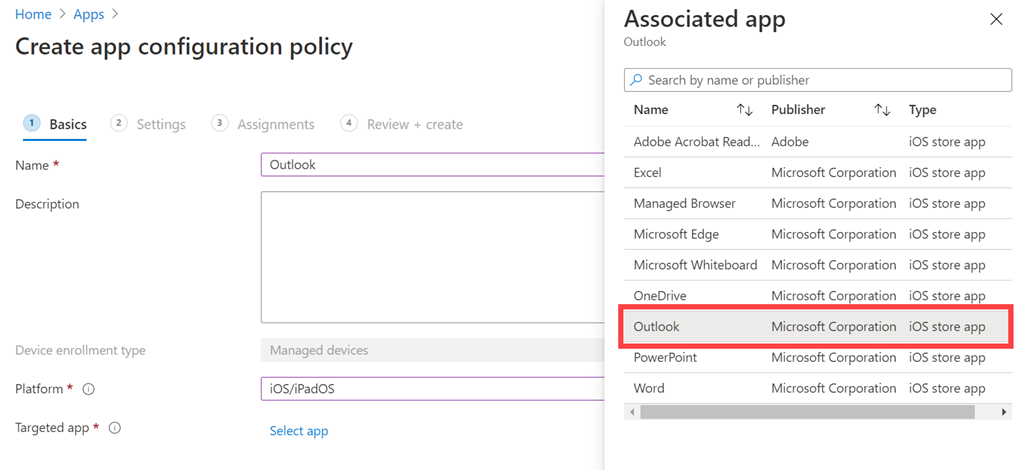
To keep things simple, I’ll choose to configure the Outlook app for iOS. This is because there are many different ways to configure applications, especially if they are not from Microsoft or not common apps like Outlook, Word, Excel, etc.

In this case, you need to click the Select app at the bottom of the page as shown.

image

Select the Outlook option from the menu that appears as shown.

image

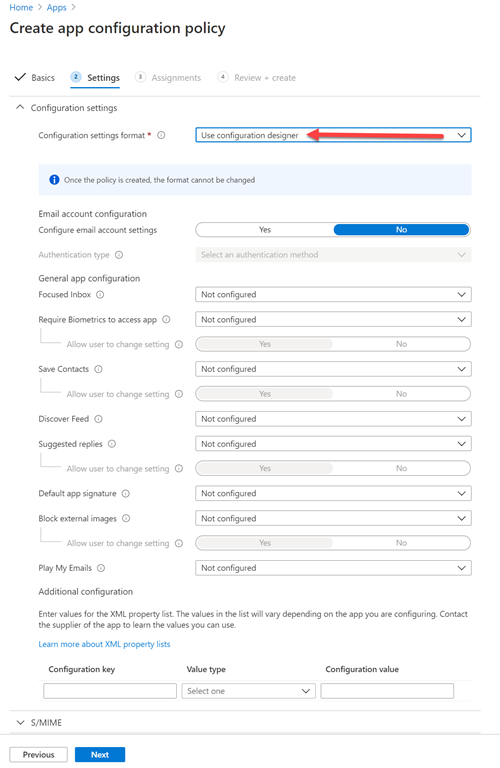
Because this a ‘well-known’ app, I select Use configuration designer in the Configuration settings format field as shown. This presents a number of options I can now configure for that application.

image

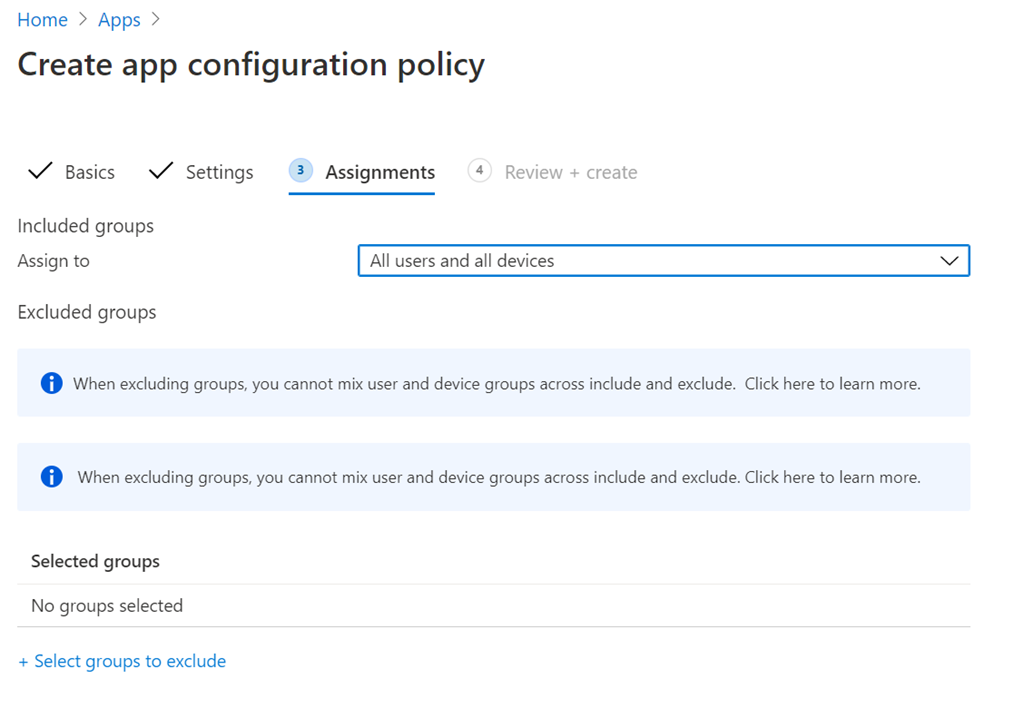
You’ll then need to allocate this application configuration policy as shown above. Again, to keep this example simple, the option for All users and all devices has been selected but you can get more granular if you wish.

image

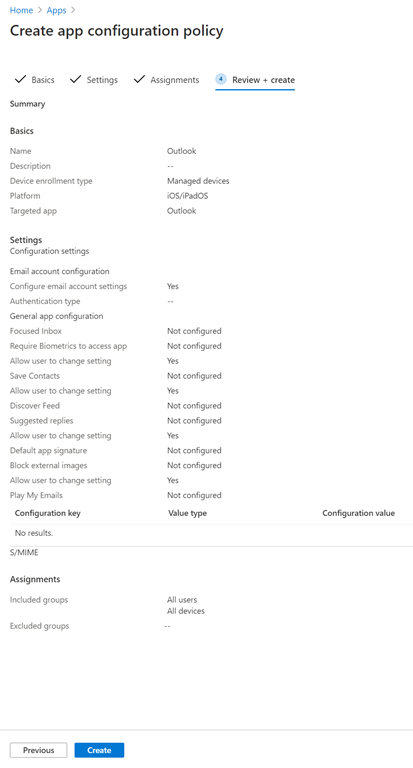
You can now Review and Create the policy.

image

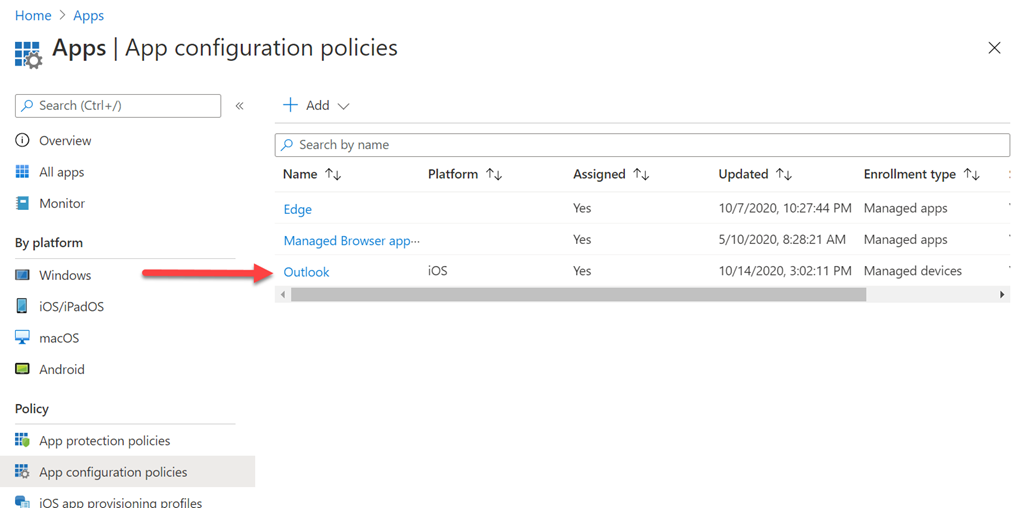
The policy should then appear in the list of App configuration policies as shown above. You can select the policy name at any time to return to editing the policy.

image

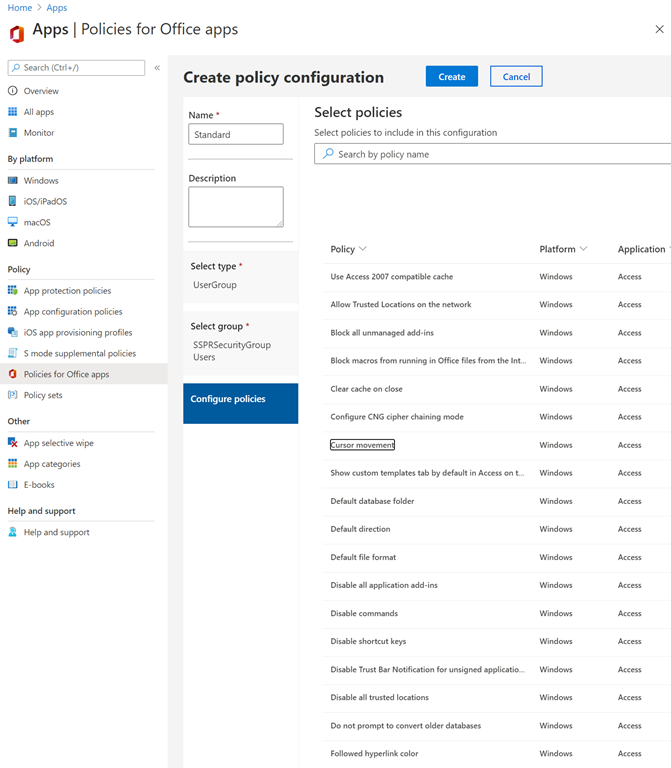
The main take away is that you can use Endpoint Manager to create deployment and configuration policies for the different applications on the different platforms and apply them quickly and easily. As shown above, this also extends to granular configuration of the Office suite of apps.

It is important to remember that there can be a lot to configure here if you consider individual apps on individual platforms, so be prepared for some set up initially. But, once complete, deployment and configuration going forward across all platforms is easy. The main benefit is that both deployment and configuration can be done directly across the Internet for both enrolled and non-enrolled devices give good management of devices in the environment.

Modern Device Management with Microsoft 365 Business Premium – Part 10

Modern Device Management with Microsoft 365 Business Premium–Part 8

Office 365 Mobile MDM – Modern Device Management with Microsoft 365 Business Premium–Part 1

Intune MDM – Modern Device Management with Microsoft 365 Business Premium – Part 2

Intune MAM – Modern Device Management with Microsoft 365 Business premium – Part 3

Endpoint Manager – Modern Device Management with Microsoft 365 Business Premium – Part 4

Baselines – Modern Device Management with Microsoft 365 Business Premium – Part 5

Deployment – Modern Device Management with Microsoft 365 Business Premium – Part 6

Autopilot admin – Modern Dev Management with Microsoft 365 Business Premium – Part 7

In the previous post I detailed Windows Autopilot from the administrator’s point of view. What does it look on the device side?

image

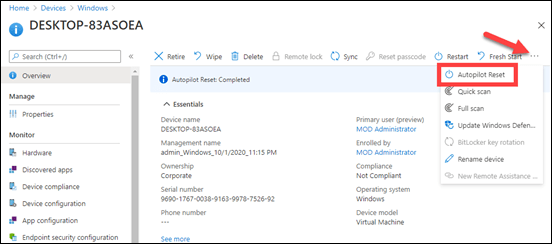
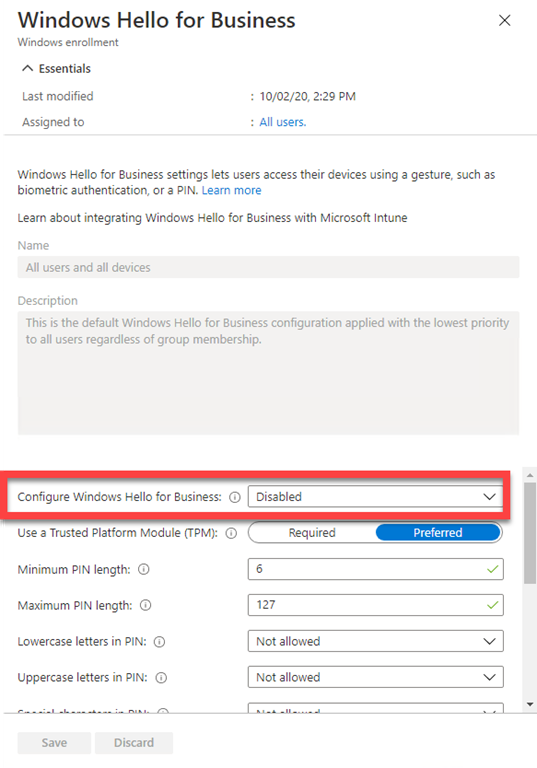
Just before the Autopilot Reset is selected in the EndPoint Manager portal as shown above, let me show you one quick configuration I’ve also done in Windows Hello for Business to make life that little bit easier.


image

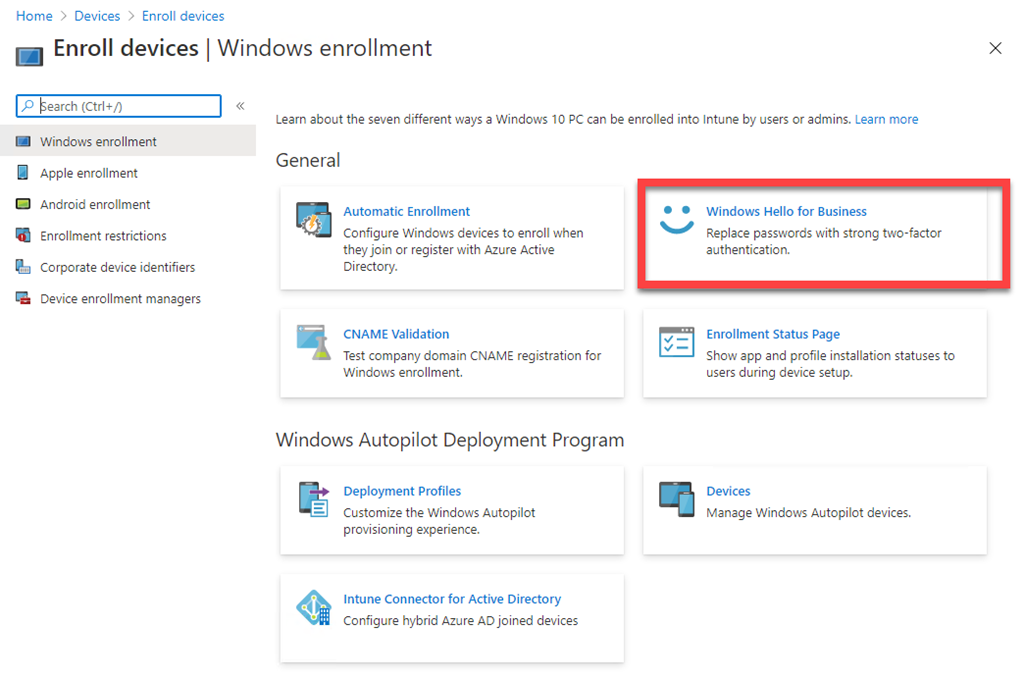
In Devices | Enroll Devices | Windows enrollment select Windows Hello for Business as shown above.

SNAGHTMLf86d2ee

I have set the Configure Windows Hello for Business to be Disabled. Because I’m using a machine WITHOUT a TPM chip here (i.e. a Virtual Machine), it means that if Windows Hello for Business is enabled I’m going to need to go through the process of registering a device PIN. For now, to keep it as simple as possible, I want that Disabled.

Of course, I have also completed the Autopilot enrolment process and created an Autopilot device policy as detailed in the previous part in the series. Note, that a user has also already been assigned to this device. This means that the machine will be joined to Azure AD using this assigned user. That means they will not need to input their credentials during the process.

image

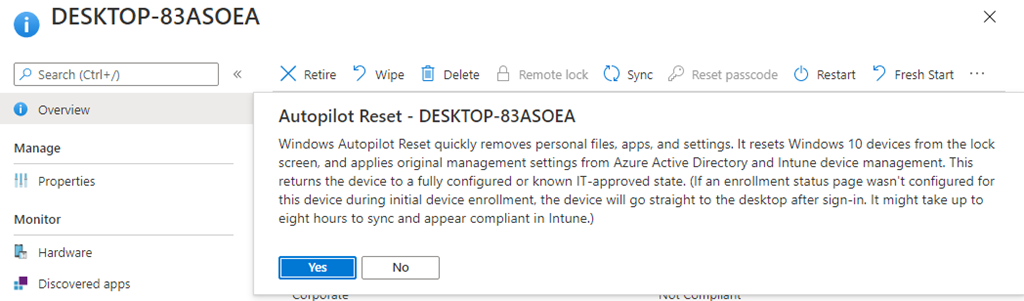
After selecting Autopilot Reset in Endpoint Manager I am asked to confirm the process as shown above. Take careful note here of what Autopilot does to that machine.

Select Yes to continue.

image

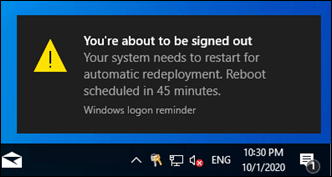
Once I select Autopilot Reset in Endpoint Manager, any active user will receive the above message that they have 45 minutes before the targeted machine is forcibly rebooted. I will fast track that process by manually rebooting the workstation to commence the Autopilot reset process.

image

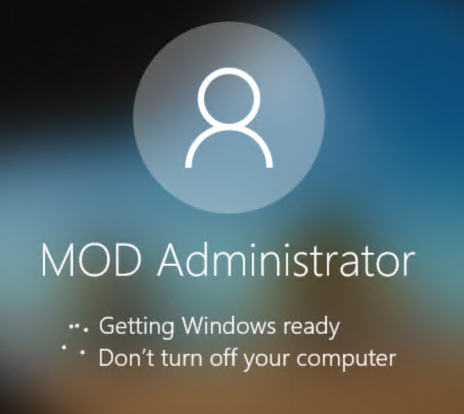
If the devices is at the lock screen you will see the above message when the Autopilot process commences.

image

The workstation will then reboot and commence a Windows ‘refresh’ of the device, effectively doing a clean installation of Windows 10.

image

image

image

image

image

image

image

image

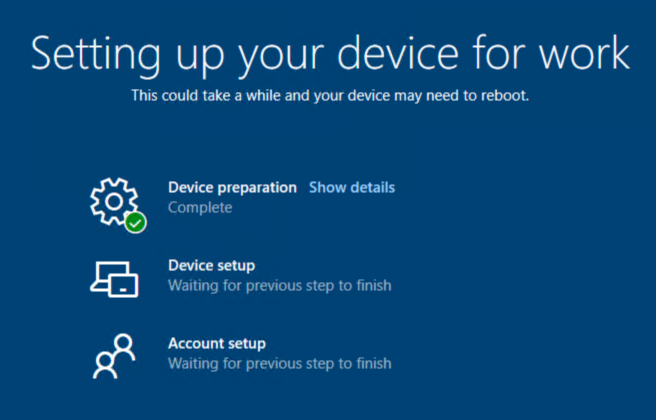
It will then complete the Autopilot configuration as seen above. You will note here that no user input is required. The reason for this is in Endpoint Manager a user has already been assigned to the device.

image

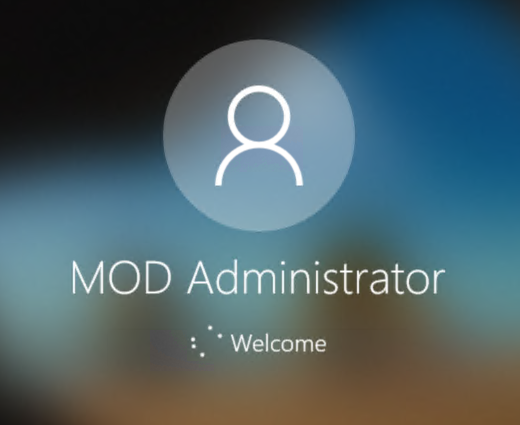
Not long after, you’ll will then end up with the ability to login to the workstation, as shown above.

image

image

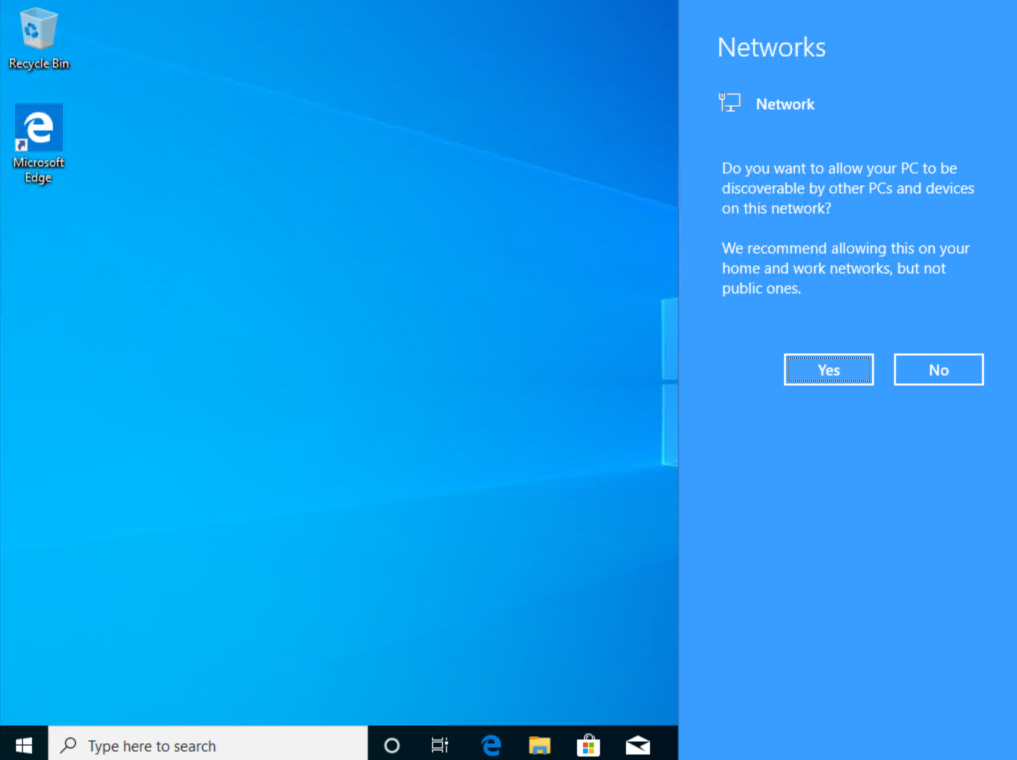
When you do, you’ll be taken through the normal first run Windows experience as shown above.

image

The standard desktop should appears and all the device policies, Intune, Endpoint Security, etc will commence application to the device. Thus, it is just like you did a manual device join to Azure AD but you DIDN’T! Autopilot did all the hard work for you!

This is an example of how easy modern device management cam make your life once you set it up. If there is a problem with a machine, don’t waste long hours troubleshooting! Do an Autopilot reset to get a fresh version with everything deployed and accessible from the cloud. Easy! Need to reprovision an existing machine for a new user? Autopilot Reset again. Easy! the list goes on and on for the benefits of Windows Autopilot.

Although not yet available, what would you say if the same Autopilot concept was coming to both iOS and Android? Roll on modern device management is what I would say.

Modern Device Management with Microsoft 365 Business Premium – Part 9

Need to Know podcast–Episode 255

FAQ podcasts are shorter and more focused on a particular topic. In this episode I speak about some automation options that are available in the Microsoft Cloud.

This episode was recorded using Microsoft Teams and produced with Camtasia 2020

Take a listen and let us know what you think – feedback@needtoknow.cloud

You can listen directly to this episode at:

https://ciaops.podbean.com/e/episode-255-modern-device-management/

Subscribe via iTunes at:

https://itunes.apple.com/au/podcast/ciaops-need-to-know-podcasts/id406891445?mt=2

The podcast is also available on Stitcher at:

http://www.stitcher.com/podcast/ciaops/need-to-know-podcast?refid=stpr

Don’t forget to give the show a rating as well as send us any feedback or suggestions you may have for the show.

Resources

FAQ 17

Modern Device Management – Part 1

CIAOPS Patron Community

@directorcia

Modern Device Management with Microsoft 365 Business Premium–Part 6

Previous parts in this series are:

Office 365 Mobile MDM – Modern Device Management with Microsoft 365 Business Premium–Part 1

Intune MDM – Modern Device Management with Microsoft 365 Business Premium – Part 2

Intune MAM – Modern Device Management with Microsoft 365 Business premium – Part 3

Endpoint Manager – Modern Device Management with Microsoft 365 Business Premium – Part 4

Baselines – Modern Device Management with Microsoft 365 Business Premium – Part 5

All the articles so far have focused on the technical implementation of device management, however these are all effectively subservient to real need of allowing users to get their work done. Security that gets in the way of what people need to do will simply result in them bypassing it and opting for solutions that are less secure and less controllable, aka shadow IT. Thus, when implementing successful device management, you keep in mind the end game here which is, allowing users to get done what they need to, securely.

Deploying all the options that are available with device management is daunting given the sheer number of settings, across multiple operating systems via multiple services like Intune and Endpoint security. Thus, even before you start implementation you should ensure that you have a good documentation regime in place to keep track of what you implement and what changes you make over times. There are going to be circumstances when you need to track down a specific setting in a specific policy and having good documentation is going to save you boatloads of time. It is also going to save you going round and round in circles making changes that have unexpected consequences. Thus,

Rule number 1 = maintain good documentation

With a plethora of policies and settings to configure having a define naming convention is going to make troubleshooting far easier. I have seen all sorts of policy names that bear no relevancy to the actual settings it implements. Remember, you can end up with multiple policies for multiple device operating systems, for multiple audiences across multiple services. Using something like MAM iOS Sales team or MDM Windows Executives or ES Antivirus Field Staff is going to allow people to quickly understand what these policies are for, where they come from and who they apply to. Good naming conventions are defined prior to implementation and applied consistently (which is why they are called conventions after all!). So,

Rule number 2 = define a naming convention upfront and apply it consistently

All users are not created the same. Thus, you’ll need to consider dividing up your policies into deployment rings, much like what Microsoft does with Windows I suggest. You’ll probably need a test or canary ring, and early adopters ring and an everyone else ring.

The canary ring is basically test devices and users to determine the effects of applying policies. This will give you early warning as to what impact settings actually have in your environment. This will be 1 – 2% of your population.

The early adopters ring is targeted at those users who like to be first and are prepared to ride out and bumps along the way by providing constructive feedback on the impacts of settings to them. This will probably be 10 – 15% of your population. Users in this ring should ‘opt in’ and understand the ramifications of getting things that may still be testing.

You may need to have multiple rings for different locations, devices or audiences. This is again where good documentation and naming conventions are critical. It is therefore recommended that:

Rule 3 = apply policies and updates to policies in rings to the environment

Not everything goes to plan. Sometimes setting and policy changes can have unexpected consequences on devices. Sometimes, these unexpected changes can prevent you from doing something you need to do. As with setting up conditional access, don’t lock yourself out:

Rule 4 = ensure you have an admin user that is not subject to any policy in case of emergency

Device management is typically never a world of all green check marks (and rainbows and unicorns). It is typically a world with setting conflicts, non compliance and strange impacts. Bulk policy implementations and/or changes are a recipe for never ending frustration. Start small and grow. Don’t turn everything on to the max out of the box. My advice is to start with one baseline at a time and get that all green, then move to individual Endpoint security policies and get that all green, then compliance and get that all green and so on. Thus,

Rule 5 = grow into your settings and policies

Some other recommendations for those that are actually tasked with deploying device management:

A. Have at least one physical test device for each operating systems. That means having a test iOS, Android and Windows 10 device at your disposal. It is easy enough to pick up a cheap or second hand device you can use. Nothing beats seeing exactly what happens on a physical device when policies are applied. It will also allow you to better understand the process of wiping and re-purposing devices.

B. Use a demo tenant first time out. Don’t learn this stuff on your customer’s dime. Don’t learn on your own production tenant. Sign up for a free demo Microsoft 365 demo tenant at https://cdx.transform.microsoft.com/ and do your learning there. There is nothing worse than test policies and configurations continuing to show up in production environments.

C. Fully implement device management in your own production tenant. Don’t forget that if you look after other customers, YOU are also a target of the bad actors. Your environment is an Aladdin’s cave full of passwords, logins and confidential information for many others. In short you hold the crown jewels for many businesses. Don’t think it can’t happen to you. Over prepare. Over secure your environment. Doing so will also help you more fully appreciate the impact that device and security settings will have on your customers and deployments as well as keeping their treasures secure.

D. Configuration is never complete. New devices, enhanced baselines, new policy options will all emerge over time. Security is a journey, not a destination as they say. You will need to monitor, review and adjust what you have implemented over time. You will need to evaluate what works, what doesn’t and what additional security you can apply to the environment. It will never be a ‘set and forget’ situation. Security is a service not a product.

E. Leverage the power of automation. Baselines are a great starting point and reduce much of the need for individual settings. However, technologies like PowerShell and the Microsoft Graph give you the ability to automate much. An example of this that I have detailed is here:

Automating the deployment of an Attack Surface Reduction policy across multiple tenants

The great things about these device management services from Microsoft is that they are consistent for everyone that has them. Thus, the same script will work across every customer that has those services. With so many settings available to you in device manage these days, it makes sense to invest your time in become more ‘code centric’ (DevOps anyone?) and adding those skills to your quiver.

In summary then, successful device deployment is all about people. It should be focused on delivering secure productivity without mindless obstruction, which being carried out in a systematic and consistent manner. You can have all the greatest deployment tools at your beckoned call, but if they are implemented incorrectly, the end result is far worse for end users and administrators than it would have been without device management. So, don’t make the mistake of seeing device management as a purely technical challenge, It ain’t!

Modern Device Management with Microsoft 365 Business Premium – Part 7

Modern Device Management with Microsoft 365 Business Premium–Part 5

Previous parts in this series are:

Office 365 Mobile MDM – Modern Device Management with Microsoft 365 Business Premium–Part 1

Intune MDM – Modern Device Management with Microsoft 365 Business Premium – Part 2

Intune MAM – Modern Device Management with Microsoft 365 Business premium – Part 3

Endpoint Manager – Modern Device Management with Microsoft 365 Business Premium – Part 4

One of the biggest challenges with the availability of all these policies via Intune MDM and MAM as well as Endpoint security is getting to a ‘best practices’ state.

image

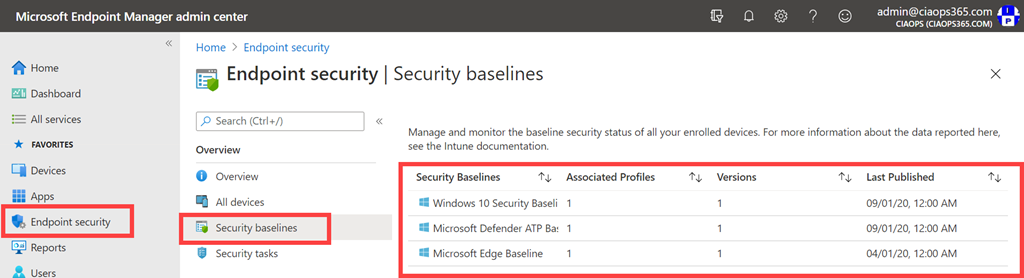
One of the benefits that Endpoint security provides is the ability to implement Security baselines as shown above. There is a baseline for Windows 10 security, Microsoft Defender ATP and Microsoft Edge already. Microsoft recently announced that an Office baseline will soon be available.

image

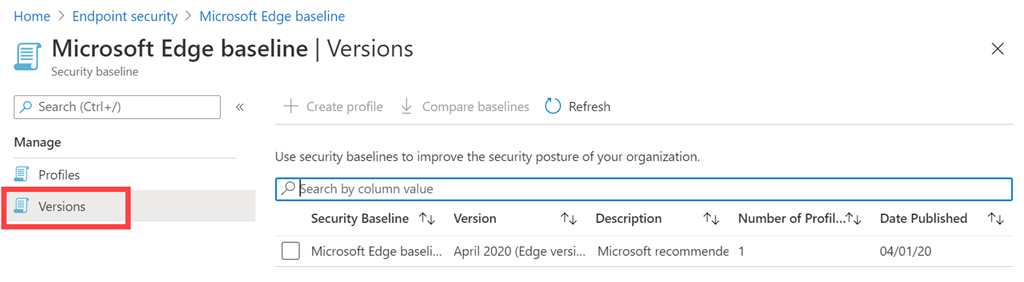
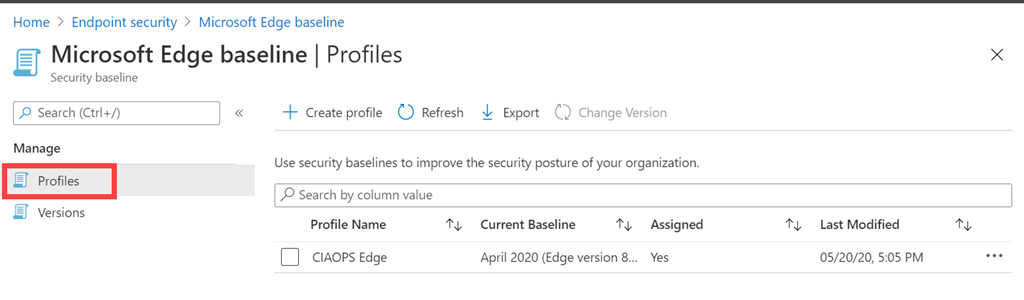
The idea is that Microsoft will publish a ‘best practices’ baseline, as shown above for Edge, and that you can create a policy or ‘profile’ as it is called here, from this to use across your environment just like any other policy we have already spoken about.

image

The idea is that, rather than you having to work out and apply a range of best practice settings across all the individual policies, you can simply implement these baseline policies from Microsoft as a starting point.

Another benefit is, as updated baselines are released by Microsoft, you can simply update any existing ‘profile’ you have created with these baselines to incorporate these updated settings.

image

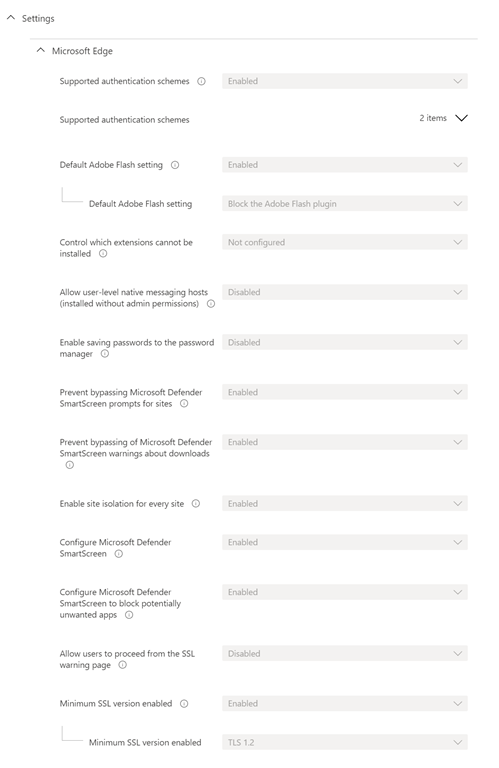
When you look at the settings available in these baselines, as shown above for Edge, you’ll notice that they basically contain many of the same settings available to you in individual Endpoint security policies. Thus, setting once via a baseline ‘profile’ is a much faster method of implement these settings. Otherwise, you’d probably have to create multiple individual policies to achieve the same level of protection.

You can, of course, adjust any baseline ‘profile’ that you create and when a new baseline is available it can be applied to existing ‘profile’ you have created while maintaining any custom settings you have made in that ‘profile’. You can also create a range of different ‘profiles’ from baselines and target them to different audiences in your environment just as you can with other individual policies from Intune MDM, MAM and Endpoint security.

If you already have individual Endpoint security and Intune policies deployed you will need to be careful if you then start to deploy baseline policies. If there are differences in the settings between the baseline policies and those configured in Intune MDM, MAM and Endpoint security you’ll end up with a conflict. Thus, you will either need to make sure that the settings are identical between all the policies that you use or stop using some of the conflicting policies. Generally, I would suggest that just using the baseline policy for the setting is a best practice approach.

Why do I believe this? If you look at the volume of policy settings that can be made across all options like Intune MDM, MAM and Endpoint security, it makes more sense to me to start with what Microsoft believes is best practice first and adjust from there. Doing so is going to:

1. Reduce the amount of individual settings in individual policies that you need to make.

2. Reduce setting conflicts across all your policies.

3. Allow you to more easily to update to new best practices when they become available.

With this in mind and looking back across what we have talked about so far with MDM and MAM, Intune and Endpoint security, I would suggest this as a new best practice approach to configuring device security is, in order:

1. Implement all Microsoft baseline security policies.

2. Make any required customisations to the deployed baseline ‘profiles’ in your environment.

3. Implement individual Endpoint security policies for additional settings not covered by the baselines.

4. Implement MDM compliance policies for additional settings not covered by baselines or individual Endpoint security policies.

5. Implement MDM configuration policies for additional settings not covered by baselines, individual Endpoint security and MDM compliance policies.

6. Implement MAM application protection polices for additional settings not covered by baselines, individual Endpoint security, MDM compliance and MDM configuration policies.

7. Implement MAM configuration policies for additional settings not covered by baselines, individual Endpoint security, MDM compliance, MDM configuration policies and MAM application protection policies.

in short, start with baselines, then implement individual Endpoint security policies, then Intune MDM policies, then Intune MAM policies.

At this stage, no single policy is going to provide all the protection required. Thus, you need to use a mix of policies across baseline, Endpoint security and Intune to suit your needs. However, in the long run, I see baselines and Endpoint security policies as being the future and suggest you start there rather than the traditional approach that was to start with Intune. If you already have Intune in place, for example, then you’ll need to think about migrating to baselines and Endpoint security policies as I am currently doing. It will be frustrating at times tracking down the duplicates at times, but I suggest doing so will position you better for future improvements in the device management space.

Success with device management is not merely about select the right setting in a policy, it is also about deploying it effectively into your organisation. That’s what I’ll take a look at in the next article.

As something else to consider, I’d suggest you have a read of my article:

The changing security environment with Microsoft 365

In light of the recommendation to apply Microsoft baselines. The questions to think about are – in the future why can’t Microsoft simply apply these baseline policies automatically and use AI to fill the gaps with additional settings? Where does that then leave those who are setting device polices today?

Modern Device Management with Microsoft 365 Business Premium – Part 6