
Previously – https://blog.ciaops.com/2026/07/30/the-recurring-problem-a-managed-services-story-chapter-5/
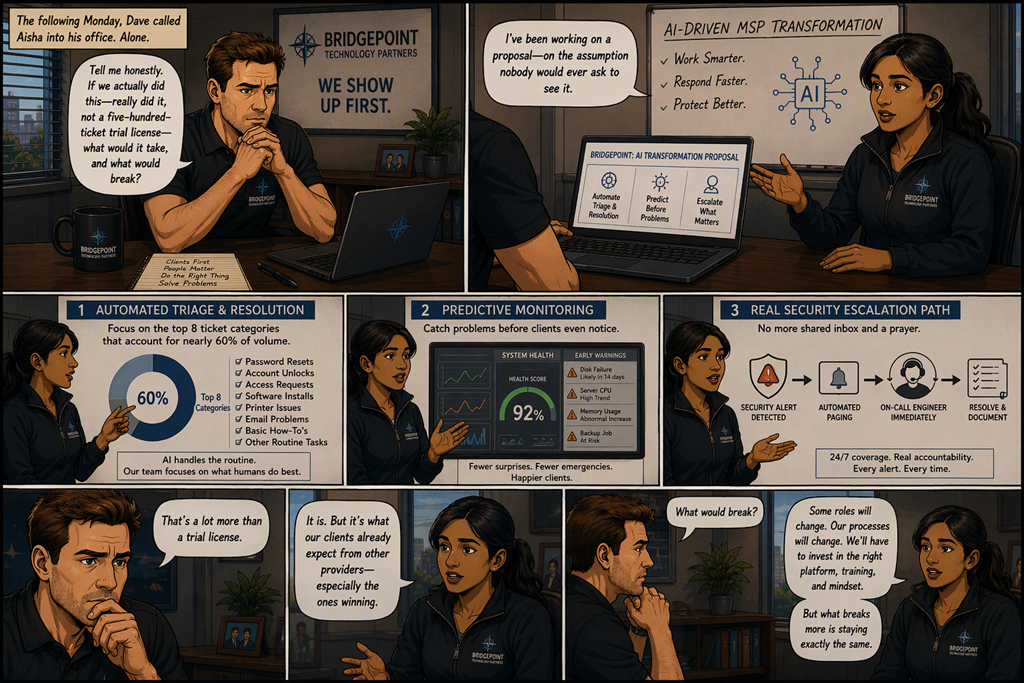
Dave called Aisha into his office the following Monday, alone, no leadership meeting audience. “Tell me honestly,” he said. “If we actually did this — really did it, not a five-hundred-ticket trial license — what would it take, and what would break?”
Aisha, to her credit, didn’t gloat. She pulled up a proposal she’d apparently been quietly refining for months on the assumption nobody would ever ask to see it. A tiered rollout: automated triage and resolution for the top eight ticket categories that accounted for nearly sixty percent of volume; predictive monitoring that could flag failing hardware and unusual network behavior before clients ever noticed a problem, instead of after; and, critically, a real security escalation path with automated paging, not a shared inbox and a prayer.
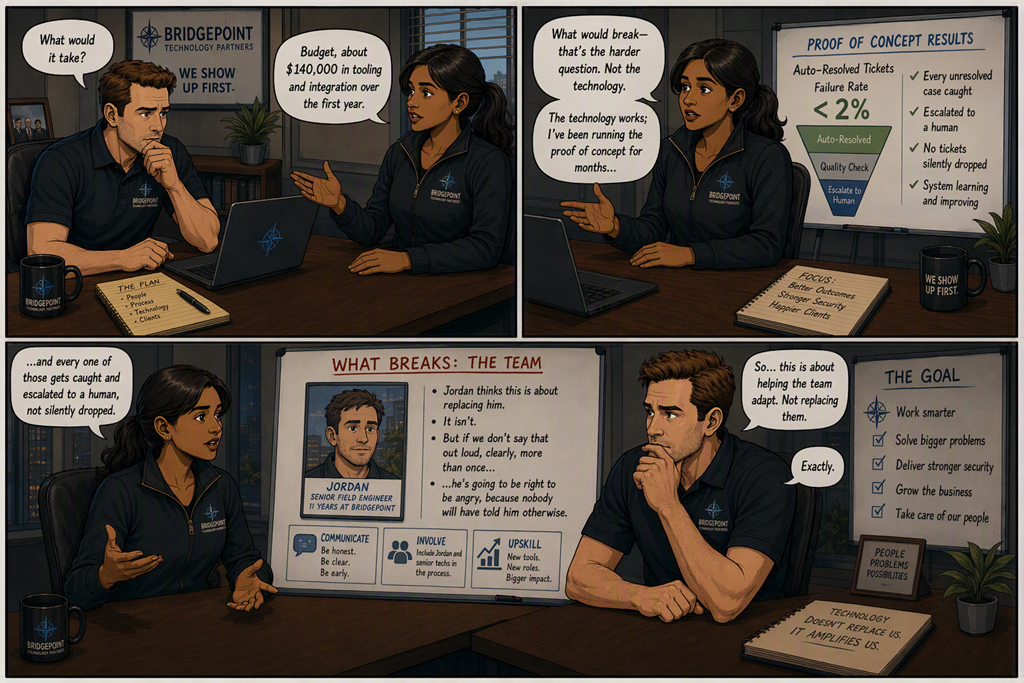
“What would it take?” she said. “Budget, about $140,000 in tooling and integration over the first year. What would break — that’s the harder question. Not the technology. The technology works; I’ve been running the proof of concept for months and the failure rate on auto-resolved tickets is under two percent, and every one of those gets caught and escalated to a human, not silently dropped. What breaks is the team, if we don’t handle this right. Jordan thinks this is about replacing him. It isn’t. But if we don’t say that out loud, clearly, more than once, he’s going to be right to be angry, because nobody will have told him otherwise.”
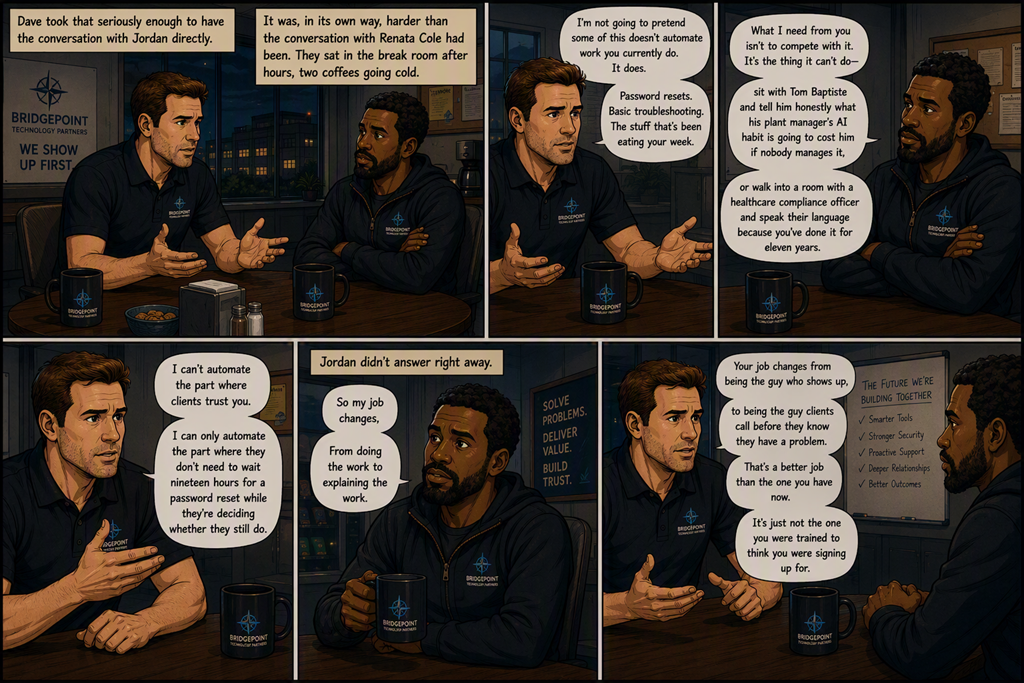
Dave took that seriously enough to have the conversation with Jordan directly, which was, in its own way, harder than the conversation with Renata Cole had been. They sat in the break room after hours, two coffees going cold.
“I’m not going to pretend some of this doesn’t automate work you currently do,” Dave said. “It does. Password resets. Basic troubleshooting. The stuff that’s been eating your week. What I need from you isn’t to compete with it. It’s the thing it can’t do — sit with Tom Baptiste and tell him honestly what his plant manager’s AI habit is going to cost him if nobody manages it, or walk into a room with a healthcare compliance officer and speak their language because you’ve done it for eleven years. I can’t automate the part where clients trust you. I can only automate the part where they don’t need to wait nineteen hours for a password reset while they’re deciding whether they still do.”
Jordan didn’t answer right away. “So my job changes,” he finally said. “From doing the work to explaining the work.”
“Your job changes from being the guy who shows up,” Dave said, “to being the guy clients call before they know they have a problem. That’s a better job than the one you have now. It’s just not the one you were trained to think you were signing up for.”
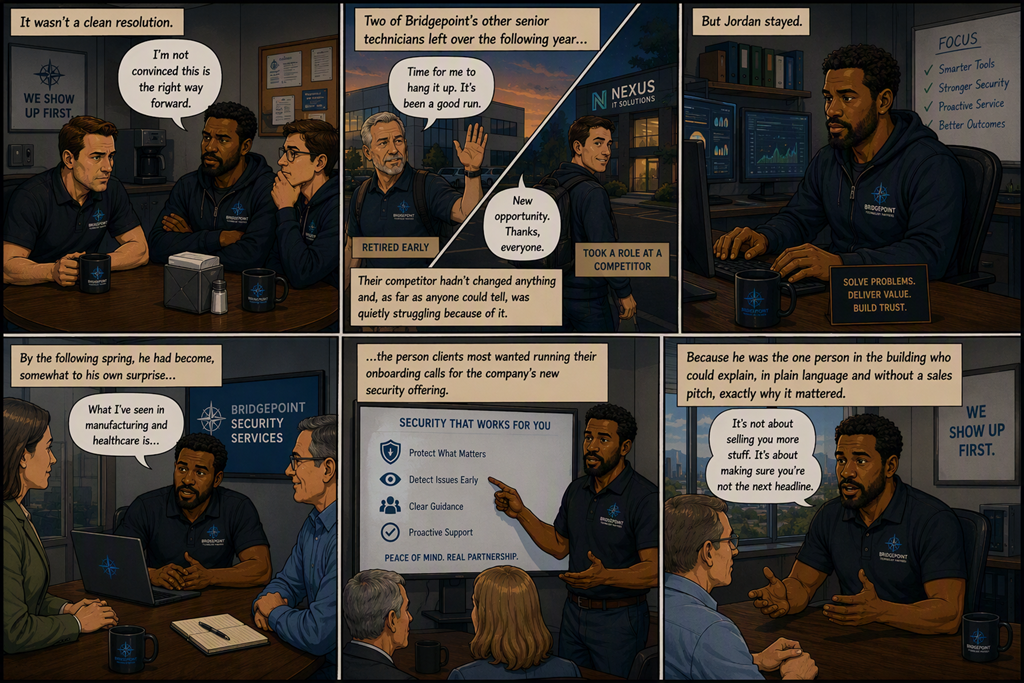
It wasn’t a clean resolution. Jordan stayed skeptical for months, and two of Bridgepoint’s other senior technicians left over the following year — one retired early, one took a role at a competitor that hadn’t changed anything and, as far as anyone could tell, was quietly struggling because of it. But Jordan stayed, and by the following spring he had become, somewhat to his own surprise, the person clients most wanted running their onboarding calls for the company’s new security offering, because he was the one person in the building who could explain, in plain language and without a sales pitch, exactly why it mattered.


One thought on “The Recurring Problem: A Managed Services Story–Chapter 6”