
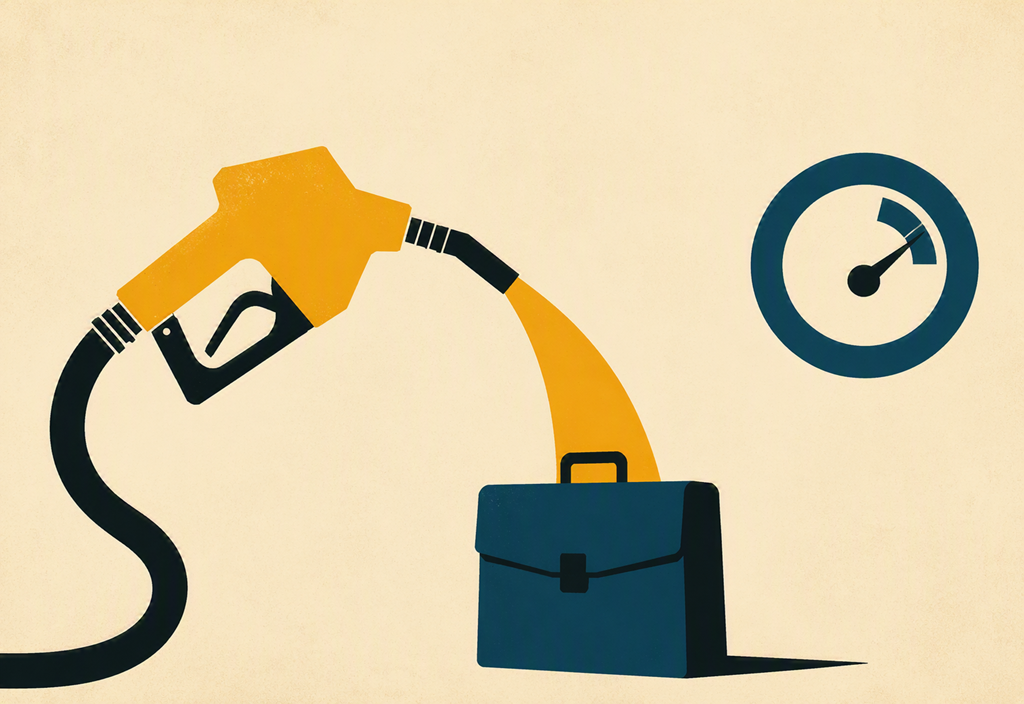
I filled up the car last weekend and did that thing we all do now — glanced at the price per litre, winced a little, and worked out whether to fill the tank or just put in enough to get me through the week. It struck me, standing there, that I’ve started having the exact same conversation about AI.
For a while, AI felt free. You paid your subscription, you used it, and the meter never seemed to run. That era is ending. Token prices, usage caps, premium request limits — the cost of running AI is becoming visible, metered, and impossible to ignore. For a small business, it’s shifting from a novelty into a line item. And like petrol, it’s no longer optional. You can’t really run the business without it, but you can’t ignore what it costs either.
A running cost, not a one-off
The mistake I keep seeing is treating AI like a piece of software you buy once and forget. It isn’t. It behaves far more like fuel or electricity — something you consume, in varying amounts, every single day. Some weeks you’ll barely touch it. Other weeks, when you’re deep in a proposal or cleaning up a quarter’s worth of numbers, you’ll burn through it.
That changes how you should think about it. A running cost needs watching. It needs a budget. And it needs someone, every so often, asking the plain question: are we actually getting value for what we’re spending here?
Spend where the work actually is
Here’s where it gets interesting for a small business. You haven’t got an unlimited tank, so you have to decide where AI earns its keep. For most of the small operations I work with, the answer isn’t exotic. It’s the boring, repetitive, time-sapping work — the email triage, the first draft of a report, the summary of a long meeting nobody wants to rewatch.
That’s exactly where Copilot inside Microsoft 365 pays for itself. Asking Copilot in Outlook to clear and draft replies to a morning’s backlog saves real hours. Having it summarise a Teams meeting you missed, or pull the key figures out of an Excel workbook, turns an afternoon into a few minutes. The trick is to point your spend at the tasks that are costing you time and money today — not the shiny demos that look clever but never touch your actual week.
Economise without going without
The same way you don’t leave the car idling in the driveway, you don’t want AI burning through your allowance on low-value busywork. Be deliberate. Use the everyday Copilot features that already come with your licence before you reach for premium-priced add-ons. Give your people a quick steer on what’s worth asking and what’s just noise. And look at the bill — actually check where the consumption is going, the way you’d question a sudden jump in the power account.
None of this is about spending less for its own sake. It’s about spending on purpose.
Where I’ve landed
Petrol taught small business owners to think in terms of value per trip, not just price per litre. AI is heading the same way. The ones who do well won’t be those who spend the most or the least — they’ll be the ones who know exactly what they’re buying and why. Watch your usage, back the work that matters, and treat AI like the utility it’s quietly becoming. The meter is running now. Best to know what it’s running on.

