AI Didn’t Remove Programming – It Lowered the Bar

image

One of the most dangerous misunderstandings I hear is:
“AI means we don’t need programming anymore.”

The opposite is true.

We need more programming literacy—just a different kind.

AI doesn’t replace logic, structure, or clarity. It amplifies them. When an AI tool “writes code” for you, what it’s really doing is translating your intent into something executable. If your intent is vague, messy, or logically broken, the output will be too.

MSPs already see this in practice:

  • A poorly described Power Automate flow that works once and then quietly breaks.

  • An AI-generated script that technically runs but makes unsafe assumptions.

  • A Copilot prompt that looks clever but produces useless business output.

The common issue isn’t the tool. It’s the thinking behind the instructions.

Understanding basic concepts—inputs, outputs, conditions, loops, exceptions—has never been more important. The difference now is you don’t need to memorise syntax. You need to think clearly and explain cleanly.


This Is a Business Advantage, Not a Technical Party Trick

Here’s where many MSPs miss the opportunity.

They see AI-assisted “programming” as something clever techs play with internally. In reality, it’s fast becoming a deliverable business capability.

Think about your SMB clients:

  • They know their processes are inefficient.

  • They can explain what they want, but not how to build it.

  • They don’t want a six‑month dev project for a simple workflow problem.

An MSP that can sit with a client, map a process in plain English, and turn it into an automated solution is no longer just “support”. You’re helping redesign how the business operates.

And the simplicity is the point.

A one‑page English description that becomes:

  • A ticket triage workflow

  • An onboarding checklist generator

  • A management report assembler

  • A light internal chatbot using their own documents

None of that needs hardcore development skills anymore—but all of it still needs structured thinking.


Your Team Doesn’t Need Coding Skills – They Need Programming Awareness

This is where MSP leaders need to be deliberate.

You don’t suddenly need Python experts across your service desk. What you do need is:

  • Staff who can break problems into steps

  • People who can explain outcomes unambiguously

  • A shared understanding of how logic flows

If your team can already document SOPs well, they are halfway there.

I’ve seen MSPs get real value by:

  • Treating AI prompts like mini specifications, not chat questions

  • Reviewing AI-generated automations as a team, not blindly deploying them

  • Teaching junior staff how to describe a problem, not just which tool to click

Those are capability investments, not tool training.


The MSPs Who Win Will Treat This as a Core Skill

We’ve crossed a line. Programming is no longer gated by language barriers—it’s gated by thinking quality.

That changes what “technical literacy” means for MSPs.

The firms that thrive over the next few years won’t be the ones chasing every new AI tool. They’ll be the ones that:

  • Build strong internal habits around logical thinking

  • Help clients translate business problems into clear instructions

  • Package simple automation as repeatable, billable outcomes

If English is now the language of code, the question is simple:

Are you teaching your people how to speak it clearly—or assuming the tools will do that for them?

That’s a strategic choice every MSP leader needs to make, sooner rather than later.

You Don’t Get What You Want. You Get What You Create.

image

I keep seeing the same pattern play out across MSPs when it comes to Microsoft 365 Copilot.

Everyone wants the outcome.

They want more productive staff. Better documentation. Faster decision‑making. Clients who “get” the value of what they’re paying for. Less rework. Less noise. Better margins.

But wanting it doesn’t get you there.

What you actually get is the result of what you deliberately create—inside your business, your client environments, and your team’s habits. Copilot has made that reality impossible to ignore.

Copilot Doesn’t Do the Work for You

One of the biggest misconceptions I’m seeing is that Copilot is some kind of productivity switch. Turn it on and suddenly everything improves.

That’s not how it works.

Copilot doesn’t magically fix poor processes, unclear thinking, or disorganised environments. In fact, it often exposes them. If your documentation is messy, your Teams sprawl is out of control, or your staff can’t clearly explain what they’re trying to achieve, Copilot reflects that right back.

I’ve watched MSPs trial Copilot and walk away disappointed because “it didn’t give good answers”. Dig a layer deeper and the real issue is usually this: no one took the time to decide what good looks like.

Copilot amplifies intent. If there’s no clear intent, the output is exactly what you’d expect—average at best.

Action Creates Leverage

The MSPs getting real value from Copilot aren’t the ones talking about it the most. They’re the ones doing the boring, unsexy work first.

They’re standardising how they write internal notes.
They’re cleaning up SharePoint, not adding another layer on top.
They’re training staff how to ask better questions, not just how to click buttons.

One example I see regularly is meeting follow‑up. Some businesses want Copilot to magically “summarise meetings”. The ones getting value have already decided what a good meeting outcome looks like—decisions made, actions assigned, context captured. Copilot then becomes a force multiplier, not a crutch.

The difference isn’t the tool. It’s the willingness to act.

Clients Get the MSP You Build

The same applies on the client side.

I hear MSPs say, “Our clients aren’t ready for Copilot.” Often what they mean is: we haven’t created a clear, safe, guided way for clients to adopt it.

If you drop Copilot into an unmanaged tenant with poor security posture and no data boundaries, you’ll get chaos—and eventually pushback. If, instead, you deliberately design adoption around governance, role‑based use cases, and realistic expectations, the conversation shifts quickly.

Copilot rewards MSPs who lead, not those who wait for clients to ask.

Waiting feels safe. Action creates differentiation.

What You Create Shapes What You Get

Copilot is forcing a moment of honesty for a lot of MSPs.

You don’t get strategic insights just because you licensed an AI tool.
You don’t get better decisions without better thinking.
You don’t get momentum without someone taking responsibility for moving first.

The MSPs who will win in this next phase aren’t chasing features. They’re creating environments—technical, operational, and cultural—where tools like Copilot actually matter.

That takes intent. It takes effort. And yes, it takes saying no to shortcuts.

The Real Opportunity

Copilot isn’t the opportunity. Creation is.

If you want better internal productivity, create better standards.
If you want smarter clients, create better guidance.
If you want results, create the conditions for them.

Because in the end, you don’t get what you want.

You get what you create.

And the MSPs willing to take action now are the ones who’ll still be relevant when everyone else realises wishing never builds anything.

Most MSPs Don’t Need Reinvention — They Need Better Systems

image

I spend a lot of time talking to MSP owners who feel stuck. Revenue is steady but flat. The team is busy, but not always effective. Sales relies on the same few people. Marketing is inconsistent. Documentation lives in too many places and still gets ignored.

What strikes me is this: most of these businesses are already doing a lot of things right. They’re just doing them manually, repeatedly, and inconsistently.

The uncomfortable truth is that most MSPs aren’t a full transformation away from growth. They’re only a few small system changes away from it. And right now, Microsoft 365 Copilot is exposing exactly where those gaps are.

Not because it’s “AI”.
But because it forces you to confront how broken your internal systems actually are.

The Real Constraint Isn’t Effort — It’s Repeatability

Here’s the pattern I keep seeing. An MSP wins business because one or two senior people are excellent. They know how to sell. They know how to explain value. They know how to scope work. They know how to write proposals that close.

The problem? None of that is systemised.

So every deal depends on hero effort. Every proposal is written from scratch. Every quarterly review relies on memory. Every new hire takes months to onboard because the knowledge lives in someone’s head.

This is where Copilot becomes uncomfortable — in a good way.

When Copilot is dropped into a messy tenant, it doesn’t magically fix anything. It simply reflects reality back at you. Disorganised docs stay disorganised. Inconsistent processes stay inconsistent. Scattered information stays scattered.

But when the systems are right? That’s when the leverage appears.

When Systems Start Doing the Heavy Lifting

I’ve seen MSPs get real traction when they stop thinking of Copilot as a feature and start using it as a force multiplier for their existing wins.

One example: sales proposals.
If your proposals are consistent, well-written, and stored properly, Copilot can help staff generate first drafts that sound like the business — not like a junior guessing. That doesn’t replace sales skills. It removes friction.

Another example: customer communication.
When meeting notes, action items, and follow-ups live in the right place, Copilot turns conversations into continuity. Clients feel like the business is organised, responsive, and on top of things — even when the team is stretched.

The biggest shift, though, is internal.
When onboarding guides, security standards, SOPs, and client histories are actually usable, Copilot acts like institutional memory. New staff ramp faster. Senior staff stop being bottlenecks. Decisions get made with context, not gut feel.

That’s not automation for the sake of it.
That’s systems enabling growth without burnout.

Autopilot Isn’t About Less Work — It’s About Better Work

Let’s be clear: autopilot doesn’t mean switching off. It means the business stops relying on constant pushing just to maintain altitude.

When systems handle the routine thinking — drafting, summarising, correlating information — people get to focus on judgement, relationships, and strategy. The things MSPs say they value, but rarely have time for.

Copilot doesn’t close deals by itself.
But it supports a system that does.

It doesn’t magically scale marketing.
But it makes consistency achievable.

It doesn’t hire great staff.
But it makes working in your business less chaotic — which is how you keep them.

The Question Every MSP Should Be Asking

Instead of asking, “What can Copilot do?”, the better question is:
What would break if our best people were unavailable next week?

Where the answer is “everything”, that’s where the system is missing.

Copilot doesn’t create discipline.
It rewards it.

For MSPs willing to invest in structure — not just tools — this is the closest thing I’ve seen to pushing an autopilot button. Not because it removes effort, but because it finally turns what you’re already good at into something that scales.

And that’s where real growth starts.

Inspect What You Expect: Why MSPs Can’t “Set and Forget” Copilot (or Anything Else)

image

One pattern I see repeatedly in MSP businesses—especially as they start adopting Microsoft 365 Copilot—is the quiet belief that once something is delegated, the job is done.

Hand it to a technician.
Hand it to an admin.
Hand it to an AI tool.

Then move on.

That approach has always been risky. With Copilot in the mix, it becomes outright dangerous.

Not because Copilot is untrustworthy—but because systems don’t improve unless you observe them. And as an MSP, improving systems is literally your job.

Delegation Without Inspection Is How Problems Hide

Most MSPs already understand this with infrastructure. You don’t deploy backups and just hope they work. You test. You get alerts. You look for drift.

But when it comes to productivity work—emails, reporting, meetings, content creation—we suddenly relax.

I’m seeing MSPs roll out Copilot, show users a few prompts, and then disappear. No feedback loop. No measurement. No review of outputs or behaviours.

Weeks later, the questions start:

  • “Why are users still asking basic questions?”

  • “Why hasn’t productivity improved?”

  • “Why does Copilot feel underwhelming?”

The issue isn’t the tool. It’s the lack of inspection.

Copilot Changes the Work—So You Need New Sensors

Copilot doesn’t just speed things up. It changes how work happens.

People delegate thinking earlier.
Drafts appear faster.
Decisions are made with less friction—and sometimes less reflection.

That’s powerful, but only if you can see what’s going on.

This is where I introduce the idea of sensors.

Sensors are simple mechanisms that tell you when reality drifts from expectation. They’re not about distrust—they’re about visibility.

In Copilot terms, that might look like:

  • A short weekly check‑in where users paste an example output that helped (or failed).

  • A dashboard showing adoption signals across apps, not just license counts.

  • A Teams message when usage patterns drop after the initial rollout.

  • A review cadence where managers validate whether Copilot‑created artefacts are actually being used.

None of this is complex. Almost no one does it.

AI Amplifies Weak Processes First

Here’s the uncomfortable truth: Copilot makes good systems better and bad systems louder.

If documentation is outdated, Copilot spreads outdated thinking faster.
If decision rights are unclear, Copilot accelerates confusion.
If users don’t know what “good” looks like, Copilot produces more confident mediocrity.

Inspecting outcomes—not effort—is how you catch this early.

I’ve worked with MSPs who expected Copilot to “lift capability” across the board. What actually happened was more revealing: high performers got better, while poor habits became more visible.

That visibility is a gift—if you’re looking for it.

Growth Comes From Feedback Loops, Not Trust Falls

Whether you’re an MSP of five people or fifty, growth doesn’t come from hiring smarter people or deploying smarter tools. It comes from tightening feedback loops.

That’s why mature MSPs obsess over:

  • Red/green indicators

  • Exception reporting

  • Notifications when something deviates from normal

The same thinking now applies to knowledge work.

Copilot isn’t a project you “finish”. It’s a system you tune. And tuning only works when you inspect what you expect.

The Takeaway for MSP Leaders

If you’re advising clients—or running your own MSP—don’t treat Copilot like a magic upgrade.

Treat it like any other core system:

  • Define what “good” looks like

  • Build simple sensors

  • Review outputs, not intentions

  • Adjust the environment, not just the prompts

Trust is fine. Visibility is better.

If you’re not inspecting, you’re guessing. And guessing doesn’t scale—especially in an AI‑assisted world.

The Real Reason Copilot “Didn’t Work”? No One Defined What Success Looked Like

image

I keep hearing the same complaint from MSPs experimenting with Microsoft 365 Copilot.

“It didn’t really land.”
“The team didn’t get much value.”
“We turned it on, but outcomes were mixed.”

When I dig into those conversations, the issue is almost never licensing, configuration, or even training.

It’s much simpler—and more uncomfortable.

No one explained the criteria for success.

A Team Can’t Execute a Standard They’ve Never Seen

I’ve watched this play out inside MSPs and their clients more times than I can count.

Copilot gets enabled. People are encouraged to “use AI.” Expectations are implied, not stated. Then weeks later, leadership wonders why email quality is inconsistent, reports still take too long, or meetings haven’t magically improved.

Copilot didn’t fail. The organisation did.

Humans—and AI—perform best when “good” is clearly defined. If you don’t articulate what a successful outcome looks like, Copilot will happily produce something, but it won’t necessarily produce the right thing.

This is where Copilot quietly exposes a weakness many MSPs already have: undocumented standards.

Copilot Forces the “Definition of Done” Conversation

One of the most valuable things Copilot does isn’t writing content or summarising meetings. It forces people to think clearly before they ask.

When someone prompts Copilot effectively, they’re doing implicit work:

  • What is the purpose of this output?

  • Who is it for?

  • What would “finished and acceptable” actually look like?

Without that clarity, prompts drift, outputs vary, and frustration sets in.

I now encourage MSPs to write down three to five criteria that define “done” for common tasks before encouraging Copilot use.

Not documentation theatre. Just enough clarity to guide behaviour.

A Practical MSP Scenario You’ll Recognise

Take a simple task: internal client update emails.

Without a definition of done, Copilot outputs range from overly wordy to dangerously vague. The problem isn’t AI—it’s ambiguity.

Now imagine the standard is written down:

  • Clear summary of what was done (in plain language)

  • Any risks or follow‑ups explicitly called out

  • No technical jargon unless requested

  • Suitable to forward directly to a non‑technical client

  • Under 200 words

Suddenly, Copilot becomes consistent, fast, and useful. Junior staff improve overnight. Senior staff stop rewriting everything. The standard becomes repeatable.

Copilot didn’t create the quality. The criteria did.

Why This Matters More Than the Tech

MSPs love tools, but tools don’t fix thinking problems.

Copilot changes the way people work by making fuzzy expectations painfully visible. If staff don’t know what a “good” report, ticket update, or proposal looks like, Copilot will simply amplify that uncertainty at scale.

The MSPs seeing real productivity gains are doing something different. They’re treating Copilot as a thinking partner, not an output machine.

They define success first, then let Copilot help execute it faster and more consistently.

That shift—from “do the task” to “meet the standard”—is where the real business impact sits.

What I’m Advising MSP Leaders to Do Now

Before your next Copilot rollout, pause.

Pick three high‑value tasks your team does daily. For each one, write down three to five simple success criteria. That’s it.

Not policies. Not 12‑page SOPs. Just clarity.

Then show the team how Copilot supports that standard.

The Takeaway

If Copilot “isn’t delivering value,” don’t start by blaming the tool.

Ask a harder question instead:

Did we ever explain what success actually looks like?

Because a team can’t execute a standard they’ve never been shown—and Copilot will expose that gap faster than any consultant ever could.

If you get the definition of done right, Copilot becomes a force multiplier. If you don’t, it just makes the mess more obvious.

And honestly? That might be exactly the wake‑up call MSPs need.

Stress Test It: Why Copilot Exposes Weak MSP Processes Faster Than Any Audit Ever Could

image

One of the biggest mistakes I see MSPs making with Microsoft 365 Copilot isn’t technical.
It’s procedural.

They document a process, feel good about it, file it away, and move on. Then Copilot gets introduced and suddenly everything that “worked fine” starts breaking—confusion, rework, inconsistent outcomes, frustrated staff.

That’s not Copilot failing.
That’s Copilot revealing where the cracks already were.

AI has zero patience for fuzzy thinking, undocumented assumptions, or tribal knowledge. If your process relies on “just ask Steve” or “we usually do it this way”, Copilot will surface that gap almost immediately.

Which is why I keep coming back to one principle with MSPs:

Once it’s documented, stress test it. Properly.

Hand It Over and Watch Where It Breaks

The simplest (and most uncomfortable) test is this:

Document the process.
Then hand it to someone who didn’t write it.

Not your best tech. Not the person who lives in that system every day. Hand it to someone competent, but neutral.

Then watch where they hesitate.

The first place they pause.
The first clarifying question they ask.
The workaround they invent because the next step isn’t clear.

That confusion is your gap.

I see this constantly with Copilot rollouts. An MSP documents “how we enable Copilot for a client” or “how staff should use Copilot in Teams”. On paper, it looks solid. In practice?

  • No one is sure where approved prompts live

  • No one knows what’s off-limits data‑wise

  • Everyone assumes someone else has done the access check

  • Security reviews live in a different document entirely

Copilot just accelerates that confusion because people start using it everywhere, all at once.

Copilot Forces End‑to‑End Thinking (Whether You Like It or Not)

Here’s the uncomfortable truth:
Copilot doesn’t care about your internal silos.

If a process only works because steps 4 and 5 happen “eventually” or “when time allows”, Copilot will make that painfully obvious.

For MSPs, this usually shows up in:

  • User onboarding that assumes clean SharePoint permissions

  • Client documentation that exists but isn’t current

  • Security controls that are “mostly” standardised

  • SOPs that describe what happens but not who decides

When Copilot is introduced, the questions multiply: “Can I use this with client data?”
“Is this the approved template?”
“Why does Copilot see this file but not that one?”

If the process doesn’t flow cleanly from step one to done, your team will improvise. And improv is exactly what MSPs spend years trying to eliminate.

Fill the Gap. Then Do It Again.

The fix isn’t complicated, but it is repetitive.

When someone gets confused, don’t explain it verbally and move on.
Fix the document.

Close the loop.
Make the decision explicit.
Remove the assumption.

Then hand the process to the next person and run it again.

You’re not looking for perfection. You’re looking for the places where the system breaks under light pressure—before clients or Copilot apply real pressure.

This is where MSP maturity actually shows. Not in how clever the Copilot prompts are, but in how resilient the underlying process is when a human and an AI are both trying to follow it.

The Real Takeaway for MSPs

Copilot isn’t a tool you “set up and support”.
It’s a mirror.

It reflects the quality of your documentation, your standardisation, your decision‑making, and your discipline as a provider.

If you want Copilot to scale productivity instead of chaos, stop asking “what does Copilot do?” and start asking:

“Where would this process fail if no one could ask a question?”

Stress test it.
Fill the gaps.
Then do it again.

That’s how you make Copilot work for your MSP—not against it.

Claude Cowork vs Copilot Cowork: why the Microsoft answer wins for SMB

image

I’ve watched a lot of clients spend the last twelve months stitching together AI tools that don’t talk to each other. A Claude tab here. A ChatGPT tab there. A Copilot tab somewhere in the middle. Then a folder of CSVs they keep dragging in and out of each one.

That’s not a workflow. That’s a tax.

So when Anthropic shipped Claude Cowork and Microsoft shipped Copilot Cowork in roughly the same window, the question landed in my inbox: which one do we tell our clients to use?

I’ll save you the suspense. For an SMB already paying for Microsoft 365, it’s not close.

What is Cowork, really?

Cowork is the bit that does the work, not the bit that talks about it. You give it an outcome — “draft the quarterly update from these meeting notes and send it to the leadership team” — and it goes off and does the thing.

That’s the shared idea. Both products own it. The split is in where the work happens.

Claude Cowork lives on your desktop. You mount a folder, drop your files in, and Claude runs in a sandbox on your machine. It doesn’t see your inbox. It doesn’t see your calendar. It doesn’t see your Teams chats unless you’ve copy-pasted them in. You bring the data to the model.

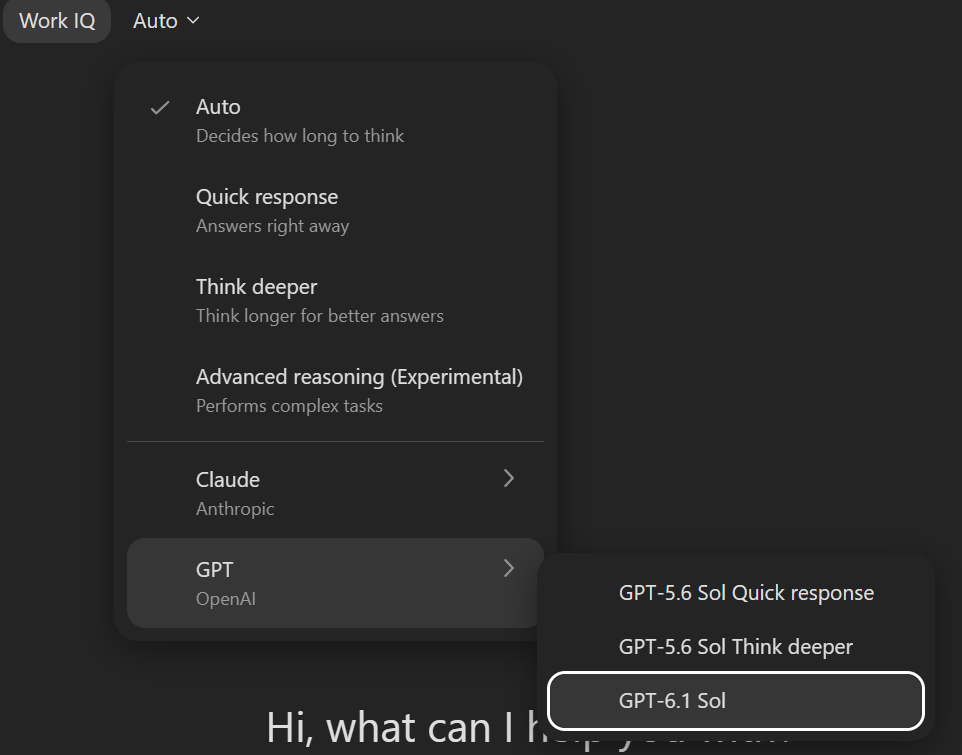
Copilot Cowork is the inverse. It already lives inside Microsoft 365, grounded in your Outlook, Teams, SharePoint, OneDrive, and calendar through Work IQ. You don’t mount anything. The model is already where your data lives.

Notice what’s missing? The mounting step. The “let me copy this folder over” step. The “hang on, I need to paste in the email thread” step.

For SMBs, that’s the whole game.

Step-by-Step: getting Copilot Cowork going

If you’re licensed for Microsoft 365 Copilot and enrolled in the Frontier preview, the start is short.

Open Cowork in Microsoft 365

Browse to m365.cloud.microsoft, sign in, and pick Cowork from the agent list. If you don’t see it, check Frontier enrolment under Copilot settings.

Describe the outcome

Skip the prompt-engineering nonsense. Talk like a person.

Read my inbox from this week, find anything tagged from a client,
draft a Friday wrap-up email summarising open items, and post a
short version into the Operations channel in Teams.

Notice what’s missing? Any reference to a file path. Any “first export your inbox to CSV” step. Cowork already has the inbox, the calendar, the Teams channels, and the SharePoint files. It just needs the instruction.

Approve the action

Cowork shows you exactly what it’s about to send, post, or schedule before it does it. You hit Send, Post, or Cancel. The full flow is in the getting started doc if you want to walk a client through it.

Set the schedule

Want it to do this every Friday at 4pm? Schedule the prompt and walk away. Copilot doesn’t get tired. Use that.

Why this actually changes behaviour

Claude Cowork is a beautifully built tool. For a developer or a data analyst on a Mac with a folder full of CSVs, it sings. I’m not knocking it.

But that’s not the SMB picture. The SMB picture is a bookkeeper, a sales lead and a director who all live inside Outlook and Teams from 8am to 6pm. Their data isn’t in a folder on their desktop. It’s in their mailbox, their channel chats, their SharePoint sites and their meeting transcripts.

“But couldn’t we just pipe our M365 data into Claude?”

You could. You’d be paying twice — once for M365, once for Claude — and you’d be exporting business data into a different vendor’s environment to do work the platform you already own can do natively.

That’s not a productivity gain. That’s a procurement problem.

Here’s the real win. Copilot Cowork sits behind the same Entra identity, the same conditional access, the same Purview labels and the same retention policies your tenant already runs. The governance story is already built. There’s no second tool to license, secure, train, or audit.

My recommendation? If you’re an MSP and you’re not walking your SMB clients through Copilot Cowork, you’re leaving value on the table — theirs and yours.

Meet people where they already are.

Cowork isn’t a second AI app for your clients to learn. It’s the work, finally getting done in the place it was always supposed to happen.

A Great Product Scales. A Great System Scales. But Leaders Multiply.

image

Most MSPs I talk to are chasing scale.

More endpoints. More seats. More tools. More revenue per engineer.

And that makes sense—up to a point.

But here’s the uncomfortable truth: products scale. Systems scale. Dashboards scale. Yet the thing that actually determines whether an MSP breaks through the next ceiling isn’t any of those.

It’s leadership.

In particular, whether you’re multiplying your people—or slowly becoming the bottleneck without realising it.

The Hidden Scaling Problem in Many MSPs

I see this pattern constantly.

The MSP owner is sharp. Knows the stack inside out. Answers client questions quickly. Fixes problems fast. Reviews every proposal. Tweaks every process.

On the surface, it looks like control. Underneath, it’s fragile.

Because when knowledge, judgement, and decision‑making live in one or two heads, the business doesn’t really scale—it stretches. And stretched systems eventually snap.

This is where Microsoft 365 Copilot genuinely changes the conversation—not because it “does AI”, but because it shifts who can think, decide, and act with confidence.

Copilot Isn’t About Speed. It’s About Trust.

When I work with MSP teams implementing Copilot properly, the biggest change isn’t faster emails or prettier documents.

It’s trust.

A junior engineer can review a complex email thread and ask Copilot to summarise what actually matters—before responding to a client.

A service manager can draft options for a tricky renewal conversation without escalating every time.

An account manager can walk into a QBR already across usage, risks, and open issues—without waiting for someone else to spoon‑feed them.

That’s not automation. That’s capability transfer.

Instead of leaders being the thinking engine for the business, Copilot becomes a quiet amplifier that helps the team think better on their own.

Systems Scale. Leaders Multiply.

Here’s the distinction I think too many MSPs miss.

Systems help people follow rules. Leaders help people exercise judgement.

Copilot sits squarely in the second category—if you use it intentionally.

I’ve seen MSPs roll it out as “another tool” and get negligible value. Everyone plays with prompts for a week, then goes back to old habits.

The MSPs getting real results are doing something different: they’re pouring into their people.

They’re teaching staff how to reason through problems using Copilot as a second brain. How to sanity‑check assumptions. How to prepare before asking for help instead of defaulting to escalation.

That’s leadership multiplication.

And it compounds faster than any new tool rollout ever will.

What This Means for MSP Owners

If you’re serious about scaling, the question isn’t “Have we deployed Copilot?”

It’s:

  • Are my people making better decisions without me?

  • Are conversations getting clearer, not noisier?

  • Are we reducing dependency on tribal knowledge?

Copilot won’t fix weak leadership. But in the hands of leaders who invest time, context, and expectation into their teams, it accelerates growth in ways traditional systems never could.

The Return Might Surprise You

Here’s what tends to happen when MSP leaders commit to developing people—not just installing tools.

Fewer interruptions. Faster client responses without panic. Better internal conversations. More confidence across the business.

And eventually, something even more valuable: space.

Space to think strategically instead of reactively. Space to focus on the business instead of being trapped inside it.

So yes—great products scale. Great systems scale.

But if you want an MSP that genuinely grows without breaking, keep pouring into your team.

That return doesn’t just surprise you.

It changes everything.