
They don’t have enough leads.
So they look around, see what the cool kids are doing…
…and start vibe marketing a solution built for the wrong problem.
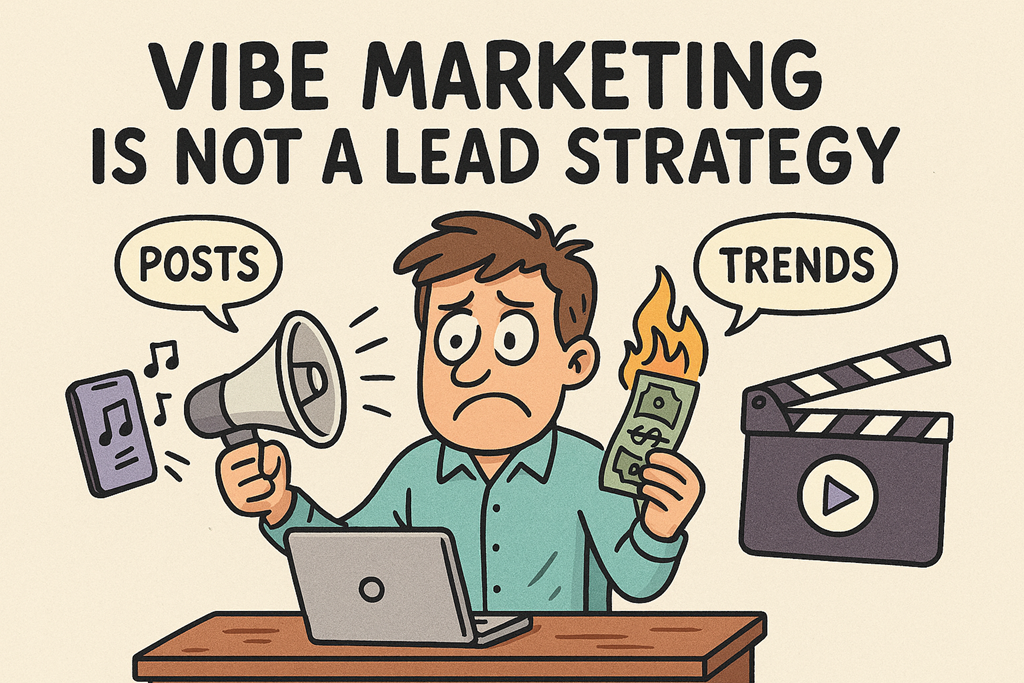
More posts.
More ads.
More trends.
More “hooks”.
And nothing changes.
You post more, and nothing happens.
Like shouting into the void.
You spend more on ads, and nothing happens.
Like burning $100 bills.
You copy viral trends and obsess over their hooks.
Like an actor practising a script.
And maybe — maybe — you get more views.
But you don’t want views.
You want leads.
You want clients.
You want money.
And that’s where vibe marketing falls apart.
The Real Problem Isn’t Marketing
Most businesses don’t actually have a marketing problem.
They have a clarity problem.
Marketing amplifies what already exists. If what exists is vague, generic, or misaligned, all you’re doing is amplifying noise.
So instead of fixing the foundations, people chase activity:
- “We need to post more”
- “We need to be on TikTok”
- “We need a personal brand”
- “We need to go viral”
No.
You need to know who you are for, what painful problem you solve, and why someone should trust you with it.
Without that, marketing is just motion without traction.
Views Are a Vanity Metric
This is the part no one likes to hear.
Views don’t pay invoices.
Likes don’t sign contracts.
Followers don’t equal revenue.
You can have thousands of impressions and still have an empty pipeline.
Why?
Because attention without intent is worthless.
If your content is designed to be liked instead of useful, you’ll attract people who are entertained — not people who are ready to buy.
This is especially true in B2B and professional services. MSPs, consultants, advisors, agencies — your buyers aren’t impulse shopping. They’re looking for confidence, competence, and clarity.
They don’t want vibes.
They want answers.
Trend Chasing Is a Trap
When you copy what’s trending without understanding why it works, you end up performing instead of positioning.
You start sounding like everyone else.
Same phrases.
Same hooks.
Same recycled advice.
And when everyone sounds the same, price becomes the only differentiator.
That’s how you end up in a race to the bottom, competing with people who are cheaper, louder, or willing to promise more than you ever should.
Good marketing isn’t about being clever.
It’s about being clear.
The Question You Should Be Asking
Instead of asking:
“What should I post?”
Ask this:
“What does my ideal client need to understand before they’re ready to buy from me?”
That’s the content that converts.
Not motivational fluff.
Not generic tips.
Not trend-based noise.
But content that:
- Names the real problem they’re avoiding
- Explains the cost of not fixing it
- Shows them a better way
- Positions you as the guide, not the hero
That’s not sexy.
It’s effective.
Marketing That Actually Produces Leads
Lead-generating marketing does a few unglamorous things very well:
- It speaks to a specific audience, not “everyone”
- It addresses a specific problem, not a broad category
- It offers a clear next step, not vague inspiration
- It builds trust over time, not hype in a moment
That might look like fewer posts.
It might look like longer posts.
It might look like content that doesn’t “perform” on social.
But it performs where it matters — in conversations, enquiries, and signed agreements.
Stop Performing. Start Positioning.
If you’re posting constantly and nothing is happening, the answer isn’t “more”.
The answer is better alignment.
Marketing isn’t about shouting louder.
It’s about being heard by the right people — at the right moment — with the right message.
So before you jump on the next trend, platform, or tactic, ask yourself:
- Do I actually understand my buyer?
- Is this solving a real problem, or just filling a content calendar?
- Would this make someone trust me enough to book a call?
If the answer is no, it’s not marketing.
It’s just vibes.
And vibes don’t close deals.


One thought on “Vibe Marketing Is Not a Lead Strategy”