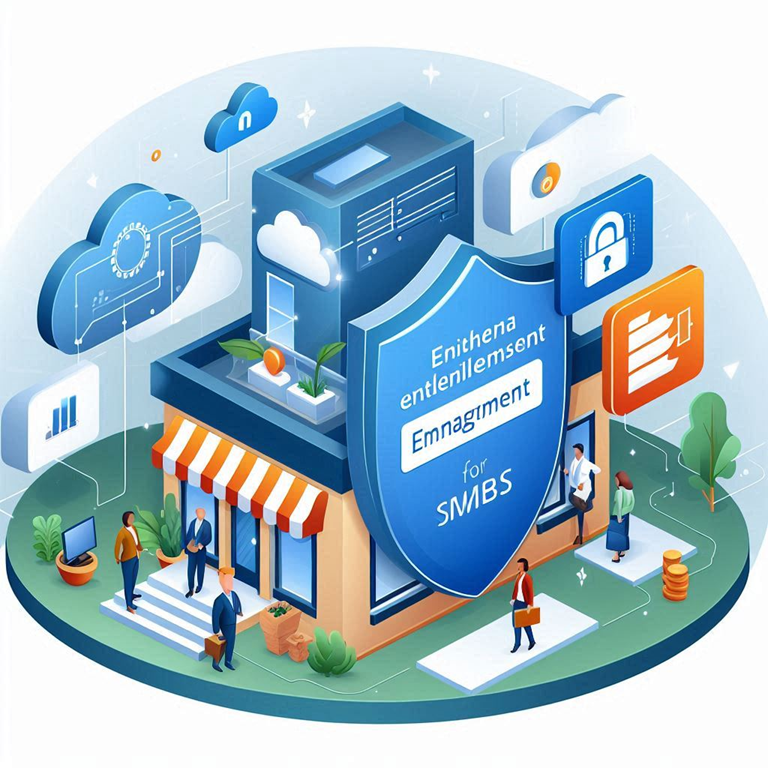
Protecting SMBs with Microsoft Defender for Cloud Apps

bp

Microsoft Defender for Cloud Apps (MDCA), formerly known as Microsoft Cloud App Security (MCAS), is a comprehensive cloud access security broker (CASB) solution designed to secure SaaS applications. It offers full-spectrum protection for cloud apps, making it a powerful tool for small and medium-sized businesses (SMBs) to safeguard their data and users in the cloud[1][4]. This report explains MDCA’s key features, how those features help protect SMBs, common threats it mitigates, best practices for implementation, and practical considerations like integration, training, costs, and limitations.


Introduction: Cloud Security Challenges for SMBs

SMBs are increasingly reliant on cloud applications, from Office 365 to third-party SaaS services, to drive productivity. However, this shift introduces new security challenges: employees might use unsanctioned apps (“Shadow IT”), sensitive data could be stored in cloud services, and cyber threats (like phishing and ransomware) target cloud accounts. Traditional perimeter security is not enough, as users access apps from anywhere and attackers constantly seek weaknesses. SMBs often have limited IT staff and resources, making a unified, easy-to-manage cloud security solution essential.

Microsoft Defender for Cloud Apps addresses these challenges by providing visibility and control over cloud applications and data[1]. It helps SMBs identify what cloud services are in use, protect sensitive information, detect threats such as account compromise or suspicious data downloads, and enforce policies to prevent leaks. As part of Microsoft’s security stack, MDCA integrates with other tools to provide a holistic defense without the need for a large security team[1]. In the following sections, we detail the capabilities of MDCA and how an SMB can leverage the full version of the product to significantly enhance their security posture.


Key Features of Microsoft Defender for Cloud Apps

Microsoft Defender for Cloud Apps delivers multiple layers of protection across different areas of cloud security. Its key features include:

  • Cloud Access Security Broker (CASB) Functions: MDCA provides fundamental CASB capabilities such as Shadow IT discovery, visibility into cloud app usage, and protection against app-based threats across your cloud environment[1]. For example, it can analyse network logs or endpoint telemetry to find all cloud services users are accessing and assess their risk. It also offers information protection and compliance assessments for discovered apps[1], so you can see if an app meets security and regulatory standards.

  • SaaS Security Posture Management (SSPM): MDCA includes SSPM features that help assess and improve the configuration security of your SaaS apps[1]. It identifies misconfigurations and provides recommendations (based on industry standards like CIS benchmarks) to strengthen each connected application’s settings[1]. These recommendations surface in tools like Microsoft Secure Score, allowing you to track and remediate configuration risks across apps (e.g., ensuring MFA is enabled on all accounts in Salesforce or ServiceNow)[3].

  • Advanced Threat Protection (ATP) and Anomaly Detection: As part of Microsoft’s extended detection and response (XDR) ecosystem, MDCA offers user and entity behavior analytics (UEBA) and machine learning to spot unusual or risky activities in cloud apps[2]. It comes with built-in anomaly detection policies that can trigger alerts for suspicious behaviors – for example, impossible travel logins (a user account logging in from two distant locations in a short time), mass downloads of data, ransomware-like encryption activities, or a sudden spike in file deletions[3][2]. These help detect account compromises, insider threats, or malware outbreaks in real time. MDCA’s threat protection extends the full kill chain: it correlates signals with other Microsoft security products to detect multi-stage attacks and provides incident-level visibility and investigation tools via Microsoft 365 Defender (XDR)[1].

  • App-to-App Protection (OAuth App Governance): Modern attacks often exploit third-party OAuth integrations – for instance, a malicious app that a user unknowingly grants access to their Office 365 data. MDCA includes App Governance capabilities to monitor and control OAuth-enabled apps that have access to your data[1]. It identifies all apps your users have consented to, evaluates their permissions and behavior, and lets you set policies (e.g. alert if an app with high privileges is granted by many users)[2]. If an OAuth app is deemed risky or malicious, you can ban or revoke it to prevent data access[2]. This feature closes a security gap by ensuring inter-app data exchange is governed and suspicious apps are dealt with[1].

  • Information Protection and Data Loss Prevention (DLP): MDCA helps protect sensitive information in the cloud. It can scan files stored in connected SaaS apps (like OneDrive, SharePoint, Box, Dropbox, etc.) for sensitive data and apply labels or enforce policies. Through integration with Microsoft Purview Information Protection, MDCA can automatically detect classified data (using a broad set of built-in sensitive info types) and even apply or respect sensitivity labels on documents[1]. For example, if a file containing credit card numbers is found in a cloud drive, MDCA can flag it or apply a “Confidential” label and encryption automatically[1][2]. With DLP policies, MDCA can also prevent data leaks – e.g. by alerting or blocking when a user tries to share a sensitive file externally or download it to an unmanaged device[2]. Governance actions allow automatic responses like removing external collaborators from a confidential file or quarantining risky files[1][2].

  • Real-time Access Control (Conditional Access App Control): In conjunction with Microsoft Entra ID (Azure AD) conditional access, MDCA can enforce session controls on cloud apps. This means you can allow users to access an app but monitor or restrict specific activities in real time – for instance, blocking the download of a sensitive file when the user is on an unmanaged device, while still allowing them read access via web[2]. Adaptive access policies can also limit or tag “risky sessions” (like from non-compliant devices or unusual locations) and apply additional scrutiny or restrictions in those sessions[1]. (Note: Conditional Access App Control requires Azure AD Premium P1, which we discuss under licensing.)

All these features work together to give SMBs full visibility and control over their cloud environment: discovering what apps are in use, securing configurations, protecting data, and detecting/responding to threats. Importantly, MDCA is highly integrative – it feeds into and draws from Microsoft’s broader security platform, which is covered next.


Integration with Microsoft Security and Compliance Tools

One of the biggest advantages of MDCA for an SMB is its seamless integration with other Microsoft security products and existing infrastructure:

  • Microsoft 365 Defender (XDR) Integration: MDCA is built into the Microsoft 365 Defender XDR suite, which means alerts from cloud apps are correlated with signals from email, endpoints, identities, and more[1]. For example, if a user’s email was phished and then that account was used to download data from SharePoint, the system will correlate these events into a single incident. This gives the security team a complete end-to-end view of an attack across systems (email → device → cloud app) with full kill-chain visibility[1]. In the Microsoft 365 Defender portal, MDCA alerts and investigations are unified with other alerts, enabling powerful cross-product response actions (like disabling a user account or wiping a device) from one place[1].

  • Microsoft Defender for Endpoint (MDE) Integration: By integrating MDCA with Defender for Endpoint (which many SMBs use for device protection), you extend cloud app discovery beyond corporate networks. Defender for Endpoint can automatically feed MDCA with information about cloud app traffic directly from the endpoints, even when machines are used off-network[2]. This means an SMB user working from home or a café is still contributing to Shadow IT discovery – MDCA will see what apps they use without relying on firewall logs. This integration also ties user/device identity to cloud usage, so you can identify which user and device is accessing a risky app and investigate in Endpoint or Cloud Apps portals accordingly[2].

  • Azure AD / Microsoft Entra ID Integration: MDCA uses Azure AD’s identity framework to enforce policies. With Azure AD Conditional Access, you can route sessions through MDCA for monitoring/control (Conditional Access App Control). You can also leverage Azure AD sign-in risk signals (like risky user detected by Entra ID Protection) in MDCA policy decisions. Conversely, MDCA can suspend or flag a user as compromised in Azure AD as a response to certain alerts. (For instance, a policy can automatically suspend a user account in Azure AD if MDCA detects that the user’s credentials are likely stolen, stopping further damage.)

  • Microsoft Purview Compliance Integration: As mentioned, MDCA integrates with Purview Information Protection. SMBs that have data labeling or Data Loss Prevention (DLP) policies via Microsoft 365 compliance can extend those to third-party apps through MDCA. For example, if you’ve defined sensitive info types (like personal data for GDPR) in Purview, MDCA can recognize those in files across your cloud services[1][2]. MDCA also feeds into Microsoft Secure Score (security posture rating) for apps: any misconfiguration or risk it finds in connected apps can reflect in your Secure Score, giving you a centralized metric to track improvements[3].

  • Microsoft Sentinel and Other Tools: For SMBs with a SIEM like Microsoft Sentinel, MDCA can send its alerts and logs to it for centralized logging and long-term retention. Also, MDCA shares data with services like Microsoft Defender for Cloud (infrastructure security) and Entra Permissions Management to support a broader Zero Trust approach across cloud resources[7].

  • Out-of-the-Box Policies and Templates: MDCA comes with many built-in policy templates and analytics (e.g., templates for detecting “Mass download of cloud data” or “OAuth app with suspicious permissions”). These are maintained by Microsoft and use intelligence from across the ecosystem. By using these or enabling Defender’s out-of-box anomaly detections, SMBs benefit from Microsoft’s extensive threat research without heavy configuration. Integration with Security Copilot (an AI assistant for security, as hinted on the product page) is emerging to help analyse incidents at machine speed.

Integration example: If an SMB user’s account is compromised via phishing, Microsoft’s integrated approach shines. Suppose the attacker logs into the user’s Office 365 and starts downloading a large number of files from OneDrive and sets up email forwarding. MDCA will detect unusual mass downloads and the creation of suspicious mailbox rules, alerting you to a possible Business Email Compromise (BEC) incident[3]. At the same time, Defender for Office 365 would catch the phishing email, and Azure AD might flag the login as risky. In the XDR portal, these pieces come together, and the admin could directly trigger a response – e.g. forcing a password reset, suspending the account, or removing the malicious OAuth app that was granted, all from one unified interface[1].

For an SMB, this tight integration means less management overhead and a more cohesive defense, which is critical when IT teams are small. You are leveraging a whole security ecosystem rather than a standalone tool, thereby increasing effectiveness against complex multi-vector attacks.


Common Security Threats Faced by SMBs (and How MDCA Mitigates Them)

SMBs face many of the same cloud security threats as larger enterprises, but often with fewer defenses in place. Here are common threats in cloud app usage for SMBs and how Microsoft Defender for Cloud Apps helps address each:

  • Shadow IT (Unsanctioned App Usage): Employees may use cloud services (file sharing, messaging, SaaS tools) without IT’s approval, potentially putting corporate data in unmanaged, insecure apps. Risk: Data leakage and non-compliance when using unvetted apps. MDCA Solution: Shadow IT Discovery continuously inventories cloud app use by analyzing traffic logs or endpoint telemetry[2]. It maintains a catalog of over 25,000 apps with 90+ risk factors (security, compliance certifications, GDPR stance, etc.) to assess each app[1]. MDCA gives each discovered app a risk score, so SMBs can quickly identify risky services in use[1]. With this visibility, you can decide which apps to sanction or block. MDCA lets you tag apps as “Approved” or “Unsanctioned” and even export block scripts for your firewall or proxy to automatically block unsanctioned apps[2]. This helps an SMB eliminate risky Shadow IT or guide users toward safer alternatives.

  • Data Leakage and Oversharing: Cloud storage and collaboration tools make it easy to share data – sometimes too easy. Employees might accidentally share a confidential document via a public link or upload sensitive files to personal cloud drives. Risk: Sensitive information (customer data, financials, IP) could be exposed to the public or unauthorized parties, leading to compliance violations. MDCA Solution: Data Loss Prevention (DLP) and file policies monitor data at rest and in transit. MDCA scans files in connected apps for sensitive content or labels[1][2]. It can automatically flag or remove external sharing on files containing regulated data. For example, you can set a policy to alert and revoke external access if a file labeled “Confidential” is shared outside the company[2]. MDCA’s real-time controls can block downloads of sensitive files to unmanaged devices, preventing an employee from, say, saving a client list to a personal laptop[2]. By containing data within approved channels and logging all file activities, MDCA helps SMBs prevent leaks and meet compliance (like HIPAA or GDPR) requirements[1][2].

  • Account Compromise and Phishing Attacks: Phishing is a top threat to SMBs – if a user is tricked into giving up credentials, an attacker can log into cloud services to steal data or cause damage. Risk: Unauthorized access to email, files, or SaaS apps leading to data theft, fraud (as in Business Email Compromise scams), or service misuse. MDCA Solution: MDCA’s anomaly detection will notice when a user behaves abnormally post-compromise. For instance, it can detect sign-ins from unusual locations or impossible travel (e.g., user logs in from New York and 30 minutes later from Russia)[2], mass file downloads or deletions (a hallmark of data theft or ransomware)[3], and suspicious modifications like an abnormal spike in mailbox forwarding rules[3]. When these anomalies trigger alerts, security can respond quickly – or even automatically. MDCA allows policies to auto-remediate some issues: you could configure it to suspend a user account upon certain high-risk alerts, blocking an attacker’s access while an investigation begins. Additionally, MDCA’s integration with identity protection means confirming a user as compromised in MDCA can feed into Azure AD to enforce password resets or MFA for that account. By providing early warning of account takeover and tools to contain it, MDCA dramatically reduces the damage a phished account can cause.

  • Insider Threats and Misuse: Not all threats come from outside. A disgruntled or careless employee might attempt to exfiltrate data (for example, download all client records before leaving the company) or access data they shouldn’t. Risk: Internal data theft or policy violations that could go unnoticed without monitoring. MDCA Solution: Through its activity policies and UEBA, MDCA monitors user activities in cloud apps and can alert on defined patterns or anomalies for insiders. You can set activity policies for things like “download of >500 files in an hour” or “user viewed >100 sensitive files” to catch suspicious behavior. MDCA also uses machine learning to learn normal user patterns and will flag anomalies per user – catching things like a user suddenly accessing files they never touched before or performing administrative actions beyond their normal scope[2][2]. Every action in connected apps is recorded in an audit log. If an incident is suspected, the audit trail can be reviewed to see exactly which files or emails an employee accessed or sent[2]. MDCA thus provides oversight that can deter malicious insiders and quickly uncover internal misuse. Governance actions like file quarantine or account suspension can again mitigate damage if an insider is detected in the act.

  • Malicious OAuth Apps (“Consent Phishing”): Attackers may trick users into authorizing a third-party app that requests extensive permissions (read emails, files, etc.). Once consented, the app acts as a backdoor to data without needing the user’s password. Risk: A trusted but malicious app siphons data or performs actions on behalf of the user (e.g., emailing all customers). MDCA Solution: The App Governance feature keeps watch on OAuth apps. It logs all OAuth app consents in the tenant (for Microsoft 365 and other supported services) and highlights those with risky permissions or unusual usage patterns[2]. You can create OAuth app policies – for example, alert if an app with Mail.ReadWrite permission is granted by over 10 users, or if an app’s usage suddenly spikes across the org[2]. If an application is deemed malicious or unnecessary, MDCA allows you to revoke its access or ban it entirely, preventing any further OAuth token use[2]. This protects SMBs from the growing threat of consent phishing, which might otherwise slip past traditional email filters (since no credential is stolen, the abuse happens via an allowed channel). By maintaining “app hygiene” – monitoring unused or high-permission apps – MDCA helps ensure only trustworthy applications integrate with your environment[1].

  • Compliance Violations and Regulatory Risks: SMBs in regulated industries (finance, healthcare, etc.) or those handling personal data have to adhere to standards (GDPR, PCI DSS, etc.). Cloud usage can introduce compliance issues, like storing data in regions disallowed by law or using apps that don’t meet security standards. Risk: Fines, legal penalties, or reputational damage from data mishandling. MDCA Solution: Compliance is woven into MDCA’s discovery and protection capabilities. The app catalog highlights which discovered apps have compliance certifications (e.g., ISO 27001, SOC 2, HIPAA) and which don’t, so you can avoid non-compliant services[1]. MDCA’s SaaS security posture management ensures that your sanctioned apps are configured in line with best practices – for example, requiring strong passwords and MFA, which are often compliance mandates[3]. Its DLP policies help enforce compliance by preventing certain data from being stored or shared in ways that violate regulations (for instance, blocking the sharing of EU customer personal data to a third-party app not approved for GDPR)[2][2]. MDCA also provides audit records and reports that can be useful for compliance audits, demonstrating that controls are in place and monitored. By using MDCA, an SMB can more easily meet the security controls expected by regulations and demonstrate due diligence in protecting sensitive data.

In summary, MDCA functions as an ever-vigilant security layer for cloud apps, directly addressing many top threats to SMBs. Whether the risk comes from external attackers or internal accidents, MDCA’s mix of prevention (policies to reduce risk), detection (alerts on anomalies), and response (automated actions and investigation tools) significantly enhances an SMB’s ability to operate safely in the cloud.


Best Practices for Implementing Defender for Cloud Apps in an SMB

To get the most out of Microsoft Defender for Cloud Apps, SMBs should follow best practices that cover setup, policy configuration, and ongoing operations. Based on Microsoft’s guidance and real-world experience, here are key best practices for deploying MDCA in an SMB environment:

1. Deploy in Phases and Prioritise Key Apps

Start with critical apps and gradual rollout: Begin by connecting your most important cloud applications (like Microsoft 365 services) to MDCA for immediate visibility[2]. Microsoft 365 (which includes SharePoint, OneDrive, Teams, Exchange, etc.) should be connected first – this is usually a one-click connection since MDCA is natively integrated[2]. Then, connect other major SaaS apps your business uses (Salesforce, Box, Dropbox, Google Workspace, etc.) using MDCA’s app connectors[2]. By onboarding apps one by one, you can focus on tuning policies for each and avoid being overwhelmed. Initially, run MDCA in an audit/monitoring mode – let it observe and report activity before you enforce strict controls. This phased approach lets you baseline “normal” usage and identify what policies make sense.

Tip: Check Microsoft’s list of supported app connectors (via the “Connect apps” page) to see all third-party apps you can integrate via API[2]. If an important app isn’t natively supported, you can still use generic controls (like discovery and reverse proxy) to cover it, but prioritize official connectors for deeper insight.

2. Enable Shadow IT Discovery with Endpoint Integration

Gain visibility into all cloud services in use: As an SMB, you may not have a fancy network proxy – but if you use Defender for Endpoint on your PCs, leverage it for app discovery. By enabling the integration, every device will report cloud app usage to MDCA, even off-network[2]. This is a best practice because it provides continuous Shadow IT monitoring without requiring manual log uploads from firewalls. In MDCA, enable “Automatic log upload” or continuous reports for discovery[6]. Review the Cloud Discovery dashboard to identify unsanctioned apps and create App Discovery policies: for example, get alerted when a new app starts trending in usage or if users flock to an app with a poor risk score[2]. After an initial discovery period, tag the apps: mark trusted services as “Sanctioned” and unapproved ones as “Unsanctioned”[2]. You can then enforce this by blocking unsanctioned apps at your firewall or via proxy; MDCA helps by providing block scripts or integrations for certain devices[2]. This process ensures no cloud tool is flying under IT’s radar, which is crucial for security and compliance.

3. Implement Strong Governance Policies

Use MDCA policies to enforce safe behavior: MDCA offers various policy types (activity policies, file policies, session policies, anomaly policies, OAuth app policies, etc.). As an SMB, you might start with template policies and then refine. Key policies to implement include:

  • Access and Session Policies: If you have Azure AD Premium, set up Conditional Access App Control for high-risk scenarios. For instance, create a session policy to block downloads of sensitive files on unmanaged devices[2]. Also consider policies to monitor user sessions from risky IPs or countries (you can configure policies to alert on any login from a foreign country your business doesn’t operate in)[2]. These real-time policies can dramatically reduce the risk of data loss from unsecured networks.

  • File Policies: Deploy DLP-oriented file policies. For example, policy to detect externally shared files containing sensitive info (like those matching credit card or SSN patterns)[2]. Another is to enforce classification: e.g., if a file labeled “Confidential” is shared externally, automatically revoke the external sharing[2]. Also enable malware detection policies – MDCA can integrate with anti-malware engines to detect malicious files in your cloud storages (quarantining infected files if found).

  • Activity Policies: Define policies for things like mass download or delete (to catch possible data theft or ransomware), admin activities (alert if an admin creates a new app API token, as that could be abused), or login anomalies if you don’t have anomaly detection (e.g., user logging in during odd hours or from new ISP). MDCA’s templates can help here – you can adapt templates such as “Impossible travel” or “Mass download” to your environment[3]. Activity policies can even notify the user when triggered (“You downloaded 200 files; if this was not intended, security has been alerted”) which can deter risky behavior.

  • OAuth App Policies: Use these to manage third-party app usage. A suggested policy is: alert if any OAuth app with high permissions is granted by more than X users[2], or if a single user grants permissions to an unusually large number of apps. This helps spot malicious apps quickly. If you see an app that looks suspicious or isn’t needed, you can use MDCA to revoke its access for all users[2].

Best Practice: Regularly review and tune anomaly detection policies. Out-of-the-box anomalies are useful, but adjust their sensitivity to suit your SMB (you might lower sensitivity to reduce false alarms if you have frequent travelers, for instance)[2]. Also configure IP address ranges (like label your office IP, VPN IPs, etc., as “corporate”) in MDCA settings[2]. This will improve alert accuracy (for example, “impossible travel” logic will then know what is a familiar location vs. not) and reduce noise from known good activities.

4. Protect Sensitive Data with Classification and DLP

Integrate information protection from the start: If your SMB deals with any sensitive or regulated data, integrate MDCA with Microsoft Purview Information Protection (formerly Azure Information Protection) right away[2]. This allows MDCA to recognize your sensitivity labels (Confidential, Secret, etc.) and apply them. Turn on automatic scanning and labeling for files in cloud apps[2]. This way, as soon as MDCA is connected to, say, your SharePoint or Box, it will detect files that contain things like credit card numbers or personal identifiers and can optionally apply a label or encryption according to your policies[1]. Even without formal labels, configure file content scanning in MDCA by enabling file monitoring for all connected apps[6] and setting up policies for known sensitive content (you can use built-in data types like financial info, health info, etc.).

Enforce collaboration controls: Beyond just identifying sensitive data, use MDCA to control sharing. A best practice is to limit external sharing of sensitive files using file policies – e.g., auto-remove external users if they were invited to a SharePoint file that contains confidential data[2]. You can also create policies to catch files being shared to personal email domains (like gmail.com, yahoo.com) which often indicates someone emailing data to themselves[2]. The goal is to reduce the chance that an employee can accidentally or intentionally take sensitive data out of the company.

Finally, educate your users about data labeling and the new controls. If employees understand that MDCA will, for instance, block them from downloading certain files on a personal device, they are more likely to use the approved, secure methods (like viewing via web or requesting a one-time approval). Pairing technology with awareness ensures that security doesn’t stifle productivity.

5. Use Real-Time Controls and Zero Trust Principles

Adopt a Zero Trust mindset for cloud app access: never fully trust a login, especially if conditions are unusual. With MDCA, enforce Conditional Access policies that route risky sessions through MDCA for monitoring[2]. For example, you might allow a user to access CRM data from any device, but if the device is not Azure AD compliant or the location is unknown, require session monitoring. In practice, this translates to using Conditional Access App Control in “Monitor” or “Block” mode for those scenarios[2][2]. It’s a best practice to block downloads of classified data in untrusted sessions – MDCA can allow the user to view a sensitive document in a web viewer but prevent the actual download if they’re not on a corporate device[2]. This granular control embodies Zero Trust (verify explicitly, and give least privileged access needed).

Also, consider enabling user risk mitigation: MDCA can tie into Azure AD Identity Protection, where if a user is flagged as high-risk, you can apply stricter controls or even block their cloud app sessions until they do MFA or password reset. All these help contain threats like stolen tokens or cookies – if something seems off, MDCA can gate what the user can do.

6. Monitor Alerts and Use the Audit Log for Incident Response

Define a process for reviewing MDCA alerts daily. Even with tuning, MDCA will generate alerts that need attention. Smaller organizations should determine who is responsible for cloud security alerts (it might be the IT admin or a security officer). Use the Microsoft 365 Defender portal as a one-stop to watch incidents and alerts across MDCA and other workloads – this unified queue can simplify your workflow[1]. When an alert comes in (e.g., “Impossible travel” or “Mass download detected”), investigate using the MDCA console’s investigation tools. MDCA provides an Activity log (audit trail) where you can filter by user, file, app, etc., to see the sequence of actions leading up to an alert[2]. For instance, if you get an alert about a suspicious login, you can quickly search the audit log to see what the user did after that login (uploaded files? changed sharing settings? etc.)[2].

Take advantage of governance actions to respond: MDCA lets you directly suspend users, terminate sessions, or remove file shares from within the portal. A best practice is to integrate MDCA with your incident response plan. For a given type of alert, decide in advance: will we just monitor, or immediately suspend the account? Many SMBs choose to have MDCA automatically suspend a user or require a sign-in reauthentication if a high-severity anomaly (like impossible travel) is detected, because it’s better to be briefly locked out than to be an entry point for attackers. You can enable such automatic responses in policy configurations (e.g., an activity policy can suspend a user as a response action). Make sure to document these and inform your team.

Finally, use the audit logs as a forensic tool. If (hopefully not) you suffer a security incident, MDCA’s logs of cloud activities can be invaluable in piecing together what happened – often, they will show exactly which files were touched or which unusual actions occurred around the incident time. MDCA retains activity logs for up to 180 days by default[7]. For longer retention, integrate with a SIEM. Regularly exporting critical logs or connecting to Sentinel can be a good practice if you need to keep data for compliance.

7. Regularly Review Security Posture and Compliance

Use MDCA to continuously assess and improve your security posture: In the MDCA portal (or M365 Defender Secure Score), check the secure configuration recommendations for each connected app. MDCA will list posture improvement suggestions (for example, “Salesforce: Disable legacy authentication methods” or “Dropbox: Enable personal account prevention”) based on industry best practices[3]. SMBs should treat these like a checklist and remediate as many as possible, as they directly reduce risk. Many SMBs find it useful to assign an admin the task of improving Secure Score by a certain amount each month using these recommendations.

On the compliance side, if your business has to follow regulations, MDCA’s discovered app list can be reviewed to ensure no one is using an app that lacks required compliance. Enforce that only approved, compliant apps are allowed (and mark them as such in MDCA). Also, periodically review reports: MDCA offers reports like App trends, File violations, etc. For instance, you might run a monthly report of all external file sharing events detected, to verify they were legitimate business needs.

By following these best practices – gradual deployment, comprehensive monitoring, strong policy enforcement, and continuous tuning – SMBs can successfully implement Defender for Cloud Apps to dramatically enhance their cloud security while minimising disruption.


Deployment Steps for SMBs: How to Get Started with MDCA

Implementing Microsoft Defender for Cloud Apps in an SMB environment can be straightforward if approached systematically. Here is a step-by-step guide to deploying the full version of MDCA:

Step 1: Obtain the Necessary Licenses
Ensure you have the appropriate licensing for MDCA. Microsoft Defender for Cloud Apps is not included in all Microsoft 365 plans by default. Each user you want to protect needs a MDCA license
[8]. MDCA is included in Microsoft 365 E5 and certain bundles (like Microsoft 365 E5 Security or EMS E5), or it can be purchased as a standalone add-on[8][4]. For many SMBs who use Microsoft 365 Business Premium (which is like E3 level), note that Business Premium includes only limited Cloud App Security (discovery), not the full MDCA features. To get the full version, you may need to add the **“Microsoft Defender for Cloud Apps (standalone)” license per user or upgrade to a plan that includes it[8][4]. Once you have licenses assigned, MDCA will become available in your tenant. (You can get a free trial via a Microsoft 365 E5 trial if you want to test first[6].)

Step 2: Access the MDCA Portal
With licensing in place, access MDCA through the Microsoft 365 Defender portal. Navigate to the “Cloud Apps” section of the portal—this is the MDCA interface
[6]. (Alternatively, use the standalone portal link if provided, but Microsoft is unifying it under the Defender portal.) Verify that MDCA is active for your tenant by checking Settings > Cloud Apps > About, which shows your MDCA tenant details and region[7].

Step 3: Connect Core Cloud Apps (App Connectors)
Set up App Connectors for the cloud services you want to monitor and protect. Start with Microsoft 365: In the MDCA portal, go to Settings > Cloud Apps > App Connectors, then click + Connect an app and select Office 365 (or “Microsoft 365”)
[6][6]. Follow the prompts—since you’re likely already logged in as an admin, this is often just a matter of granting the consent. Once connected, MDCA will begin ingesting activity logs from Exchange, SharePoint, OneDrive, Teams, etc., giving you visibility into all those services[2].

Next, connect other third-party apps your business uses. Common ones are Salesforce, Google Workspace, ServiceNow, Box, Dropbox, Slack, etc. Each connector might require an admin account or API token for that service. MDCA’s Connect Apps wizard will guide you through the needed steps for each (often linking out to documentation for the app). By connecting apps, you gain deep visibility into user activities, files, and settings for those apps, and can start to apply policies to them[6][6]. Note: There may be API call limits on apps (for example, some services limit how fast MDCA can pull data); the portal will warn if you approach those[6].

Step 4: Enable Policies and Governance Actions
Once apps are connected, configure your initial set of policies. It’s wise to begin with out-of-the-box Policy Templates that align to common scenarios (MDCA provides templates for things like “Mass download by a single user”, “Daily upload anomaly”, “Suspicious OAuth app” etc.)
[6]. In the portal, go to Policies > Policy Templates, pick a relevant template, and click the + to create your own policy from it[6]. Customize the filters or threshold as needed, and set governance actions (like alerting, notifying user, or suspending user) appropriate for the severity[6]. Additionally, go to Policies > Policy Management to see all active policies and adjust as needed[6]. We recommend enabling at least: a few anomaly detection policies (MDCA’s built-in ones are auto-enabled – ensure they’re on), a couple of activity policies for admin and sign-in events, and a few file policies for DLP.

Don’t forget to configure governance action settings globally: e.g., set up email notifications so that if an alert triggers, your admins get an email (MDCA can send alert notifications to specified email or to Teams). Under Settings > Cloud Apps > Alerts, you can set who gets notified for alerts and how often. Also, in Settings, there is a section to configure IP address ranges – input your corporate IPs here as “Internal” etc., to aid in location-based policies[2].

Step 5: Set Up Cloud Discovery
For Shadow IT discovery, decide how to feed MDCA logs of internet usage: either via Defender for Endpoint integration or by uploading firewall/proxy logs. If you have devices with Defender for Endpoint, simply enable the integration toggle: in the MDCA settings, find the option to integrate with Defender for Endpoint or in the Defender for Endpoint settings, allow data to be shared with MDCA
[6][6]. This will automatically start sending cloud app data from endpoints. If not using Defender for Endpoint, you can configure automatic log upload from your network devices: MDCA supports parsing many common firewall logs (Cisco, Palo Alto, etc.). Set up a Log Collector (a lightweight VM or agent that uploads logs to MDCA) as per documentation[6]. You can also run one-time snapshot reports by uploading a batch of logs manually via the portal[6]. After enabling discovery, verify it’s working by checking the Cloud Discovery Dashboard, which should start showing discovered apps and users.

Step 6: Fine-Tune and Test
With connectors and initial policies in place, let MDCA run for a short period to collect data. Use this time to fine-tune: Are you getting too many alerts? Adjust policy sensitivity or scope. Are some known good activities being flagged? Add them to allowed lists or lower thresholds. Test critical controls: e.g., try downloading a labeled confidential document from an unmanaged device to see if your session policy blocks it as intended. Try installing a test OAuth app to see if your OAuth policy triggers. It’s better to identify needed adjustments early.

Make sure the integration pieces are working: check the Microsoft 365 Defender Incidents and see if MDCA alerts are part of those incidents as expected. Ensure admins receive email notifications for high-severity alerts.

Step 7: Train Your Team and Go Live
Educate both IT staff and end users about MDCA. Admin/IT Training: Administrators should know how to navigate the MDCA portal, interpret alerts, and take actions. Microsoft provides a “Defender for Cloud Apps Ninja Training” and Microsoft Learn modules which are excellent for getting up to speed on all features. Investing a few hours in these trainings can significantly help your IT team utilize MDCA effectively. User Awareness: Let employees know that a cloud security solution is in place – not to scare them, but to encourage good practices. For instance, inform them that certain risky activities (mass downloads, trying to use unapproved apps) may be monitored or blocked. Promote a list of “approved cloud apps” and ask users to stick to those for work data. With transparency, users are less likely to feel “spied on” and more likely to cooperate with security policies.

Now, start enforcing policies and treat alerts seriously. As you fine-tune over time, you’ll strike a balance where MDCA operates with high efficacy and minimal annoyance.

Step 8: Ongoing Management
Post-deployment, make MDCA management a routine. Review alerts daily or weekly depending on volume. Update policies as your business or threats change (e.g., if you adopt a new SaaS tool, add appropriate policies; if a certain alert is always a false positive, adjust it). Onboard new apps whenever your users start using them – MDCA discovery might reveal a new popular app, at which point you should evaluate it and, if it’s to be allowed, connect it via API for full insight. Keep an eye on new features: Microsoft regularly updates MDCA with new capabilities (for example, recent addition of “secure use of generative AI apps” is mentioned in docs
[4]). Applying updates and improvements will ensure your SMB gets maximum protection value over time.

By following these steps, an SMB can methodically deploy Microsoft Defender for Cloud Apps and quickly start reaping its benefits in securing their cloud footprint.


Training Staff for Effective Use of Defender for Cloud Apps

Technology alone isn’t enough – people and process are key to a successful security solution. For SMBs, it’s essential that both IT administrators and end-users are appropriately trained to use and live with Microsoft Defender for Cloud Apps:

  • Admin and IT Staff Training: The individuals responsible for security or IT in your organization should become proficient in MDCA. Microsoft offers comprehensive training resources such as the Microsoft Defender for Cloud Apps Ninja Training (a multi-part blog and video series) and interactive Microsoft Learn courses. These cover everything from basic concepts to advanced configurations. Encourage your IT staff to complete these trainings to gain confidence in tasks like creating policies, investigating alerts, and integrating MDCA with other tools. Additionally, consider scenario-based exercises: e.g., have them simulate a response to an alert (like a mock “impossible travel” incident) to practice using the MDCA portal for investigation and taking action (suspending a user or file quarantine). Regular knowledge shares or refresher sessions are useful, since MDCA’s features evolve.

  • Security Operations Process: If you have a security team or even a single dedicated security admin, establish clear procedures on handling MDCA alerts. For example, define which types of alerts require immediate action (e.g., a “OAuth app consented by 50 users” might warrant urgent response to remove it), and which can be just documented and monitored. Ensure the team knows how to escalate issues found by MDCA – e.g., if MDCA finds evidence of a breach, what’s the incident response plan? Having run-books that include steps to take in MDCA (like “if malware found in Box, use MDCA to quarantine the file and then notify affected user”) will streamline responses under pressure.

  • End-User Awareness and Training: While end-users don’t interact with MDCA directly, their actions trigger its policies. Educating users on acceptable cloud usage and the security measures in place will improve compliance and reduce false alarms. Make sure employees know which cloud apps are approved and that using unapproved ones could be detected and blocked. If you’ve enabled things like session monitoring, you might occasionally have MDCA display a notification to a user (for example, if a policy is set to notify on certain actions). Inform users that these messages are part of keeping company data safe, not personal criticism. Provide tips like: “Avoid uploading work documents to personal cloud drives – use OneDrive or approved storage where we have security protections.” Emphasize that MDCA is there to protect both the company and them (preventing their accounts from abuse, etc.). You could include a short segment on cloud security in your regular security awareness training, highlighting phishing prevention (which ties to MDCA catching account compromise) and safe data handling.

  • Leverage Reports for Feedback: MDCA can also be used in training by showing the workforce aggregated insights. For instance, IT can share, “Last quarter, we discovered 50 unsanctioned cloud apps in use and have reduced that to 5 now. This improves our security and compliance.” Celebrating improvements can reinforce good behavior. Conversely, if MDCA logs show risky trends (like many confidential files shared externally), you can address this trend in a company meeting (no need to call out individuals – focus on the behavior to correct, e.g., “we’ve seen too many external sharing events, please double-check before sharing if it’s necessary and allowed”).

  • Continuous Learning: The threat landscape changes, and so will MDCA capabilities. Make it a practice for your IT team to stay updated via Microsoft security blogs or community webinars. Microsoft often publishes case studies and tips for Defender for Cloud Apps – reading those can give your team new ideas to utilize MDCA more effectively. If feasible, attend security conferences or webcasts related to cloud security or Microsoft 365 security; many are tailored for IT pros at smaller organizations.

By investing in training and awareness, an SMB ensures that MDCA isn’t a black box but a well-understood tool. A knowledgeable team will harness MDCA’s full potential, responding quickly to incidents and fine-tuning the system proactively. Likewise, an informed user base will be less likely to trigger security incidents, making your entire cloud environment safer.


Costs and Licensing Considerations for SMBs

When planning for the full version of Microsoft Defender for Cloud Apps, SMBs should understand the licensing model and associated costs:

  • Licensing Model: MDCA is licensed on a per-user basis (i.e., each user whose activities you want to monitor/protect must have a license)[8]. There isn’t a site-wide or server license; it’s tied to users. This means if you have 100 employees using cloud apps, you’d license all 100. In an SMB context, you might opt to license only certain users (for example, start with those handling the most sensitive data), but for comprehensive protection it’s best to cover everyone.

  • Included in Microsoft 365 Plans: The full MDCA is included in Microsoft 365 E5 (top-tier enterprise), and also in some add-on bundles:

    • Microsoft 365 E5 Security add-on (this is an add-on to, say, M365 E3; MDCA is part of it)[8].

    • Enterprise Mobility + Security (EMS) E5 (the advanced security suite)[4].

    • Certain industry or government SKUs (A5 for education, G5 for government) also include it[4].

    • Microsoft 365 Business Premium, aimed at SMBs, does not include full MDCA; it includes only a subset called “Cloud App Security Discovery” (Shadow IT reporting)[5][5]. So Business Premium users would need an upgrade or add-on for full capabilities.

    • Lower plans like M365 E3 or EMS E3 often include only “Cloud App Security (CAS) Discovery” or “Office 365 Cloud App Security” (limited to O365 apps)[5], not the full MDCA for all apps. The term “Microsoft 365 Cloud App Security” refers to a lighter version limited to M365 data[6].
  • Standalone Purchase: MDCA can be purchased as a standalone license if you don’t have E5. This is useful for SMBs on lower M365 plans. The standalone SKU is often just called “Microsoft Defender for Cloud Apps” and is priced per user per month. (While Microsoft doesn’t publicly list prices on docs as they vary by region and agreement, one Microsoft partner source indicates it’s on the order of a few dollars per user per month for MDCA standalone[5] – approximately in the range of \$3–\$5 USD/user/month, but exact pricing should be confirmed with a Microsoft reseller.) Be aware that if you go standalone, you might also need to ensure you have Azure AD Premium P1 for each user to use some MDCA features like Conditional Access App Control[4]. Azure AD P1 is included in many suites (EMS E3/E5, Business Premium includes it, etc.), but it’s a prerequisite for the session control scenarios.

  • SMB Cost Considerations: SMBs tend to be cost-sensitive, so an E5 license for all users might be too expensive if they only need the CASB functionality. A common approach is to keep an SMB on Business Premium (for general productivity and basic security) and add a “Microsoft 365 E5 Security” add-on for those who need advanced security. The E5 Security add-on includes MDCA and other advanced protections at a fraction of the cost of full E5[5][5]. For example, if you have 50 users, you might buy 50 Business Premium licenses and 50 E5 Security add-ons for them to get MDCA (and more). Discuss with a Microsoft licensing partner for the most cost-effective combo.

  • Value Proposition: It’s worth noting that the cost of MDCA can often be justified by the risk reduction it provides. A single data breach or compliance fine can cost far more than years’ worth of MDCA licensing. Microsoft also bundles MDCA in such a way that you get other benefits (Defender for Endpoint, etc., in the same bundle), which overall improves your security posture. Additionally, MDCA’s broad feature set could replace or consolidate other third-party tools (like separate CASB or DLP solutions), potentially saving money in your IT budget by not paying for multiple products.

  • Trial Availability: If cost commitment is a concern, Microsoft offers a free trial (often 30 days) for up to a certain number of users via an E5 trial[6]. An SMB can trial MDCA to evaluate the benefits before purchasing. This can be a good way to gather evidence (e.g., “MDCA found 200 risky app uses in a month”) to justify the spend to management.

In summary, the full Defender for Cloud Apps is a premium feature that typically requires a premium license. SMBs should plan licensing strategically – possibly using add-ons – to fit their budget. It’s important to ensure every user you intend to monitor or protect is licensed; otherwise, their activities might not be covered, leaving gaps. Always verify with Microsoft’s latest licensing guides or a trusted partner, as Microsoft’s licensing options do evolve.


Compliance Support for SMBs

For many small and medium businesses, meeting compliance requirements (be they legal regulations or industry standards) is as critical as security. Microsoft Defender for Cloud Apps provides several capabilities to help SMBs maintain compliance and protect data privacy:

  • App Compliance and Risk Assessment: As part of Shadow IT discovery, MDCA’s catalog provides compliance-related information for each app discovered. This includes whether the app has certifications like ISO 27001, SOC 2, PCI DSS, HIPAA, GDPR compliance statements, etc.[1]. SMBs can use this feature to enforce that employees only use cloud services that meet the company’s compliance criteria. For example, if you operate in healthcare, you might decide that only apps compliant with HIPAA are allowed. MDCA will flag those that are not, so you can block or discourage their use. This helps prevent the use of shadow IT that could inadvertently violate regulations.

  • Data Residency and Privacy: MDCA itself is designed with data privacy in mind. The service operates in regional Azure data centers; your MDCA data is stored in the geography of your tenant (for example, EU tenants’ data stays in EU data centers), adhering to data residency requirements[7]. This is important if you have obligations about where data is stored. Additionally, MDCA retains data (activity logs, etc.) for up to 180 days in the portal[7], and will purge it after contract termination in accordance with Microsoft’s privacy commitments[7]. Knowing this, SMBs can be assured that using MDCA will not introduce new compliance problems—Microsoft handles MDCA data securely and transparently.

  • Protection of Regulated Data: MDCA’s information protection and DLP features directly support compliance by ensuring regulated data is properly handled. You can define policies to detect data like personal identifiable information (PII), financial information (credit card numbers, bank details), health records, etc., which are common in laws such as GDPR, PCI DSS, or HIPAA. Once detected, MDCA can prevent that data from being openly shared or leaving the controlled environment[2][2]. For instance, to comply with GDPR’s requirement to safeguard personal data, you can set MDCA to encrypt or quarantine files that contain EU citizen personal data if they’re stored in non-EU cloud apps, or simply to alert your compliance officer whenever such data is uploaded to a cloud service. These controls create an audit trail and enforcement point for compliance that SMBs might otherwise lack.

  • Compliance Reporting: While MDCA is not a compliance management tool per se, it provides logs and alerts that feed into your overall compliance reporting. If auditors ask “how do you monitor for unauthorized data sharing?”, an SMB can demonstrate MDCA’s policies and even show example alerts that were generated and resolved. MDCA also integrates with Microsoft Purview’s Compliance Manager and Secure Score. By improving Secure Score through MDCA, you’re likely also improving your compliance posture. Secure Score and MDCA’s SSPM essentially guide you to implement best practices that often line up with regulatory standards (e.g., enforcing MFA, restricting external sharing, etc., which are common audit checkpoints).

  • Zero Trust Approach and Regulations: Many modern regulations (or at least industry frameworks like ISO 27001, NIST, etc.) encourage a Zero Trust security approach and continuous monitoring. MDCA enables exactly that for cloud apps – continuous monitoring of user actions and data flow. For an SMB pursuing certifications or questionnaires for clients (say you need to answer how you protect cloud data for a potential B2B client), being able to say you have a CASB (MDCA) monitoring all cloud usage with anomaly detection, DLP, etc., can satisfy many security control requirements.

  • Customer Lockbox and Data Access: One subtle privacy aspect – when MDCA scans your data, is Microsoft accessing it? By design, MDCA’s scanning is automated. Microsoft operators do not access your content; and in sensitive scenarios (like scanning content of files), the service abides by Microsoft’s customer data access policies (in many Microsoft services, if human access is needed for support, it’s only with permission via Customer Lockbox on certain plans). So SMBs can be confident that their data remains under their control, just made safer by MDCA. The MDCA privacy documentation confirms that data collected depends on what apps provide and might include personal info, but it is handled according to strict privacy standards[7].

In short, MDCA helps SMBs enforce the confidentiality, integrity, and availability of data in cloud apps – the core of many compliance regimes. It not only helps prevent violations (like an employee storing credit card numbers in an unsanctioned app), but it also provides evidence that you are monitoring and protecting data as required. For SMBs without large compliance teams, MDCA’s built-in intelligence and policies can act as a guardian to keep everyday operations within the bounds of laws and standards.


Benefits of MDCA Over Other Solutions for SMBs

Why should an SMB choose Microsoft Defender for Cloud Apps (the “full version”) as opposed to other cloud security solutions or doing nothing? Here are the notable benefits of MDCA, particularly from an SMB perspective:

  • Comprehensive Protection in One Platform: MDCA is a multi-faceted solution (CASB, SSPM, DLP, threat detection, app control)[1]. Without it, an SMB might need separate tools – one for shadow IT discovery, another for DLP, another for user behavior analytics. Managing multiple tools is costly and complex. MDCA gives a one-stop platform, which is easier to deploy and maintain. Plus, it’s updated regularly by Microsoft with new policies and threat indicators, so you benefit from continuous improvements without extra effort.

  • Native Integration with Microsoft Ecosystem: Many SMBs are heavily invested in Microsoft 365. MDCA being part of that ecosystem is a major advantage. It integrates natively with Azure AD, Office 365, and Windows endpoints, meaning setup is simpler and functionality is richer than a third-party CASB trying to hook in. For example, MDCA can leverage a signal like “risky sign-in detected by Azure AD” directly to trigger a policy, which a non-native solution might not know about. The unified Microsoft 365 Defender experience means your team doesn’t have to swivel-chair between different consoles for email security, endpoint security, and cloud app security – it’s all in one, which is a big productivity boost for a lean IT team[1].

  • Machine Learning and Threat Intelligence: Microsoft has vast threat intelligence from billions of data points (email, endpoints, identities worldwide). MDCA benefits from this by having advanced anomaly detection and templates built by Microsoft’s experts[2]. The kinds of alerts it generates (impossible travel, atypical data access, etc.) are informed by real attack patterns seen across the globe. Competing CASB products also have ML, but Microsoft’s breadth of signal (especially when combined with other Defender components) is hard to match. For an SMB, this means you get enterprise-grade detection capabilities out-of-the-box – effectively outsourcing a lot of security research to Microsoft.

  • Ease of Deployment and Use: The basic features of MDCA require minimal effort to deploy – often just enabling it and connecting your accounts. For SMBs who might not have a dedicated security engineer, the fact that MDCA can be largely up and running in a short time is crucial. The interface is also integrated with familiar Microsoft portals, reducing the learning curve. Microsoft provides plenty of guidance and even automated setup guides to configure MDCA[6]. This ease-of-use means you can start getting value (like discovering shadow IT and receiving alerts) very quickly compared to some complex enterprise solutions.

  • Cost-Effectiveness (if already on Microsoft stack): While MDCA licensing is not free, if an SMB already has (or plans to get) Microsoft 365 E5 or the security add-on, MDCA comes as part of a bundle that also includes other needed security tools. The incremental cost might be lower than buying a standalone CASB from another vendor on top of existing Microsoft licenses. Additionally, consolidating with Microsoft can sometimes simplify licensing negotiations and support contracts. Microsoft also often runs promotions or adds new capabilities at no extra cost (e.g., they integrated the “App Governance” add-on into core MDCA licensing in 2023 for free, which added value[5]).

  • Scalability and Future-Proofing: As your small business grows, MDCA scales with you. It’s cloud-based, so no appliances to upgrade; just assign more licenses. If you expand to use more cloud services, MDCA likely already supports them or will soon, given Microsoft’s broad support. And if you adopt new Microsoft technologies (say you start using Power Platform heavily, or new AI services), MDCA tends to incorporate security for those as well. For example, it’s mentioned to help secure usage of generative AI apps as those become prevalent[4]. Having Microsoft as the provider means you’re on a platform that will evolve to cover new cloud security needs, which is comforting for an SMB that can’t keep shopping for new tools every year.

  • Unified Visibility and Control: One underrated benefit: MDCA gives unified visibility into cloud app usage that can be shared across the organization’s management. The dashboards and reports can be shown to executives to illustrate risk and improvement. If using multiple point solutions, aggregating that info is harder. With MDCA, an IT manager can pull a single report showing all cloud app usage, all policy violations, etc., and use that to justify security investments or policy changes. It’s also easier to demonstrate compliance efforts (as discussed). This holistic insight is valuable for strategic decision-making at SMBs.

  • Microsoft Support and Community: Being a Microsoft product, MDCA comes with Microsoft’s support resources and a large user community (tech forums, blogs, etc.). If you encounter issues or need best practices, there’s a lot of documentation (as we’ve cited) and community knowledge available. Third-party solutions might have smaller communities or require separate support contracts. With MDCA, an SMB who is already dealing with Microsoft for other services has one fewer vendor to manage.

In summary, MDCA offers enterprise-grade cloud security in a package accessible to SMBs, especially those already aligned with Microsoft. Its breadth of protection, integration, and ease of management make it stand out against alternatives. For SMBs, which often need maximum security value for minimal complexity, MDCA’s consolidated approach is a strong advantage.


Leveraging MDCA for Incident Response in SMBs

When a security incident occurs involving cloud applications or data, Microsoft Defender for Cloud Apps can be a critical tool in the incident response (IR) process for SMBs. Here’s how SMBs can leverage MDCA during and after security incidents:

  • Early Detection of Incidents: The first step in incident response is knowing something is wrong. MDCA’s real-time alerts often serve as the trigger that an incident is occurring. For example, MDCA might alert on “Multiple files encrypted and renamed – possible ransomware” or “Unusual mass download by user X.” The speed of these detections means you might catch an incident in progress (e.g., an insider copying data or an external attacker rummaging through an account) rather than after the fact. SMBs should route critical MDCA alerts to on-call staff (via email or SMS integrations) to ensure they are seen quickly.

  • Automatic Containment: MDCA can perform or prompt immediate containment actions, which is vital when resources are limited. Through policy-based governance actions, MDCA can automatically suspend a user account or revoke user sessions when a high-risk alert is triggered. For instance, if an account is exhibiting behavior consistent with hijack, MDCA can suspend that user in the target SaaS app (and even in Azure AD in some cases) to stop the attacker’s activity. Similarly, if a malicious file is detected in a cloud storage during an incident (say malware in SharePoint), MDCA can quarantine the file (restrict access to it) to prevent further spread. These actions give an SMB immediate breathing room – stopping the bleeding – even if the security admin hasn’t yet fully jumped in.

  • Investigation and Scope: Once an incident is identified, MDCA’s logs and investigations help determine scope and impact. The MDCA Activity log can answer key IR questions: “What did the attacker do? What data was accessed or exfiltrated? Which users are affected?” For example, if a malicious insider was forwarding emails outside, you can filter MDCA logs for that user’s activities and see every file they downloaded, or any unusual admin actions they took, etc. The governance log in MDCA shows what actions were automatically taken (e.g., “User was suspended by policy at 3:00 PM”) which is useful to know during response. MDCA also integrates with Microsoft Sentinel and other SIEMs – if you have those, all MDCA alerts and activities can be queried in one place alongside other logs to piece together a full timeline.

  • Eradication of Threats: With the intelligence MDCA provides, you can eradicate the threat. If the incident was a compromised OAuth app, you use MDCA to ban that app tenant-wide[2]. If the incident was an account compromise, MDCA already suspended the account; next step is to remove any rogue sharing links created or suspicious files uploaded – MDCA can assist by showing all shared links (in its Files view) and letting you remove external shares in bulk. It also might reveal other risky configurations to fix (like if the attacker created inbox rules, MDCA’s anomaly detected that, so you know to go delete those rules). Essentially, MDCA provides a checklist of what to clean up by highlighting all the abnormal changes.

  • Recovery and Post-Incident: After containment and eradication, you’ll restore normal operations (e.g., unsuspend the user after a password reset, restore data from backups if needed). Then, crucially, learn from the incident. MDCA can help here by identifying gaps. For example, if an incident happened because an unsanctioned app was used, you might need to formalize blocking of that app (mark it unsanctioned in MDCA and use conditional access or firewall to prevent its use). If a certain anomaly wasn’t detected this time, consider creating a custom policy for it for the future. Also, check MDCA’s Secure Score and recommendations – often after an incident, you’ll find recommended actions (like “enable MFA for all users”) that if implemented could prevent similar incidents. Treat the incident as a test of your MDCA policies: did an alert fire soon enough? If not, tune the policies.

  • Documentation and Reporting: SMBs may need to report incidents to authorities or business partners, or at least document them for internal review. MDCA aids this by providing a clear record of what happened and when. You can export logs of relevant activities during the incident window to include in your incident report. The fact that MDCA logs who accessed what file and whether data was blocked or allowed can be vital in assessing data breach impact (e.g., “although an attacker attempted to access 100 files, our DLP policies blocked downloads of files with customer data, so exposure was limited”). This kind of detail helps in breach notifications and customer assurance post-incident.

  • Integration with Response Workflows: If you have an IT service management (ITSM) tool or simple ticketing, integrate MDCA alerts with it. For example, critical MDCA alerts can automatically create an incident ticket and send it to the responsible person. Microsoft’s ecosystem (with tools like Power Automate or Logic Apps) allows such integrations – an alert triggers a flow that sends a Teams message to admins or generates a helpdesk ticket. This ensures no alert falls through the cracks, essentially embedding MDCA in your response workflow even if you don’t have a formal Security Operations Center.

For an SMB that might not have a full-time incident response team, MDCA acts as a force multiplier: it detects issues early, takes preset actions to contain damage, and provides the information needed to resolve and learn from the incident. By incorporating MDCA into your incident response plan, you reduce the likelihood that a cloud security incident turns into a business crisis.


Limitations and How SMBs Can Address Them

While Microsoft Defender for Cloud Apps is a powerful solution, it’s important for SMBs to understand its limitations or challenges and how to mitigate them:

  • License and Feature Limitations: As discussed, not all Microsoft 365 plans include full MDCA. A limitation for some SMBs is that with basic licenses they only get Cloud App Security for Office 365 (covering Microsoft apps) or just shadow IT reporting, but not the full suite of protections[5]. How to address: If you’re serious about cloud security, budget for the necessary license upgrade or add-on. Microsoft does not offer partial MDCA features beyond what’s in those lower plans. Consider starting with a subset of users if cost is an issue – e.g., license your admins and high-risk users first. Over time, aim to cover everyone.

  • Learning Curve and Configuration: MDCA has many features and policy options. For a small IT team, this can be overwhelming at first. Misconfiguring policies might lead to either gaps in coverage or too many alerts. How to address: Utilize Microsoft’s best practice guides (like the ones we cited) to follow tried-and-true configurations. Start small: enable a few key policies and gradually expand. Leverage the default anomaly detection which works out-of-the-box so you’re protected even before you fine-tune everything. Engaging a Microsoft partner or consultant for initial setup can also help an SMB get off on the right foot, if resources allow.

  • False Positives / Alert Noise: Behavioral analytics can sometimes flag benign behavior as suspicious (false positives). Especially if an SMB has users who travel or use various apps for legitimate reasons, you might get frequent alerts that turn out not to be breaches. How to address: MDCA provides tuning knobs – adjust sensitivity of anomaly policies (e.g., set “impossible travel” to low sensitivity if your users legitimately move around a lot)[2] and mark familiar activities. Defining IP ranges (corporate IPs) reduces false alerts for known locations[2]. You can also “dismiss with feedback” on alerts in MDCA[2]; giving feedback helps MDCA’s algorithms learn and reduces similar alerts in future. Over a few months of tuning, the alert quality will usually improve significantly. It’s also wise to have alerts go to someone who can triage them, rather than bothering end-users; only involve users when needed (e.g., requiring them to sign back in if flagged).

  • Coverage Gaps: MDCA works great for SaaS and some IaaS/PaaS (it can connect to AWS, GCP for certain governance as well[2]), but it’s primarily about cloud apps. It doesn’t replace endpoint AV, firewall, etc. If an SMB has on-premises systems or legacy apps not in the cloud, MDCA won’t directly cover those. How to address: Use MDCA as part of a layered defense. Pair it with Defender for Endpoint on devices, Defender for Office 365 for email, etc., to cover other attack vectors. Microsoft’s strategy is defense in depth; no single tool covers everything. The good news is MDCA integrates with these others, but ensure you have those other layers in place. Also, MDCA’s Conditional Access App Control works only with apps that authenticate via Azure AD. Some third-party cloud apps might not be federated through Azure AD – those you can still monitor via discovery and API if supported, but you won’t have session control. To mitigate, try to integrate key apps with Azure AD SSO if possible, or rely on their native security capabilities in tandem with MDCA’s API control.

  • Device Requirements for Conditional Access: If you want to use the powerful session controls, you need Azure AD P1 and conditional access, and typically devices that are Azure AD registered or compliant (to differentiate managed vs unmanaged). SMBs that don’t use Azure AD or have a bring-your-own-device environment might find it complicated to distinguish device trust. How to address: Consider adopting Azure AD registration for devices (even in a lightweight way via MDM or compliance policies) so that MDCA can tell managed devices apart. If that’s not feasible, use other criteria for policies — e.g., IP ranges, user roles — to approximate the control. Microsoft is also enabling more granular access controls via the browser (by injecting controls in sessions) which can work without device management, but for now, having at least Azure AD P1 is a must for those scenarios[4].

  • Limited Offline Capabilities: MDCA focuses on cloud usage; if a user downloads data and then works offline, MDCA can’t track what they do with it offline (that’s more a job for device DLP or endpoint protection). Similarly, if your internet goes down, MDCA can’t enforce policies on local copies of data. How to address: Combine MDCA with endpoint DLP or rights management for highly sensitive info, which can persist protection even offline. However, in many cases, MDCA’s job is done at the cloud boundary — once data leaves, it’s another system’s responsibility. Just be aware of that limit and plan accordingly (e.g., discouraging or blocking downloads of top-secret data entirely, so it never lives outside the monitored cloud).

  • Support for Some Apps: While MDCA supports a wide array of popular apps, there might be niche SaaS apps your SMB uses that don’t have a native connector or any API. In such cases, MDCA might only see them via log traffic and can perhaps block/allow via proxy, but cannot do deep scanning or apply governance in that app. How to address: For un-supported apps, use MDCA’s “discovery” and sanction/unsanction approach. If an app is unsanctioned, block it at network/endpoint. If it’s sanctioned but not API-supported, ensure that app’s internal security settings are configured strongly (since MDCA can’t manage them). You might also contact the vendor or vote on Microsoft’s UserVoice/forums for that app to be added.

  • User Resistance or Workarounds: Occasionally, users might be frustrated by new controls (like a download blocked) and seek workarounds (maybe using a different channel to send data). This is more a cultural limitation. How to address: Get management buy-in and communicate the why of MDCA policies. Monitor MDCA logs for attempted policy violations – if you see users trying to bypass controls, address it with them. Usually, once users understand the stakes (e.g., “we could be fined or lose customers if this data leaks”), they cooperate. Also, tune policies to not overly hinder legitimate work, which reduces the temptation to bypass.

In conclusion, while MDCA has certain limitations, most can be mitigated with planning and complementary practices. Microsoft’s ecosystem approach means many limitations in one product (like offline coverage) are handled by another product (like endpoint protection). For SMBs, the key is to be aware of these boundaries and ensure you have a holistic security strategy. When configured correctly and used alongside other best practices, the benefits of MDCA far outweigh its limitations, and it significantly elevates an SMB’s security posture.


Conclusion

Microsoft Defender for Cloud Apps (full version) empowers small and medium-sized businesses to secure their cloud journey with confidence. By providing visibility into cloud app usage, protecting sensitive data, and detecting threats – all integrated within the familiar Microsoft security ecosystem – MDCA addresses a crucial area of modern cybersecurity that SMBs cannot afford to ignore. Through its CASB capabilities, even a lean IT team can gain control over Shadow IT and ensure employees are using safe, compliant applications[1]. Its advanced threat protection and anomaly detection act as a watchdog for account compromises and malicious activities, often catching incidents that would otherwise go unseen until damage is done[2][3]. And with DLP and governance controls, SMBs can enforce the principle that company data stays secure, no matter where it travels[2][2].

Implementing MDCA does require an investment in licenses and in configuring policies to fit your organization, but the best practices and steps outlined above provide a roadmap to maximize its effectiveness from day one. When combined with staff training and a culture of security, MDCA becomes a force multiplier, extending your security team’s reach into every cloud app and every user session. It aligns well with a Zero Trust strategy, which many SMBs are embracing as they modernize their IT – verifying each access, monitoring continuously, and responding decisively to anomalies[1].

In the ever-evolving threat landscape, SMBs are often targeted by the same sophisticated attacks as large enterprises, but without the luxury of large security departments. Microsoft Defender for Cloud Apps helps level the playing field, giving SMBs enterprise-grade cloud defense as a service. By leveraging MDCA’s full capabilities, an SMB can confidently harness the productivity benefits of cloud apps while keeping risks in check – knowing that their data is protected, compliance requirements are met, and threats are being hunted across their cloud environment. In summary, for any SMB looking to bolster their cybersecurity, Microsoft Defender for Cloud Apps offers a comprehensive and integrated solution to protect the modern workplace in the cloud[1]

References

[1] Overview – Microsoft Defender for Cloud Apps | Microsoft Learn

[2] Best practices for protecting your organization – Microsoft Defender …

[3] Top Threat Protection use cases in Microsoft Defender for Cloud Apps

[4] Microsoft Defender service description – Service Descriptions

[5] Microsoft Cloud Security Licenses and pricing – Sulava

[6] Get started – Microsoft Defender for Cloud Apps

[7] Privacy with Microsoft Defender for Cloud Apps

[8] Defender for Cloud Apps Licensing – Microsoft Q&A

Microsoft Defender for Office 365 Plan 1 vs Plan 2: Comparison and SMB Implementation Guide

bp

Introduction

Small and medium-sized businesses (SMBs) face the same cyber threats as larger enterprises – phishing, ransomware, business email compromise, and more – but often with fewer IT resources. Cybercriminals are increasingly targeting SMBs: over 50% of cyberattacks are aimed at small businesses, and nearly 1 in 4 SMBs experienced a security breach in the past year[7]. The consequences can be severe, with the average cost of an SMB data breach around $108K[7] and many businesses unable to operate afterward. In this context, Microsoft Defender for Office 365 (a component of Microsoft 365 security) provides essential email and collaboration protection. It comes in two plans – Plan 1 (P1) and Plan 2 (P2) – offering different levels of security features. This report compares Defender for Office 365 Plan 1 vs Plan 2, highlights the benefits of Plan 2 for an SMB environment, and provides a step-by-step guide to implementing Plan 2 to bolster security.

Feature Comparison: Defender for Office 365 Plan 1 vs Plan 2

Defender for Office 365 Plan 1 provides core protection for email and collaboration, while Plan 2 includes all Plan 1 capabilities plus advanced tools for threat investigation, response, and user training. Below is a comparison of key features:

  • Baseline Threat Protection (Plan 1)Plan 1 covers the essential defensive measures:

    • Safe Attachments (email attachment sandboxing) – Scans and detonate unknown attachments in a virtual environment to catch malware (Included in P1)[6].

    • Safe Links (URL checking and time-of-click analysis) – Rewrites and verifies links in email or Teams to block malicious URLs (Included in P1)[6].

    • Anti-Phishing Policies – Machine learning and impersonation detection to protect against phishing and spoofing (Included in P1)[3][6].

    • Protection for SharePoint, OneDrive, Teams – Scans files in cloud storage and Teams for malware (Included in P1)[3].

    • Real-Time Reporting and Basic Investigation – Security dashboard with real-time detections of threats (basic reporting) (Included in P1)[6].

    • Preset Security Policies – Ability to use standard or strict preset security templates for easy deployment (Included in P1)[3].
  • Advanced Threat Protection and Response (Plan 2)Plan 2 includes all Plan 1 features and adds enhanced capabilities:

    • Threat Explorer & Advanced Hunting – An interactive Explorer tool to investigate threats in emails and files (e.g., search for malware/phishing across mailboxes) (Only in P2)[4]. This allows security analysts in an SMB to proactively hunt for threats and analyze the scope of attacks beyond the “real-time detections” view of Plan 1.

    • Threat Trackers & Campaign Views – Insightful threat intelligence widgets and campaign views that show emerging phishing or malware campaigns targeting your organisation (Only in P2)[4]. This helps admins visualize and understand attack patterns (e.g., seeing all users targeted by the same phishing campaign).

    • Automated Investigation & Response (AIR) – Automatic triggers that investigate and remediate threats. Defender can isolate emails or files, scan user mailboxes, and neutralize malware (Only in P2)[4]. This significantly reduces the manual workload and response time for an SMB IT team by handling routine threat response tasks.

    • Attack Simulation Training – A built-in phishing simulation platform to run cyber-attack simulations and assign training to users based on their responses (Only in P2)[5]. This lets you send fake phishing emails to test users and then educate those who fall for them – a critical capability for building security awareness in an SMB.

    • User Tags and Priority Accounts – The ability to tag users with custom labels and mark priority accounts (high-risk or high-value users like executives) for specialized monitoring (Only in P2)[5]. Priority accounts receive enhanced protection and are easier to filter in incident investigations, which is valuable if your SMB leadership or finance team is frequently targeted.

    • Integration with Microsoft 365 XDR – Plan 2 ties into Microsoft 365 Defender’s extended detection and response, correlating email threats with other domains (identities, endpoints, cloud apps) (Only in P2)[4]. This is useful if your SMB uses other Defender components (like Defender for Endpoint): all alerts can be seen in one unified portal.

    • Enhanced Reports and Analytics – Plan 2 provides more detailed reporting, such as detailed click trace reports (who clicked what link), and incident reporting that aggregates related alerts (Only in P2)[4]. These detailed insights help in compliance and in measuring the impact of security over time.

Summary: Plan 1 focuses on prevention – it stops phishing and malware with safe links/attachments and basic filtering. Plan 2 includes everything in Plan 1, but adds detection and response capabilities – threat hunting tools, automated response, user simulations, and deeper analytics – which provide a more comprehensive security posture.[4][6].

Benefits of Defender for Office 365 Plan 2 for SMBs

Upgrading to Plan 2 yields significant security benefits for an SMB environment, due to the advanced features described above. Key advantages include:

  • Proactive Threat Hunting & Better Visibility: With Plan 2’s Threat Explorer, security admins can actively search emails and content for indicators of compromise, rather than waiting for an alert[4]. For example, if news breaks of a specific malware campaign, an admin can quickly query if any user received related emails. This proactive stance helps find and contain threats that might have evaded initial filters. Campaign Views also aggregate all emails part of the same phishing campaign, showing which users were targeted and whether anyone clicked – invaluable context for an SMB to understand attack spread[4].

  • Faster and Automated Incident Response: Plan 2’s Automated Investigation and Response (AIR) can dramatically reduce response times. When a suspicious email is detected (e.g. a user clicks a phishing link), Defender can automatically investigate the user’s mailbox, quarantine the email across all mailboxes, and even hunt for similar messages organization-wide[4]. This automation means that even a small IT team can effectively contain threats 24/7. Microsoft notes that post-breach automated response in Plan 2 helps reduce the time and resources required to remediate security incidents[4] – a critical benefit if your IT staff wear multiple hats.

  • Security Awareness Training for Users: Human error is often the weakest link. Plan 2 includes Attack Simulation Training, which provides a safe, controlled environment to simulate real-world phishing attacks and then deliver training[4]. SMBs benefit greatly from this, as it educates employees to recognize and avoid phishing attempts. Over time, you can track improvement (e.g., fewer users clicking fake phishing emails), directly lowering the risk of a real breach.

  • Priority Protection for High-Risk Users: Plan 2 allows designation of “priority accounts” (such as CEOs, CFOs, etc.) who often are prime targets for spear-phishing[5]. These accounts get extra scrutiny (additional heuristic checks) and are flagged in reports[5], so in a security incident you can immediately see if a VIP’s account was affected. This is important for SMBs where a compromise of one key account (like the owner’s email) could be especially damaging.

  • Comprehensive Reporting and Compliance: Plan 2 provides detailed reporting on threats and user actions. SMB administrators can access reports on every malicious URL clicked by users, malware detection trends, and results of simulations[4]. These reports not only demonstrate the value of the security measures (useful for management or auditors) but also help pinpoint areas to improve. For instance, if reports show many users clicked a particular phishing link, you might conduct additional training on that attack type.

  • Integration with Broader Security Ecosystem: Many SMBs are adopting Microsoft 365 Business Premium, which includes Defender for Office 365 P1 and Defender for Business for endpoints. By moving to P2, an SMB gains XDR (extended detection & response) integration – meaning email threats can be correlated with endpoint signals, cloud app alerts, etc., in the Microsoft 365 Defender portal[4]. This holistic view is usually found in enterprise setups; Plan 2 brings it to SMBs, enabling enterprise-grade visibility into multi-faceted attacks (e.g., detecting if a phishing email led to malware on a device, and seeing that in one incident report).

  • Meeting Cyber Insurance and Regulatory Needs: As threats grow, cyber insurance and regulations are requiring stronger controls. Plan 2 features like user training and incident response automation can help satisfy security benchmarks. For example, insurers often ask if the company performs regular phishing training – with Plan 2, the answer is yes (and it’s built-in). This can potentially improve insurability and demonstrate due diligence in protecting the business.

Overall, Defender for Office 365 Plan 2 offers a layered, “defense-in-depth” approach that is particularly beneficial for SMBs that cannot staff a full security operations center. It adds readiness (through training), detection, and response on top of Plan 1’s prevention features, significantly enhancing an SMB’s security posture[4][4].

Prerequisites and Best Practices for Plan 2 Deployment

Before implementing Defender for Office 365 Plan 2, SMBs should consider licensing requirements and preparatory steps:

  • Licensing Plan 2: Ensure you have the appropriate licenses for Plan 2. Microsoft Defender for Office 365 Plan 2 is included in certain enterprise subscriptions (e.g. Office 365 E5, Microsoft 365 E5) and can also be purchased as an add-on for other plans. Notably, Microsoft 365 Business Premium (popular for SMBs) includes only Plan 1 by default[4]. To get Plan 2 features, Business Premium customers can either upgrade to an E5 Security add-on or acquire standalone Defender for Office 365 Plan 2 licenses for users. Microsoft recently enabled an “M365 E5 Security” add-on for Business Premium, which includes Defender for Office 365 P2 along with other security upgrades[4]. Best practice is to license all users who have mailboxes for Defender P2, so that threats are uniformly handled across the tenant[4].

  • Technical Prerequisites: You should have Exchange Online as your email platform (Defender for Office 365 works with Exchange Online mailboxes). If you have hybrid or on-premises Exchange, Defender can still protect cloud-delivered mail or operate in “ATP for on-premises mailboxes” mode, but most SMBs will use Exchange Online. Also, ensure that you have access to the Microsoft 365 Defender portal (security.microsoft.com) with an account that has Security Administrator or Global Administrator rights to configure policies[4]. Microsoft recommends following the principle of least privilege – assign a Security Administrator role to those who will manage Defender rather than using the Global Admin account daily[5][5].

  • Email Domain Configuration: Properly configure your email domain’s DNS records for SPF, DKIM, and DMARC before rolling out Defender for Office 365 protections. These email authentication protocols ensure that your domain’s emails are trusted and help Defender distinguish legitimate versus spoofed emails. Specifically: publish an SPF record for your domain, enable DKIM signing on your Office 365 mail, and set up a DMARC policy[5][5]. These steps (while not strictly part of the Defender product) greatly enhance its effectiveness by reducing false positives and blocking domain spoofing. Microsoft’s deployment guide lists this as Step 1 for a secure configuration[5].

  • User Preparation and Change Management: It’s wise to inform or train your users about new security measures. For example, with Safe Links, users might notice URLs in emails are rewritten and go via “safelinks.protection.outlook.com”. They should understand this is normal and for their safety. Similarly, if you plan to run Attack Simulations (phishing tests), leadership and employees should be aware that periodic simulated phishing emails will occur as training exercises. Setting expectations helps gain user buy-in and avoids confusion.

  • Policy Planning: Decide if you will use Preset Security Policies or custom policies in Defender for Office 365. Microsoft provides Standard and Strict preset profiles that bundle recommended settings for anti-phishing, Safe Attachments, Safe Links, etc., appropriate for most SMBs[5][5]. Using these presets can simplify deployment – for instance, you can apply the “Standard” protection preset to all users as a starting point. However, review the preset settings to ensure they align with your business needs (Strict is more aggressive – e.g., it may quarantine more mail). Presets can be turned on tenant-wide easily[5]. If your business has specific needs (e.g., allow certain senders, custom branding on quarantine messages), you might create custom policies instead. A best practice is to start with Standard or Strict preset for quick protection, then refine with customizations as needed, checking with the built-in configuration analyzer tool for any weaknesses[5].

  • Do a Phased Rollout (if possible): If you are upgrading from no Defender or from Plan 1 to Plan 2, consider piloting with a small group first. For example, enable the new Plan 2 features for your IT team or a subset of users, and run simulations or review the reports. This pilot can uncover any tuning needed (perhaps certain safe senders to allow, etc.) before full deployment to the whole company.

  • Have a Response Plan: Even with Plan 2’s automation, have a basic incident response plan for any serious threat that is detected (e.g., if a real attack gets through or a user falls victim). Identify who will be alerted (Defender can send alert emails), who will coordinate response, and how to communicate to the rest of the company if needed. Plan 2 provides the tools, but the organisation should still decide on human procedures for various scenarios.

By addressing these prerequisites and plans, an SMB can ensure that the deployment of Defender for Office 365 Plan 2 goes smoothly and maximizes security from day one.

Step-by-Step Implementation Guide for Plan 2 in an SMB Environment

Implementing Microsoft Defender for Office 365 Plan 2 involves configuring multiple layers of protection and utilizing its advanced features. Below is a step-by-step guide tailored for SMBs, aligning with Microsoft’s recommended deployment steps[5]:

Step 1: Configure Email Authentication for Your Domain
Objective: Strengthen the foundation of email security by setting up SPF, DKIM, and DMARC records for your email domain.

  • Configure SPF (Sender Policy Framework): Publish an SPF TXT record in your DNS that lists Office 365 (and any other legitimate mail senders for your domain) as authorized senders. This helps receivers block emails that claim to be from your domain but come from unauthorized servers[5].

  • Enable DKIM (DomainKeys Identified Mail): In Office 365, enable DKIM signing for your domain’s outbound emails. DKIM embeds a digital signature in headers of your messages, which recipients can verify against your public key in DNS[5]. This ensures emails aren’t tampered with and truly come from your domain.

  • Publish a DMARC Policy: Create a DMARC DNS record to instruct recipients what to do if an email fails SPF/DKIM checks (e.g., quarantine or reject). Start with a monitoring policy (p=none) and eventually move to p=quarantine or p=reject to block spoofed emails[5]. Include email addresses to get aggregate and forensic reports so you can monitor unauthorized use of your domain.

  • (If applicable) ARC (Authenticated Received Chain): If your mail flows through third-party services (like a newsletter service that modifies messages), consider configuring trusted ARC sealers in Office 365[5]. This prevents those modifications from breaking the authentication chain.

  • Why: These steps ensure that external recipients trust your emails and that Microsoft’s filters can better differentiate legitimate vs. forged sender addresses. It reduces false positives and leverages email authentication to complement Defender’s filtering[5].

Step 2: Apply Protection Policies (Anti-Malware, Phishing, Safe Links, Safe Attachments)
Objective: Turn on robust threat protection by using preset policies or custom settings in Defender for Office 365.

  • Use Preset Security Policies: In the Microsoft 365 Defender portal, go to Email & Collaboration > Policies & Rules > Threat Policies. Choose Preset Security Policies and enable at least the Standard profile for all users (or Strict for high-security needs)[5]. The Standard preset will enforce recommended settings for:

    • Anti-phishing: Impersonation protection for user and domain, mailbox intelligence, etc.

    • Safe Attachments: Malware scanning with dynamic delivery (email delivered with placeholder while attachment is scanned).

    • Safe Links: URL scanning on click, with URLs rewritten.

    • Anti-spam & anti-malware (Exchange Online Protection default): Already enabled, but preset ensures they are at good default levels.

    • These presets are off by default on new tenants until you turn them on[5]. Enable them for all recipients (you can simply choose “all users” in the wizard).
  • Optional – Custom Policies: If not using presets, individually configure policies:

    • Create an Anti-Phishing policy: Enable features like user impersonation protection (add your executives’ names so impersonation detection triggers), and set thresholds for SI (spoof intelligence) based on your risk tolerance.

    • Create a Safe Attachments policy: Use Dynamic Delivery (so users get emails immediately and the attachment is swapped in after scanning) or Block mode for high security. Turn on Safe Attachments for SharePoint/OneDrive/Teams as well[3] (in Tenant settings).

    • Create a Safe Links policy: Enable URL rewriting for email and Teams links and do not let users click through to original URL if malicious (disable the “Allow users to click through” option). You might apply this to all users; possibly use different policies for high-risk vs. standard users if needed.

    • Confirm your anti-malware policy (EOP) is on – typically defaults cover virus scanning with multiple engines.
  • Use Configuration Analyzer: After applying policies, use the Configuration Analyzer in the portal to compare your settings against Microsoft’s best practices[5]. It will highlight if any recommended setting is not configured, allowing you to adjust for optimal protection.

  • Why: This step deploys the core defenses of Defender for Office 365, ensuring all inbound (and internal) communications are scanned and filtered. For an SMB, using presets is a quick way to get comprehensive protection without needing deep expertise, as Microsoft has pre-tuned those settings[5].

Step 3: Assign Appropriate Admin Roles and Permissions
Objective: Set up proper administration model following least-privilege principles for ongoing management of Defender for Office 365.

  • Verify who in your organisation will administer security features. Assign them the Security Administrator role in Microsoft Entra ID (Azure AD) or in the Microsoft 365 Defender portal roles[5]. This role allows managing Defender for Office 365 without granting full tenant admin rights.

  • Alternatively, add relevant users to the Organization Management or Security Operator roles in Exchange Online / Defender as needed[4] (Organization Management can configure all Exchange settings including security, typically for IT leads).

  • Remove or avoid using Global Administrator accounts for daily security management tasks[5]. Reserve Global Admin for only critical changes. This reduces risk in case an admin account is compromised.

  • If you have an external IT provider or consultant managing security, create dedicated accounts for them with Security Admin role rather than sharing credentials.

  • Why: Following least privilege ensures that no single account has unnecessary access to all management functions, reducing the impact of credential theft[5]. It also allows distributing responsibilities (e.g., helpdesk can be given a role to view and release quarantined emails without giving them rights to change policies).

Step 4: Identify and Tag Priority Accounts (Plan 2 feature)
Objective: Leverage Plan 2’s Priority Account and User Tags features to protect critical users and categorize user groups.

  • Determine which users are most sensitive or critical – typically leadership (CEO, CFO), accounts handling financial transactions, or IT admin accounts. These are your Priority Accounts.

  • In the Defender portal, go to Settings > Email & Collaboration > Priority accounts. Add up to 250 accounts as priority accounts[5]. This tagging will highlight these users in reports and give them enhanced protection heuristics (Microsoft applies stricter filters for them behind the scenes)[5].

  • Use User Tags for custom categories as needed. For instance, you might tag departments like “Finance”, “HR” or “Interns” if you want to track certain groups in the incident reports[5]. In Plan 2, you can create custom tags and assign users to them (e.g., tag all finance department users). This won’t change protection directly but helps in filtering and investigating by those tags (e.g., quickly see if any “Finance” user’s account was impacted in an attack).

  • Why: Priority accounts receive extra scrutiny by Defender (since a breach of those is higher impact)[5], and they are easier to spot in threat Explorer or incident views. For a small business, this ensures your “crown jewel” accounts have an added safety net. User tags, on the other hand, are a convenience for investigations and reporting – helpful if you want to show, for example, how many phishing emails targeted the finance team versus others.

Step 5: Enable User Submissions (Report Phishing) and Train Users
Objective: Activate the mechanisms for users to report suspicious emails, and integrate this feedback into Defender for Office 365.

  • Reporting Button: Ensure the Report Message add-in (or built-in “Report Phishing” button in Outlook) is deployed for all users[3]. In Microsoft 365, the add-in can be deployed via the admin center (many Outlook clients now have it by default in the ribbon). This allows users to report any email as phishing or junk with one click.

  • Set up User Report Settings: In the portal, go to User Submissions settings. Configure where user-reported messages go:
    • Enable sending copies of reported messages to Microsoft (for analysis and to improve filters)[5].

    • Optionally, specify a mailbox to receive the reported messages (e.g., an IT or security mailbox) for internal awareness[5]. Microsoft recommends either to Microsoft only or Microsoft + mailbox so that the feedback loop is complete.
  • Educate Users: Announce to employees that they should use the “Report Phishing” button any time they suspect an email. Assure them that false reports are okay – it’s better to over-report than miss a threat. Reported messages go into a special portal view for admins (“User reported” tab)[5]. This user-driven feedback helps catch threats that automated filters might allow or to quickly remove similar emails tenant-wide.

  • Simulate and Train: With Plan 2, consider running an Attack Simulation campaign soon after deployment to baseline your users’ awareness. For example, run a simple phishing simulation (Defender’s Attack Simulation Training wizard has templates) targeting all users and see what percentage fall for it. Then use the built-in training modules to educate those who clicked[5]. This both raises awareness and signals to users that the company is proactive about phishing threats.

  • Why: Empowering users to be part of the defense is key, especially for SMBs. The user-reported messages feature acts as an early warning system – if one person reports a phish that slipped through, Defender can immediately raise an alert and optionally start automatic investigations on that campaign[5]. Over time, as users report more, Defender’s Machine Learning also learns from that feedback. Attack Simulation Training further reduces the human risk factor by improving employees’ ability to spot malicious emails in real life.

Step 6: Fine-tune Allow/Block Lists
Objective: Learn to manage false positives/negatives by using Defender for Office 365’s Tenant Allow/Block List and submission process.

  • Understand Blocking vs Allowing: Microsoft’s guidance – it’s generally safer to block specific senders or files than to create broad allows[5]. Overusing allow lists can expose your org to danger (e.g., allowing a sender could let any email from them bypass some filters)[5]. So treat allow entries sparingly and as temporary.

  • Tenant Allow/Block List: In the portal (Policies & Rules section), familiarize with the Tenant Allow/Block List[5]. Here you can manually add:
    • Blocked senders or domains (e.g., you might block a persistent spammer domain).

    • Blocked file hashes or URLs (perhaps from threat intelligence you receive externally).

    • Spoofed sender blocks or allows via the Spoof Intelligence tab[5].
  • Handling False Positives (good email quarantined): If users complain about missing emails that were incorrectly quarantined, you (or they, if permitted) can release them from quarantine. Then, if needed, add the sender to the allow list via submission: In Submissions page, submit the quarantined item as “Not Junk” and choose to allow the sender/domain so future messages aren’t blocked[5]. This creates a temporary allow entry (good for 30 days by default) on Tenant Allow/Block List[5]. Avoid manually adding permanent allows unless absolutely necessary.

  • Handling False Negatives (missed phish): If a malicious email got through, submit it to Microsoft via the Submissions portal or Outlook Report button[5]. When submitting, choose the option to also “Block this sender (or file or URL)” for the organisation. This will add an entry to block that content going forward[5][5]. For example, if ransomware.exe wasn’t caught by scanners, submit it and block its file hash so it won’t hit others.

  • Regular Review: Periodically review the Tenant Allow/Block List for any entries that can be removed (e.g., a 3-month-old allow for a vendor that has since fixed their emailing system might be removed). Also review Spoof Intelligence insight page[5] – it will show if someone attempted to spoof your domains or send as your users, and you can one-click block those senders.

  • Why: Properly managing these lists helps maintain a balance between security and business continuity. SMBs can’t afford to have important client emails lost, but also can’t allow threats in. This step ensures you have a process to quickly unblock legitimate mail or stop a new threat, using Defender’s built-in tools[5][5].

Step 7: Launch Phishing Simulation Campaigns (Attack Simulation Training)
Objective: Utilize Plan 2’s Attack Simulation Training to improve user resilience against phishing.

  • Navigate to Attack Simulation Training in the Defender portal (under Email & Collaboration). Use the wizard to create a phishing simulation:

    • Choose a realistic phishing template (e.g., an Office 365 login page lure or a fake package delivery email – there are many presets).

    • Target a group of users or all users. It might be wise to start with all users for a baseline, since SMBs might have manageable numbers.

    • Schedule the simulation or launch it immediately. Plan 2 allows running multiple simulations and even automation (e.g., periodic campaigns that automatically harvest real threat payloads)[5], but to start, one campaign is fine.

    • Ensure “payload” (the link or attachment) is something safe but trackable (the built-in ones are).
  • Once the simulation runs, monitor results in real-time. See which users clicked the link, entered credentials (the system does not actually steal their password; it just records the attempt), or reported the email.

  • After it concludes, assign the relevant training modules to users who fell for it[5]. Defender Plan 2 has training experiences (videos, quizzes) covering why that phishing email was convincing and how to avoid it next time. The platform can automatically send training links to those users.

  • Repeat simulations regularly (e.g., quarterly). Use varying templates – perhaps an attachment-based phishing next, or a different theme – to cover different attack types. Over time, track the improvement metrics: ideally, with each campaign, the “click rate” goes down.

  • Why: Simulated phishing campaigns are one of the most effective ways to vaccinate your users against real attacks. By experiencing harmless test attacks, users learn to spot red flags. Microsoft data shows Plan 2’s simulation training provides SMBs a safe environment to train employees in recognizing phishing attempts[4]. This is an invaluable layer of defense – technology alone is not enough if an employee is fooled; training reduces that likelihood.

Step 8: Monitor, Investigate, and Respond to Threats Continuously
Objective: Use Defender for Office 365 Plan 2’s ongoing detection and response capabilities to maintain security over time.

  • Secure Score and Dashboard: Check your organisation’s Microsoft Secure Score and Threat protection status in the security center dashboard. Secure Score will give you a numerical rating of your security posture and recommend improvement actions (many of which you might have done by deploying Plan 2 features). Aim to maximize the score relevant to email & collaboration security.

  • Real-Time Detections/Incidents: The Defender portal will aggregate alerts into Incidents. For example, if a user opens a malicious file and later fails a login – these could be linked. For email, if multiple phish are detected, it might form one “phishing campaign” incident. Regularly review any active incidents or alerts. For an SMB, it’s good practice to check the portal at least daily (or ensure alert emails are going to an admin mailbox that is monitored). With Plan 2, many incidents will show an Automated Investigation running or completed[4]. Review the results: e.g., an investigation might say “X malicious emails removed from 5 mailboxes”. Verify that and mark incident as resolved once done.

  • Threat Explorer: Make use of Threat Explorer (also called Explorer or Real-Time detections in UI) to investigate as needed. For instance, if you hear about a new virus via news, you can search for that file name or hash in Threat Explorer across Exchange, SharePoint, etc. Or if you suspect a user account might be compromised (maybe sign-in risk alerts from Entra ID), use Explorer to see all mail sent from that account or unusual inbox rules (some phishing attacks create auto-forward or delete rules – those can be seen in Explorer under “Rule” events). Hunting Queries: Optionally, Plan 2 allows writing or running queries (similar to advanced hunting) for email traces. This is more advanced but can be valuable for deeper forensics if needed.

  • Responding to Incidents: When a real threat is confirmed – use Plan 2 tools to respond:

    • If a malicious email is identified, use Explorer or Content search to find all instances of it and then Detonate or Soft-delete those messages from mailboxes.

    • If indicators are found (malicious URL or attachment), add them to block lists (Step 6 above).

    • If a user fell for a phishing link and entered credentials, trigger a password reset for that user immediately and investigate if their account sent out more phish.

    • Use Automated Investigation results as a guide – they often recommend actions. For example, the automation might quarantine emails but leave it to you to confirm and permanently delete them – follow through on those.
  • Maintain and Update Policies: Periodically re-evaluate your policies. As your business evolves, you may tighten policies (e.g., move from Standard to Strict preset if threat landscape worsens) or adjust whitelists/blacklists. Also stay informed via the Message Center in Microsoft 365 Admin – Microsoft often announces new Defender features or changes. For example, new rule toggles or improvements might be released; adopting them can improve protection.

  • Monthly Review Meetings: It may help to have a monthly (or quarterly) security review within your team. Go over reports like Top Malware Detections, Phishing emails blocked, User simulation performance, etc. Identify if additional training is needed or if certain departments are being targeted more. This is essentially treating security as an ongoing cycle: Deploy > Monitor > Improve.

  • Why: Consistent monitoring and quick response ensure that Plan 2’s features are effectively used. The solution provides detailed alerts and even automatic fixes for many issues, but human oversight is still required to verify and to handle the edges. By actively using the tools (Explorer, Incidents, reports), an SMB can stay on top of threats and continuously harden their environment. Microsoft emphasizes that after initial setup, admins should “monitor and investigate threats in the organisation” using the Security Operations Guide[5] – this step is about practicing that on an ongoing basis.

By following these steps, an SMB can methodically deploy Microsoft Defender for Office 365 Plan 2 and integrate it into their security operations. The result is a multi-layered defense system: secure configuration of the email ecosystem, robust threat filtering, educated users, and rapid response to any incidents – all tailored to fit the limited resources but significant needs of a small/medium business.


Integration with Existing Security Measures

Defender for Office 365 Plan 2 is one component of a broader security strategy. In an SMB environment, it’s important to integrate Plan 2 with other security measures in place:

  • Email Filter Co-existence: Some SMBs might have an existing third-party email security gateway or spam filter (e.g., Proofpoint, Mimecast) in front of Office 365. Plan 2 can complement or even replace these. Microsoft generally recommends using Defender for Office 365 as the primary protection to take full advantage of its capabilities. However, if you choose to keep a third-party gateway (for a “defense in depth” approach), be sure to configure connectors and skip-listing properly so that the third-party filtered email still goes through Defender’s scanning without interference. Microsoft provides a “Configure defense in depth” guide for running Defender behind another gateway[4]. Key is to avoid double-marking of emails. For example, you’d want to disable Safe Links rewriting if the other gateway already rewrites links, or vice versa. Carefully consider if maintaining two solutions is necessary – many SMBs consolidate to Plan 2 alone, reducing complexity and cost.

  • Endpoint Security Integration: Plan 2 is part of the Microsoft 365 Defender suite, which includes Defender for Endpoint (for device protection), Defender for Identity (for on-prem AD threat detection), and Defender for Cloud Apps. If your SMB uses Microsoft Defender for Endpoint (MDE) on Windows/Mac devices (for example, via Microsoft 365 Business Premium’s Defender for Business), the signals from Plan 2 and MDE will feed into a unified incident queue in the Microsoft 365 Defender portal[4]. This is a powerful integration: if a user clicks a malicious email and that leads to malware on their PC, the email alert and the endpoint alert will be correlated as one incident. Ensure that you onboard devices to Defender for Endpoint and verify in the portal that incidents show data from both Email and Device. Plan 2’s XDR integration essentially bridges email and endpoint, so you get a cross-domain view of attacks[4].

  • Identity and Access Management: Security is not just about content scanning. Make sure you also have strong identity security, which works hand-in-hand with Plan 2. Enable Multi-Factor Authentication (MFA) for all users (this is perhaps the single most effective measure to prevent compromised accounts via phishing). Use Conditional Access if available (requires Azure AD P1/P2) to block risky sign-ins. These measures ensure that if a password is phished via email, the attacker still can’t easily use it. Plan 2 can send alerts if it sees anomalous behavior (e.g., impossible travel logins if integrated with Identity protection), strengthening overall security.

  • Data Loss Prevention (DLP) and Compliance: While Plan 2 focuses on threat protection, consider setting up DLP policies in Office 365 to prevent sensitive data leaks (like SSNs or credit card numbers being sent out via email). This guards the outbound side. Also, Office Message Encryption can be used if sending confidential info externally – ensure it’s configured (Business Premium includes basic Office 365 encryption features). These are security controls that complement Plan 2 by addressing data protection rather than threat protection.

  • Security Information and Event Management (SIEM): If your SMB uses a SIEM like Microsoft Sentinel or another logging system, you can integrate Defender for Office 365 with it. Plan 2 allows API access and alert forwarding. For instance, you could forward Defender alerts to Sentinel or to an IT service management tool to ensure nothing is missed. Many SMBs might not have a SIEM, but for those who do (perhaps via an IT provider or MSSP), integration ensures Plan 2 events are part of centralized logging and compliance.

  • Third-Party Services: There might be other security layers – for example, endpoint antivirus (if not using Defender for Endpoint), firewall and network security appliances, backup solutions. While those don’t directly integrate with Plan 2, your overall security procedures should consider them. For example, ensure that if Plan 2 identifies a malware outbreak, you also scan endpoints with your AV. Or if ransomware is detected, verify backups. Essentially, use Plan 2 alerts as triggers to check other systems. You can also import threat intelligence from other sources into Plan 2’s block lists (step 6 above) – e.g., if your firewall vendor shares an IoC (indicator of compromise) list of malicious URLs seen, you could add those to Defender’s blocked URLs.

  • User Experience Considerations: Integration is also about making security seamless. For instance, if you have an internal Teams or Slack channel for security alerts, you might set up email notifications from Defender to post there. Or integrate Defender with a ticketing system so that when an alert arises, an IT ticket is created automatically. These process integrations ensure that Plan 2 becomes a well-oiled part of your IT operations.

In summary, Defender for Office 365 Plan 2 should not be viewed in isolation. It works best when combined with strong identity protection (MFA), device protection (Defender or other AV), and good IT policies. The good news for SMBs is that Microsoft 365 Business Premium, in particular, provides a cohesive suite – pairing Plan 2 (via an add-on) with Defender for Endpoint P2, Azure AD P2, etc., essentially brings an enterprise-grade security stack within reach of an SMB[4]. Integrating these components yields a comprehensive security posture: email threats blocked, compromised devices isolated, and suspicious user activities flagged, all under one roof.

Monitoring, Maintenance, and Effectiveness Evaluation

Deploying security controls is not a one-time project – it requires ongoing monitoring and maintenance to remain effective. For SMBs using Defender for Office 365 Plan 2, here’s how to ensure the solution continues to deliver strong protection and how to evaluate its effectiveness over time:

  • Continuous Monitoring: As covered in Step 8 of the implementation guide, it’s critical to keep an eye on the Defender security portal or set up alerting. Make sure alert notifications in Defender for Office 365 are configured to email or text the admin (or MSP) for high-severity incidents (like multiple infections or detected compromised accounts). The sooner you know about an issue, the faster you can act. Many SMB breaches occur not because defenses failed, but because an alert was missed until too late. With Plan 2, take advantage of the central Incidents queue and consider enabling the 24/7 alerting feature (if available) where Microsoft can even call your phone for the most critical alerts (this is optional, often reserved for severe incidents).

  • Regular Policy Audit: Every few months, review your policies and rules. Things to check:

    • Quarantine configuration: Are users allowed to self-release emails from quarantine? (By default, end users can get quarantine summaries and release false positives unless you restrict it.) Decide if this is working or if too many false releases happen – you might tighten or loosen accordingly.

    • Safe Links and Attachments: Review if any users or groups are exempted from these policies (perhaps done for testing) and ensure none remain inadvertently unprotected.

    • New features: Microsoft frequently updates Defender. For instance, they might introduce a new setting like “Tenant Allow/Block for files in Teams” or enhancements to detection algorithms that can be toggled. Stay aware via the Microsoft 365 Message Center or the Defender for Office 365 blog[3] and incorporate new best practices.

    • Licence count: If your organization grows, ensure new users are licensed for Plan 2 and receive the same protections (license management can be a form of maintenance too!).
  • False Positive/Negative Tuning: Track if users are experiencing any pain from the security – e.g., important emails landing in quarantine often (false positives), or conversely, if any spam/phish are leaking through (false negatives). Use the submission data and user feedback. For repeated false positives from a known partner, you might add a domain to the Allowed senders list (with caution as noted). If users report they’re getting phishing emails regularly, check if something is misconfigured (perhaps those emails are newsletters with bad links that trigger Safe Links – if legitimate, maybe add to allow). Regularly checking quarantine and user submissions can reveal patterns to tweak. Aim for a balance: maximum security with minimal disruption. Plan 2’s rich data should help pinpoint what needs adjustment.

  • Metrics to Evaluate Effectiveness: To justify and evaluate Plan 2’s value, look at measurable outcomes:

    • Threats Detected/Blocked: Use the Reports section in the Defender portal. For example, check the Threat Protection Status report, which shows how many emails were malware, phish, etc., and were blocked. If, say, 500 phishing emails were blocked last month, that’s 500 potential incidents avoided – a clear benefit. You can track this month over month.

    • User Resilience: Monitor the results of Attack Simulations. If initially 30% of users clicked a simulation link and after training it’s down to 5%, that’s a major improvement in security culture (and reduces real risk). Plan 2’s detailed click reports[4] mean you can even see if any user clicks malicious links in real emails – if zero successful phishing-related account compromises occur over a year, that’s a good indicator of efficacy.

    • Incident Response Time: With Plan 2 automation, measure how quickly issues are resolved. For instance, when a real phishing incident happened, how long did it take from alert to containment? Ideally, Plan 2’s automation plus your admin action should neutralize threats within minutes or hours, not days. If you have historical data from before Plan 2 (maybe when using manual processes or no advanced tool), you might see a reduction in response time.

    • Secure Score Improvement: If you started with a lower Microsoft Secure Score and after deploying Plan 2 and related features your score climbed (e.g., from 30% to 85%), it quantifies improved posture. Secure Score will specifically count things like “User training simulations enabled” and “Safe attachments policy configured” as points.

    • Reduction in Successful Breaches or Losses: Ultimately, the best metric is the lack of a successful attack. If your company hasn’t experienced a serious email-borne security incident since Plan 2 implementation, that is evidence of success (though it can be hard to prove causation, the correlation is strong when filtering and training are robust). Some organisations calculate $ ROI of security tools by estimating how many breaches were prevented. Microsoft even published a Total Economic Impact study for Defender for Office 365 that showed reduced likelihood of breaches and cost savings due to automation[3]. For an SMB, even preventing one $50k wire fraud or one ransomware infection can justify the investment in Plan 2 many times over.
  • User Feedback: Check in with users periodically. Are they finding the Safe Links and Safe Attachments experience acceptable? (Usually it’s seamless, but if users complain about delayed emails due to scanning, you can investigate if Dynamic Delivery is configured properly, etc.) Are users more confident knowing suspicious emails get caught? Sometimes the cultural impact – users feeling safer – is a soft benefit. Make sure, however, users aren’t developing complacency (“the system catches everything, so I might click anyway”). Continue to remind them that technology is one part and their vigilance is the other.

  • Update Training and Awareness: Cyber threats evolve, and so should your training. Use the content updates provided in Attack Simulation Training – Microsoft adds new templates reflecting current real-world lures. Also, share newsletters or tips with staff when you see new trends (e.g., “There is a surge in fake invoice scams this quarter – be extra careful with any invoice emails. Our systems are monitoring, but stay alert and report anything suspicious.”). Keeping security in the conversation maintains a security-conscious culture, amplifying the effect of Plan 2’s technical controls.

By maintaining diligent monitoring and being metrics-driven in evaluating Plan 2’s performance, an SMB can ensure they are getting the most out of their security investment and continuously adapting to the threat landscape. The goal is that over time, incidents become rarer, and the organisation’s confidence in its security grows – all while knowing that if something does happen, the tools are in place to quickly mitigate it.

Challenges and Mitigations in Plan 2 Implementation

Implementing advanced security like Defender for Office 365 Plan 2 in an SMB can come with some challenges. Anticipating these and planning mitigations will lead to a smoother experience:

  • Challenge 1: Initial Configuration Complexity – Plan 2 has many features and settings, which can be daunting for a small IT team during setup. Misconfiguring a policy could reduce protection or cause user friction.

    • Mitigation: Leverage Microsoft’s Setup Guides and Best Practices[4]. The Defender for Office 365 setup wizard can auto-configure recommended policies if you’re unsure. Start with Preset policies (Standard/Strict) to cover everything broadly. You can also engage a Microsoft partner or utilize Microsoft’s FastTrack (if eligible) for guidance. Always test new policies with a small group before deploying company-wide to catch misconfigurations.
  • Challenge 2: False Positives Impacting Business – Aggressive filters might quarantine valid emails (e.g., a safe attachment being sandboxed, causing a slight delay, or a legitimate domain getting flagged for phishing). If users or management perceive that security is “getting in the way” of business, they may push back.

    • Mitigation: Fine-tune gradually. Use “Monitor” modes where available – for example, an anti-phishing policy can be set to audit (just tag the email) before enforcing full quarantine. Review quarantine daily especially in the early weeks to release any good mail and train the filters (via user Submissions)[5]. Build an Allow list for known partners/newsletters only if absolutely needed, and prefer using spoof allow (for domains you trust that often get spoofed) rather than blanket safe sender allows. Communicate to users that they should check their quarantine notifications – educate them on how to self-release emails if that’s enabled. By addressing false positives quickly and adjusting policies (using the Tenant Allow/Block list as needed[5]), you can minimize business disruption. Over time, as Defender’s machine learning learns your mail flow (and you add necessary exceptions), false positives typically drop.
  • Challenge 3: User Resistance to Phish Simulations or New Protocols – Some users (or even managers) might feel the phishing tests are a “gotcha” tactic or be embarrassed by failures. Others may ignore the training assignments. Additionally, changes like mandatory MFA or new login flows due to Safe Links could initially confuse users.

    • Mitigation: Leadership endorsement and positive framing are key. Explain to everyone that the simulations are there to help, not to punish – “just like a fire drill, it’s practice to keep us safe”. Emphasize that results are used to improve training, not to single out individuals (keep results reasonably private or only share department-level scores rather than naming and shaming). Perhaps even gamify the process: reward teams with the best phishing test performance or most improved rates. For other changes, provide user guides or internal brown-bag sessions about the new “Report Phish” button or why a link they click now opens with a safe redirect. This reduces confusion and makes users partners in security, rather than adversaries of the new system.
  • Challenge 4: Limited IT Manpower for Ongoing Management – A small IT department might struggle to regularly review all the alerts, incidents, and logs that Plan 2 generates, potentially leading to oversight of important signals.

    • Mitigation: Take advantage of automation and prioritization. Plan 2’s automated investigations already take care of many issues – trust them to handle the noise. Configure notification rules so that only high-severity or specific alerts page your team. For example, you might set an alert when Auto-Remediation fails or when user clicks on a confirmed phish link, rather than every single spam quarantine event. Additionally, consider using a Managed Service Provider (MSP) or Microsoft’s own Threat Experts service (if available for SMB) for additional monitoring – some SMBs outsource Tier-1 security monitoring to an external SOC. Within the team, assign clear responsibilities (e.g., who checks the dashboard each morning). Using the Secure Score as a guide can also focus efforts on what to improve next instead of wading through raw logs.
  • Challenge 5: Keeping Pace with Updates and Threat Landscape – Cyber threats evolve quickly. A tactic that was not caught today might appear tomorrow. SMBs might not have dedicated security analysts to track these trends or new features in Plan 2.

    • Mitigation: Microsoft helps by continuously updating Defender’s backend with new threat intelligence (so many new threats are addressed automatically via cloud updates). To keep up on your side: subscribe to the Microsoft Defender for Office 365 blog or Community for announcements. Set aside time monthly to read Microsoft’s summary of recent changes or upcoming updates (Message Center). Also, consider joining an industry ISAC or a security mailing list oriented to SMBs – sometimes, peer insights can alert you to scams hitting local businesses, which you can then watch for in your org. The good part is Plan 2 includes Threat Trackers – use those in the portal; they often highlight current top phishing themes or malware impacting organizations globally, which is like built-in threat intel at your fingertips[4]. You can then verify if those are seen in your tenant.
  • Challenge 6: Licensing Costs – Upgrading to Plan 2 or adding E5 Security licenses does incur additional cost, which might strain an SMB’s IT budget if not anticipated. Decision-makers might question the ROI if they haven’t yet seen a breach.

    • Mitigation: Build a strong business case using some data and the features Plan 2 provides. Emphasize the cost of a potential breach or business email compromise (which can easily be five or six figures, not to mention reputational damage) versus the subscription cost of Plan 2. If available, leverage any trial periods – Microsoft often allows a 30-day trial of E5 which includes Plan 2; use that to demonstrate value (e.g., show leadership how many threats were caught in just one month of trial). Also mention that Plan 2 is part of Microsoft 365 E5 Security add-on which also upgrades other areas (like Endpoint P2, Identity P2)[4], so it’s a comprehensive security uplift, not just email. Many SMBs find that consolidating on Microsoft’s security stack (instead of multiple point products) can even save money in the long run[4].

By recognizing these common challenges and proactively addressing them, you can ensure that deploying Defender for Office 365 Plan 2 is a net positive experience for your organisation. With thoughtful tuning and user engagement, the robust security gains far outweigh the initial hurdles.

Resources for Ongoing Support and Training

SMBs implementing Plan 2 have a wealth of resources available to help maintain and improve their security posture:

  • Microsoft Learn Documentation: Microsoft provides extensive official documentation and step-by-step guides for Defender for Office 365. The “Get started with Microsoft Defender for Office 365” guide is highly useful for initial setup[4], and there are specific docs for managing Safe Links, Safe Attachments, Attack Simulator, etc. Keep the Microsoft Learn links handy for reference whenever you need to adjust a setting. Relevant docs include: “Microsoft Defender for Office 365 service description” (feature list)[3], “Set up Safe Attachments policies”, “Safe Links in Office 365”, and “Attack simulation training in Office 365”. These are updated by Microsoft as the product evolves.

  • SMB Security Guide: Microsoft has published a Practical Guide to securing SMBs with Microsoft 365 Business Premium[2] (often available via aka.ms/smbsecurityguide). This guide, and an accompanying checklist[1], covers a holistic security approach – including enabling Defender for Office 365 P1/P2, plus device security, identity, and data protection. It’s essentially a blueprint for partners and IT admins in the SMB space. It can ensure you didn’t miss any important configuration and provides rationales for each step. Using the checklist (aka.ms/smbsecuritychecklist) you can periodically audit your setup against best practices.

  • Admin Training and Certifications: If you or your team want to deepen your knowledge, Microsoft offers free training modules on Microsoft Learn for security administration. There is even a certification (SC-200: Microsoft Security Operations Analyst) that covers Microsoft 365 Defender components, including Office 365 Defender – pursuing such structured learning can strengthen your skills in using Plan 2 effectively. Microsoft Virtual Training Days or webinars specifically often have sessions on Defender for Office 365 – keep an eye out for those.

  • Community and Support Forums: The Microsoft Tech Community has an area for Defender for Office 365 where Microsoft engineers and experts often post blogs or answer questions. It’s a good place to seek advice for peculiar scenarios or see how others are using the product. Similarly, forums like Stack Exchange (Server Fault) or even Reddit (r/Office365) see discussions on issues/solutions – sometimes you’ll find that someone has already asked a question that you’re facing. Always verify info from community with official docs, but it’s a useful supplement. For official support, if you face an issue (like something not working as it should), remember that Microsoft 365 support is included in your subscription – you can open a support ticket from the admin center; Microsoft’s support can assist with troubleshooting or confirming if an issue is a known bug.

  • Microsoft 365 Lighthouse (for MSPs): If your SMB’s IT is managed by a partner or if you are an MSP handling multiple SMB tenants, Microsoft 365 Lighthouse is a tool specifically designed to manage security across multiple Business Premium tenants. It highlights security issues across customers, including threats discovered by Defender for Office 365, in a unified portal. This can greatly aid partners in supporting SMBs at scale (ensuring none of their clients slip through the cracks security-wise). If you are an SMB without an MSP, Lighthouse wouldn’t directly apply, but it’s good to know if you consider using a partner’s services.

  • User Training Materials: For end-user education, Microsoft provides some ready-made resources. Apart from the Attack Simulation Training content, you can find PDFs or videos in the Microsoft Security Awareness Toolkit. There are email templates, posters, and tips you can circulate to users. Keep security awareness alive by occasionally sharing a one-minute “Did you know?” about phishing or safe computing. The more users hear it, the more it sinks in.

  • Staying Updated on Threats: To keep security top-of-mind, subscribe to alerts from organisations like US-CERT or SANS for any major new email threat campaigns. While Plan 2 will likely catch new threats, knowing about a big wave (e.g., a COVID-19 themed phishing wave) lets you warn your users to be extra careful even before any phish might hit their inbox. Microsoft’s Security Intelligence Reports and the Defender for Office 365 Threat Analytics (if enabled) are also good ways to understand emerging threats.

  • Periodic Microsoft Services: Microsoft occasionally offers free security assessments or workshops for eligible customers (sometimes via partners). For instance, an Email Threat Assessment might be offered, where they analyze your last X days of mail for latent threats. Check with your Microsoft account rep or partner about such programs – they can provide insight and tune-ups that complement your own efforts.

In summary, you are not alone in maintaining your security – Microsoft and the security community provide ample support. By regularly consulting these resources, you can keep your Defender for Office 365 Plan 2 deployment optimized and stay ahead of new threats. As threats evolve, so do defenses, and continuous learning is part of the journey. Given the robust capabilities of Plan 2 and the support around it, even a small IT team can effectively protect an SMB environment at a level that rivals enterprise security, creating a safer environment to conduct your business.

References

[1] Module 02 – Security v2.0

[2] PracticalGuideToSecuringWorkFromAnywhereUsingMicrosoft365BusinessPremium

[3] Microsoft Defender for Office 365 service description

[4] Microsoft 365 E5 Security is now available as an add-on to Microsoft …

[5] Get started with Microsoft Defender for Office 365

[6] MS-900T01A-ENU – PowerPoint_03

[7] Microsoft SMB Briefings Partner Presentation deck_August 2023

Microsoft Entra Entitlement Management for SMB: Enhancing Security and Step-by-Step Configuration

A cartoon-style illu

Microsoft Entra Entitlement Management is an identity governance solution that can significantly strengthen security for small and mid-sized businesses (SMBs). It helps organizations control who has access to what resources, for how long, and under what conditions, all through automated workflows and policies[4][1]. SMBs often face challenges like limited IT staff and ad-hoc access processes, which can lead to users obtaining inappropriate access or keeping it longer than necessary[4]. By adopting entitlement management, SMBs can ensure the right people have the right access at the right time in a controlled, auditable manner, aligning with Zero Trust security principles[1]. The following sections explain the benefits of Microsoft Entra Entitlement Management for SMB security and provide a detailed step-by-step guide to configure it for maximum protection, with best practices and citations from official Microsoft documentation.


Key Features of Microsoft Entra Entitlement Management and Security Benefits for SMBs

Microsoft Entra Entitlement Management (part of Microsoft Entra ID Governance) offers a rich set of features designed to automate and tighten access control. These features directly address common SMB security challenges – such as users having inappropriate or outdated access and the overhead of manual approvals – by providing centralized, policy-driven management of entitlements[4][4]. The table below highlights key entitlement management features and how each improves security for SMB organizations:

Feature
Security Benefit for SMB

Access Packages (bundled resources)
Combines all required permissions (groups, apps, SharePoint sites, Teams) for a role or project into one package, making it easy for users to request correct access and harder to acquire unnecessary permissions
[4][4]. This ensures users only get access to what they truly need, reducing oversharing of access.

Approval Workflows (single or multi-stage)
Enforces oversight by requiring one or more approvers to vet access requests before granting them
[4][4]. Multi-stage approvals (e.g. manager then IT) help prevent unauthorized access by adding checkpoints.

Time-Limited Access (assignments with expiration)
All access granted through access packages can be automatically time-bound so that no user retains access indefinitely
[4]. This reduces risk from “access creep,” ensuring permissions expire if not renewed or extended.

Recurring Access Reviews
Enables periodic re-certification of access – reviewers can regularly confirm that each user still needs their access
[4][3]. This helps maintain least-privilege access over time and meet compliance requirements for reviewing user access.

Automated Provisioning & Deprovisioning
Supports auto-assigning access based on user attributes or roles, and auto-removing access when those attributes change
[4]. For example, if an employee moves departments, their old access can be removed and new access granted without manual intervention, closing security gaps quickly.

External/Guest User Management
Securely onboard partners or contractors by allowing them to request access packages via a controlled process
[4]. External users are automatically invited as guests on approval and can be set to auto-remove from the directory when their access expires[4], preventing former partners from lingering in the system.

Delegation to Non-Admins
Allows you to delegate creation and management of access packages to department managers or project owners (without giving them full admin rights)
[4]. This relieves IT staff and ensures access decisions are made by those who understand the business need, while still following the security guardrails in policies.

Integration with M365 & Azure AD
Natively integrates with Microsoft 365 groups, Teams, SharePoint, and enterprise applications
[4]. This means entitlement management can govern access across cloud apps that SMBs use, and even on-premises apps through Azure AD integration[1]. All access changes are unified under one system, simplifying audits and improving consistency in security controls.

**In summary, these features help SMBs reduce the risk of unauthorized or excessive access by making access *requesting, approval, and removal highly structured and automated*[4]. For example, users can discover what access they can request (solving the issue of not knowing whom to ask), and approved access comes with an expiration date by default[4][4]. Without entitlement management, a small business might grant broad, permanent permissions to users or forget to remove access when people change roles – a major security risk. With entitlement management, *access is granted on a just-in-time and just-enough basis*: only the needed resources, only to eligible users, only for a limited duration[4][4]. Such fine-grained control enforces *least privilege*, a cornerstone of strong security. Moreover, every access event is logged and can be reviewed, which is critical for security monitoring and compliance audits (discussed later)[3][6].

Addressing SMB Security Challenges

SMBs typically face challenges like manual user provisioning, ad-hoc approval processes, and “permission hoarding” (users accumulating access over time). Microsoft Entra Entitlement Management directly addresses these issues:

  • Users unsure of what access they need or who must approve – Entitlement management provides a self-service My Access portal where users can see available access packages (pre-defined by IT or department leads) and request what they need without chasing down approvals informally[4][4]. The built-in process routes the request to the appropriate approvers automatically, so the user no longer needs to “find the right person” to grant access. This improves productivity and ensures approval is handled by the correct authority every time.

  • Users retaining access longer than necessary – Entitlement management mitigates this by requiring expiration on access assignments. No access is open-ended; if a user still needs access after the duration, they must renew the request (optionally with approval again) or an access review will prompt removal[4][4]. This means SMB IT admins don’t have to manually remember to remove access – it’s handled systematically, reducing the risk of old accounts or former employees having lingering privileges.

  • External collaboration complexity – For many SMBs, working with outside contractors or partners is essential, but it introduces security risk. Entitlement management provides a safe framework for external access via connected organizations. For instance, you can allow users from a partner company domain to request an access package; once approved they are automatically added as a guest in your directory and given only the resources in that package[4]. When their need is over, the system can automatically remove their guest account if it’s no longer required[4]. This addresses the common problem of forgetting to disable external accounts. It lets SMBs collaborate confidently, knowing that external access is tightly scoped and temporary by design.

  • Limited IT resources and inconsistent processes – Because entitlement management automates and centralizes access provisioning and governance, it reduces the workload on a small IT team[2]. All access packages follow a standard policy format, and approvals/notifications are handled by the system. Microsoft’s own IT found that moving to Azure AD entitlement management “centralized access provisioning and freed up resources” by linking entire sets of resources to single role-based packages[2]. For an SMB, this means fewer ad-hoc manual permissions and fewer errors. Onboarding a new hire or offboarding a departing employee becomes much faster and more reliable – “both onboarding—and equally importantly, offboarding—are managed via a single policy with built-in approval processes”[2], as one case study noted. Consistency in how access is granted or removed improves the organization’s security posture overall.

By solving these challenges, entitlement management empowers SMBs to implement enterprise-grade access controls without needing a large IAM (Identity and Access Management) team. It instills discipline in how access is granted, reviewed, and revoked, greatly reducing common security gaps such as orphaned accounts, unnecessary privileges, or unknown access by outsiders[4][4].

Prerequisites and Initial Setup

Before configuring Microsoft Entra Entitlement Management for your organization, there are a few prerequisites and setup steps to address:

  • Licensing Requirements: Ensure that your SMB has the appropriate Microsoft Entra (Azure AD) license. Entitlement management is a premium feature that requires Microsoft Entra ID P2 or Microsoft Entra ID Governance (or a bundle like Enterprise Mobility + Security E5)[7]. Without one of these licenses in your tenant, you will not have the entitlement management features available. Verify your licenses and assign them to the administrators who will configure these settings.

  • Administrative Roles: You should have the right admin role to configure Identity Governance. The account performing setup must be a Global Administrator or an Identity Governance Administrator in Entra ID[7]. Microsoft recommends using a least-privileged role, so consider assigning the Identity Governance Administrator role to whoever will manage entitlement management (instead of using the full Global Admin account)[7]. This role can create access packages, catalogs, and policies. In larger organizations, there are also roles like Catalog Owner and Access Package Manager for delegated management, but initially a global or governance admin will set things up.

  • Access to Admin Portals: The configuration is done in the Microsoft Entra admin center (formerly Azure AD admin center). Make sure you can access the Entra admin portal with your admin credentials. Additionally, familiarize yourself with the My Access portal (https://myaccess.microsoft.com) which end-users will use to request access packages. No separate install is needed; this portal is automatically available once entitlement management is enabled, but you might want to bookmark it and perhaps inform users how to reach it later.

  • Plan Your Access Governance Strategy: Before diving into creation of access packages, it’s wise to identify which resources and applications you want to govern with entitlement management and how. For SMBs, start by targeting high-value or sensitive resources – for example, finance systems, admin-sensitive groups, or any resource where strict control is needed (or where you currently experience many access requests/tickets). Determine the groups, teams, SharePoint sites, and apps that will be included, and who the typical users are that need access. Also decide who should approve requests for those resources (e.g. the resource owner or the requester’s manager). Having this plan will make the configuration smoother.

With prerequisites in place, you can proceed to configure entitlement management. The next section provides a step-by-step guide.


Step-by-Step Configuration Guide for Maximum Protection

Below is a step-by-step walkthrough to set up Microsoft Entra Entitlement Management in a way that provides maximum protection for your SMB environment. This guide assumes the prerequisites (licensing and admin role) are already satisfied:

Step 1: Enable Identity Governance and Access the Entitlement Management Blade
Sign in to the Microsoft Entra admin center as an Identity Governance Administrator or Global Administrator
[7]. In the portal, navigate to “Microsoft Entra ID -> Identity Governance -> Entitlement Management”. This is the area where you will create and manage Access Packages. If this is your first time here, the feature will initialize a default catalog (called “General”). Ensure that the Identity Governance features are enabled for your directory (with the correct license, the portal will allow you to proceed; otherwise you may see an access denied message until a P2/Governance license is present)[7].

Step 2: Set Up an Access Package Catalog (if needed)
Access packages are organized into catalogs, which are containers for resources. By default, a General catalog is available, and you can use that to get started. For a simple SMB deployment, the General catalog is fine to hold all your access packages. (Optionally, you can create separate catalogs to delegate management to different departments in the future.) Make sure the resources you plan to include (groups, teams, apps, sites) are enabled and present in your Azure AD/Microsoft 365 tenant. For example, if you plan to manage access to a SharePoint site or a specific group, have those created or identified beforehand. You may also want to tag or name resources clearly so they are recognizable when adding to packages.

Step 3: Create an Access Package
In the Entitlement Management section, go to “Access Packages” and click “+ New access package”
[7]. Give the access package a Name and Description that clearly indicate its purpose (e.g., “Finance App Access” or “Project Falcon Collaboration Package”)[7]. Choose which catalog it belongs to (use General or another if you created one). An access package is essentially a bundle of one or more resources with a set of policies governing access to them.

Step 4: Add Resources to the Access Package
On the “Resources” or Resource Roles tab (depending on portal UI), select the resources and roles to include in this package. You can add:

  • Groups and Teams: e.g., a Microsoft 365 Security group or M365 Group that controls access to certain apps or data[4]. (Adding a Team will include the underlying M365 Group.)

  • Applications: enterprise applications registered in Entra ID (including Azure AD-integrated SaaS apps) and choose the app role that users should get[4].

  • SharePoint Online sites: you can specify a SharePoint site and a role (typically you might use group membership to manage SharePoint permissions)[4].

Select all that apply. For example, if this package is for a project, it might include a Teams channel (via its M365 Group membership), a SharePoint project site, and access to an internal application — all of which are needed by project members. By bundling them in one package, a user can request one thing to get all needed permissions. After selecting each resource, you may need to specify the permission level (for instance, whether the user will be a Member or Owner in a group, or a Reader vs. Owner on a site). Tip: You can include Azure AD roles or Azure resource roles indirectly by using groups: for instance, add a group into the package that is assignable to an Azure AD role (like a role-assignable group for an admin role) or that is used for Azure RBAC on subscriptions[4][4]. This way, entitlement management could even govern some admin access if needed, though for highly privileged roles, consider using Privileged Identity Management (PIM) as well.

Step 5: Configure Access Package Policies (Eligibility, Approval, and Expiration)
This is the critical step for security – defining who can request access, how they get approved, and how long the access lasts. Each access package can have one or more policies. At minimum, you will have one policy for internal users (employees). You can also set additional policies if, for example, you want to allow external users from a partner to request the same package under different rules. When configuring the policy, pay attention to these settings for maximum protection:

  • Allowed Requestors (Eligibility): Define the users or groups who are eligible to request this access package[4]. For an internal policy, you might choose “All users in your directory” or a specific subset (like only users in HR department can request a Finance package). For an external policy, you will select a Connected Organization (see step 6) or allow all guest users. Restrict eligibility as much as possible to avoid inappropriate requests. For example, if only sales team members should ever need this access, limit eligibility to a sales security group.

  • Approval Requirements: Decide if approval is needed and by whom. For stronger security, require at least one approval for access requests, especially for sensitive resources[4][4]. You can designate one or multiple approvers — options include the requestor’s manager, or specific users/group (like a resource owner). You can even set up multi-stage approval (e.g., manager first, then data owner) for highly sensitive access[4]. While approval can be set to “auto approve” for low-risk scenarios, an SMB will typically want someone to validate new access. Configure the workflow so that the appropriate person gets an email (or Teams notification if enabled) to approve the incoming requests.

  • Assignment Duration (Expiration): Always set an expiration for the access to enforce the principle of least privilege[4][4]. You can choose duration in days (e.g., 30 days, 90 days, or a custom period). For ongoing needs, it’s common to allow 90 or 180 days, after which the access is removed unless re-requested. For short-term project or contractor access, you might choose a shorter window (even 14 days or 30 days). Entitlement management will handle the removal of access when the time is up, ensuring users don’t retain access indefinitely[4].

  • Extension & Renewal: Decide if users can request an extension or must re-apply after expiration. Allowing extensions (with approval) can reduce friction for long-term projects. If security is paramount, you might require re-request from scratch to force re-evaluation of need.

  • Require Access Reviews: Enable access reviews for the assignments if appropriate[7]. In the policy settings, you might see an option to require a periodic access review for active assignments. If enabled, this will periodically prompt a designated reviewer to confirm each user’s continued need for access. For example, you could require a review every 30 days for a highly sensitive admin access package. If the platform doesn’t have this in policy (in older versions, it might not), you can separately set up a recurring access review (discussed later). The key best practice is: configure some mechanism to regularly re-certify access.[4][3]
  • Additional Settings: If available, consider enabling just-in-time access (for Azure AD roles via PIM) or on-behalf-of requests (managers request for their employees) if those fit your scenario[7]. These are optional – for SMB security, the main concern is ensuring every request goes through proper approval and expires, which we have covered.

Once you define these, create (save) the policy. You can have multiple policies per package (for example, one policy that allows internal employees with manager approval, and another that allows a specific partner organization’s users with two levels of approval). Each policy in effect creates a different path to get the same access package. Make sure to configure all intended policies before finalizing the package.

Step 6: (Optional) Configure Connected Organizations for External Users
If your SMB needs to provide access to users from outside your tenant (e.g., a partner, vendor, or subsidiary organization), you should set up a Connected Organization in entitlement management. A connected organization in Entra ID Governance represents an external directory or domain whose users can be invited. Go to “Connected organizations” in the Identity Governance section and add a new connected organization, specifying the domain name of the partner (or simply a name and the email identities of external users you anticipate). This helps you manage external user identities and their sponsorship. You can then use this connected organization in an access package policy’s requestor scope
[4]. For instance, you might allow “users from ConnectedOrg X” to request the package under certain approvals. The benefit is that any external user who comes in via that policy will automatically be set up as a B2B guest in Azure AD (no need to pre-create them)[4], and when their access is removed, their account can be cleaned up if not needed elsewhere[4]. Note: If your external collaborators are just a handful of individuals, you can also invite them manually as guests first; but using entitlement management for the whole process is more seamless and auditable.

Step 7: Test the Access Package Request Process
After creating the access package and its policy/policies, it’s important to validate that it works as expected. Microsoft Entra provides the My Access portal for end-users to request access. Copy the My Access portal link for your new access package from the Access Package overview blade
[7]. This link is a user-facing URL that you can send to users, or they can find the package by signing into the My Access site and browsing available packages. Perform a test by signing in as a typical user (for example, have a non-admin test account that is eligible for the package) and submit a request for the access package[7]. Provide a justification if required. Then, sign in as the designated approver to confirm that you received the approval request (check email or the Entra admin portal under pending requests). Approve the request. After approval, verify that the user was granted all the access: for example, check that the user is added to the group(s) and has access to the app or site included[7]. This confirms your configuration is working. If the process is auto-approval, simply verify the user got access immediately after requesting. Also check that the expiration date is set on the assignment (in the Access Package’s “Assignments” tab you can see when the user’s access will expire) – it should reflect the duration you set[7][7].

Step 8: Implement Ongoing Access Reviews and Revocation
To maximize security, don’t “set and forget” your access packages. Even though each assignment will expire, users might renew or multiple people might request the same package over time. It’s important to periodically review who currently has access. If you enabled Access Reviews within the package policy, the system will handle prompting reviewers at the interval you set
[7]. If not, you can create a separate access review (in the Identity Governance -> Access Reviews section) targeting either the group or application that was granted. Set up a recurring review (e.g., monthly or quarterly) for the resources governed by the access package[3]. For instance, review the membership of the “Finance App Access” group every month. Assign the review to the resource owner or the users’ managers for certification. This ensures that if someone no longer needs access (perhaps they changed roles or the project ended early), a reviewer will flag and remove them. Microsoft Entra Access Reviews can even automate the outcome, such as removing users who don’t respond or who are denied by reviewers[3]. Delegating reviews to business owners or managers is a best practice – those individuals can best judge if an access is still necessary[3]. By scheduling regular reviews, you maintain a strong security posture over time, catching any drift in permissions.

Step 9: Monitor and Adjust
After deployment, use Entra’s monitoring and reports to keep an eye on how entitlement management is being used. In the Entra ID Audit Logs, you can see every access package request, approval decision, assignment, and removal recorded
[6]. Verify that assignments are indeed being removed on expiration. If you find many users frequently requesting the same access, that might be normal, but also consider if your default assignment duration is too short (causing unnecessary churn) or if a certain access could be granted in a different way. On the other hand, if you see assignments that are constantly extended, ensure that’s justified or consider longer initial duration but with an access review in place. Adjust access package policies as needed: you can edit the package to add new resources (if the project scope expands) or remove resources that are no longer required. You can also refine the eligible users or change approvers if the business ownership shifts. Entitlement management is flexible – you can update policies on the fly to adapt to your organization’s changing needs.

By following these steps, an SMB can configure entitlement management such that every access grant is deliberate, documented, and temporary, greatly reducing security risks. The system will handle routine enforcement (like removing expired access), freeing administrators to focus on overseeing exceptions or improvements rather than executing every change by hand.


Access Reviews: Best Practices for Ongoing Security

Access Reviews are a complementary feature in Microsoft Entra ID Governance that work hand-in-hand with entitlement management to maintain security over time. Best practices for configuring access reviews in an SMB environment include:

  • Schedule Regular Reviews: Establish a cadence (e.g., monthly for high-risk apps, quarterly for standard access) to continuously validate active access[3]. Regular reviews help discover any permissions that are no longer needed, such as those of former employees or changed roles.

  • Scope Reviews Appropriately: Start with critical resources – for example, review access to financial data or administrative groups first. You can gradually expand to reviewing all access packages or all guest users over time. Microsoft Entra allows reviews of guest user access across M365, which is highly recommended since external accounts can pose extra risk if left unchecked.

  • Choose the Right Reviewers: Assign reviews to people who can judge necessity of access. Often this is the resource owner or the user’s manager. Entra ID can also enable self-attestation (users confirm they still need access) which can be combined with manager oversight[3]. In a small company, an IT admin might do all reviews, but it’s more effective to involve business stakeholders for accuracy.

  • Automate Outcomes: Take advantage of Entra ID Governance capabilities to auto-remove access if a review isn’t completed or if a reviewer denies continued access[3]. This ensures that the review process has teeth – if someone forgets to review, the system can remove the access by default, which is safer than leaving it by default.

  • Use Recommendations: Azure AD (Entra) Access Reviews can provide AI-based recommendations (for example, suggesting users who haven’t signed in for 60 days be removed). These insights can speed up the review process. While SMBs might not have large datasets for AI, consider any “inactive user” suggestions from the system as strong candidates to remove.

  • Document and Audit Reviews: Keep track of review results. The history of who approved or denied access is logged and can be exported for auditors, which is important for compliance reporting[3]. If your industry has regulations requiring periodic certification of access (such as SOX, ISO 27001, or HIPAA), these records will serve as evidence of compliance[3].

  • Adjust Review Frequency Based on Risk: Not all access is equal. If a particular access package consistently has its access affirmed and rarely changes, you might scale back frequency. Conversely, if a certain area has a lot of turnover, do more frequent checks. The goal is to catch issues early without causing “review fatigue” by over-reviewing stable areas.

By applying these practices, SMBs ensure that entitlement management doesn’t become “set it and forget it” but remains a living process that adapts to the business. Access reviews are essentially a safety net that catches any access that may no longer be appropriate, providing an extra layer of security over the automated expiration alone.

Monitoring and Reporting

A strong security configuration isn’t complete without monitoring and visibility. Microsoft Entra Entitlement Management provides comprehensive audit logs and usage reports so you can monitor who requested what, who approved it, and when access was granted or removed. All these events are recorded in the Microsoft Entra ID audit logs[6]:

  • Audit Trail of Access Changes: Every creation of an access package, every request submission, each approval or denial, and each assignment (and revocation) is logged with timestamp and actor information. This means administrators can always go back and trace, for example, who approved a certain contractor’s access or when a user’s membership in a group was removed[6]. These logs are invaluable for investigating incidents or responding to auditor questions. For SMBs with limited IT staff, having an automatic record saves time compared to maintaining manual change logs.

  • Integration with SIEM and Alerts: Microsoft Entra’s logs can be integrated with security tools like SIEM (Security Information and Event Management) systems. Using Entra’s diagnostic settings, you can route the logs to Azure Monitor, Microsoft Sentinel, or third-party SIEMs like Splunk for centralized analysis[6]. This allows you to set up alerts — for instance, you could trigger an alert if an unusually large number of access requests are approved in a short time, or if someone adds themselves as an approver. Consolidating identity logs with other security logs (firewall, endpoint, etc.) gives a fuller security picture. Microsoft provides out-of-the-box connectors (data connectors for Azure AD) to make this integration straightforward.

  • Access Package Insights: Within the Identity Governance interface, you can view the list of current assignments for each access package (who currently has access), as well as pending requests. Regularly reviewing these in the portal can help spot anomalies (e.g., seeing an unexpected name in a highly sensitive access package). There is also a feature called “entitlement management dashboard” (in preview at the time of writing) which gives an overview of governance posture – for example, how many users have access via packages, how many access reviews are active, etc. This can be useful for at-a-glance health checks.

  • Reports for Compliance: You can export lists of who had access to what and when they were removed. If an auditor asks “who had access to finance data in Q1?”, the combination of access package assignment reports and access review results can answer that. The logs show the lifecycle of each access: requested on this date, approved by X, expired (or removed) on that date[7][7]. Since audit logs are retained for a limited time by default (usually 30 days in Azure AD), consider exporting or feeding them to a log archive for long-term retention if needed for compliance (this is where an Azure Storage or SIEM integration helps, to keep data for months/years)[6].

  • Monitoring User Activity: Beyond entitlement management-specific logs, remember that general Sign-in logs and risky sign-in detections in Entra ID are also available for monitoring user behavior. These can complement entitlement management: for example, if you see a risky sign-in for a user who has privileged access via an access package, that might warrant immediately reviewing or suspending their access.

For a small or mid-sized business, it’s often feasible for the IT admin or security officer to review logs periodically (e.g., weekly) to spot any irregular access patterns. You might also set up email alerts for certain events (using Azure Monitor alerts on the logs). The key point is: Microsoft Entra provides full visibility into entitlement management actions, so you’re never in the dark about how access is being granted and used[6]. This monitoring capability greatly enhances security, as you can detect potential misuse (like someone approving access they shouldn’t) and ensure the system is functioning as intended.

Compliance and Regulatory Considerations

For many organizations, especially in regulated industries, controlling and auditing access isn’t just a security best practice – it’s a compliance requirement. Microsoft Entra Entitlement Management helps SMBs meet various compliance and regulatory obligations by implementing structured access governance:

  • Demonstrating Least Privilege & Need-to-Know: Frameworks like ISO 27001, NIST, HIPAA, GDPR, and others expect that users are given the minimum access required and that access to sensitive data is restricted. Entitlement management inherently enforces least privilege through granular access packages and approvals. The fact that access expires and must be re-certified means the organization can demonstrate that it does not grant open-ended access[4][3]. If an auditor asks for proof that only authorized individuals can access a certain system, you can show the access package policy and its current assignments as evidence, as well as the approval records.

  • Periodic Access Certification: Regulations often require periodic reviews (sometimes called recertification or attestation) of user access rights, especially for high-risk systems. The Access Reviews feature, as discussed, meets this need. You can generate reports from completed access reviews to show that, for example, every quarter the finance group membership is reviewed and signed off by the finance manager[3]. This satisfies auditors that a control is in place to regularly check who has access to financial data.

  • Audit Trail and Accountability: Because every action is logged, you have an audit trail to satisfy requirements like SOX (Sarbanes-Oxley) which demand tracking of access changes and the ability to hold individuals accountable for approvals. For instance, if a compliance auditor wants to know who approved a certain user’s access to a confidential folder, you can retrieve the request’s approval history from the logs[6]. The logs can answer “when was access granted and by whom,” which is critical for investigating any incidents as well.

  • Separation of Duties (SoD): Some standards require ensuring no single individual can accumulate conflicting privileges (for example, someone shouldn’t be able to both submit and approve their own financial transaction). Entitlement management can help enforce SoD by using its access package design: you can mark certain access packages as incompatible with each other (via the Microsoft Graph API or portal settings)[5]. Also, the approval workflow itself can ensure the requester’s manager (or other independent party) is involved whenever access is elevated. Microsoft’s identity governance guidance highlights using access packages and reviews to ensure that “conflicting access can’t occur with separation of duties” controls[1].

  • Compliance Reporting: Many SMBs need to report compliance status in areas like user access management. By leveraging the built-in capabilities, you can show that you have a formal access provisioning process (via entitlement management) and a formal access review process (via Access Reviews). This goes a long way in satisfying sections of standards related to access control (for example, ISO27001 A.9 Access Control, or PCI-DSS requirements on least privilege and account reviews). In effect, entitlement management acts as an internal control for user access. It can significantly reduce the cost and effort of yearly or quarterly compliance audits, since reports can be pulled rather than compiled manually.

In summary, Microsoft Entra Entitlement Management provides structured, repeatable, and auditable processes that help SMBs not only improve security but also meet compliance obligations with less hassle[3]. Regular use of these features keeps you prepared for any access-related audit, and protects your business from the fines or risks of non-compliance by ensuring proper access governance is always in place.

Integration with Other Security Tools and Platforms

Microsoft Entra Entitlement Management is not a standalone island; it integrates smoothly with your broader IT and security ecosystem, which is especially beneficial for SMBs that need their tools to work in concert due to limited resources:

  • Integration with Azure AD/Microsoft Entra Ecosystem: Since Entitlement Management is a native part of Microsoft Entra ID, it works with all the Azure AD features SMBs might already use. For example, it complements Conditional Access policies (you manage who can get access via entitlement management, and conditional access manages how they can log in to use that access, perhaps requiring MFA or compliant devices for those users). It also ties into Privileged Identity Management (PIM) for scenarios where you include Azure AD roles in access packages – PIM can require just-in-time activation of those roles, adding another layer of security. All these identity services live under Entra and share the same user directory, making integration seamless.

  • Hundreds of Integrated Apps: Microsoft Entra ID supports single sign-on and provisioning to thousands of SaaS applications. Entitlement Management can include any of those enterprise applications in an access package. This means if your SMB uses, say, Salesforce or Dropbox in addition to Microsoft 365, you can manage access to those third-party apps through the same access packages. Microsoft provides many pre-built app connectors and supports federation/SCIM for user provisioning to external apps[4][1]. Therefore, entitlement management isn’t limited to Microsoft-only products; it can be your one-stop shop for access requests to virtually any app your business relies on.

  • On-Premises and Legacy Systems: Via Azure AD, entitlement management can indirectly manage on-premises app access too. If you have Azure AD Connect syncing to a local AD, or if you publish on-prem apps via Azure AD App Proxy, those accesses often still tie to AD security groups. Since entitlement management can manage Azure AD security group membership, a package could be used to govern an on-prem file share or legacy application access (through group membership). Additionally, the new Entra Private Access (a Zero Trust network access tool) scenario shows using entitlement management to grant access to internal apps in a modern way. Essentially, cloud-based entitlement management can reach back to your on-prem environment when it’s integrated with Entra ID.

  • SIEM/SOAR Integration: As mentioned in monitoring, the ability to send audit logs to SIEM tools means entitlement management events can be part of your centralized security operations. For example, an SMB using Microsoft Sentinel can create incidents if an anomalous pattern of entitlement changes occurs. Or if using another SIEM, the audit data can be ingested via an API or Azure Event Hubs[6]. This integration is key for organizations looking to have automated responses – e.g., a SOAR (Security Orchestration Automated Response) playbook could remove a user’s access package assignments automatically if that user is flagged as high-risk by another system.

  • IT Service Management (ITSM) Integration: Some companies integrate identity requests with IT ticketing systems like ServiceNow. While Entitlement Management provides its own user-facing portal (My Access), it also exposes APIs via Microsoft Graph[5]. An SMB with development capability could use Graph API to programmatically handle access package requests or tie them into an existing helpdesk portal. For instance, an in-house portal could call the Graph to create an accessPackageAssignmentRequest for a user, or a Power Automate flow could be created to trigger when a new employee is added by HR, automatically assigning them an onboarding access package. This kind of integration can further streamline processes by connecting entitlement management with HR systems or other business workflows.

  • Microsoft Teams and Email Notifications: By default, entitlement management uses Azure AD’s notification system to send emails for request approvals, etc. This ensures approvers (and requestors) are kept in the loop. Additionally, adaptive cards in Teams can be enabled so that approvers can approve directly from a Teams message rather than email. This isn’t a separate product integration per se, but it leverages the productivity tools SMBs use daily, reducing friction in the approval process.

  • Cross-Organization Collaboration: If your SMB is part of a consortium or multi-tenant setup, entitlement management can be used in multi-tenant scenarios through Azure AD B2B. For example, if you manage multiple tenants (say one for production and one for development or a partner tenant), you can set up connected organizations pointing to the other tenant and manage cross-tenant access with the same policies. This way, you integrate identity governance across organizational boundaries.

Overall, Microsoft Entra Entitlement Management is designed to integrate and enhance your existing identity and security strategy, not replace it. It works alongside Conditional Access, PIM, and your monitoring tools to create a comprehensive security environment. By integrating with both cloud and on-prem apps[1], it helps SMBs unify access management under one umbrella. This unified approach means fewer gaps for attackers to exploit and a more coherent security posture.

Use Case: Remote Work and External Collaboration

In today’s remote work era, SMBs often have employees and contractors working from anywhere. Entitlement management plays a key role in securing remote access and enabling collaboration without sacrificing control:

  • Self-Service Access from Anywhere: With users often off-site, you can’t rely on in-person IT support to grant access. The My Access portal gives remote users a web interface to request the resources they need, 24/7. For example, a new remote hire can request the “New Employee Onboarding” access package which might give them accounts and permissions to begin work. This reduces delays and allows people to be productive quickly, while still enforcing approvals. Importantly, because the process is online and accessible globally, distance or time zone doesn’t hinder proper approval workflows. An approver could be traveling and still receive an email or Teams notification to approve a request securely.

  • Integrated Multi-Factor Authentication (MFA): Entitlement management is part of Entra ID, so all access it grants is still subject to your tenant’s security policies. If you require MFA for accessing certain apps or for guest users, those policies will apply. Thus, a remote user requesting access might authenticate with MFA to prove identity, then get their access package. This aligns with Zero Trust — always verifying identities and devices when granting access.

  • Secure External Sharing: Instead of emailing documents back and forth, SMBs can use entitlement management to grant business partners access to internal Teams or SharePoint sites in a governed way. During the pandemic and beyond, many businesses formed virtual teams with outside consultants. Using an access package for “Project X External Collaborators”, for instance, ensures those externals can only see Project X’s team and files, and only for the timeframe of the contract. It also spares IT from having to constantly add and remove guest accounts manually. Everything is done via the standard entitlement workflows, which can be initiated remotely by the partner (with the appropriate approvals on your side). This greatly reduces the risk of oversharing data with external parties and ensures temporary collaboration instead of permanent access.

  • Zero Trust Network Access (ZTNA) tie-in: Microsoft’s Entra suite includes Entra Private Access which allows secure remote access to internal apps without VPN. A scenario published by Microsoft shows using entitlement management to distribute access to those private apps in a Zero Trust manner. Essentially, a remote user can request access to an internal web app; once approved via entitlement management, Entra Private Access ensures they can reach that app securely from anywhere without exposing it publicly. For an SMB, this means you can provide remote access to on-premises resources (like an old HR system) through a modern, policy-driven method, avoiding shared VPN passwords or always-on network access. Each user gets only the app access they requested, nothing more.

  • Monitoring Remote Access: The audit and sign-in logs let you keep an eye on remote user activities. If an external user who was given access hasn’t signed in at all, that might prompt outreach or removal as part of an access review. If a remote user’s account shows risky sign-in flags, you can quickly disable their assignments. Entra ID’s identity protection signals work alongside entitlement management to guard remote accounts.

In essence, entitlement management enables “secure remote work by design.” It provides the scaffolding to allow employees and partners to get what they need from wherever they are, but strictly on an as-needed basis with full traceability. This helps SMBs embrace flexible work arrangements and partnerships without opening up security holes. By leveraging these tools, even a small business can apply enterprise-level controls to a workforce that operates entirely online.

Best Practices and Common Pitfalls to Avoid

Successfully implementing Microsoft Entra Entitlement Management requires not just following the steps, but also adhering to best practices and being mindful of potential pitfalls:

Best Practices:

  • Start Small and Expand: When first rolling out entitlement management, start with a single department or project as a pilot. This allows you to refine your processes and settings on a smaller scale. Gather feedback from the users and approvers involved, then expand to other areas of the business.

  • Clearly Define Access Packages: Each access package should have a clear purpose and owner. Avoid mixing too many unrelated resources into one package. If a package starts serving too many purposes, consider splitting it. Well-scoped packages (e.g., one per department or one per project) are easier to manage and review.

  • Enforce Least Privilege: Only include in the package the resources and roles a user truly needs. For example, if users only need read access to a SharePoint site, don’t add edit permissions or broader group memberships unless necessary. The principle of least privilege limits damage if an account is compromised.

  • Use Descriptive Names and Descriptions: This might seem minor, but using intuitive names for catalogs, packages, and policies (with good descriptions) is very helpful. It ensures that approvers and users understand what is being requested. For instance, a package named “ Guest Access – ReadOnly” is clear in intent. This reduces the chance of mistakes and speeds up approvals.
  • Train Your Users and Approvers: Take time to educate employees about the new access request process. Show end-users how to use the My Access portal. Likewise, train approvers on how to approve requests (via email link or Teams or the Entra portal) and what criteria to consider. When people understand the system, they are less likely to bypass it or delay actions. Emphasize that this system will make their jobs easier while keeping the company secure.

  • Regularly Review Access Package Contents: Over time, the resources or needs may change. Set a reminder (perhaps annually) to review each access package’s content and policies. Remove any resources that are no longer needed or update approvers if staff roles changed. This housekeeping ensures the packages remain effective and relevant.

  • Combine with Other Identity Governance Features: Use Lifecycle Workflows (if available in your license) to automate user onboarding/offboarding signals to entitlement management – for example, automatically assign an “Onboarding” access package when a new hire’s account is created by HR, then automatically remove it after 30 days when they’ve settled in. Also, use Privileged Identity Management for any highly privileged roles rather than giving permanent role access via entitlement management. The two systems can coexist: entitlement management for eligibility (who could potentially activate a role), and PIM for the actual activation with just-in-time elevation.

  • Test in a Sandbox: If possible, test configuration changes in a development or test Azure AD tenant (or with test users) before applying to production. This is especially important if you automate via Graph API or PowerShell scripts – you want to be sure your automation does exactly what you expect.

  • Keep an Eye on License Counts: Premium features mean you need licenses for the users benefiting from them. If you plan to extend access to many guest users, note that Azure AD B2B guests can generally be invited without extra cost up to certain limits, but if those guests leverage premium features, Microsoft’s licensing guidelines suggest having some ratio of licenses. Review Microsoft’s guidance on Azure AD External identities licensing to ensure compliance.

Common Pitfalls to Avoid:

  • Pitfall: Too Broad Eligibility. A common mistake is making an access package available to “All users” when only a subset needs it. If it’s too broad, users might request access out of curiosity or confusion. This leads to unnecessary approvals and potentially granting access to someone who shouldn’t have it. Solution: Use groups or attributes to narrow eligibility whenever possible.

  • Pitfall: Ignoring Expiration and Reviews. If you set packages to never expire or don’t conduct reviews, you defeat much of the purpose of entitlement management. Then access might accumulate just like before. Solution: Always use expiration unless there’s a very compelling reason not to, and leverage at least annual reviews for long-lived access.

  • Pitfall: One Approver for Their Own Requests. Be careful not to configure a policy where the only approver might be the requester’s manager, but the requester is the head of the department – in that case their request might go to themselves! This could happen in a small org where the CEO is requesting something and the policy says “manager approves” (CEO has no manager in the system). Solution: Have a fallback or a different approver (e.g., a secondary approver or require an IT admin in those cases). Test various scenarios of the org chart to adjust policies.

  • Pitfall: Not Monitoring Usage. Setting up is great, but if you never look at the outcomes, you might miss things like an approval that was improperly granted. Solution: Use the monitoring capabilities. For instance, if an access review shows someone repeatedly extending access beyond what policy intended, maybe that access should be granted permanently in a different way or the policy adjusted. If certain packages have no requests at all, maybe they aren’t needed.

  • Pitfall: Forgetting to onboard new admins to the process. If the person who set up entitlement management leaves or changes roles, and nobody else knows how it works, the system could fall into disuse or disrepair. Solution: Document your configuration and ensure at least two admins are familiar with managing entitlement management. Microsoft’s documentation is extensive, but internal notes about your specific implementation (like “Finance package requires CFO approval”) are useful.

  • Pitfall: Overloading a Single Package. Trying to put “everything” into one package for one user role can make approvals harder (because many system owners might need to sign off) and reviews more complex. Solution: It can be better to have a couple of smaller packages than one giant one if the resources have different owners. For example, instead of one package for “All IT access” that requires the networking team, server team, and app team all to approve, create separate packages for each domain of access.

  • Pitfall: Not leveraging delegation. Some SMB IT admins might be hesitant to let others manage access packages and end up a bottleneck. Solution: Use the delegation feature safely – you can make a department manager an Access Package Manager for their catalog, meaning they can create and adjust packages only in their scope[4]. This distributes the workload and places decision-making closer to the business need, often improving security by ensuring nuance is understood.

By keeping these best practices in mind and avoiding the pitfalls, SMBs can ensure they get the most security value out of Microsoft Entra Entitlement Management. Remember that the goal is to simplify and secure access management, so continuously look for ways to streamline the process without weakening controls. When in doubt, refer back to Microsoft’s official guidance and tutorials (Microsoft’s documentation includes scenario-based examples and learnings from other customers[4][2]) and adjust your approach as your organization grows.

Continuous Improvement of Security Posture

Identity and access management is not a one-time project but an ongoing discipline. After implementing Microsoft Entra Entitlement Management, SMBs should adopt a mindset of continuous improvement to further strengthen security over time:

  • Analyze Trends: Periodically analyze the data from your entitlement management usage. Are certain access packages frequently requested together? Perhaps that indicates you could combine them or create a new bundle for convenience (if it doesn’t violate least privilege). Is a particular approver overwhelmed with requests? Maybe spread out the responsibility or refine eligibility to reduce noise. Use the insights from logs and reports to fine-tune your approach.

  • Stay Updated on Features: Microsoft regularly updates Entra ID Governance with new features (for example, enhancements to access reviews with AI, new integration capabilities, etc.). Keeping an eye on Microsoft’s announcements or tech community blogs can alert you to improvements you can adopt. For instance, if Microsoft introduces an easier way to do something you’ve been handling manually (like automatically revoke dormant guest accounts), applying that update will improve your security with little effort.

  • Solicit Feedback: Get input from both end-users and approvers on how the process is working. Perhaps users find the request form confusing or approvers want more info in the request (you can add additional questions in access package requests if needed). By improving the user experience, you encourage compliance with the process rather than users seeking workarounds.

  • Expand Coverage: Once you have successfully governed the most critical access with entitlement management, consider expanding it to cover more systems and scenarios. Maybe you started with just internal users – you can next tackle external partner access. Or if you’ve only done a few apps, try to bring in more SaaS applications or on-prem legacy apps into the fold so that their access is also governed. The more areas covered by a unified process, the fewer gaps in security. Prioritize expanding to areas that currently might be unmanaged or where you know there’s sensitive data but no formal control.

  • Integrate with Joiner/Mover/Leaver Processes: Work with HR or management so that whenever employees join, move, or leave, there’s a touchpoint with entitlement management. For example, for a leaver, ensure all their active access package assignments are removed immediately (this might be manual or automated via a PowerShell/Graph script that HR can trigger). For movers (role changes), plan to have their access packages adjusted to match the new role. Over time, you might achieve a state where an employee’s set of access packages fully corresponds to their role, making onboarding and transition seamless.

  • Review and Revise Policies: As the threat landscape evolves, you might tighten policies. For instance, if the business decides that all access to customer data must have two approvers, you can update relevant access package policies to add an extra approval stage. Or if new compliance rules come in (e.g., mandated access recertification every 6 months), adjust your review schedules to comply. Entitlement management is a tool that can adapt to these new requirements without needing a ground-up redesign.

  • Measure Impact: Track metrics like number of support tickets related to access before and after implementing entitlement management, or time taken to onboard a user previously vs now. Many organizations find dramatic improvements – Microsoft IT, for example, transformed a manual access process into a “compliant, one-click experience” using Azure AD entitlement management[2]. By quantifying improvements (faster onboarding, fewer mis-provisioned accounts, less excess access), you can demonstrate the value of the system to leadership and justify further investment or maintenance. It also helps identify where more improvement is needed if certain metrics aren’t yet ideal.

Continuous improvement ensures that security governance keeps pace with the business. SMBs are dynamic – people join, leave, businesses pivot – and the identity governance solution should be continuously tuned accordingly. Microsoft Entra Entitlement Management provides a robust framework out of the box, but how you use it can mature over time from basic to truly optimized. By regularly revisiting and enhancing your configurations, you will maintain a strong security posture year after year.


Conclusion: Implementing Microsoft Entra Entitlement Management gives SMBs a powerful way to manage access securely and efficiently. It addresses common security challenges by introducing automated workflows for access requests, approvals, and expiration[4]. By following the step-by-step configuration guide and adhering to best practices, even smaller organizations can enforce principles like least privilege and Zero Trust with relative ease, all while reducing the burden on IT teams. The result is a more secure environment where access to data and applications is tightly controlled, risks of unauthorized access are minimized, and compliance requirements are met through automated processes and audits[3][3]. Through continuous monitoring and improvement, SMBs can adapt this solution to their evolving needs, ensuring that their security posture gets stronger over time. Microsoft Entra Entitlement Management thus empowers SMBs to protect their sensitive assets on par with large enterprises, using intelligent identity governance as a force multiplier for their security strategy.[2][1]

References

[1] Microsoft Entra Identity Governance | Microsoft Security

[2] Using Microsoft Azure AD entitlement management to empower Microsoft …

[3] Plan a Microsoft Entra access reviews deployment

[4] What is entitlement management? – Microsoft Entra ID Governance

[5] Working with the Microsoft Entra entitlement management API

[6] Microsoft Entra activity log integration options – Microsoft Entra ID

[7] Tutorial: Manage access to resources in entitlement management

Enhancing SMB Security with Microsoft Entra Identity Protection

Screenshot 2025-05-18 080444

Introduction
Small and medium-sized businesses (SMBs) are increasingly targeted by cyberattacks, yet often lack dedicated security teams. In fact, 1 in 3 SMBs have experienced a cyberattack, with an average incident costing between $250K and $7M
[2]. Identity breaches (stolen passwords, phishing, etc.) are a common entry point for these attacks. Microsoft Entra ID Protection (formerly Azure AD Identity Protection) is an enterprise-grade, AI-driven security solution that SMBs can leverage to protect user accounts and credentials. It helps detect compromised sign-ins, enforce adaptive access controls (like multi-factor authentication), and remediate risks automatically – all without requiring a large IT staff, which makes it ideal for resource-constrained SMBs. This report explains the benefits of Entra ID Protection for SMBs and provides a step-by-step guide to configuring it for maximum protection.


Overview: What is Microsoft Entra ID Protection?

Microsoft Entra ID Protection is a cloud-based tool that continuously monitors user sign-ins and credentials for suspicious activity. It is part of the Entra ID Premium P2 tier, meaning it’s available to organizations with the appropriate license (such as Microsoft 365 E5 or Entra ID P2 add-on)[5]. Key features and capabilities include:

  • Risk Detection and Analysis: Entra ID Protection uses machine learning on Microsoft’s massive signal data (trillions of authentication and threat signals collected daily across Azure AD, Microsoft accounts, Xbox, etc.) to evaluate each login for risk[5]. It can detect atypical or malicious sign-in behaviors such as sign-ins from anonymous IP addresses (Tor/VPN), password spray attacks, leaked credentials found on the dark web, impossible travel between locations, sign-ins from malware-infected devices, and more[5][7]. Every user login is assigned a risk level (Low, Medium, High) indicating the likelihood that the attempt is malicious or the account is compromised[5].

  • Risk Categorisation (User Risk vs Sign-in Risk): Entra ID Protection differentiates between user risk (the probability a specific user’s account is compromised) and sign-in risk (the risk attached to a particular login session). For example, a user risk might be high if that user’s credentials were leaked in a breach, even if their current sign-in looks normal. Sign-in risk might be high if the system sees an unusual login (like from a new country or suspicious IP) even if the user’s credentials themselves weren’t known to be leaked. The service correlates many signals to assign these risk levels.

  • Real-Time Protective Response: Detection is only half the battle – response is critical. Entra ID Protection can automatically respond to detected risks in real time through risk-based policies. When a risky sign-in or user is detected, policies can require additional verification (like an immediate MFA challenge) or block/limit access until the user’s identity is verified or password reset[5]. Behind the scenes, Azure AD evaluates risk during each sign-in and can intervene instantaneously if the risk is above your defined threshold. This stops attackers at the door by challenging them or locking the account before damage is done.

  • Integrated Reports and Alerts: Administrators get rich insights via three built-in reports:

    • Risky Sign-ins: A log of sign-in attempts flagged with any level of risk (with details on what triggered the risk, e.g. unfamiliar location)[5].

    • Risky Users: A list of user accounts that have been deemed risky (e.g. users with leaked passwords or multiple risky logins)[5].

    • Risk Detections: An inventory of individual risk events or alerts (for example, “Leaked credentials for user X”)[5].
      These dashboards let admins investigate suspicious activities and confirm if they were malicious or benign. Entra ID Protection also supports automatic alerts – for instance, administrators can enable an alert email whenever a new high-risk user is detected
      [5]. There’s also an optional weekly digest email summarising all risky users discovered in the past week[5]. Such alerts are invaluable for SMB IT teams so they can respond promptly to potential incidents.
  • Automated Remediation: Entra ID Protection emphasizes letting users self-remediate under safe conditions rather than simply blocking access. For example, you can set a policy that if a user account is judged to be at high risk, the next time that user signs in they must go through multi-factor authentication and then perform a secure password reset immediately[1]. By successfully doing so, the user proves their identity and the act of resetting the password mitigates the leaked credential risk – all without requiring IT to manually intervene. Similarly, a risky sign-in can be handled by forcing an MFA prompt (if the user passes the MFA, the sign-in risk is cleared)[1]. This risk-based conditional access approach ensures threats are addressed swiftly and accounts are restored to a safe state with minimal disruption. If automated remediation is not possible (say the user can’t complete the challenge), the system can block access and flag an admin to follow up[1]. This balance of automation and control is critical for SMBs who need security 24/7 but may not have round-the-clock IT staff.

  • Integration with Security Ecosystem: Microsoft Entra ID Protection doesn’t operate in isolation – it feeds signals into other security tools. Notably, it works hand-in-hand with Conditional Access (Azure AD’s policy engine) by providing user risk and sign-in risk as dynamic conditions. An organization can incorporate these conditions in broader access policies. For example, a Conditional Access policy might stipulate that any High-risk sign-in is completely blocked (instead of just requiring MFA) for especially sensitive applications or admin accounts[1]. Moreover, all Identity Protection data (risk events, user risk levels) can be exported via Microsoft Graph API to a SIEM or other monitoring systems[5]. This means an SMB’s security dashboard (e.g., Microsoft Sentinel or a third-party SIEM) can receive identity risk alerts in real time[4], correlating them with other events (like endpoint threats or email phishing alerts) for a unified view. The tight integration into the Microsoft 365 ecosystem (including the Microsoft 365 Defender portal and cloud app security) provides comprehensive coverage that standalone identity products struggle to match[4].

In summary, Microsoft Entra ID Protection is an intelligent guard for your Entra ID identities: it continuously monitors for suspicious sign-in events, flags or blocks likely attackers, forces risky users to re-verify themselves, and gives admins insight into what’s happening. All of this is delivered as a cloud service, meaning SMBs can utilize these advanced defenses without deploying complex infrastructure.


Benefits of Entra ID Protection for SMB Customers

Implementing Entra ID Protection offers multiple advantages for small and mid-sized organizations:

  • Enterprise-Grade Security on an SMB Budget: With Entra ID Protection (as part of Entra ID P2), SMBs get the same advanced identity security features that large enterprises use. This includes behavioural analytics and AI-driven threat detection that leverages Microsoft’s global intelligence. Microsoft’s analysis of trillions of signals each day means even the smallest business benefits from the world’s broad threat telemetry – a scale that attackers find hard to evade[5]. Traditionally, such capability might require expensive third-party tools or dedicated analysts; Entra ID Protection delivers it as a turnkey service in the cloud. It can literally block identity attacks in real time using behavioural analytics and user/sign-in risk signals[2], giving SMBs a fighting chance against sophisticated threats.

  • Dramatically Reduced Risk of Breaches: Compromised passwords are the #1 cause of security breaches, and SMBs are no exception. Entra ID Protection provides strong mitigations: it enforces multi-factor authentication during risky sign-ins and drives periodic password changes for at-risk users. This is hugely effective – Microsoft reports that 99.9% of compromised account incidents involve users who did not have MFA in place[9]. By using Identity Protection policies (which ensure MFA challenges for risky logins and require MFA enrollment for all users), SMBs can virtually eliminate the bulk of opportunistic account hijacking[7]. It’s like raising the drawbridge at the first sign of trouble. Fewer compromised accounts means a dramatically lower chance of data breaches or costly ransomware incidents.

  • Automated, 24×7 Protection: Small businesses often lack 24×7 security monitoring. Entra ID Protection addresses this by automating threat response. It doesn’t rely on an admin noticing an alert at 2 AM – if a user’s account is detected on the dark web or a login comes from a known malicious IP, the system can immediately act, e.g. by blocking the sign-in or forcing a credential reset. This round-the-clock vigilance helps compensate for limited IT staff. It also reduces the manual workload on admins; routine mitigations (like prompting MFA or locking an account) happen automatically according to policy[5], so IT personnel only need to follow up on truly anomalous or complicated cases. For an SMB IT department, this automation of identity threat response is a force multiplier.

  • Simplified Security Management: Because Microsoft Entra ID Protection is integrated into the Azure AD/Entra admin center, SMBs manage it through a familiar interface – no need to learn a separate security console. Risk events and user status are visible in the same tenant portal used for user management. This consolidation saves time and reduces complexity. Moreover, for SMBs already using Microsoft 365 Business or Office 365, adopting Entra ID Protection is straightforward: it builds on the existing user directory and sign-in processes. Compared to bringing in an outside identity security product, using Microsoft’s solution means fewer integration headaches and a more seamless user experience (e.g. users see the same Microsoft Authenticator app for MFA prompts). Licensing can also be cost-efficient: Entra ID Protection is included with Microsoft’s E5 Security add-on for Business Premium, which can save ~57% cost compared to buying multiple separate security products[2].

  • Real-Time Conditional Access for Better User Experience: Rather than enforcing blunt rules that apply to all users all the time (which can frustrate users, e.g. constant MFA prompts every single login), Identity Protection allows adaptive security. Legitimate sign-ins under normal conditions sail through uninterrupted, while risky sign-ins face additional checks. This means better usability day-to-day, with security stepping in only when needed. Users appreciate not being hassled at every login, and administrators appreciate that when something is out of the ordinary, the system reacts instantly. This risk-based approach provides maximum protection and preserves productivity – a win-win for small businesses that can’t afford productivity loss due to security overkill.

  • Improved Compliance and Customer Trust: By deploying Entra ID Protection, SMBs can meet and document certain security control requirements often found in regulations and cyber insurance mandates. For example, many frameworks (HIPAA, GDPR, ISO 27001, etc.) require organizations to have controls against account compromise and to enforce MFA for remote access. Entra ID Protection helps fulfill these by ensuring compromised accounts are quickly remediated and by mandating MFA during risky access attempts. Microsoft’s cloud identity services are certified compliant with major standards like GDPR, HIPAA, ISO 27001, and SOC 2[4], so SMBs can use them knowing they align with industry compliance needs. The detailed logs and reports from Identity Protection also provide an audit trail of security events, which can be useful for demonstrating compliance efforts or investigating incidents.


Step-by-Step Configuration Guide for Maximum Protection

Setting up Microsoft Entra ID Protection for your organization involves configuring policies and settings that strike the right balance between security and usability. Below is a step-by-step guide to deploying Entra ID Protection with an emphasis on maximizing security for an SMB environment:

  1. Confirm Licensing and Assign Admin Roles:
    Before you begin, ensure you have the required tools enabled. Microsoft Entra ID Protection is a Premium P2 feature, so your tenant must have the appropriate licenses (e.g. Entra ID Premium P2, Microsoft 365 E5, or the Microsoft 365 E5 Security add-on for Business Premium)
    [5]. Verify your subscription includes this, or activate a trial if needed. Next, assign the proper administrator roles for managing Identity Protection. At minimum, you (or the person configuring) should have the Security Administrator or Conditional Access Administrator role in Entra ID[5]. These roles allow configuration of risk policies and viewing of reports. (Tip: Follow the principle of least privilege – only those who need to manage these policies should have elevated roles, and consider using Privileged Identity Management (PIM) to time-limit those permissions[6].)

  2. Review Current Risk Reports (Baseline Assessment):
    Before turning on new policies, assess your baseline by reviewing the existing Identity Protection reports in the Entra admin center
    [6]. Check Risky Users and Risky Sign-ins to see if any users are already flagged with medium/high risk or if there have been recent suspicious login attempts. Investigate these findings: if a user shows as high risk, you may want to manually force a password reset or verify their sign-ins before enabling automated policies. This ensures you’re not blindsided by a lot of alerts or lockouts once policies go live. Microsoft recommends remediating or dismissing any active risks after this investigation, so you start with a clean slate[6]. In this step, also note any patterns – for example, perhaps several “impossible travel” sign-ins were just your sales manager legitimately traveling. Understanding these will help tailor the policy thresholds in later steps.

  3. Engage Stakeholders and Communicate Changes:
    Introducing risk-based policies can impact end users (they might get prompted for MFA more frequently or be asked to reset passwords). It’s crucial to inform your users and management about what’s coming. Let employees know that for security, they may occasionally see extra authentication steps, and provide guidance on how to handle them. Emphasise that these measures protect both the business and the users’ own accounts. Clear communication will reduce confusion and support calls when the policies take effect
    [6]. Additionally, identify and prepare for any accounts that should be exempted from the strict policies: for example, designate at least one or two emergency access (break-glass) accounts that are not subject to MFA or risk policies[1]. These are global admin accounts kept in reserve to recover the tenant in case admins get locked out (store their credentials securely offline). Also consider service accounts or legacy systems – interactive logins for these should ideally be transformed into more secure methods (managed identities, etc.), but if you have to use them, exclude them from risk policies to avoid disruption[1]. Planning these exclusions now will prevent accidental lockouts when policies are enforced.

  4. Ensure Broad MFA is Enabled (MFA Registration Policy):
    Multi-factor authentication is the cornerstone of defending against identity attacks. Even outside of Identity Protection’s risk-based triggers, you should have MFA enabled for all user accounts where possible. If you haven’t already, you can implement Security Defaults (which mandate MFA for all users in new Azure AD tenants) or create a Conditional Access policy requiring MFA for all logins. In the context of Identity Protection specifically, you should enable the MFA registration policy feature. This policy forces users who have not set up a secondary authentication method to do so (typically at next login)
    [6]. By getting every user registered for MFA, you guarantee that when a risk-based policy challenges them, they are able to complete MFA. In the Entra ID Protection blade, configure the “MFA registration policy” and target it to All Users (or at least all users in scope of your forthcoming risk policies). It’s often wise to set a grace period or notify users a few days before this goes into effect (“On Monday, you will be prompted to set up the Authenticator app…”). Result: After this step, every user should be armed with an MFA method (such as a phone app, text, or hardware key), which is essential for the next steps.

  5. Configure a Sign-In Risk Policy:
    Now set up the automated response for risky sign-in attempts. In Entra ID, this is done by creating a Conditional Access policy that targets sign-in risk. Microsoft provides a built-in template for this, or you can create one manually:

    • Policy Scope: Include all users (or at least all accounts except the exclusions discussed earlier, such as break-glass admins). You may choose to exclude service accounts or specific roles if appropriate.

    • Condition – Sign-in Risk: Set the trigger to Medium and above (i.e. Medium OR High) sign-in risk[1]. This is Microsoft’s recommended setting, covering any sign-in that isn’t outright normal. Medium-risk events include things like unfamiliar properties or anonymous IP usage, while High-risk includes known leaked credentials or confirmed malicious patterns. By covering Medium and High, you’ll catch the majority of suspicious logins without pestering users over every Low-risk anomaly[1].

    • Control – Access Action: Choose “Require multi-factor authentication” as the control for these sign-ins[1]. This means whenever a sign-in is flagged as Medium/High risk, the user must perform MFA (if they fail or can’t, access is effectively blocked). A successful MFA will mark that session’s risk as remediated[1], while a failure to complete MFA will prevent the login. This allows legitimate users a chance to prove themselves, but stops attackers who likely don’t possess the second factor.

    • (Optional) Control for Extreme Cases: For maximum security, some organizations choose to outright block High sign-in risk events (instead of allowing MFA remediation). Blocking can be set as an alternative control for High risk, ensuring that if something is very clearly malicious (e.g., known leaked credentials being used by a bot), the sign-in is rejected even if the attacker somehow had the victim’s phone too. However, blocking can also stop a legitimate user who is traveling or whose account was just recovered from compromise, so use with caution[1]. A balanced approach is to start with MFA challenge for High risk; you can always tighten to blocking if you observe too many real attacks.

    • Enforce Policy: Set the policy to On (after any testing as noted in Step 7). Give it a name like “Entra ID Protection – Sign-in Risk Policy”. Once active, the system will immediately begin prompting for MFA on any risky login events.
  6. Configure a User Risk Policy:
    Next, create a policy for user risk, which addresses cases where a user’s account is likely compromised (for example, their password is found in a breach dump, or multiple risky sign-ins indicate their credentials are owned by someone malicious). The recommended configuration is different from sign-in risk:

    • Policy Scope: Again, target all users (or all relevant users) except the exclusions (emergency accounts, etc.). You might also exclude very low-risk accounts like test accounts, but generally this should cover your user base.

    • Condition – User Risk: Set the condition to trigger when User Risk is High[1]. (Microsoft suggests not acting on Medium user risk automatically, since those could be less certain; a High user risk indicates a strong likelihood of compromise, warranting immediate mitigation[1].)

    • Control – Access Action: Choose “Require password change (self-service password reset) with MFA”. In Azure AD interface, this is achieved by requiring the user to perform a secure password change. Practically, when a High risk user signs in, they will be forced through an MFA prompt and then directed to the password reset flow[1]. Using self-service password reset (SSPR) in tandem with Entra ID Protection allows the user to pick a new password after proving their identity with MFA. This one-two step is crucial: the MFA ensures the person changing the password is the legitimate account owner, and the password reset kicks out any adversary who might have stolen the old password. According to Microsoft, a secure password change is the only way to fully remediate a high user risk short of disabling the account[1]. Ensure that SSPR is enabled for your users and, if your identities are synced from on-premises AD, that password writeback is turned on so the new password flows back to AD[1].

    • Enforce and Notify: Turn this policy On and consider enabling the option to notify users (and admins) when an account is flagged or when a reset is required. The Identity Protection settings can optionally send the user an email like “Your account may be compromised; you were required to change your password.” This can reinforce security awareness.
  7. Pilot Testing and “Report-Only” Mode:
    Before rolling out these risk policies tenant-wide, it’s prudent to test their impact. Azure AD Conditional Access policies offer a Report-Only mode which logs policy matches without actually enforcing them
    [6]. You can enable your new policies in report-only first. Then simulate sign-in scenarios or simply watch for a few days. Microsoft provides an “Impact Analysis of risk-based policies” workbook in Azure AD – this tool shows how many user logins would have been interrupted by your new policies, helping predict disruption[6]. Use this data to adjust as needed. For instance, if you see many routine logins from a particular country being marked Medium risk (perhaps because that country’s IP ranges aren’t in your “trusted locations”), you might add a named location or adjust sensitivity to avoid excessive MFA prompts[6]. You could also pilot the policies by enabling them for a small group (e.g. IT team or a specific department) before global rollout. This allows you to refine the configuration and ensure the self-remediation process is smooth (e.g. verify that users can complete MFA or SSPR as required). Once confident, switch the policies from report-only to On for everyone.

  8. Exclude or Adjust for Special Accounts:
    Double-check that your exclusions are in place so that critical accounts won’t be inadvertently locked. Ensure the break-glass admin accounts are excluded from both the sign-in risk and user risk policies
    [1]. Those accounts should have very strong static passwords and ideally hardware-based MFA, but they must remain accessible even if your policies misfire. Also, for any service accounts or automation accounts that must perform interactive logins (ideally none, but reality might differ), consider excluding them or better yet converting them to use app-based authentication that isn’t subject to user risk checks[1]. The goal is to avoid scenarios where a background process fails at 3am because it was blocked by an MFA prompt it cannot handle. By now, your policies should be finely tuned to target real user identities and interactive sign-ins.

  9. Enable Risk Event Notifications:
    In the Entra ID Protection settings, configure notifications so your IT administrator(s) know immediately if something is amiss. You can enable “Users at risk detected” alerts, which will send an email to specified admins whenever a new high-risk user is detected (i.e. when a user moves into the risky state)
    [5]. Additionally, turn on the Weekly Digest email report[5]. This provides a summary of all risky users and sign-in events over the past week, delivered to your inbox. For a small IT team, these emails are extremely helpful for staying on top of identity issues without having to constantly check the portal. Make sure the emails are set to go to a monitored address (e.g. your IT support group or security mailbox). By getting alerted ASAP when an account is flagged, you can respond faster – whether that means contacting the user to verify activity or starting an investigation if a breach is suspected.

  10. Continuous Monitoring and Incident Response:
    Once everything is configured and running, ongoing monitoring is essential. Regularly review the Risky sign-ins and Risky users reports in Entra ID Protection. Ideally, assign someone in IT to check these dashboards daily or get the alerts from step 9. When a risky sign-in is identified by the system and an MFA challenge was triggered, verify that it was the legitimate user who completed the MFA. (If a user reports “I kept getting MFA prompts I didn’t initiate,” that’s a red flag their account info is phished; you should elevate that incident.) For risky user alerts (high user risk), after the user has gone through password reset, you should still investigate the root cause – e.g., was their password found in a leaked database? Did they fall for a phishing email? This helps prevent future incidents. Mark events appropriately in the portal: you have options to “dismiss” a risk or “confirm compromised” for a user
    [5]. Dismissing or labeling helps train the detection algorithms over time and clears the dashboards once addressed. In cases where a risk was detected but you determine it was a false positive (e.g. an employee on vacation triggered atypical travel), you can confirm sign-in safe in the portal[5] to resolve the alert. On the other hand, if an actual breach occurred, you’d “confirm compromised” so the system learns from that. Having an incident response plan for identity threats is wise: define steps for what IT should do if a high-risk user alert comes in (such as contacting the user, collecting sign-in logs, etc.). The tool will handle the immediate security (MFA or blocking), but follow-up is still needed to ensure the threat is fully eliminated (for example, malware cleanup if their device was infected).

  11. Integrate with Other Security Tools (Optional Advanced Step):
    To get the most out of identity risk data, consider integrating Entra ID Protection with your broader security operations systems. Microsoft provides connectors to export risk detection logs to Azure Monitor, Microsoft Sentinel, or even third-party SIEMs via Event Hubs
    [5]. For an SMB, if you have a security monitoring service or an IT provider watching your systems, feeding them these logs can be highly useful. It allows correlation of identity threats with, say, network or endpoint alerts (this aligns with the emerging practice of Identity Threat Detection and Response). For example, if Sentinel is ingesting Identity Protection logs, it could automatically flag when the same user who had a risky sign-in also had an abnormal file access, indicating a bigger incident. At minimum, even if you don’t have a SIEM, you can use the Microsoft 365 Defender portal which aggregates alerts from across Microsoft’s security products. Identity Protection alerts and user risk info surface there as well[5], so your view of threats is unified. This integration ensures that nothing falls through the cracks: your identity protection system becomes a core part of an end-to-end security defense.

  12. Maintain and Improve (Continuous Security Posture Management):
    Security is not a one-and-done task. Continuously evaluate your identity protection setup:

    • Adjust Policy Settings as Needed: Over time, you might decide to tighten policies (for instance, if you find that even some Medium-risk sign-ins in your case are nearly always malicious, you could elevate controls for those). Or you might loosen things if users find it too hard to work (e.g., if you set the threshold to Low risk and got flooded with MFA prompts, consider raising to Medium as recommended). Microsoft’s guidance is to balance security and usability[1], so periodically review if your balance needs tweaking. The threat landscape can change too – new attack patterns might lead Microsoft to introduce new risk detection types, which you can then incorporate.

    • Expand Scope: If initially you only rolled out to a subset of users (common for pilot), make sure to cover all accounts, including new hires. Identity Protection should become a standard part of your user provisioning: every new user is immediately put under these protections (after they register for MFA).

    • Monitor Metrics: Look at metrics like number of risky sign-ins per week, number of accounts flagged, etc. Ideally, these should trend down or remain low as your security posture improves. If you see spikes, investigate why. Microsoft Entra ID Protection also offers an Azure Workbook for Identity Protection that can show trends and patterns overtime[6] – use these insights to identify areas of concern (e.g., repeated password spray attempts) and address them (maybe by implementing stronger password policies or additional training).

    • Stay Informed on Updates: Microsoft regularly updates Entra ID Protection with new detections and features (for example, new AI enhancements that catch novel attack patterns, or improvements in accuracy). Keep an eye on the Microsoft 365 roadmap or the Entra release notes so you can enable new features or adjust your strategy. For instance, if a new “session anomaly” detection is added, you might start seeing a new type of risk event – knowing what it is will help you respond correctly.

    • Periodic Testing: Conduct periodic simulated attacks in a controlled manner to test your defenses. For example, use Azure AD sign-in logs to simulate an impossible travel (log in from two distant locations using a test account) and see if it’s caught and how your team handles it. Microsoft even suggests this kind of simulation to test your investigation process[6]. Tabletop exercises for an identity breach scenario can also ensure your team stays prepared.

By following these steps, an SMB can confidently deploy Microsoft Entra ID Protection and achieve a significantly heightened security posture for user identities. In essence, you will have set up an automated sentinel that watches over your accounts day and night, with policies tailored to respond to the slightest hint of danger.


Best Practices for Monitoring and Managing Alerts

Once Entra ID Protection is in place, effective monitoring and alert management will ensure you get maximum value from it:

  • Enable Admin Notifications: As noted, always turn on the built-in alerts for risky users[5]. Make sure these notifications reach the people who can act (e.g., don’t send them to an unmonitored mailbox). For SMBs, you might route them to an external IT service provider or a mobile alert to on-call staff if you have that setup. Quick awareness is key; an admin who promptly gets the “User XYZ is at high risk” alert can immediately start remediation (and potentially prevent misuse of that account before the attacker does more harm).

  • Use the Weekly Digest: The weekly email summary is a convenient way to keep leadership or IT management informed of identity threats without digging into the portal[5]. This can be used in security review meetings to discuss trends (e.g., “We had 3 high-risk sign-ins this week, all password spray attempts – maybe time to educate users on not using common passwords”).

  • Regular Report Reviews: In addition to reacting to alerts, set a schedule (say, every Friday) to review the Risky Sign-ins report in the Entra portal. Look at all Medium and High events that occurred. Verify that for each, the system’s response was appropriate and the user successfully completed any challenges. This report can sometimes reveal attempts that were thwarted without you noticing – e.g., an attacker tried to log in as an employee from a foreign IP, got blocked by MFA, and gave up. It’s valuable to be aware of these attempts as they may presage targeted attacks. Likewise, review Risky Users regularly to see if any user’s risk level is accumulating. Multiple low-risk events might not trigger a policy but could indicate a user being probed by attackers.

  • Integrate with a SIEM or Log Analytics (if possible): If your organization uses a SIEM (Security Information and Event Management) tool or even Azure Sentinel (now Microsoft Sentinel), ingest the Identity Protection logs into it[4]. This allows you to set up custom alert rules and dashboards. For example, your SIEM could correlate a risky sign-in with a flood of denied emails on that account, suggesting the account was also used in spam – a broader incident. Even for SMBs, Microsoft Sentinel offers free ingestion of Azure AD logs in many cases, so it could be worth enabling if you have Azure credits or an E5 license. At minimum, archive the logs (Azure AD allows sending logs to a storage account or Log Analytics workspace) for compliance and historical analysis[5] – by default Azure AD might only retain sign-in data for 30 days.

  • Investigate Alerts Thoroughly: Whenever you get a high-risk alert, treat it as a potential security incident. This means:

    • Contact the user in question (out-of-band, like by phone) to verify if recent sign-in activity was them. If not, assume the account was compromised.

    • Check if the user’s device might be infected (if a sign-in risk came from malware-linked IP, for instance, scan their PC).

    • If a third-party breach exposed their password (leaked credentials risk), ensure they not only reset the Azure AD password (which the policy does) but also that they haven’t reused that password elsewhere (common with users – one breach can lead to multi-site compromise).

    • Document what happened and how it was resolved for future reference.

    • If false positives happen (user was flagged but actually it was them traveling), mark the event as “Dismissed” or user “Confirmed safe” in the portal[5]. Over time this feedback can reduce noise.
  • Leverage Microsoft Defender for Cloud Apps: Microsoft’s Defender for Cloud Apps (formerly MCAS) has anomaly detection policies that can complement Entra ID Protection. It can detect things like impossible travel by itself and also provides an investigation toolset[6]. If you have access (included in some licenses), use it to cross-check and investigate account activity around the time of the risky sign-ins. This might show if the account accessed unusual files or if there are other cloud app alerts for that user, giving a fuller picture of the threat.

  • Keep Administrators’ Accounts Extra Secure: Monitor admin accounts with even greater scrutiny. It’s wise to have dedicated admin accounts separate from user accounts and not used for everyday email/browsing. Those admin accounts should probably be excluded from general policies and instead have stricter policies (like requiring MFA every login, not just when risky, and maybe hardware token only). Also, any risky sign-in on an admin account, even Low, should be taken very seriously. SMBs typically have very few global admins, so you can manually keep an eye on those accounts’ sign-in logs outside of the normal dashboards.

In short, proactive monitoring and a defined process to handle alerts will ensure that Identity Protection’s signals result in real security outcomes (like blocked attacks and mitigated breaches) rather than just being background noise. The good news for SMBs is that the system does a lot automatically – your job is mainly to follow up intelligently on what it surfaces.


Integration with Other Security Tools and Services

One of the strengths of Microsoft Entra ID Protection is how it can tie into a broader security ecosystem, which is beneficial even for smaller businesses:

  • Conditional Access & Zero Trust: The risk-based policies from Entra ID Protection are a key component of a Zero Trust approach. They integrate with Azure AD Conditional Access, as we configured, to ensure that no access is granted without evaluation of context and risk. This means Identity Protection works in concert with other Conditional Access conditions like device compliance or location. For example, a device that fails compliance and has a risky sign-in could trigger a stricter block. By using Identity Protection signals in Conditional Access, SMBs get a dynamic defense that adapts to real-time conditions[1].

  • Microsoft 365 Defender Suite: In a Microsoft 365 E5 environment, Identity Protection feeds into the Microsoft 365 Defender unified incident portal. This allows alerts about risky users or impossible travel logins to show up alongside things like Defender for Endpoint’s malware alerts or Defender for Office 365’s phishing detections. An SMB running an E5 Security bundle can therefore have a single pane of glass for threats, where an attack campaign that involves stealing a password and then attempting to log in can be seen and stopped across endpoints and identities. The integration is seamless since it’s all Microsoft – the Defender portal will automatically correlate a risky sign-in with, say, an OAuth token anomaly if those are part of the same incident.

  • SIEM and XDR Solutions: As mentioned, Entra ID Protection data can be exported to a SIEM. If the SMB is using Microsoft Sentinel, there’s an out-of-the-box connector for Azure AD logs (which include these risk events)[4]. Sentinel even has prebuilt workbooks and analytics for Identity Protection. In a scenario where an SMB has outsourced security monitoring to a provider, that provider can use these feeds to watch the customer’s identity security. For those using other XDR (Extended Detection & Response) platforms, Microsoft’s logs can be forwarded via standard syslog or API integration. The key point is, Identity Protection doesn’t lock your data in – you can stream it to any tool that helps you manage risk[5]. This is important if you, for example, work with a managed security service that isn’t constantly checking your Azure portal.

  • Third-Party Identity Solutions: Some SMBs might be running a mix of identity platforms (though this is less common). If you use Microsoft Entra ID in tandem with others (say, part of your apps use Okta or a legacy AD FS), note that Microsoft’s identity protection only covers Azure AD authentications. However, Azure AD can act as the federation or identity provider for many apps (including integrating with on-prem AD). A best practice is to centralize identities into Entra ID to take advantage of its protection everywhere. If consolidation isn’t possible, third-party tools like Silverfort or Defender for Identity (for on-prem AD) could extend similar risk-based monitoring to other systems, and you’d coordinate responses across them.

In summary, Entra ID Protection doesn’t exist in a vacuum – it serves as a critical piece of an SMB’s layered security defense. Its insights can trigger responses in other systems (like restricting session access in SharePoint via Conditional Access, or alerting a SOC analyst via Sentinel) and vice versa. By integrating these tools, an SMB can achieve security coordination typically seen in much larger enterprises.


Common Challenges for SMBs & How to Mitigate Them

Implementing advanced security like Entra ID Protection can come with challenges, especially for smaller organizations. Here are some common hurdles SMBs face and ways to address them:

  • Licensing and Cost: Many SMBs operate on tight budgets, and advanced security features often require premium licenses. Entra ID Protection needs Entra ID P2 (often obtained via Microsoft 365 E5 or E5 Security add-on). This can seem costly if you’re currently on a basic license. Mitigation: Consider the Microsoft 365 E5 Security add-on for Business Premium subscribers, which bundles Identity Protection along with other security tools at a discounted rate (up to 57% savings compared to buying standalone products)[2]. This bundle can be cost-effective, giving you enterprise-grade security for a fraction of what a breach would cost. Alternatively, you can license just the users who handle the most sensitive data with P2, as a starting point. Microsoft also frequently offers trials or partner programs that SMBs can leverage to evaluate the benefits before fully investing.

  • Limited IT Expertise: SMB IT teams might have little experience with Azure AD Conditional Access or interpreting risk reports. Navigating new security concepts can be daunting. Mitigation: Microsoft provides guided setup wizards and templates – for instance, there are preset Conditional Access templates for “Protect against risky sign-ins” that you can use instead of building policies from scratch. Also, invest in admin training: Microsoft Learn has free modules on Entra ID Protection, and there are numerous community tutorials. Engaging a Microsoft partner or consultant for the initial deployment can be wise; they can help configure the system optimally and coach your team on managing it day-to-day. Once set up, the ongoing maintenance is relatively low-effort. Additionally, use the built-in “Report-Only” mode to safely experiment with policies without breaking anything[6],[1]. This helps build confidence and understanding before you enforce changes.

  • User Resistance and Awareness: Employees might be unaccustomed to MFA or might get alarmed by being forced to change their password due to a “security risk” alert. Without framing, these security measures could cause pushback (“why do I suddenly need my phone to log in?!”). Mitigation: Communication and training are key. Explain to staff why MFA and new sign-in policies are important, perhaps citing the same stats – e.g., “Password attacks are stopped 99% of the time by MFA[9], so this will protect you and the company.” Provide a quick reference or training session on how to use the Authenticator app or what to do if they get an unfamiliar MFA prompt. Emphasize that if they ever receive an MFA challenge that they didn’t initiate, they should deny it and notify IT – this is exactly Identity Protection at work alerting us that something might be wrong. By making employees part of the solution (security-conscious users) rather than inconveniences, you’ll get better cooperation. Also, try to make the MFA onboarding easy: for example, choose authentication methods that your users find convenient (Microsoft Authenticator push notifications tend to be easier than typing codes from SMS).

  • False Positives and Account Lockouts: A big concern is always “Will this lock out my CEO when they travel?” or “What if legitimate activity is flagged and disrupts work?” Overly aggressive settings could indeed interrupt users unnecessarily. Mitigation: Start with Microsoft’s recommended risk levels (Medium for sign-in, High for user)[1] which are designed to minimize false positives. Use named locations to mark your office IPs or known good ranges as trusted, which can reduce false risk detections for users in those locations[1]. Always have a couple of break-glass accounts as mentioned, so you can quickly unlock things if needed. Monitor the impact analysis and adjust thresholds if you see too many prompts. Remember, you can choose “allow MFA self-remediation” rather than “block” in policies to give legitimate users a chance. Most SMBs find that once initial kinks are worked out, disruptions are very rare – the policies target genuinely suspicious events. It’s a good practice to run new policies in report-only mode during a business downtime (like a weekend) and maybe even intentionally have a user log in from a new location to simulate the effect. This way you’re not surprised during a critical work hour.

  • Managing Password Resets and MFA Support: If a user gets flagged high risk and must reset their password, they may need guidance, or if they are blocked because they weren’t registered for MFA, IT might need to step in. This can create support overhead. Mitigation: Enforce the MFA registration policy (Step 4 above) well in advance so no one is caught unregistered in a crisis[6]. Also, enable self-service password reset (SSPR) for all users in Azure AD (if you haven’t) so that the password change process is self-service and doesn’t require calling IT. Test the end-to-end flow as an ordinary user: experience the MFA prompt and SSPR, so you can document a quick “What to do if you’re asked to change your password” help article for your team. By making the remediation user-friendly and self-contained, users can help themselves in most cases, and IT only needs to handle truly stuck cases.

  • Coverage of All Identities: Some SMBs may have certain accounts or systems not integrated with Azure AD (like a legacy line-of-business app with its own login). Those accounts won’t be protected by Entra ID Protection. Mitigation: Try to unify applications under Azure AD authentication if possible (using Azure AD Single Sign-On or app proxy), so that Identity Protection can monitor those sign-ins too. For on-premise Active Directory environments, consider using Microsoft Defender for Identity (which is an on-prem AD monitoring tool formerly known as Azure ATP) to catch things like lateral movement or abnormal on-prem login behavior. While not the same as Identity Protection, it complements it by watching over domain controller activity. In summary, try to eliminate “blind spots” where users might be logging in without the benefit of risk assessment.

By anticipating these challenges and planning for them, SMBs can avoid common pitfalls and smoothly implement Identity Protection. The result is a stronger security posture with minimal business disruption.


Recommended Settings for Maximum Protection

To summarise the ideal configuration (balanced for strong security and practicality) for Microsoft Entra ID Protection in an SMB scenario, here are the recommended settings and policies:

  • Multi-Factor Authentication: Enable MFA for everyone. Ideally require MFA on all user sign-ins using Conditional Access or Security Defaults (at least for any access from outside the trusted office network). This baseline significantly reduces risk[9]. At the very least, ensure every account is enrolled in MFA so that risk policies can invoke MFA when needed[6].

  • User Risk Policy: High user risk -> Require password change (with MFA). This means if Entra ID Protection deems an account likely compromised, the user must prove identity via MFA then immediately perform a secure password reset[1]. This setting maximises security by neutralising leaked or stolen passwords promptly. Lockout vs. Self-remediation: Allowing the user to reset password (self-remediate) is recommended over outright blocking the account, because it fixes the issue and lets the user continue working securely[1]. Only in extreme cases or very sensitive roles might you choose to fully block until an admin can investigate.

  • Sign-In Risk Policy: Medium or High sign-in risk -> Require MFA. This covers the gamut of suspicious login attempts from medium upwards[1]. Requiring multi-factor auth will stop most automated attacks (password sprays, token replay, etc.) since the attacker won’t have the second factor. For High sign-in risk, you could opt to block login entirely, but the user experience trade-off usually isn’t worth it – a successful MFA on a high-risk sign-in will serve as proof-of-life that it’s really the user. Blocking is recommended only if, for example, you’re in a highly regulated environment or have seen targeted attacks where even MFA was at risk. For most SMBs, MFA on medium/high sign-in risk is the sweet spot.

  • MFA Registration Policy: Enable for All Users. This ensures nobody is left without an MFA method. Set it such that new hires are prompted to register within their first login or two. This guarantees your entire tenant is covered for step-up authentication when needed[6].

  • Trusted Locations: Define known safe locations (e.g., your office IP range, or partner networks) in Azure AD and mark them as trusted. Identity Protection uses these to reduce false positives (sign-ins from trusted locations may be considered lower risk)[1]. But be cautious: don’t trust too broad a range (never trust “everywhere in my country” – that defeats the purpose). Typically, only corporate network egress IPs merit this. For maximum protection, you might not trust even your office if attackers could VPN from there, but most choose to trust their own office to avoid constantly MFA-ing on the internal network.

  • Notifications: Turn on “Users at risk detected” admin alert and Weekly Digest[5]. Configure at least one admin (preferably a small group) to receive these.

  • Policy Scope and Exclusions: Apply policies to All Users for broad protection. Exclude only the break-glass emergency accounts and perhaps service principals/bots that can’t do MFA[1]. Everyone else—including executives—should be in scope. Often, execs are prime targets, so do not exempt them; instead, personally assist them in setting up MFA on multiple devices for redundancy. Maximum protection means no user is above the policy.

  • Device Compliance (optional): If using Intune or device management, consider a Conditional Access rule to require devices to be compliant or hybrid-joined for sign-ins, in addition to the risk policies. This adds another layer (only healthy devices can sign-in). While not part of Identity Protection per se, it compliments it by mitigating scenarios like a legitimate user on a malware-infected device. This would force device cleanup as part of accessing resources[8].

  • Use of FIDO2/Phishing-Resistant MFA: For the truly security-conscious SMB, you can adopt passwordless and phishing-resistant authentication methods (such as FIDO2 security keys or certificate-based authentication). These are strongly recommended by Microsoft for high security scenarios[8]. Such methods are immune to phishing and man-in-the-middle attacks that can sometimes circumvent text-message MFA. While this goes beyond Identity Protection settings, using these methods means many “risky sign-in” types (like password spray or replay) are completely eliminated, because no password is being presented to steal. If it’s feasible in your organization, this is a future-proofing step towards maximum identity protection.

  • Periodic Review: Keep the policies in Report-Only mode for a week every time you change them significantly, to gauge impact. Also, review your Identity Secure Score (in Azure AD) which will highlight if any recommended settings are not in place. For instance, it will remind you if MFA is not required for admins, etc., which you should address for maximum security.

By adhering to the above settings, an SMB will be aligned with Microsoft’s best practice recommendations and operating at a high level of security maturity for identity protection. These configurations ensure that any sign-in out of the ordinary is challenged or stopped, and any account that shows evidence of compromise is swiftly locked down and recovered. In effect, even if attackers obtain a user’s password (through phishing, brute force, or leak), they’ll hit a wall of MFA prompts and automated mitigations that make it extremely difficult to progress further.


Ensuring Continuous Improvement in Security Posture

Cybersecurity is an ongoing journey. After deploying Entra ID Protection, SMBs should adopt a cycle of continuous improvement for their identity security:

  • Learn from Incidents: Treat each security incident or even minor alert as a learning opportunity. If a user’s credentials were compromised, analyze how (phishing email? weak password? lack of user training?). Use that insight to improve – perhaps deploy a phishing simulation training for users, or implement passwordless sign-in to remove passwords altogether in the future. If you encounter false positives, feed that back into adjusting risk policies or trusted locations as discussed. Over time, this fine-tuning makes the system more accurate and your responses more efficient.

  • Stay Updated on Threats: The threat landscape evolves – new phishing techniques or attack vectors emerge. Microsoft will update the detection algorithms (often behind the scenes in Entra ID Protection – for example, they’ve added real-time threat intelligence detections for emerging attack patterns). Keep an eye on Microsoft Security blogs or Entra product announcements for enhancements like these. Whenever new detection types are introduced, there might be new data in your reports or new options in policies (for instance, “token theft” detection might start showing up). Embrace these improvements and consider if your policies need to adapt.

  • Utilize Secure Score: Microsoft Secure Score (and the subset Identity Secure Score) in the compliance center gives you a checklist of recommended actions. This can highlight areas for improvement – e.g., it will suggest enabling MFA for all users (if not already), or ensuring admin accounts have additional protections. Regularly reviewing Secure Score is a good practice; treat it like a credit score for your security. Increasing it often aligns with better protection. Many of the steps we’ve discussed (like requiring MFA, password reset for risky users) directly contribute to a higher Secure Score.

  • User Feedback Loop: Gather input from users after a few months of the system running. Are they finding the experience acceptable? Did anyone have trouble with MFA while traveling or any other issues? Sometimes frontline workers or frequent travelers can provide insight into scenarios you might not have tested. Use this feedback to maybe adjust your named locations or have IT proactively reach out to heavy travelers to advise them (e.g., “Let us know before you go overseas, we can pre-authorize your device or be on standby to assist if you get locked out.”). While security is paramount, understanding user experience helps ensure the controls don’t hinder business operations.

  • Regular Training and Drills: Conduct refresher security awareness training focusing on identity threats. One idea is running a drill: send an email to all staff reminding them, “If you get an unexpected MFA prompt on your phone, do NOT approve it – it could be an attacker, and our system will catch it. Always report such events.” You could even simulate an alert (with permission) to see if staff follow procedure. This keeps everyone vigilant and reinforces that the technology and the people together form the defense. Also, ensure any new employees get an onboarding briefing about the sign-in security measures in place.

  • Periodic Policy Audits: Every 6-12 months, review your Entra ID Protection policy settings. Things to check: Are the right users included/excluded (any new service accounts that need exclusion, any new user groups that need inclusion)? Are the contact emails for alerts up to date (in case personnel changed)? Has your organization’s risk tolerance changed (maybe you want to now enforce even stricter controls if the threat level in your industry went up)? These periodic audits keep the configuration aligned with your current business and threat environment.

  • Measure and Celebrate Success: Track metrics such as “number of account compromises in the last year” and see if it’s decreased after implementing Identity Protection. Many SMBs find that before, they had several phishing-related account breaches a year, and after deploying these controls, that drops to near-zero. Highlighting this success to leadership is important – it validates the investment in security. It can also justify further improvements or budget (for example, showing that “blocking legacy authentication and enforcing MFA cut breaches by 95%” might persuade stakeholders to fund other security projects). For the IT team, it’s a morale boost to see that the systems they implemented are actively thwarting threats daily (the Risky Sign-in report is great evidence of that – “we stopped 50 suspicious login attempts this quarter that could have led to a breach!”).

The goal is to foster a culture of continuous security enhancement. Microsoft Entra ID Protection gives you a platform that will grow and adapt with you – as Microsoft updates it and as you refine your policies. By continuously engaging with the tool, training your users, and adjusting to new challenges, your SMB can maintain a resilient security posture year after year.


Compliance Considerations for SMBs Using Identity Protection

For many small and mid-sized businesses, complying with industry regulations or cybersecurity insurance requirements is as critical as security itself. Using Entra ID Protection can aid in compliance in several ways, but there are a few things to keep in mind:

  • Regulatory Requirements: Many regulations (like GDPR in the EU, HIPAA for healthcare, PCI DSS for credit card handling, etc.) require organizations to protect access to systems and detect/respond to breaches. By implementing Entra ID Protection’s controls (especially MFA and automated risk response), you are addressing controls such as “use multi-factor authentication for remote access” and “establish a process to identify and mitigate compromise of credentials.” This can help demonstrate compliance. Furthermore, Microsoft Entra ID is itself compliant with major standards – it adheres to GDPR requirements for data handling, and Microsoft is SOC 2, ISO 27001, and FedRAMP certified for Azure AD services[4]. This means using Entra ID doesn’t introduce compliance issues; it’s a vetted service.

  • Data Residency and Privacy: Entra ID Protection will process data about user sign-ins, including IP addresses, device info, and location (approximations). This might be considered personal or sensitive information in some jurisdictions. Microsoft handles this data under their online services data privacy terms. SMBs in certain sectors or regions should be aware where this data is stored (generally in the region of your Azure AD tenant, often U.S. or EU datacenters) and who has access. For most, this is not a concern, but if you have specific data residency needs, you might need a tenant in a particular geography. Check Microsoft’s documentation on data storage for Azure AD. Generally, leveraging a well-managed cloud service like Entra ID Protection will help with compliance because Microsoft builds in a lot of privacy safeguards.

  • Audit Logging and Retention: Compliance standards often require retaining security logs for a certain period (90 days, 6 months, or even longer for audit trails). By default, Azure AD sign-in logs (which include risk info) are kept for 30 days in the portal. If you need longer retention, you should export the logs to an Azure Storage or Log Analytics workspace[5]. For example, setting up diagnostics settings to send logs to an Azure Storage account can let you retain data for years (to meet, say, a 1-year audit log retention policy under SOC 2 or similar). This is a step to consider during deployment if compliance is a driving factor. Additionally, if you ever have an audit, you’ll want to be able to produce evidence of your controls – the existence of the Conditional Access policies, the lists of risky sign-in events (with outcomes), etc., can be shown as part of compliance audits.

  • Access Control Policies Documentation: Document your risk policies and why they are configured as such. An auditor might ask, “How do you ensure only authorized individuals access sensitive data?” You can then show that “We have MFA enforced for risky logins and automatic password resets on any sign of compromise, as documented in Policy X” – this demonstrates a proactive security posture. The risk policy configuration screen (or your own write-up of it) can serve as evidence here.

  • User Consent and Communication: In some jurisdictions (or under internal policy), users must be informed that their logging data is being collected and monitored for security. Include a note in your employee handbook or new hire orientation that states accounts are monitored for anomalous sign-ins as part of security – basically an FYI that “for your safety and the company’s, we keep an eye on sign-in locations, times, etc., and will take action if something looks malicious.” This transparency can help with privacy compliance and avoid surprises.

  • Separation of Duties: If your industry cares about who can do what (for example, SOX compliance might want separation between those who manage accounts and those who approve access), note that Entra ID Protection has separate role capabilities like Security Reader vs Security Administrator[5]. You can use these roles to ensure no single person has too much control. For instance, one person could review reports (Security reader) while another can change policies (Security admin). In very small orgs this might both be the same person, but the capability exists if needed.

In summary, Microsoft Entra ID Protection is a compliance-friendly solution that can actually strengthen your compliance posture by enforcing key controls (MFA, account monitoring, etc.). Just remember to handle log data retention and documentation in alignment with whichever rules you follow. By integrating these compliance considerations into your deployment, you’ll not only be more secure but also audit-ready.


Training Staff to Use Identity Protection Effectively

Technology is only as effective as the people using it. To get the most protection out of Entra ID Protection, both IT administrators and regular end-users should receive some training and guidance:

  • Administrator Training: Your IT staff or service provider managing Entra ID Protection should complete some formal training on Azure AD security features. Microsoft offers free Learn modules (e.g., “Implement risk-based Conditional Access in Azure AD” or “Manage identity security posture”). There are also video tutorials – for example, Microsoft’s YouTube channel has a 6-minute guide on setting up Entra ID Protection. Ensure admins know how to interpret the risk reports, how to investigate a risky sign-in (like looking at the sign-in logs for that time, checking device info), and how to manually force a password reset or block an account if needed. They should also practice using the Azure AD admin portal or Graph PowerShell to mark events (confirm compromised, etc.)[5]. If you have a backup admin, include them in training so there’s not a single point of failure. Consider scenario-based drills: e.g., “User Jane is flagged as high risk. Show how you’d respond.” This builds confidence that when real incidents happen, the team will know what to do.

  • Helpdesk/Support Training: If you have a helpdesk or an IT support person who interfaces with end-users, train them on the typical user issues related to these security features. Common ones: “I got an MFA prompt on my phone but I wasn’t logging in” – support should instruct them to deny it and change password immediately (potential attempted breach). Or “I can’t sign in, it says my account is locked or requires additional verification” – support should recognize this might be Identity Protection kicking in, and they can assist the user through the MFA or SSPR process (perhaps verifying their identity via alternate method if needed). Essentially, support should be aware that these policies exist and be ready to guide users who hit a roadblock due to security (rather than just assuming it’s a generic login issue).

  • End-User Education: While end-users don’t directly operate Identity Protection, their behavior has a huge impact on its effectiveness. Educate users on basic digital hygiene that complements Identity Protection:

    • Embrace MFA: Ensure they understand how to use the Authenticator app or other MFA methods and encourage them to always complete MFA prompts promptly. Explain that sometimes they might be asked to MFA more often if something is unusual – and that’s for their safety. If they ever see an MFA prompt out of the blue, they should not approve it unless they themselves initiated a login. This single habit (never approving unexpected MFA requests) can stop a breach in its tracks.

    • Phishing Awareness: Train users to be skeptical of emails or messages asking for passwords. Despite all tech, phishing is still a danger. If users can avoid falling for phishing, many risk events (like leaked credentials) will never happen. Perhaps run periodic phishing simulation campaigns to keep awareness high.

    • Safe Travel Practices: If your employees travel or work remotely, teach them to use known networks or company VPNs. If they log in from a new country, Identity Protection will notice. This is fine, but they should be prepared for an MFA challenge. Also, if they inform IT about travel plans, IT can be extra vigilant around their account or even pre-authorize something if needed.

    • Password Management: Encourage the use of strong, unique passwords (or passphrases) and/or password managers. Identity Protection will catch a lot, but prevention helps too. Remind them that if they reuse their work password on another site and that site is breached, our system will likely find out (through leaked credential detection)[7] – and they’ll be forced to change their work password anyway. So better to never reuse passwords between work and personal sites.

    • Reporting: Foster an environment where users report suspicious activities. For instance, if they receive an email saying “Your account is locked, click here to verify” they should report it (likely a phishing attempt). Or if their phone shows repeated unknown MFA prompts, they should call IT. Users are the eyes on the ground; if they know what to look for, they become an asset in the security process.
  • Fire Drills and Tabletop Exercises: Conduct a simple tabletop exercise about an account compromise. Example: “An employee’s credentials were phished and an attacker tries to log in from Nigeria. Identity Protection flagged it and required MFA, which failed, then blocked the user. Now what do we do?” Walk through the steps with the team – checking logs, contacting the user, resetting password, scanning device, etc. This solidifies roles and actions. For a small business, this might just involve 2-3 people, but it’s still valuable to rehearse. It turns theoretical knowledge from training into practiced response.

  • Leverage Microsoft Resources: Microsoft provides user-facing documentation as well – like “What to do if you get an unusual sign-in notification” or guides on using Authenticator app. Provide these to your users via an intranet or email. Also, if your company has a periodic security newsletter or bulletin, include an Identity Protection corner – share stats like “We blocked X risky sign-ins this month – make sure to stay vigilant!” or a tip like “Did you know: You can use the Microsoft Authenticator app’s phone sign-in for easier and safer logins?” Keeping the topic in regular circulation helps users internalize it.

In summary, investing time in training both the guardians (IT staff) and the citizens (end-users) ensures that Microsoft Entra ID Protection operates smoothly and effectively. Users will be less likely to trigger risks (through better practices), and IT will be ready to swiftly handle the threats that do arise. Given that technology alone is not a silver bullet, this human element of preparedness is what elevates the security posture to the next level.


Resources and Support for SMBs

SMBs adopting Microsoft Entra ID Protection are not alone – there are plenty of resources and support options available to assist:

  • Microsoft Documentation: The official docs on Microsoft Learn are the first stop. Key articles include “What is Microsoft Entra ID Protection?” (overview)[5], “Plan an ID Protection deployment” (step-by-step guidance)[6], and “Configure and enable risk policies” (detailed policy setup)[1]. These documents have been referenced throughout this report and are updated by Microsoft regularly. Microsoft Learn also offers free modules and learning paths specific to Entra ID security that can walk administrators through interactive scenarios.

  • Community and Blogs: The Microsoft Tech Community has forums and blog posts where you can learn from others. For example, the Azure AD team and MVPs often post how-to guides, such as “Combatting risky sign-ins in Azure AD”, and share news about new features (the TechCommunity Identity blog is great for that). On the Community forums, you can ask questions and get answers from experts or other IT pros who have implemented similar solutions in SMB contexts.

  • Microsoft Support: If you have a Microsoft 365 subscription with support, you can open support tickets for assistance with Entra ID issues. For critical issues (like if a policy misconfiguration locked out many users), Microsoft support can help you regain access. They can also clarify how certain features work if documentation isn’t clear. For urgent security incidents, Microsoft has a Rapid Response team (though usually at additional cost or part of certain plans).

  • Microsoft FastTrack: For eligible subscriptions (usually 150+ licenses of Microsoft 365, including Business Premium or EMS), Microsoft’s FastTrack program offers deployment assistance. This could include guidance on setting up Conditional Access and Identity Protection. It’s worth checking if your tenant qualifies; even if not, sometimes Microsoft’s SMB support can provide abbreviated guidance.

  • Partner Support: Many SMBs work with Microsoft Partners or Managed Service Providers (MSPs) who specialize in Microsoft 365. These partners often have expertise in setting up security features like Entra ID Protection. If you have such a partner, use them – they might have a template deployment or prior experience to draw on. Partners can also provide managed security services, where they set up and even monitor the Identity Protection alerts for you as an outsourced security operations role.

  • Online Tutorials and Videos: Platforms like YouTube have both official and community-created tutorials. The Microsoft Security YouTube channel has short videos (e.g., “How to set up Microsoft Entra ID Protection”) that visually walk through the portal. Sometimes seeing the UI in a video helps more than reading text. Additionally, sites like Pluralsight or LinkedIn Learning may have courses on Azure AD and identity management that cover these topics in depth (useful if someone on the team wants comprehensive training).

  • GitHub and Samples: Microsoft often publishes sample scripts or configurations on GitHub. For instance, you can find Azure AD Conditional Access templates or scripts to export risk data via Graph API. The community might also have PowerShell modules that simplify exporting reports or adjusting policies in bulk. If you’re inclined to automate tasks (like automatically disabling accounts marked as high risk via script), you can find examples in developer communities.

  • Tech Support Communities: Apart from Microsoft’s own forums, communities like Spiceworks, Reddit (r/Azure or r/sysadmin), Stack Exchange, etc., have discussions. An SMB admin could ask, “Anyone implemented Azure AD Identity Protection? What to watch out for?” and crowdsource tips. Just be mindful to verify any advice with official sources, as environments differ.

  • Microsoft Secure Score portal: While not a direct “support” resource, the Secure Score tool in your tenant provides actionable guidance tailored to your setup. It’s like having a consultant give you a checklist: many Secure Score improvement actions for identity will lead you to enable certain features or policies (with links to how-to docs). Following Secure Score can step-by-step improve your use of Identity Protection and related features.

By leveraging these resources, SMBs can overcome knowledge gaps and troubleshoot issues quickly. Importantly, staying plugged in to Microsoft’s updates (via docs or community) means you’ll hear about new features – for example, if Microsoft introduces new policy options or detection categories, you’ll want to know and possibly implement them. The ecosystem around Entra ID Protection is rich, and even without a big internal IT team, an SMB can tap into this collective knowledge and support network to successfully secure their identities.


Comparison with Other Identity Protection Solutions

Microsoft Entra ID Protection is one of several identity security solutions on the market. How does it stack up, especially for an SMB considering alternatives? Below is a brief comparison highlighting differences:

  • Integration and Ecosystem: One of Entra ID Protection’s biggest advantages is that it’s built into the Microsoft Entra (Azure AD) ecosystem. If your business already uses Microsoft 365 or Azure, Entra ID Protection works out-of-the-box with your users, devices, and applications[4]. Competing solutions like Okta offer similar adaptive MFA and SSO capabilities, but they are third-party – to achieve the same depth of integration, you’d need to connect them into your Microsoft environment. For example, Okta or others can protect SaaS logins but would require extra configuration to protect Azure AD-connected services or feed signals to Microsoft’s security tools. In contrast, Microsoft’s solution can immediately enforce across Office 365 apps, Azure services, etc., and feed incidents to Microsoft’s SIEM and XDR systems[4]. For an SMB invested in Microsoft, sticking with Entra ID Protection means a unified platform rather than juggling multiple systems.

  • Threat Intelligence Data: Microsoft arguably has an unparalleled trove of identity threat intelligence – they analyze over 24 trillion signals daily between accounts and endpoints[5]. Entra ID Protection’s risk evaluations benefit from this breadth of data. Other identity providers (Okta, Google, Duo, etc.) also gather threat intel (like lists of malicious IPs or compromised passwords), but Microsoft’s visibility (including things like Windows device telemetry, global login trends, nation-state actor techniques) is a differentiator. This often means Microsoft can detect certain subtle attacks or new attack patterns quickly and globally. In practice, Microsoft’s machine learning might catch a brand-new phishing-based session cookie replay attack due to global signals, whereas a smaller vendor might not have seen it enough yet. Competitors, however, might integrate with specialist threat feeds or focus deeply on particular niches (e.g., some products excel at on-prem AD attack detection, which is outside Azure AD’s cloud scope).

  • Feature Set: In terms of core features, many leading solutions converge on similar offerings:

    • Adaptive MFA: Both Entra ID Protection and others like Okta Identity Cloud can enforce MFA based on risk conditions. Okta has “Adaptive Multi-Factor Authentication” which similarly can challenge unusual logins. Microsoft’s implementation ties into Conditional Access which offers a wide range of conditions (device state, location, user group, etc.) in addition to risk[4], giving very granular control.

    • Risky Login Detection: Microsoft enumerates specific risk detections (impossible travel, unfamiliar device, etc.). Other solutions have their own terminology, but e.g. Okta’s ThreatInsight can block logins from IPs seen in other Okta orgs as attacking, and Google Workspace will flag suspicious sign-ins to admins. Microsoft’s advantage is often the breadth of detections and the continuous improvement via AI. A third-party might not automatically force a password reset for leaked credentials; they might just alert an admin. Microsoft by design includes that as a policy option (user risk policy) and does the heavy lifting of finding those leaked creds through its partnerships with researchers[1].

    • Self-Service Remediation: Microsoft allows the user to remediate (MFA or SSPR) which is relatively unique. Many competitors take a more binary approach (either allow or block the login). For instance, Okta or Duo will challenge for MFA on risk but generally won’t guide the user to change password – that would be an admin action externally. Microsoft’s philosophy of “challenge then require password change for certain scenarios” is a more automated recovery workflow. This can reduce IT intervention and downtime.

    • Privileged Identity Management: While not exactly Identity Protection, worth noting – Microsoft Entra P2 includes PIM (just-in-time admin access) which complements Identity Protection by reducing standing admin privileges. Some competitors don’t have a built-in equivalent (you’d need an add-on product). This might be relevant if you’re comparing full identity security suites.
  • Usability and User Experience: An SMB must consider user experience. Microsoft’s solution leverages Microsoft Authenticator app and other standard MFA methods which users may already use for Office 365. The experience can be as simple as tapping “Approve” on a phone. Competitors also have good user experiences (Okta Verify app, Duo Push, etc. are similarly convenient). There isn’t a huge gap here, except that if users are already using Microsoft Authenticator for one thing, using it for everything makes life easier (versus having multiple authenticator apps).

  • Cross-Platform and Third-Party App Coverage: If your IT environment extends beyond Microsoft (for instance, lots of third-party SaaS or on-prem apps), Okta is known for its wide range of pre-built integrations, which can be a plus. Azure AD has a large gallery of integrated apps too, but some say Okta leads in easy integration for every app under the sun. However, Azure AD’s app integration catalog is very extensive and likely sufficient for most SMB needs, covering thousands of popular SaaS apps.

  • Cost Considerations: For cost, if you already have Microsoft 365 Business Premium, adding Azure AD P2 (via EMS E5 or Azure AD P2 standalone) might be cheaper than subscribing to an entirely separate identity service. Okta and Duo, for example, charge per user for their MFA/SSO services. If you’re not in the Microsoft ecosystem at all, those might be competitive. But for those in Microsoft 365, Azure AD Identity Protection often comes bundled as mentioned, making the marginal cost low[4]. Additionally, consolidating to one vendor (Microsoft) can reduce administrative overhead and potentially get volume discounts.

  • Vendor Lock-In vs Best-of-Breed: Some SMBs worry about putting all eggs in one basket (e.g., “Everything with Microsoft”). Microsoft’s integration is a double-edged sword: it’s super convenient if you use Microsoft services, but if you ever switch or have a multi-cloud strategy, a third-party like Okta might serve as a neutral identity layer. However, many SMBs find the benefits of an all-Microsoft approach outweigh this, especially since Microsoft Entra ID can also federate to other clouds/apps if needed.

  • Unique Features: Certain identity protection vendors offer unique features: for instance, CrowdStrike has an identity protection module focusing on on-prem AD attacks with things like honeytoken accounts; BeyondTrust or others offer advanced session monitoring. For pure cloud identity, Microsoft’s feature set is among the most comprehensive. But if an SMB has a heavy on-prem presence or wants a unified solution for on-prem and cloud, they might combine Entra ID Protection (for cloud) with Defender for Identity or other tools for on-prem AD, whereas some competitor might claim to cover both with one product.

In summary, Microsoft Entra ID Protection stands out for organizations already leveraging Azure AD – it provides native, intelligent risk-based security that’s hard to beat in that context, especially given Microsoft’s broad signal intelligence and integration. Competing solutions offer similar adaptive authentication and might be better if you are multi-cloud or not using Microsoft for primary identity, but they could require more integration effort. For an SMB using Microsoft 365, Entra ID Protection is usually the most logical and cost-effective choice to protect identities, as it extends the capabilities of the platform you already own. It’s also backed by Microsoft’s continuous investments in security (notably, Microsoft is a leader in identity and access management in analyst rankings). The convergence of IAM and security (ITDR) is something Microsoft is heavily investing in[3], ensuring that with Entra ID Protection, you’re getting state-of-the-art protection that is likely to evolve and improve in step with emerging threats.


Conclusion:
Microsoft Entra ID Protection can significantly bolster the security of SMBs by providing intelligent, automated protection against identity-based threats. By enabling its risk policies and following best practices as outlined, even a small organization can achieve a level of identity security on par with large enterprises – stopping account compromise attempts in real time and minimizing potential damage. The key to success is a combination of the right technical configuration and user awareness/training. With both in place, SMBs can confidently embrace modern cloud services and remote work, knowing that their user accounts are under robust protection. Entra ID Protection, as part of a broader defense-in-depth strategy, ensures that one of the most vulnerable parts of your security (user credentials) is continuously monitored and shielded by world-class intelligence. The result is fewer breaches, less operational disruption, and a safer environment to conduct business in an era of ever-evolving cyber threats.
[2][1]

References

[1] Risk policies – Microsoft Entra ID Protection | Microsoft Learn

[2] Highlighting the importance of securing your business during National …

[3] Microsoft identity threat detection and response combines IAM and XDR …

[4] Okta vs Azure AD: In-Depth Feature Comparison

[5] What is Microsoft Entra ID Protection?

[6] Plan a Microsoft Entra ID Protection deployment – Microsoft Entra ID …

[7] What is Azure Identity Protection, and what benefits does it provide …

[8] Microsoft Entra ID: Enhancing identity security for US agencies …

[9] Improve identity strategy with Microsoft | Microsoft Security Blog

Elevating SMB Security: How Privileged Identity Management (PIM) Provides Maximum Protection

bp

Small and Medium-sized Businesses (SMBs) often operate with limited IT resources, making them attractive targets for cyberattacks. One of the most critical areas to secure is privileged access – the permissions granted to users or accounts that allow them to perform administrative functions or access sensitive data. Compromise of these accounts can lead to devastating data breaches, financial losses, and reputational damage.

Microsoft Entra ID Privileged Identity Management (PIM) is a service designed to mitigate these risks by managing, controlling, and monitoring access to important resources. For SMBs leveraging Microsoft Entra ID (formerly Azure Active Directory), PIM offers a powerful yet manageable solution to significantly enhance their security posture without requiring extensive infrastructure or specialized staff.

How PIM Improves Security for SMB Customers

PIM addresses key security challenges faced by SMBs by implementing the principle of “just-in-time” and “just-enough” access. Instead of granting standing administrative privileges to users indefinitely, PIM allows organizations to:

  • Minimize the attack surface: By reducing the number of accounts with permanent, highly privileged access, the potential entry points for attackers are significantly reduced.
  • Lessen the impact of a breach: If a regular user account is compromised, the damage is limited because that account doesn’t hold excessive permissions. Privileged access is only granted when explicitly needed and for a limited time.
  • Gain visibility into privileged activity: PIM provides detailed logging and auditing of privileged role activations and actions, making it easier to detect suspicious activity and investigate security incidents.
  • Enforce accountability: With PIM, you can track who activated a privileged role, when they activated it, and for what purpose (if justification is required), creating a clear audit trail.
  • Support compliance efforts: Many regulatory requirements mandate strict control and monitoring of privileged access. PIM helps SMBs meet these obligations.
  • Reduce human error: By requiring activation and justification for privileged tasks, PIM encourages a more deliberate approach to administrative actions, reducing the likelihood of accidental misconfigurations or data deletion.

Essentially, PIM transforms standing access into eligible access, requiring users to activate their elevated permissions only when necessary, for a defined period.

PIM is part of the features of Entra ID P2, which means it is not natively available with Microsoft 365 Business Premium but is available as part of the E5 Security Add-on to Microsoft 365 Business Premium.

Configuring PIM for Maximum Protection: A Step-by-Step Guide for SMBs

Configuring PIM effectively is crucial to maximizing its security benefits. Here’s a step-by-step guide tailored for SMBs:

Phase 1: Initial Setup and Role Discovery

  1. Identify and Inventory Privileged Roles:

    • Navigate to the Microsoft Entra admin center (entra.microsoft.com).
    • Go to Identity governance > Privileged Identity Management.
    • Select Microsoft Entra roles or Azure resources (depending on the resources you want to protect).
    • Review the list of available roles and identify which users are currently assigned to highly privileged roles (e.g., Global Administrator, Security Administrator, User Administrator). This step is critical to understand your current privilege landscape.
  2. Assign Eligible Roles:

    • For users who require privileged access for their duties, change their assignment type from “Active” (permanent) to “Eligible”.
    • Select the role you want to configure and go to Assignments.
    • Add assignments for users, selecting “Eligible” as the assignment type.
    • Set an expiration date for the eligible assignment. While eligible assignments can be permanent, setting an expiration (e.g., 1 year) and requiring periodic review is a best practice for maximum security.

Phase 2: Configuring Role Settings for Enhanced Security

For each privileged role you’ve identified, configure the following settings to enforce strong controls during activation:

  1. Access Role Settings:

    • In the PIM portal, select the relevant resource type (Microsoft Entra roles or Azure resources).
    • Select Roles, then choose the specific role you want to configure.
    • Select Settings > Edit.
  2. Activation Maximum Duration:

    • Set the Activation maximum duration to the shortest possible time required to complete typical administrative tasks. For most SMBs, 1-4 hours is often sufficient. Avoid setting this to the maximum 24 hours unless absolutely necessary.
  3. On activation, require multifactor authentication (MFA):

    • Enable this setting for all privileged roles. This is one of the most effective controls to prevent unauthorized activation even if a user’s password is compromised. Ensure all eligible users are enrolled in Microsoft Entra multifactor authentication.
  4. On activation, require justification:

    • Enable this setting. Requiring users to provide a business justification for activating a privileged role creates an audit trail and encourages users to think critically before elevating their permissions.
  5. Require approval to activate:

    • For highly sensitive roles (e.g., Global Administrator, Security Administrator), enable this setting.
    • Specify approvers (ideally, a small group of trusted administrators) who must approve activation requests before the user gains privileged access. This adds an extra layer of control and prevents a single compromised account from immediately gaining high-level access. Ensure your approvers understand their responsibility and the importance of timely responses.
  6. Notification Settings:

    • Configure notifications to alert administrators when privileged roles are activated. This provides near real-time awareness of privileged activity.

Phase 3: Implementing Access Reviews

Regularly reviewing who has eligible and active assignments is crucial to maintain a strong security posture.

  1. Create Access Reviews:

    • In the PIM portal, select the relevant resource type.
    • Under Manage, select Access reviews.
    • Click New to create a new access review.
  2. Configure Access Review Settings:

    • Name and Description: Give the review a clear name and description (e.g., “Quarterly Global Administrator Role Review”).
    • Start and End Dates: Define the duration of the review.
    • Frequency: Set the review to recur regularly (e.g., quarterly or semi-annually) to ensure ongoing oversight.
    • Roles to Review: Select the privileged roles you want to include in the review.
    • Reviewers: Assign appropriate reviewers. For SMBs, this might be a trusted IT administrator or a business owner who understands the need for specific roles. You can also configure users to review their own access, but this should be used with caution and ideally combined with another layer of review for critical roles.
    • Upon completion settings: Configure what happens after the review. You can choose to automatically remove access for users who were denied or not reviewed.

Phase 4: Ongoing Monitoring and Maintenance

  1. Monitor Alerts and Notifications: Regularly review the PIM alerts and notifications in the Microsoft Entra admin center and via email.
  2. Audit Logs: Periodically review the PIM audit logs to understand who activated which roles and when.
  3. Refine Settings: As your business evolves, periodically review and refine your PIM role settings and access review configurations to ensure they remain appropriate for your security needs.

By implementing Microsoft Entra ID Privileged Identity Management and following these configuration steps, SMBs can significantly enhance their security by moving away from standing administrative privileges and adopting a just-in-time approach. This proactive measure helps protect against the misuse of elevated access, reduces the impact of potential security incidents, and strengthens the overall security posture in an increasingly complex threat landscape.

A Guide to Microsoft Entra Private Access for On-Premise Servers

image

Microsoft Entra Private Access offers a modern, secure way to connect your users to on-premise applications and resources without the need for traditional VPNs. This service, part of Microsoft’s Security Service Edge (SSE) solution, Global Secure Access, allows you to grant granular access based on identity and context, enhancing your security posture.

Here’s a comprehensive guide to setting up and configuring Microsoft Entra Private Access to connect back to your on-premise servers:

I. Understanding the Core Components:

Before diving into the setup, it’s essential to understand the key elements involved:

  • Microsoft Entra ID: Your cloud-based identity and access management service. It will handle user authentication and authorization.

  • Global Secure Access (SSE): The overarching service in Microsoft Entra that includes Private Access and Internet Access. You’ll configure Private Access settings within this portal.

  • Microsoft Entra Private Network Connector: Lightweight agents installed on your on-premise Windows servers. These connectors establish a secure outbound connection to the Microsoft Entra Private Access service, acting as a reverse proxy to your internal applications. They do not require inbound firewall rules, enhancing security.

  • Connector Groups: Logical groupings of connectors. You can assign specific applications to particular connector groups for better organization, resilience, and traffic management.

  • Enterprise Applications in Entra ID: You will register your on-premise applications as Enterprise Applications in Entra ID. This allows you to configure Single Sign-On (SSO), assign users and groups, and apply Conditional Access policies.

  • Traffic Forwarding Profiles: Part of Global Secure Access, these profiles ensure that traffic destined for your private, on-premise resources is correctly routed through the Private Access service.

II. Prerequisites:

Ensure you have the following before you begin the configuration:

  • Licensing:
  • Microsoft Entra ID Premium P1 or P2 licenses are required for users accessing applications through Private Access.
  • Global Secure Access (preview) might have specific trial or preview licensing requirements. Check the latest Microsoft documentation.
  • Permissions:
  • Global Administrator or Private Access Administrator role in Microsoft Entra ID to configure Global Secure Access and Private Access settings.
  • Application Administrator role if you need to configure Enterprise Applications (if not a Global Administrator).
  • Local Administrator rights on the on-premise Windows servers where you will install the Private Network Connectors.
  • On-Premise Server Requirements for Connectors:
  • A Windows Server (check Microsoft documentation for supported versions, typically Windows Server 2012 R2 or later). The server must have .NET Framework (usually 4.7.2 or later) installed.
  • The server must have outbound connectivity to specific Microsoft URLs and ports. Refer to the official Microsoft documentation for the most up-to-date list of required URLs and ports. Proxies, if used, must be configured appropriately.
  • The server should have network connectivity to the on-premise applications you intend to publish.
  • TLS 1.2 should be enabled on the connector server.
  • Network Considerations:
  • Ensure your on-premise network allows outbound HTTPS (TCP port 443) traffic from the connector servers to the Microsoft Entra Private Access service endpoints.
  • Internal DNS resolution must be working correctly for the connector servers to find your on-premise applications.

III. Step-by-Step Configuration Guide:

Step 1: Prepare Your On-Premise Environment

  1. Identify Connector Servers: Choose at least two Windows servers for installing the Private Network Connectors to ensure high availability. These servers should be dedicated to this role or have sufficient resources if shared.

  2. Verify Network Connectivity: Confirm the chosen servers can reach your internal applications and have the necessary outbound internet access as per Microsoft’s requirements.

  3. Disable IE Enhanced Security Configuration (Recommended during setup): This can sometimes interfere with the connector registration process. You can re-enable it afterward.

Step 2: Install and Register the Microsoft Entra Private Network Connector(s)

  1. Access the Global Secure Access Portal:
  • Navigate to the Microsoft Entra admin center (entra.microsoft.com).
  • Go to Global Secure Access (Preview) > Connect > Connectors.

2. Download the Connector: Click on “Download connector service” and accept the terms.

3. Install the Connector:

  • Copy the downloaded installer to your chosen on-premise server(s).
  • Run the installer as a local administrator.
  • Follow the on-screen prompts.

4. Register the Connector:

  • During the installation, a pop-up window will prompt you to sign in to your Microsoft Entra ID. Use an account with Global Administrator or Private Access Administrator privileges.
  • Upon successful authentication, the connector will register with your Entra ID tenant and appear in the “Connectors” list in the Global Secure Access portal.

5. Repeat for High Availability: Install and register the connector on at least one more server for redundancy.

Step 3: Create and Configure Connector Groups (Recommended)

  1. Navigate to Connector Groups: In the Global Secure Access portal, go to Connect > Connector groups.

  2. Create a New Connector Group:
  • Click “+ Create connector group”.
  • Give the group a descriptive name (e.g., “OnPrem-App-Group”).
  • Assign the newly installed connectors to this group.
  • Click “Save”.

3. Purpose: Connector groups allow you to dedicate specific sets of connectors to particular applications, which is useful for large environments or if you need to isolate traffic. If you don’t create one, your connectors will reside in a “Default” group.

Step 4: Configure Quick Access or Global Secure Access Apps for Your On-Premise Application

This is where you define how users will access your on-premise resources. You have two main approaches within Global Secure Access:

  • Quick Access: This is the simplest way to enable access to all on-premise resources or a broad set of FQDNs/IP addresses.
  1. In the Microsoft Entra admin center, go to Global Secure Access (Preview) > Applications > Quick access.

  2. Click on “+ Add Quick Access app”.

  3. Select the Connector group you created earlier.

  4. Under Application segment, click “+ Add application segment”.

  5. Choose the Destination type:
  • IP address: For specific server IPs.
  • Fully qualified domain name (FQDN): For accessing applications by their DNS names (e.g., sharepoint.internal.contoso.com). This is generally preferred.
  • IP address range: For a subnet.

6. Enter the Destination(s) and the Port(s) your application uses (e.g., intranet.mycompany.local on port 80 or 443).

7. Click “Apply” and then “Save”.

  • Global Secure Access App (Enterprise Application): This method involves creating or using an existing Enterprise Application in Entra ID for more granular control, including SSO and Conditional Access policies.
  1. Create/Configure the Enterprise Application:
  • In the Microsoft Entra admin center, navigate to Identity > Applications > Enterprise applications.
  • Click “+ New application”.
  • Choose “Create your own application” (for non-gallery, on-premise apps).
  • Give your application a name (e.g., “OnPrem SharePoint”).
  • Select “Integrate any other application you don’t find in the gallery (Non-gallery)”.
  • Click “Create”.

2. Configure Private Access for the Enterprise App:

  • Once the application is created, go to its Properties.
  • Set Assignment required? to “Yes” if you want to control who can access it.
  • Configure Single sign-on (SSO) if desired (e.g., Kerberos Constrained Delegation, SAML, or password-based). Header-based SSO is also a common option for on-premise web apps. The specifics depend heavily on your on-premise application’s authentication capabilities.
  • Assign Users and groups who should have access to this application.

3. Link the Enterprise Application in Global Secure Access:

  • Go to Global Secure Access (Preview) > Applications > Enterprise applications.
  • Click “+ Add app”.
  • Search for and select the Enterprise Application you configured.
  • Select the Connector group.
  • Under Application segment, click “+ Add application segment”.
  • Enter the Internal FQDN or IP address and Port of your on-premise application as it’s accessible from the connector servers.
  • Click “Apply” and then “Save”.

Step 5: Configure Traffic Forwarding Profile

You need to ensure that traffic to your private resources is forwarded to the Global Secure Access service.

  1. Go to Global Secure Access (Preview) > Connect > Traffic forwarding.

  2. Ensure the Private access profile is enabled. This profile will automatically include the destinations you configured in Quick Access or your Global Secure Access Apps.

Step 6: Install and Configure the Global Secure Access Client (on end-user devices)

For users to access the on-premise applications through Entra Private Access, they need the Global Secure Access Client installed on their Windows devices.

  1. Download the Client:
  • In the Microsoft Entra admin center, go to Global Secure Access (Preview) > Connect > Client download.
  • Download the client.

2. Deploy the Client: Deploy the client to your end-user devices using methods like Intune, SCCM, or manual installation.

3. Client Behavior: Once installed and the user is signed in, the client will route traffic for the configured private resources through the Microsoft Entra Private Access service based on the traffic forwarding profiles.

Step 7: Configure Conditional Access Policies (Highly Recommended)

Enhance security by applying Conditional Access policies to your newly published on-premise applications.

  1. Go to Protection > Conditional Access in the Microsoft Entra admin center.

  2. Create a new policy.

  3. Under Assignments, select the users and groups you want this policy to apply to.

  4. Under Cloud apps or actions, select your Enterprise Application (if using that method) or all traffic profiles if using Quick Access more broadly.

  5. Define Conditions (e.g., device compliance, location, sign-in risk).

  6. Under Access controls, configure Grant controls (e.g., require multi-factor authentication, require compliant device).

Step 8: Test Access

  1. From a client device with the Global Secure Access Client installed and a user assigned the necessary permissions:
  • Try accessing the on-premise application using its external FQDN (if you configured one) or the internal FQDN/IP address you specified in the Quick Access or Enterprise Application configuration.
  • The traffic should be transparently routed through the Private Access service to your on-premise application.
  • Verify SSO functionality if configured.

IV. Important Considerations and Best Practices:

  • High Availability for Connectors: Always deploy at least two connectors in a connector group, installed on different servers, to avoid a single point of failure.

  • Connector Server Sizing: Ensure the connector servers have adequate CPU, memory, and network capacity based on the expected load.

  • Network Segmentation: Place connector servers in a network segment that has access to the required applications but is otherwise appropriately secured.

  • Least Privilege:
  • When configuring applications, only publish the specific FQDNs and ports required. Avoid overly broad rules.
  • Grant users the minimum necessary permissions to the applications.
  • Monitoring:
  • Monitor the status of your connectors in the Global Secure Access portal.
  • Review sign-in logs and audit logs in Microsoft Entra ID for access to these applications.
  • Utilize the Global Secure Access traffic logs.
  • Updates: Keep the Private Network Connector software and the Global Secure Access Client updated to the latest versions.

  • DNS: Ensure that the FQDNs of your on-premise applications are resolvable by the Private Network Connectors. If you are using private DNS names, these must be resolvable by your internal DNS servers that the connectors use. External users will typically access the application via a URL provided by Entra ID, which then proxies the connection.

  • SSL/TLS Certificates: For applications published with SSL, ensure the certificates are valid and trusted by the connector servers and, if applicable, by the end-user browsers (though typically the Private Access service handles the external SSL termination).

  • Application Compatibility: While Entra Private Access supports a wide range of TCP-based applications (and UDP in preview for some scenarios), thoroughly test your specific applications for compatibility.

By following these steps, you can effectively leverage Microsoft Entra Private Access to provide secure, modern access to your on-premise resources, simplifying user experience and strengthening your overall security infrastructure. Always refer to the latest official Microsoft documentation for any changes or more detailed guidance, especially as Global Secure Access services continue to evolve.

Setting Up Entra ID Secure Private Access for On-Premise Servers

Microsoft Entra Private Access offers a modern, secure way to connect users to your on-premise applications and resources without the need for traditional VPNs. This solution, part of Microsoft’s Global Secure Access (GSA) services, leverages the principles of Zero Trust Network Access (ZTNA) to provide granular, identity-centric access controls.

Here’s a comprehensive guide to setting up and configuring Entra ID Secure Private Access for your on-premise servers:

I. Prerequisites:

Before you begin, ensure you have the following:

  • Licensing: A Microsoft Entra ID Premium P1 or P2 license is required. Entra Private Access is often included in suites like the Microsoft Entra Suite.

  • Administrative Roles: You’ll need appropriate administrative roles in Microsoft Entra ID, such as Global Secure Access Administrator and Application Administrator.

  • On-Premise Server(s) for Connectors:
  • Operating System: Windows Server 2012 R2 or later.
  • .NET Framework: Version 4.7.1 or higher (latest recommended).
  • TLS 1.2: Must be enabled on the server.
  • Outbound Connectivity: Ports 80 and 443 must be open for outbound connections to Microsoft Entra services and other required URLs. Ensure your firewall or proxy allows this traffic.
  • No Inbound Ports Required: The connectors use outbound connections, enhancing security.
  • Server Resources: Allocate sufficient CPU and memory (e.g., 4+ cores, 8GB+ RAM recommended per connector for optimal performance, though minimums may be lower).
  • Domain Join (Recommended for Kerberos SSO): For Single Sign-On with Integrated Windows Authentication (IWA) or Kerberos Constrained Delegation (KCD), the connector server(s) should be in the same Active Directory domain as the application servers or in a trusting domain.
  • Client Devices:
  • Operating System: Windows 10/11 (64-bit).
  • Entra ID Status: Devices must be Microsoft Entra joined or Microsoft Entra hybrid joined (not just registered).
  • Global Secure Access (GSA) Client: This client software needs to be installed on user devices to direct traffic to the GSA service.
  • Network Configuration:
  • Ensure your internal DNS can resolve the on-premise resources you intend to publish.
  • If using firewalls, ensure they don’t block traffic to the necessary Microsoft URLs and that TLS inspection is not performed on traffic from the connectors to the Microsoft services, as this can interfere with the mutual TLS authentication.

II. Core Setup Steps:

  1. Activate Global Secure Access (GSA):
  • Under the “Global Secure Access (Preview)” section, go to the “Dashboard.”
  • If not already activated, click the “Activate” button to begin using Global Secure Access services, which include Entra Private Access.

2. Install and Configure Microsoft Entra Private Network Connector(s):

  • Download the Connector: In the Entra admin center, go to Global Secure Access (SSE) > Connect > Connectors. Select “Download connector service.” Accept the terms and download the installer.
  • Install on On-Premise Server(s):
  • Copy the installer to your designated on-premise Windows Server(s).
  • Run the MicrosoftEntraPrivateNetworkConnectorInstaller.exe as an administrator.
  • Follow the wizard. You will be prompted to authenticate with your Entra ID Application Administrator credentials.
  • Important for Windows Server 2019 and later: You might need to disable HTTP/2 in WinHttp for Kerberos Constrained Delegation to function correctly if you plan to use it. This can be done via a registry setting or PowerShell command:
    PowerShell
    Set-ItemProperty ‘HKLM:\SOFTWARE\Microsoft\Windows\CurrentVersion\Internet Settings\WinHttp\’ -Name EnableDefaultHTTP2 -Value 0
    A server restart might be required after this change.
  • High Availability: Install at least two connectors on different servers for redundancy and load balancing.
  • Connector Groups:
  • Connectors are automatically assigned to a default group. You can create custom connector groups for better organization and to assign specific applications to specific sets of connectors. This is useful for isolating traffic or managing access to applications in different network segments.
  • Navigate to Global Secure Access (SSE) > Connect > Connectors. Select “New connector group” to create and assign connectors.
  • Verify Installation: After installation, check the “Connectors” page in the Entra admin center to ensure your connectors are listed and show an “Active” (green) status. Also, verify that the “Microsoft Entra private network connector” and “Microsoft Entra private network connector updater” services are running on the connector servers.

3. Configure Traffic Forwarding for Private Access:

  • In the Entra admin center, go to Global Secure Access (SSE) > Connect > Traffic forwarding.
  • Ensure the “Private access profile” is enabled. This tells the GSA client on end-user devices to forward traffic destined for your private resources through the Entra Private Access service.

III. Publishing On-Premise Applications:

You have two main approaches to publishing your on-premise applications:

  1. Quick Access (Broad Network Access):
  • This method allows you to quickly provide access to entire network segments (IP ranges, FQDNs) rather than individual applications. It’s a simpler way to start, especially when migrating from traditional VPNs.
  • Configuration:
  • Navigate to Global Secure Access (SSE) > Applications > Quick Access.
  • Provide a name for your Quick Access configuration.
  • Click “+ Add Quick Access application segment.”
  • Define the destination type (IP address, FQDN, IP range, or Subnet).
  • Enter the details (e.g., IP address and port(s) like 192.168.1.10:3389 for RDP or fileserver.corp.local:445 for SMB).
  • Assign users or groups who should have access to this Quick Access application.
  • Use Case: Useful for scenarios like accessing internal file shares, RDP to servers, or internal websites where per-app granularity isn’t immediately required.

2. Per-App Access (Enterprise Applications – Zero Trust Approach):

  • This is the recommended approach for a Zero Trust security posture, providing granular access control to specific applications. This method is similar to the traditional Entra Application Proxy setup but integrated within the Global Secure Access framework.
  • Configuration:
  • Navigate to Global Secure Access (SSE) > Applications > Enterprise applications.
  • Click “+ New application.”
  • Select “Add an on-premises application” (or “Create your own application” if it’s not a pre-integrated template).
  • Basic Settings:
  • Name: A user-friendly name for the application.
  • Internal URL: The URL or FQDN/IP address used to access the application on your internal network (e.g., http://intranet.corp.local or 10.0.0.50:8080).
  • External URL: This will be automatically generated (usually https://<yourtenant>-<appname&gt;.msappproxy.net) or you can configure a custom domain. This is the URL users will access from the internet.
  • Pre-Authentication: Choose “Microsoft Entra ID” to enforce authentication before users reach the application. “Passthrough” is an option but less secure.
  • Connector Group: Assign the application to a specific connector group (or the default).
  • Additional Settings (Optional but Recommended):
  • Single Sign-On (SSO): Configure SSO (e.g., Kerberos, SAML, header-based, password-based) for a seamless user experience. This might require additional configuration on your on-premise application and in Entra ID.
  • Backend Application Timeout.
  • Translate URLs in Headers/Application Body (for web apps): Useful if your application has hardcoded internal links.
  • Assign Users and Groups: After creating the application, assign users or groups who are permitted to access it.
  • Use Case: Ideal for publishing web applications, APIs, and even non-HTTP applications (by specifying TCP/UDP ports) with fine-grained access control.

IV. Client-Side Setup (Global Secure Access Client):

  • Download and Deploy: The Global Secure Access client needs to be installed on end-user Windows devices. You can find the client download in the Entra admin center under Global Secure Access (SSE) > Connect > Client download.

  • Installation: Install the client. Users will typically need local admin rights for installation.

  • Sign-in: Users sign into the GSA client with their Entra ID credentials.

  • Connectivity: Once signed in and the traffic forwarding profiles are active, the client will automatically route traffic destined for the configured private resources through the Entra Private Access service. Users should then be able to access the on-premise applications using their internal FQDNs or IPs (for Quick Access) or the External URL (for Enterprise Applications).

V. Security and Management:

  • Conditional Access Policies:
  • Leverage Entra ID Conditional Access policies to enforce additional security controls for accessing your on-premise applications.
  • You can require Multi-Factor Authentication (MFA), compliant devices, specific locations, or limit session risk before granting access.
  • Enable “Global Secure Access signaling in Conditional Access” under Global Secure Access (SSE) > Global settings > Session management > Adaptive Access to use GSA-specific conditions in your policies.
  • Monitoring and Logging:
  • Utilize Entra ID sign-in logs and audit logs to monitor access attempts.
  • Global Secure Access provides its own traffic logs (NetworkAccessTraffic table) which can be ingested into Log Analytics/Azure Sentinel for detailed analysis and reporting.
  • Privileged Identity Management (PIM): For highly sensitive applications, integrate with Entra ID PIM to provide just-in-time (JIT) access.

  • Regularly Update Connectors: The connector updater service should keep your connectors up-to-date automatically. However, monitor their status and version.

  • DNS Configuration for FQDNs in App Segments: For Entra Private Access app segments configured with FQDNs, name resolution is typically redirected to the connector, allowing internal DNS resolution.

VI. Key Differences and Considerations (Entra Private Access vs. Entra Application Proxy):

  • Foundation: Entra Private Access is built upon the foundation of Entra Application Proxy but is part of the broader Security Service Edge (SSE) solution, Global Secure Access.

  • Protocols: While Application Proxy traditionally focused on web applications (HTTP/S), Entra Private Access is designed to be more protocol-agnostic, tunneling TCP/UDP traffic. This makes it suitable for a wider range of applications, including RDP, SMB, and other client-server applications.

  • Client Requirement: Entra Private Access generally requires the Global Secure Access client on end-user devices. Traditional Application Proxy for web apps might not always require a dedicated client beyond a web browser (though the GSA client enhances this).

  • Access Model: Entra Private Access strongly aligns with ZTNA principles, allowing for both broad “Quick Access” and granular “Per-App Access.”

  • B2B/BYOD: Historically, Application Proxy had more established support for B2B guest users. Entra Private Access capabilities for these scenarios are evolving. For now, accessing devices typically need to be Entra ID joined/hybrid joined.

Troubleshooting:

  • Connector Status: Always check the connector status in the Entra admin center and the services on the connector server.

  • Logs: Review Entra ID logs, GSA traffic logs, and event logs on the connector server (e.g., MicrosoftEntraPrivateNetworkConnectorService.exe.config can be modified for more detailed connector logging).

  • Network Connectivity: Verify outbound connectivity from connector servers to Microsoft services and from connector servers to the internal application servers.

  • Client Health: Check the GSA client status on the end-user device.

By following these steps, you can effectively set up and configure Microsoft Entra Private Access to provide secure, modern access to your on-premise servers and applications, reducing reliance on traditional VPNs and strengthening your overall security posture. Remember to consult the latest Microsoft documentation for any updates or changes to the service.

Sources

1. https://github.com/changeworld/azure-docs.pt-br

Replacing RADIUS for Wireless Security with Intune Suite Cloud PKI: A Certificate-Based Approach

image

Replacing a traditional RADIUS server for wireless access security with Microsoft Intune Suite’s Cloud PKI involves transitioning to a certificate-based authentication model using 802.1X and EAP-TLS. This approach leverages digital certificates managed by Cloud PKI as the primary method for verifying the identity of devices connecting to the wireless network, offering enhanced security and simplified management for Intune-managed endpoints.

Here’s a breakdown of how this works and the steps involved in setting it up, with citations from the search results:

How Cloud PKI Replaces RADIUS for Authentication

Traditionally, a RADIUS server acts as a central authority for authenticating and authorizing users and devices on a network, particularly for WPA2/WPA3-Enterprise Wi-Fi secured with 802.1X. The wireless access point (WAP) forwards authentication requests from connecting devices (supplicants) to the RADIUS server. The RADIUS server then validates the provided credentials, often against an identity store like Active Directory, before informing the WAP whether to grant or deny access [1, 5].

With Intune Cloud PKI, the authentication process shifts to validating digital certificates issued by the Cloud PKI. This typically utilizes the EAP-TLS protocol within the 802.1X framework [1, 3]. The flow is as follows:

  1. Certificate Issuance: Intune, integrated with Cloud PKI, acts as a simplified certificate authority, issuing unique client authentication certificates to Intune-managed devices [7, 8, 9].
  2. Trusted Root Deployment: The public certificates of the Cloud PKI’s root and issuing certificate authorities (CAs) are deployed to both the Intune-managed devices and the wireless infrastructure (WAPs or wireless controllers) [4, 7]. This ensures that both the connecting device and the network infrastructure trust certificates issued by your Cloud PKI.
  3. Connection Attempt: When an Intune-managed device attempts to connect to a secure Wi-Fi network, the WAP initiates the 802.1X authentication process.
  4. Certificate Presentation and Validation: The device presents its Intune Cloud PKI-issued client authentication certificate to the WAP. The WAP (or controller) validates this certificate by checking its validity period, its revocation status (often via a CRL Distribution Point provided by Cloud PKI), and verifying that it chains up to a trusted root CA installed on the wireless infrastructure [1, 4].
  5. Access Decision: Based on the successful validation of the certificate, the wireless infrastructure grants the device access to the network. Authorization, such as assigning a VLAN, can be based on information within the certificate or managed through separate policies on the wireless infrastructure [1, 3].

In this model, the core authentication decision is made by the wireless infrastructure based on the trust and validity of the Cloud PKI-issued certificate, effectively bypassing the need for a separate RADIUS server to perform this specific authentication task for Intune-managed devices.

Setting Up Wireless Access Security with Intune Cloud PKI

Implementing this certificate-based wireless security requires configuration in both Microsoft Intune and your wireless access point or controller management interface.

Phase 1: Configure Intune Cloud PKI and Certificate Profiles

  1. Enable and Configure Cloud PKI: Within the Microsoft Intune admin center, enable the Cloud PKI service. This involves setting up your certificate authority hierarchy, typically starting with a root CA and then configuring an issuing CA that will issue certificates to your devices [7, 8].
  2. Create Trusted Certificate Profiles: Create Intune configuration profiles for each relevant operating system (Windows, macOS, iOS, Android) to deploy the public certificates of your Cloud PKI’s root and issuing CAs to your managed devices [4]. These profiles ensure devices trust certificates issued by your Cloud PKI.
  3. Create SCEP or PKCS Certificate Profiles: Create SCEP or PKCS certificate profiles in Intune for your target operating systems [3, 4]. These profiles configure devices to request client authentication certificates from your Cloud PKI’s issuing CA. You’ll define settings such as the certificate type (device or user), key usage (must include ‘Client Authentication’), key size, and the SCEP or PKCS endpoint URL provided by Cloud PKI [3, 4].
  4. Assign Certificate Profiles: Assign the created trusted certificate and SCEP/PKCS certificate profiles to the appropriate Azure AD user or device groups that will need access to the secure wireless network [3, 4].

Phase 2: Configure Your Wireless Infrastructure

Configuration steps will vary based on your specific WAPs or wireless controller, but the general requirements are:

  1. Configure SSID: Set up your wireless network SSID to use WPA2-Enterprise or WPA3-Enterprise security [2, 5].
  2. Enable 802.1X and EAP-TLS: Configure the SSID to use 802.1X authentication and select EAP-TLS as the EAP method [1, 2, 3].
  3. Install Trusted CA Certificates: Import the public certificates of your Intune Cloud PKI’s root and issuing CAs into the trusted certificate store of your wireless access points or controller. This is crucial for the wireless infrastructure to validate the certificates presented by connecting devices [2].
  4. Configure Certificate Validation: Configure the wireless infrastructure to perform certificate validation during the 802.1X process. This includes enabling checks for certificate chain trust, validity periods, and certificate revocation using the CRL Distribution Point URL provided by your Cloud PKI [1].

Phase 3: Configure Wi-Fi Profiles in Intune

  1. Create Wi-Fi Profile: In Intune, create a Wi-Fi configuration profile targeting the relevant operating systems [3, 4].
  2. Configure Enterprise Settings: Configure the profile to connect to your WPA2/WPA3-Enterprise SSID [3, 4].
  3. Select EAP-TLS: Choose EAP-TLS as the authentication method within the Wi-Fi profile [3, 4].
  4. Associate Certificate: Configure the profile to use the client authentication certificate deployed via the SCEP or PKCS profile for authentication. You will typically reference the trusted certificate profile that deploys your Cloud PKI’s issuing CA certificate [3, 4].
  5. Assign Wi-Fi Profile: Assign the Wi-Fi profile to the same Azure AD groups used for assigning the certificate profiles [3, 4].

By following these steps, you can leverage Intune Suite’s Cloud PKI to issue and manage the certificates required for secure, certificate-based wireless authentication for your Intune-managed devices, thereby replacing the authentication role traditionally performed by a RADIUS server.

References:

[1] Portnox. How Does 802.1X EAP TLS work? Portnox Cybersecurity 101. Retrieved from https://www.portnox.com/cybersecurity-101/8021x-eap-tls/

[2] Cisco Meraki Documentation. Configuring RADIUS Authentication with WPA2-Enterprise. Retrieved from https://documentation.meraki.com/MR/Encryption_and_Authentication/Configuring_RADIUS_Authentication_with_WPA2-Enterprise

[3] Keytos. How to Enable WiFi Certificate Authentication in Intune. Retrieved from https://www.keytos.io/docs/cloud-radius/setup-radius-in-mdm/intune/how-to-enable-wifi-certificate-authentication/

[4] Microsoft Learn. Use SCEP certificate profiles with Microsoft Intune. Retrieved from https://learn.microsoft.com/en-us/intune/intune-service/protect/certificates-profile-scep

[5] SecureW2. What is 802.1X? How Does it Work? SecureW2 Solutions. Retrieved from https://www.securew2.com/solutions/802-1x

[6] Ping Identity. Radius Authentication – How it Works. Ping Identity Blog. Retrieved from https://www.pingidentity.com/en/resources/blog/post/radius-authentication.html

[7] Microsoft Security. Microsoft Cloud PKI—Certificate Management. Retrieved from https://www.microsoft.com/en-us/security/business/endpoint-management/microsoft-cloud-pki

[8] Microsoft Learn. Overview of Microsoft Cloud PKI for Microsoft Intune. Retrieved from https://learn.microsoft.com/en-us/mem/intune-service/protect/microsoft-cloud-pki-overview

[9] Interlink Cloud Advisors. How Microsoft Intune Suite’s Cloud PKI and Enterprise App Management are Game Changers for Endpoint Management. Interlink Cloud Advisors Blog. Retrieved from https://www.interlink.com/blog/how-microsoft-intune-suites-cloud-pki-and-enterprise-app-management-are-game-changers-for-endpoint-management/

How hackers are leveraging Artificial Intelligence (AI) to target small businesses (SMBs)

image

It’s important to understand that AI isn’t necessarily creating entirely new *types* of attacks, but it’s making existing methods **more effective, scalable, personalized, and harder to detect.**

Think of AI as a powerful assistant or force multiplier for malicious actors. Here’s how they’re using it against SMBs:

  1. Hyper-Personalized Phishing & Social Engineering:

    • How AI Helps: AI can rapidly analyze vast amounts of public data (social media, company websites, news articles, LinkedIn) to craft highly convincing and personalized phishing emails, SMS messages (smishing), or voice calls (vishing).

    • Impact on SMBs: Instead of generic scam emails, an employee might receive a message that perfectly mimics their CEO’s writing style, references a recent company event, or addresses a specific project they’re working on, making it much harder to spot as fake. AI can do this at scale, targeting many employees simultaneously with unique, tailored messages.
  2. AI-Enhanced Malware & Evasion:

    • How AI Helps: AI algorithms can help create polymorphic and metamorphic malware that constantly changes its code signature to evade traditional antivirus detection. AI can also analyse security software to find weaknesses or ways to bypass it.

    • Impact on SMBs: SMBs often rely on standard, signature-based antivirus solutions which are less effective against this adaptive malware. An infection can go undetected for longer, causing more damage.
  3. Automated Vulnerability Discovery & Exploitation:

    • How AI Helps: AI can scan networks and software code far faster and more efficiently than humans to identify potential vulnerabilities, including zero-day exploits (previously unknown flaws). It can prioritize targets based on discovered weaknesses.

    • Impact on SMBs: SMBs often lack dedicated resources to constantly patch systems and monitor for vulnerabilities. AI-powered scanning allows attackers to quickly find these weaknesses in SMB networks that might otherwise go unnoticed.
  4. Deepfake Technology for Fraud (Voice & Video):

    • How AI Helps: AI can generate realistic fake audio or video (deepfakes). Hackers can use this to impersonate executives or trusted partners.

    • Impact on SMBs: Imagine receiving a voice message or even a short video call seemingly from the CEO urgently requesting a wire transfer or sensitive login credentials. In smaller, often less formal SMB environments, this can be particularly effective.
  5. Optimized Password Cracking & Brute-Forcing:

    • How AI Helps: AI can learn common password patterns, analyze password dumps from previous breaches, and intelligently guess passwords much more effectively than traditional brute-force or dictionary attacks.

    • Impact on SMBs: Employees at SMBs might reuse passwords or use weaker ones. AI significantly increases the speed and success rate of cracking these accounts.
  6. Intelligent Attack Automation & Adaptation:

    • How AI Helps: AI can automate complex attack sequences. For example, if one method of entry fails, an AI-driven attack tool could automatically pivot and try a different vulnerability or technique based on the target’s defenses, adapting in real-time.

    • Impact on SMBs: This increases the speed, persistence, and sophistication of attacks, potentially overwhelming the limited security resources of an SMB.
  7. Efficient Target Selection & Reconnaissance:

    • How AI Helps: AI can sift through massive datasets (industry reports, financial filings, web data) to identify SMBs that might be easier targets (e.g., using outdated software visible online) or particularly valuable targets (e.g., holding specific types of customer data or intellectual property).

    • Impact on SMBs: Even seemingly low-profile SMBs can be identified and targeted if AI analysis flags them as vulnerable or valuable based on certain criteria.

Why are SMBs Particularly Vulnerable to AI-Powered Attacks?

  • Limited Resources: Fewer IT/security staff, smaller budgets for advanced security tools.

  • Less Security Awareness Training: Employees may be less equipped to spot sophisticated AI-generated phishing or deepfakes.

  • Reliance on Standard Tools: Often use basic security measures that AI is specifically designed to overcome.

  • Perception of Being “Too Small”: A mistaken belief that they won’t be targeted leads to complacency. AI makes targeting en masse much easier, meaning size is less of a deterrent.

In essence, AI lowers the bar for launching sophisticated attacks and increases the efficiency and effectiveness of existing cybercrime methods, making the already challenging cybersecurity landscape even tougher for small businesses.