CIAOPS Need to Know Microsoft 365 Webinar – June

laptop-eyes-technology-computer_thumb

Join me for the free monthly CIAOPS Need to Know webinar. Along with all the Microsoft Cloud news we’ll be taking a look at Microsoft Teams.

Shortly after registering you should receive an automated email from Microsoft Teams confirming your registration, including all the event details as well as a calendar invite.

You can register for the regular monthly webinar here:

June Webinar Registrations

(If you are having issues with the above link copy and paste – https://bit.ly/n2k2506)

The details are:

CIAOPS Need to Know Webinar – June 2025
Friday 27th of June 2025
11.00am – 12.00am Sydney Time

All sessions are recorded and posted to the CIAOPS Academy.

The CIAOPS Need to Know Webinars are free to attend but if you want to receive the recording of the session you need to sign up as a CIAOPS patron which you can do here:

http://www.ciaopspatron.com

or purchase them individually at:

http://www.ciaopsacademy.com/

Also feel free at any stage to email me directly via director@ciaops.com with your webinar topic suggestions.

I’d also appreciate you sharing information about this webinar with anyone you feel may benefit from the session and I look forward to seeing you there.

CIA Brief 20250602

image

Creating Microsoft Sentinel automations and workbooks in Microsoft Defender –

https://www.youtube.com/watch?v=Lc0T_hPTug4

Alert correlation in Microsoft Defender –

https://www.youtube.com/watch?v=GIIxN1dMJTc

Incident investigation in Microsoft Defender –

https://www.youtube.com/watch?v=BnZBVm8ZGsY

Microsoft Scenario Library –

https://adoption.microsoft.com/en-us/scenario-library/

Defending against evolving identity attack techniques –

https://www.microsoft.com/en-us/security/blog/2025/05/29/defending-against-evolving-identity-attack-techniques/

Check out the latest security skill-building resources on Microsoft Learn –

https://techcommunity.microsoft.com/blog/microsoft-security-blog/check-out-the-latest-security-skill-building-resources-on-microsoft-learn/4418018

What’s new in Microsoft Intune: May 2025 –

https://techcommunity.microsoft.com/blog/microsoftintuneblog/what%E2%80%99s-new-in-microsoft-intune-may-2025/4415748

Monitoring & Assessing Risk with Microsoft Entra ID Protection –

https://techcommunity.microsoft.com/blog/nonprofittechies/monitoring–assessing-risk-with-microsoft-entra-id-protection/4404069

From skepticism to success: How AI is helping teachers transform classrooms in Peru –

https://news.microsoft.com/source/latam/features/ai/world-bank-peru-teachers-copilot/?lang=en

Discover how automatic attack disruption protects critical assets while ensuring business continuity –

https://techcommunity.microsoft.com/blog/microsoftdefenderatpblog/discover-how-automatic-attack-disruption-protects-critical-assets-while-ensuring/4416597

Access chats while sharing your screen in Teams meetings –

https://techcommunity.microsoft.com/blog/Microsoft365InsiderBlog/access-chats-while-sharing-your-screen-in-teams-meetings/4417972

New Russia-affiliated actor Void Blizzard targets critical sectors for espionage –

https://www.microsoft.com/en-us/security/blog/2025/05/27/new-russia-affiliated-actor-void-blizzard-targets-critical-sectors-for-espionage/

After hours

AI company’s CEO issues warning about mass unemployment – https://www.youtube.com/watch?v=zju51INmW7U

Editorial

If you found this valuable, the I’d appreciate a ‘like’ or perhaps a donation at https://ko-fi.com/ciaops. This helps me know that people enjoy what I have created and provides resources to allow me to create more content. If you have any feedback or suggestions around this, I’m all ears. You can also find me via email director@ciaops.com and on X (Twitter) at https://www.twitter.com/directorcia.

If you want to be part of a dedicated Microsoft Cloud community with information and interactions daily, then consider becoming a CIAOPS Patron – www.ciaopspatron.com.

Watch out for the next CIA Brief next week

Securing Microsoft Edge Browser with M365 Business Premium: Best Practices & Deployment Guide

bp1

Microsoft Edge is a modern, secure-by-default browser, but organizations can further harden it using tools in Microsoft 365 Business Premium – especially Microsoft Intune – to protect users and data. This post outlines best practice security settings for Microsoft Edge and details how to deploy and manage these settings across a fleet of devices using Intune. We also cover ongoing management, monitoring, and user awareness to ensure maximum day-to-day protection.


Introduction: Why Secure Edge with Intune

Microsoft Edge for Business provides a dedicated work browser experience that is secure by default, separating work and personal browsing data to prevent leaks[6]. It includes robust built-in security features (like Microsoft Defender SmartScreen) and supports enterprise controls. However, to achieve a consistent security posture across all devices, IT administrators should enforce configurations via Intune. Microsoft Intune (part of M365 Business Premium) allows centralized management of Edge’s security settings on Windows PCs, Macs, and mobile devices. By leveraging Intune policies, security baselines, and integration with other Microsoft 365 security tools, organizations can:

  • Enforce security best practices on every Edge browser used for work (e.g. enable phishing protection, restrict unsafe features).
  • Deploy these settings at scale to all managed endpoints (Windows, macOS, mobile) in a uniform way.
  • Ensure compliance with organizational security requirements and industry recommendations.
  • Monitor and update Edge configurations over time, responding to new threats and updates.

In the sections below, we’ll first explore the key Edge browser security settings and best practices. Then we’ll provide a step-by-step guide to implement these via Intune, discuss deployment to multiple devices, and cover management, updates, and user training.


Best Practice Security Settings for Microsoft Edge

To secure Edge browsers in an enterprise environment, administrators should focus on several critical security areas. Microsoft provides an Edge security baseline – a template of recommended settings – which we will use as a reference for best practices. This baseline reflects the latest security team recommendations for Edge’s configuration[1]. Below is a summary of key Edge security settings and their recommended state (as per Microsoft’s baseline and industry best practices), along with their purpose:

Security Setting Recommended Configuration Purpose / Protection
Microsoft Defender SmartScreen Enabled (On) Blocks access to phishing sites, malicious downloads, and other threats in real-time.
SmartScreen – Potentially Unwanted Apps (PUA) Enabled (On) Blocks download of adware, browser hijackers, and other low-reputation apps.
SmartScreen Bypass Disallow user bypass Prevents users from clicking through warning pages for malicious sites or files.
Typosquatting Checker Enabled Warns users if they mistype URLs and helps avoid look-alike malicious sites.
Site Isolation (Strict Site Per Process) Enabled (On) Isolates each website in its own process, mitigating spectre-type attacks between sites.
Legacy Browser Mode (IE mode) Disabled unless needed Avoids using Internet Explorer mode except for approved legacy sites, reducing exposure to older insecure web technologies.
HTTP/Legacy Authentication Disable Basic auth Blocks legacy HTTP Basic authentication to prevent sending credentials in cleartext; only allow modern auth (NTLM/Kerberos).
Browser Extensions Restrict add-ons (block unapproved) Block all unauthorized extensions – by default, no extensions are allowed unless whitelisted. This prevents installation of malicious or unvetted add-ons which could hijack the browser.
Legacy Extension Points Enabled (Block legacy hooks) Blocks old-style extension injection points, preventing malware from using unsupported methods to hook into Edge.
Application Bound Encryption Enabled Encrypts browser data tied to user identity or device, adding a layer of protection for stored credentials/cookies.
Insecure Network Requests Blocked Blocks requests from HTTP websites to local or more secure network resources (protects against cross-network attack vectors).
TLS/Encryption Protocols Enforce TLS 1.2+ Ensure only modern TLS versions (1.2 or 1.3) are used, preventing fallback to deprecated 1.0/1.1 protocols that have known weaknesses.
Password Manager / Autofill Configured securely Consider disabling password save for sensitive accounts or ensure saved passwords are protected by OS credentials. (The baseline doesn’t disable it entirely, but organizations may choose to manage this depending on policy.)
Automatic Updates Enabled (Auto-update Edge) Allow Edge to update itself automatically on all devices for timely security patches. Do not disable the built-in update mechanism.

As shown above, Microsoft’s Edge security baseline already sets most of these configurations to the recommended values by default.[1] By using this baseline (or configuring equivalent settings manually), you achieve a hardened browser configuration that significantly reduces risk.

Below we further explain some of these best practices and why they are important:

  • SmartScreen & Phishing Protection:
    Microsoft Defender SmartScreen is a cloud-based URL and app reputation service built into Edge. Enabling SmartScreen (with no user bypass) is critical – it provides industry-leading protection against phishing websites, malicious drive-by downloads, and other web threats
    [2][1]. SmartScreen will block known dangerous sites and files, and with Potentially Unwanted App blocking enabled, Edge also prevents users from inadvertently downloading unwanted software like adware[1]. The baseline sets SmartScreen and PUA blocking on, and even stops users from bypassing the warnings[1], ensuring maximum protection.
  • Typosquatting Checker:
    This feature warns users if they mistype a popular URL (for example, “micros0ft.com” instead of “microsoft.com”) and might have landed on a fraudulent look-alike site. Enabling typo protection helps prevent credential theft via spoofed domains
    [2]. The Edge security baseline enables this by default[1].
  • Site Isolation:
    Site Isolation (also known as strict site-per-process) forces each website to run in a separate browser process. This is a defense against attacks like Spectre, which attempt to read data across sites via speculative execution vulnerabilities. With site isolation enabled, a malicious site cannot easily access data from other sites’ sessions
    [7][3]. Microsoft’s baseline now enables full site isolation for every site (earlier versions had it off, but it’s enabled in newer baseline versions)[3].
  • Legacy Content (Internet Explorer Mode):
    Edge can use IE mode for legacy web apps, but IE’s outdated rendering can pose security risks. Best practice is to minimize the use of IE mode. The baseline disables loading unconfigured sites in IE mode
    [1] and hides the “Reload in IE mode” button[1], so IE is only used for sites explicitly configured by IT. This reduces exposure to old ActiveX or insecure controls. Only enable IE mode for trusted internal sites that absolutely require it.
  • Encryption and Network Protections:
    Edge and Windows support modern encryption protocols. Force strong encryption by disallowing legacy protocols. The baseline, for instance, disables old TLS 1.0/1.1 (Edge already deprecated these by default) and ensures TLS 1.2 is the minimum
    [7]. It also disables HTTP Basic authentication in the browser[1] – Basic auth sends credentials in plaintext and should be avoided in favor of NTLM or OAuth flows[1]. Additionally, Edge baseline disables insecure cross-network requests (Private Network Access)[1], which stops public websites from reaching into internal resources by default – mitigating certain CSRF and lateral movement scenarios.
  • Extensions Management:
    Browser extensions can greatly increase productivity but also introduce risk. Malicious or poorly made extensions might redirect users to phishing sites, inject ads or scripts, or steal data
    [7]. A best practice is to allow only approved extensions. The Intune Edge baseline helps here by including a setting to block all extensions by default[1]. Administrators can then maintain an allow-list of specific extensions if needed (by specifying permitted extension IDs and leaving others blocked). This way, users can’t install random add-ons – reducing malware and data leak risks. If your organization needs certain extensions (password managers, etc.), explicitly approve those and keep the list minimal and reviewed.
  • Legacy Plug-ins and Code:
    Edge has a setting to block legacy extension points (legacy plug-in APIs or injection mechanisms used by older apps/malware). The baseline keeps this blocking enabled
    [1] to prevent any unsupported mechanism from loading into Edge’s process. This hardening measure protects against malware that tries to use outdated hooks to compromise the browser.
  • Application Bound Encryption:
    Newer versions of Edge support Application Bound Encryption, which ties data encryption to the application context or user’s corporate identity. The security baseline enables this by default
    [1]. In effect, it ensures certain sensitive data that Edge stores (like cookies or credentials) are additionally encrypted such that only Edge (or only the user’s profile) can use them. This reduces the risk of sensitive browser data being stolen and used outside the browser, even if the underlying OS is compromised.
  • Auto-Updates for Edge:
    Keeping Edge up-to-date is one of the simplest yet most vital security practices. Microsoft Edge receives frequent security updates (aligned with a 4-week stable channel cycle). Allow Edge to update automatically in your environment. By default, Edge’s internal updater will periodically check and install updates
    [5]. Intune can enforce the update check frequency if needed (via Edge Update policies)[5], but generally the key is: do not disable or delay Edge updates. Ensuring all users run the latest Edge version means known browser vulnerabilities are patched and the latest protections are active. We will discuss later how Intune can help monitor or enforce update compliance.

By implementing the above settings, you establish a strong defensive baseline for web browsing. Next, we’ll describe how to use Intune to configure these settings across all your devices in a scalable way.


Implementing Edge Security Policies with Intune

Microsoft Intune (part of the Endpoint Manager) is the primary tool to enforce the Edge configurations described. Intune offers multiple methods to deploy browser policies:

  1. Security Baselines – Microsoft provides a pre-packaged Microsoft Edge Security Baseline profile in Intune. This is a template with a comprehensive set of recommended settings (many of which we summarized above) that you can deploy with minimal effort. The baseline ensures a default secure posture for Edge aligned with Microsoft security team guidance[1].
  2. Configuration Profiles – For more granular control or to implement settings not in the baseline, Intune allows custom Configuration Profiles. Using the Settings Catalog or Administrative Templates in Intune, admins can configure individual Edge policies (analogous to Group Policy settings) and deploy them. This can supplement or fine-tune the baseline.

We’ll focus first on using the Edge Security Baseline, as it covers best practices out-of-the-box.

Using the Microsoft Edge Security Baseline in Intune

Intune’s Security Baseline for Edge is the fastest way to apply a broad set of hardened settings to Edge browsers. It includes dozens of configurations with Microsoft’s recommended defaults. Follow these steps to create and deploy an Edge baseline profile:

  1. Open Endpoint Security > Security Baselines in Intune: Sign in to the https://endpoint.microsoft.com/ and navigate to Endpoint security > Security baselines. You’ll see a list of available baseline templates (Windows 10, Defender for Endpoint, Microsoft Edge, etc.)[3].
  2. Select the Edge baseline and create a profile: Choose Microsoft Edge (version 112 and later) from the list (this is the Edge for Windows 10/11 baseline)[3]. Click + Create profile. Give the profile a name (e.g. “Edge Browser Security Baseline”) and optional description[3].
  3. Review and configure settings: On creation, you can review the baseline’s settings groups. By default, all settings are set to Microsoft’s recommended value (as summarized in the table above). You can leave them as-is for a standard deployment. Optionally, you may customize specific settings – for example, if you want to allow a particular extension or adjust a policy, you can modify that before deployment. Intune’s interface lets you expand categories (Security, Privacy, Extensions, etc.) and see each setting and its default[3]. Insights (lightbulb icons) may be available next to settings to indicate how many other organizations enable a setting, which can guide you[3].
  4. Assign the baseline profile to device groups: Once the profile is ready, proceed to the Assignments step. Select one or more Azure AD groups containing the target users or devices to include[3]. For example, you might assign it to an “All Corporate Devices” group. (You can also exclude certain groups if necessary, e.g., a pilot or IT testing group.) Note: The Edge baseline contains both computer and user settings, and Intune will handle applying them appropriately. At least one group must be assigned, otherwise the profile won’t deploy[3].
  5. Finish and deploy: Click Review + create and then Create. As soon as you create the baseline profile, Intune will push it to all devices in the assigned groups[3]. Managed PCs will receive the settings policy over the air. Users might need to restart Edge for certain policies to take effect immediately, but many settings apply dynamically.

Tip: It’s recommended to test new baselines on a small set of devices before broad deployment. Intune allows creating multiple baseline profiles – you could assign a baseline first to a pilot group, verify the impact, then roll out to everyone[3]. You can also duplicate a baseline profile and update it (e.g., when a new baseline version is released) for testing before replacing the old one[3].

  1. Monitor deployment status: After deployment, you can check Intune > Endpoint security > Security baselines > [Your Edge baseline] > Device status to see a report of devices and whether the policy succeeded, is pending, or has errors. A successful status indicates the device has applied the Edge settings. We’ll cover more on monitoring in a later section.

Using the security baseline is often the best method, as it bundles all essential settings. However, you might want to adjust or add policies outside the baseline. For instance, maybe you want to configure a new Edge setting that the current baseline doesn’t include, or you want a slightly different value for a particular setting. This is where custom configuration profiles come in.

Custom Edge Configuration via Settings Catalog (Optional)

Intune’s Settings Catalog provides access to all available Edge policies (equivalent to the Chrome/Edge ADMX settings) that you can configure in a profile. This approach is useful if you need to:

  • Add settings beyond what the baseline covers (for example, a brand-new Edge feature or a less common setting).
  • Relax or tighten a baseline setting for specific groups (e.g., allow a certain extension for developers while baseline blocks all others).
  • Manage Edge settings on platforms like macOS (the Windows baseline might not apply there, so you’d create a separate macOS configuration profile for Edge).

To create a custom Edge policy profile:

  1. In the Intune admin center, go to Devices > Configuration profiles and create a new profile. Choose the appropriate platform (Windows 10/11, macOS, etc.) and pick Settings Catalog as the profile type.
  2. Under Configuration settings, click Add settings. Search for “Edge” to see categories of Edge browser settings. Intune lists hundreds of available settings derived from the Edge administrative template.
  3. Select the desired settings and set their values. For example, to enforce extension blocking manually: find “Control which extensions cannot be installed” and add it, then set it to Enabled and specify “*” (block all) as the prohibited extensions list[1]. Likewise, you can configure SmartScreen (Enable Microsoft Defender SmartScreen = Enabled)[1], “Prevent bypass of SmartScreen warnings” (Enabled)[1], “Enable site isolation” (Enabled) etc., matching the best practices discussed. Each setting in the catalog includes a description of what it does, and often a link to documentation.
  4. Once you’ve configured all needed settings, assign the profile to your device/user groups similar to the baseline assignment. Intune will deploy these settings to those devices.
  5. Monitor the profile deployment under the profile’s Device status, and resolve any conflicts. (If a device has both a baseline and a custom profile with overlapping settings, ensure they are consistent. Intune will mark a conflict if two policies set the same setting differently. It’s usually best to avoid duplicates – you can stick mostly to baseline OR custom for a particular setting, but not both with different values.)

Using the Settings Catalog approach requires more manual work to select and configure each setting, but it provides flexibility. Many organizations will start with the Edge security baseline (for broad coverage) and layer any additional needed settings via a small custom profile.

Intune App Protection (MAM) for Edge on Mobile

In addition to device configuration profiles (which apply to managed devices), M365 Business Premium allows App Protection Policies for scenarios where you manage only the app (Edge) on a mobile device. For example, if employees access corporate web apps via Edge on their personal phone (without enrolling the phone in Intune), you can use Intune’s MAM (Mobile Application Management) policies on Edge for iOS/Android.

These policies can require a PIN to open the app, prevent data from Edge being copied to personal apps, require Edge to open links from corporate emails, etc. Edge for Business on mobile can be managed such that corporate data viewed in the browser is containerized and protected[6]. If this scenario applies, configure an App Protection Policy targeting the Edge app for your user group – enabling features like app-level encryption, disable “Save-as” for files, block screenshots, and so on, to secure corporate web access on unmanaged devices[6]. This extends your Edge security to BYOD cases.


Deploying Policies Across Your Device Fleet

Deploying the Edge security settings across a fleet is straightforward with Intune once the profiles (baseline or custom) are set up. Here are some best practices for fleet-wide deployment:

  • Organize devices into Azure AD groups: Intune assignments are group-based. Ensure all company endpoints are members of a group (or multiple groups) that you target with the Edge policy. Many admins use an “All Managed Devices” dynamic group. Alternatively, separate groups by platform if you have different profiles for Windows vs. macOS.
  • Include new devices automatically: If using dynamic device groups (e.g., all devices with a specific enrollment tag or all Windows 10 devices), any new device enrolled into Intune will automatically receive the Edge policies shortly after enrollment. This is useful for autopilot scenarios – when a new PC is set up, it joins Intune and moments later the Edge hardening policy is applied, ensuring compliance from day one.
  • User vs Device targeting: The Edge baseline can be assigned to device groups (then user settings in it apply to any user on those devices) or to user groups (then when that user logs into any managed device, the settings apply). Microsoft documentation notes that you may need multiple profiles if you want to cover both device-targeted and user-targeted scenarios[3]. However, for simplicity, many organizations assign Edge policies to devices (since browsers are generally used on company devices). Choose the approach that fits your management model.
  • Monitoring deployment: After a broad deployment, use Intune’s reports to ensure all devices have received the policies. Under Reports > Endpoint security or under the baseline profile’s per-setting status, you can identify if any device is in error or conflict. Ideally, all managed devices should show the Edge profile status as “Succeeded”. Any failures should be investigated (e.g., perhaps a PC is offline, or a setting is not applicable to Windows Home edition, etc.).
  • Policy refresh: Intune-managed devices typically check in and refresh policies periodically (every ~8 hours by default, with some variance). If a device is powered off or offline, it will get the Edge policy next time it comes online and syncs. You can expedite testing on a specific device by using “Sync” from the Intune portal (or Company Portal app) for that device.

By thoughtfully targeting groups and monitoring, you can achieve near 100% coverage of your fleet with these Edge security settings. This ensures every user’s browser adheres to your security standards, whether they are in the office or remote.


Managing User Access and Identities in Edge

Securing the browser also involves managing how users access corporate resources through Edge and what they can do with their accounts:

  • Require Azure AD Sign-In for Edge (Work Profile): Encourage or enforce that users sign into Edge with their work (Entra ID/Azure AD) account. This turns on “Edge for Business” mode automatically, separating work browsing from any personal profiles[6]. When signed-in, enterprise policies (like the ones deployed via Intune) are enforced on that profile. You can use Azure AD Conditional Access policies to ensure that only compliant, domain-joined, or Intune-managed devices can access certain resources – indirectly this means they must use the managed Edge (or other compliant apps) to log in. For example, a Conditional Access policy could block access to Office 365 from unmanaged browsers, guiding users to use their Intune-managed device with Edge.
  • Multiple Profile Control: Edge allows multiple browser profiles (e.g., personal and work). Admins can set policies to limit the mixing of profiles, such as disabling the ability to add additional profiles or at least controlling sign-in modes. One policy of interest is ”BrowserSignin” which can force users to sign into Edge with a work account or block personal sign-in. Coupled with “Enterprise Profile Separation”, this ensures work content stays in the work profile. While not always enforced in Business Premium environments, these settings can be considered if data separation is a concern.
  • Permissions and Capabilities: Through Intune’s Edge settings, you can also manage specific browser capabilities for users:
    • For instance, you might disable the Edge Password Manager or Form Autofill for highly sensitive environments, or require a primary password. The security baseline doesn’t outright disable password saving, but it’s something to review based on your org’s password management strategy.
    • You can restrict printing or saving of work data via Edge if needed (e.g., disable printing from Edge to avoid physical data leakage, or restrict downloads to only certain locations).
    • Manage Favorites and data sync: Corporate Entra ID accounts can sync Edge favorites, history, etc. to Microsoft cloud. This is generally useful and encrypted, but some orgs might disable cloud sync for confidentiality. Intune can control that (“Allow syncing of browsing data” policy).
  • Conditional Access App Control: For web apps, Azure AD Conditional Access can integrate with Defender for Cloud Apps to apply session controls in Edge (e.g., preventing downloads of sensitive files via the browser for unmanaged sessions). This is more of an Azure AD/M365 E5 feature, but mentionable as an additional layer if Business Premium customers opt for add-ons: effectively, even if a user is in Edge, the access can be limited by cloud policy if certain risk conditions are met.

In summary, leverage Intune and Azure AD to ensure that Edge is used in a managed, authenticated context. By tying Edge usage to the user’s corporate identity, you gain better control (policies follow the user) and visibility (logs of sign-ins, conditional access reports). Edge for Business will keep personal and work browsing separate[6], reducing the chance of corporate data mixing with personal accounts.


Monitoring and Compliance

After deploying security policies, ongoing monitoring is crucial to maintain Edge’s secure state across all devices.

  • Intune Policy Compliance: Intune provides compliance and configuration reports. Regularly review the Device compliance dashboard in Intune. While Edge settings themselves are configuration profiles (not “compliance policies” in Intune’s terminology), a device’s overall compliance can be tied to whether required settings are in place. For example, you might create a Custom Compliance Policy that checks if a particular registry key (set by the Edge policy) exists, though this is advanced. More straightforward: check each managed device in Intune – under Device Configuration > Setting status, verify that no Edge setting is in error or conflict. Any misapplied setting should be fixed promptly.
  • Security Baseline Compliance: If you used the Edge baseline, Intune has a dedicated report for baseline compliance. It will show each setting and how many devices deviated or had issues. Pay attention to any settings showing non-compliance. Perhaps a user changed something or a machine is missing the policy. Intune can’t usually be “undone” by the user (since these are enforced), but a user might install an unsupported extension if they found a workaround, etc. If an Edge policy was misapplied (e.g., due to concurrent GPO in Hybrid AD scenarios), Intune will flag a conflict.
  • Defender for Endpoint Signals: M365 Business Premium includes Defender for Endpoint (Plan 1). If onboarded, Defender for Endpoint will monitor browser threats. Edge is tightly integrated with Defender – SmartScreen blocks, for instance, are reported. Check the Microsoft 365 Security Center for any alerts related to Edge, such as attempts to visit malicious sites that were blocked. While Plan 1 might not have full Threat & Vulnerability Management, it will still log detected threats. If you see repeated SmartScreen blocks for certain users, that might prompt further training or investigation.
  • Browser Update Compliance: Ensure all devices are running a recent version of Edge. Because Edge auto-updates, this is generally the case if internet access is available. For compliance, you can use Intune Proactive Remediations (a scripting feature) or a reports to see Edge versions installed. If some devices fell behind (perhaps auto-update was disabled or failed), Intune can push an update. One method is to deploy the latest Edge installer as a Win32 app to those devices, but normally enabling auto-update is simpler. Consider implementing the Edge Update policy via Intune that sets Auto-update check period override to a reasonable interval (e.g., every 4 hours)[5], to ensure frequent update checks. Intune doesn’t have a native “Edge version compliance” policy, but you could use Azure AD or Endpoint analytics to query versions.
  • Logging and Auditing: Edge itself produces logs/events for policy enforcement. For example, if an extension is blocked by policy, that event can be found in the Event Viewer under Applications and Services Logs -> Microsoft -> Edge. In a security audit, you might review such logs or use a log aggregator. However, this is typically only done if investigating an incident. Day-to-day, rely on Intune and Defender dashboards for a high-level view.
  • User Feedback Loops: Sometimes users will report an issue (e.g., “I can’t install an extension” or “Edge won’t let me bypass a certificate warning”). These reports are actually signs that your security policies are working! Nonetheless, monitor helpdesk tickets or user feedback to identify if a policy is too restrictive or causing workflow issues. For instance, if a developer legitimately needs a certain extension, you might adjust the allowed list. Monitoring isn’t just technical – it’s also listening to user impact and balancing security with usability.

By actively monitoring these areas, you can verify that your Edge security measures remain effective and that all devices stay in line with the policy. It’s far easier to address compliance drift or new threats early than to remediate after a breach.


Keeping Edge Up-to-Date and Patched

Maintaining the latest browser version is a non-negotiable aspect of browser security. New Edge releases often patch security vulnerabilities and introduce improved defenses. Here’s how to manage updates:

  • Built-in Auto-Update: Microsoft Edge’s built-in updater is the primary mechanism to get updates. By design, Edge will automatically download and install updates in the background for users, without needing full admin rights. This should be kept enabled in all environments. The good news is that, on a standard Windows install, users typically cannot easily disable Edge updates (especially if governed by Intune policies). Verify that no Intune policy or GPO is inadvertently turning off updates. The default (no special policy) is that Edge checks for updates approximately every 12 hours[5]. You can shorten this interval via policy if needed[5].
  • Intune Management of Updates: While there isn’t a dedicated “Edge update” slider in Intune like there is for Windows Update, you can deploy Edge update configurations via Administrative Templates. For instance, using Intune’s administrative template for Edge, set “Update policy override default” or “Target Channel override” if you want to lock Edge to a particular channel (Stable vs. Extended Stable). Small businesses usually stay on the Stable channel. You might also configure “Allow Edge browser to automatically update” (should be enabled) and “Restore failed updates” (Edge can rollback if an update fails, which is fine). Intune can enforce that Edge continues to update itself normally.
  • Forced Updates: In scenarios where a critical fix is out and you want to ensure users restart Edge to apply it, you can send a notice or use Intune’s endpoint analytics messaging or a toast notification script. There is no native Intune button to “reboot all Edge browsers,” because it’s generally not needed (Edge will eventually enforce a restart after update, and users often restart the browser daily). However, in high-security environments, you might instruct users to restart Edge or even schedule a device reboot after a major security update rollout.
  • Update Compliance Monitoring: As part of monitoring, review the Edge versions in use. Microsoft’s Security Center or Defender for Endpoint Threat & Vulnerability Management (TVM)—if you had it—would list outdated browsers as vulnerabilities. Without TVM, you can still periodically generate a report using a script: for example, an Intune Proactive Remediation script can query the version of msedge.exe on devices and report it. Ensure it’s at the expected version (e.g., if the current version is 114.x, no one should be on 112.x). If some devices are lagging significantly, investigate if their update service is broken or if they are rarely online.
  • Edge on Mac and Mobile: Don’t forget non-Windows platforms. Edge on Mac updates via Microsoft AutoUpdate (MAU). Intune on macOS can enforce MAU settings. Edge on iOS/Android updates via the respective app stores – ensure your mobile application management doesn’t block app updates. Generally, encourage users to keep apps updated, possibly using Apple’s managed App Store updates or the Google Play Enterprise management for controlled devices.

In summary, let Edge do its job with automatic updates, and use Intune policies only to monitor or fine-tune if necessary. Keeping browsers patched closes the door on many vulnerabilities attackers might exploit.


Integration with the Microsoft 365 Security Ecosystem

One advantage of standardizing on Edge and Intune is tight integration with other M365 security features. Here are ways the Edge security initiative ties into your broader security landscape:

  • Microsoft Defender for Endpoint (MDE): As mentioned, Edge shares threat intelligence with Defender. For example, SmartScreen phishing blocks in Edge provide signals to your Security Operations Center via Defender[2]. If a user encounters a malicious site, it’s logged and can be correlated with other alerts. MDE can also do web content filtering for any browser, but it has enhanced controls with Edge (e.g., it can block access to certain categories on Edge specifically if configured). With Business Premium’s MDE P1, you at least get basic web threat monitoring. If upgraded to P2, you get vulnerability management that covers Edge settings and version as part of the endpoint’s security score.
  • Microsoft Purview (Data Loss Prevention): Edge has native hooks for Microsoft Purview DLP on endpoints[2]. If your subscription includes Purview DLP (E5 Compliance or an add-on – note: Business Premium might not include full DLP, except possibly for Office apps), Edge can enforce DLP policies such as blocking copy-paste of sensitive info into web forms or preventing uploads of classified files to unsanctioned websites. This is an area to explore if data exfiltration via web is a concern. Even without full DLP, Edge allows basic controls like printing or download restrictions for trusted vs. untrusted sites if you configure it.
  • Azure AD Conditional Access: We touched on this under user access, but to reiterate, CA policies can ensure that only devices with Intune policies (compliant devices) access corporate cloud resources. This means even if a user tries a different browser or an unmanaged machine, they’d be blocked. You can specifically target “Browser” as a client app in Conditional Access rules. If you want to enforce Edge usage, one indirect method is to only allow browsers that support integrated Windows authentication or conditional access authentication contexts – in practice, Edge (and Chrome with a plugin) are the primary ones that do. Many orgs simply require “Require device to be marked as compliant” for web app access, which covers Edge since on an Intune-managed device Edge will be compliant.
  • Global Secure Access / Secure Web Gateway: Microsoft has introduced Microsoft Defender for Cloud Apps and Azure AD Application Proxy, etc., for securing access. While beyond the scope of this report, note that Edge for Business can work with Microsoft’s SSE (Security Service Edge) offerings (such as Global Secure Access) to route traffic through cloud security gateways. In a Business Premium context, you might not have these advanced features, but the ecosystem is ready to integrate if you do invest in them.
  • Logging and Analytics: By using Edge enterprise policies, you gain visibility. For example, signs of abnormal browser usage (mass downloads, visiting risky sites) may surface in logs that feed into Microsoft Sentinel or other SIEM solutions. If you have Sentinel, there are data connectors for Office 365 and Azure AD that, together with Defender logs, can be used to analyze browser usage patterns for anomalies.

In short, securing Edge is not an isolated task – it reinforces and benefits from all other security layers in Microsoft 365. The identity protection, endpoint protection, and information protection features all intersect at the browser. Taking advantage of these integrations can elevate your security posture beyond just configuring Edge settings.


User Education and Awareness

No security configuration is complete without addressing the human factor. While Intune and Edge can enforce many protections, users should be educated on safe browsing practices to complement these technical measures:

  • Train employees to recognize browser warnings: Ensure users understand that Edge’s warnings (Smartscreen blocks, certificate errors) are serious. They should not try to circumvent them. In fact, you have disabled bypass for most warnings in policy[1], but explain why. For example, if Edge shows a red phishing warning, the user should know not to proceed (and in our setup, they can’t). Teaching them the importance of those warnings will reduce any temptation to find workarounds.
  • Phishing awareness: Regular security awareness training should include spotting phishing attempts, not just in email but on the web. Users should be cautious when entering credentials into web pages. Edge will help by identifying known phish sites and showing the domain clearly, but user vigilance is still key. Encourage them to report suspicious web pages to IT.
  • Extensions caution: Since you blocked extensions by default, users might ask “Why can’t I install this add-on?” Educate them that unapproved extensions can pose risks, and there’s a process to request an extension to be allowed if it’s business-critical. This manages expectations and prevents users from attempting to use unmanaged browsers to get an extension (a risk in itself).
  • Personal vs Work browsing: Remind users to separate their work and personal web activities. With Edge’s profile separation, it’s easier – work stuff in the work profile (with your policies active) and personal stuff in a personal profile/browser. Users should avoid logging into work sites on personal browsers or devices, as those wouldn’t have Intune protections. Similarly, discourage them from doing personal sensitive transactions on their work browser session.
  • Policy transparency: Let users know what protections are in place. For instance, inform them that certain file downloads might be blocked if deemed dangerous, certain websites are off-limits, etc. This can prevent frustration and foster a security culture. Many users feel better knowing the organization is actively protecting them with modern tools, as long as they’re aware of the “rules of the road.”
  • Reporting issues: Encourage users to promptly report if they encounter a website needed for work that is being blocked or not functioning due to the browser settings. There may be cases where a line-of-business web app uses an outdated control that got blocked. Rather than the user trying unsafe tweaks, they should alert IT. You can then assess and possibly adjust policy for that site (e.g., allow an exception for an internal site in IE mode if absolutely required, or add a certain URL to Trusted Sites via policy, etc.). A feedback loop helps maintain security without hampering productivity.

Security awareness training should be an ongoing effort – it reinforces that technology alone isn’t a silver bullet. By combining a locked-down Edge configuration with educated, security-conscious users, your defense-in-depth is much stronger.


Ongoing Maintenance and Policy Review

Finally, securing Edge is not a one-time set-and-forget task. Regular maintenance and review will ensure your policies remain effective and up-to-date:

  • Stay updated on Edge baseline changes: Microsoft periodically updates the security baseline for Edge (e.g., with each major release or annually). New settings might be added as security features evolve. For example, in version 128 of Edge’s baseline Microsoft added and removed some settings to keep the recommendations current[4]. When Intune offers a new baseline version, review the change log. Plan to update your baseline profiles to the latest version after testing[3]. New settings could include additional protections you want, and outdated ones might be deprecated.
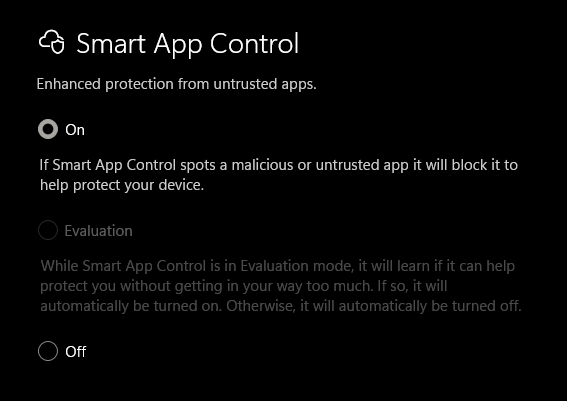
  • Evaluate new Edge features: Microsoft Edge is continuously improving, including security features (like Enhanced Security Mode, which was introduced to mitigate memory vulnerabilities by disabling JIT for untrusted sites[2]). Keep an eye on Edge release notes. If a new feature could benefit security, consider enabling it via Intune policy. For instance, Enhanced Security Mode can be enforced (it’s the feature that provides extra protection on unfamiliar sites by using hardware-enforced security). The same goes for upcoming features like Edge network isolation improvements, or integration with Windows Defender Smart App Control – as these come, adjust your policies.
  • Revisit exceptions and allowances: Over time, you might grant some exceptions (e.g., allow a specific extension or enable an old protocol for a specific system). Maintain a documented list of these and revisit them periodically. Aim to tighten exceptions if possible (maybe that legacy system got updated and you can remove the exception now). The goal should be to converge back to baseline standards after temporary needs pass.
  • Audit configurations: Perform an audit at least annually (if not quarterly) of your Edge Intune configuration. This means reviewing Intune profiles to ensure they align with current best practices, verifying all device groups are covered, and cleaning up any unused profiles. Microsoft’s documentation and compliance toolkit can help compare your settings with the recommended baseline.
  • Security incidents review: If there were any security incidents or near-misses involving browsers (e.g., a malware download was caught, or a user fell for a phishing page), analyze if additional Edge controls could prevent those in the future. Maybe enabling a stricter download policy, or integrating a threat feed. Use incidents as learning opportunities to refine policy.
  • User feedback and usability: Check in with user representatives or run surveys to gauge if the Edge policies impede work in any way and if so, is there a justified trade-off or a safe adjustment. Browser security is critical, but sometimes overly harsh measures (like completely blocking all downloads) might not be suitable for all roles. Adjust with caution, always weighing risk vs reward.
  • Documentation: Keep your own documentation of what settings are deployed and why. This helps for continuity (e.g., if another admin takes over, or if you liaise with compliance officers). Document any rationale for non-standard configurations.

By maintaining vigilance and adapting to new developments, you’ll ensure that your Edge browsers remain a strong link in your security chain rather than a weak point.


Conclusion

Microsoft Edge is a key application through which users interact with the internet and corporate resources, making it a critical component to secure. By leveraging Microsoft 365 Business Premium’s capabilities – especially Intune – you can transform Edge into a highly secure enterprise browser with minimal impact on user productivity. We covered how to apply best practice settings (like SmartScreen, site isolation, extension control, and more) uniformly via Intune, using the built-in Edge security baseline as a foundation[1]. We walked through deploying these configurations to all devices and highlighted the importance of keeping the browser updated and integrated with other security measures like Defender for Endpoint and Conditional Access.

In addition to technical enforcement, we emphasized user education and ongoing management: a secure configuration today must be maintained tomorrow through updates, policy reviews, and training. Security is an ongoing process, and using the rich toolset in M365 Business Premium, administrators can continuously monitor compliance and address new threats as they arise.

By following the guidance in this report, your organization can confidently provide users with a safe, protected browsing experience in Microsoft Edge – one that shields them from threats, protects sensitive data, and meets the highest security standards in day-to-day work. With Intune and M365 Business Premium, enterprise-grade Edge security is within reach for organizations of all sizes, delivered in a cloud-manageable and scalable way.

References

[1] List of settings for the Microsoft Edge security baseline in Intune …

[2] Microsoft Edge for Business Recommended Configuration Settings

[3] Configure security baseline policies in Microsoft Intune

[4] Edge Browser Security Latest Best Practices Released by Microsoft

[5] Best practice to enforce updates on Microsoft Edge to have the latest …

[6] Secure your corporate data using Microsoft Edge for Business

[7] Deploying a Microsoft Edge security Baseline with Intune

Defender for Office 365: Malicious Email Protection in M365 Business Premium

bp1

Microsoft Defender for Office 365 (included with Microsoft 365 Business Premium) is an advanced security solution that protects email and collaboration tools from phishing, malware, and other threats[1][3]. When a malicious email arrives, Defender for Office 365 engages multiple layers of defense to identify and neutralize the threat, preventing compromise of user accounts and devices. This report provides a detailed technical walkthrough of how Defender for Office 365 handles a malicious email step by step, and outlines best-practice configurations and recommendations for administrators to maximize protection.

Did you know? Over 90% of cyberattacks start with an email, making robust email protection critical for safeguarding organizational data and operations[4].


Email Threat Protection Pipeline: Step-by-Step Process

When an email is received, Defender for Office 365 processes it through multiple stages to detect and block malicious content before it reaches the user. Each stage builds on the previous, combining filtering, analysis, and dynamic protection measures[2]. Below is the step-by-step process that occurs when a potentially malicious email arrives:

  1. Edge Protection – Connection and IP Filtering: Initial blocking at the mail gateway. As soon as the email hits the Office 365 service, Edge Protection checks the sender’s IP address and domain reputation[2]. Known malicious senders are blocked outright at this stage:

    • IP/Domain Reputation: If the sender’s IP or domain is on a known-bad list (such as spam sources or malware distributors), the connection is rejected before the email enters the system[2]. This prevents a large volume of spam or malware-laden emails from ever reaching user mailboxes.

    • Throttle & Block: Bulk attacks are throttled or dropped. For example, if a source sends an unusually high volume of messages in a short time (potential Denial of Service attempt), it’s throttled to protect the email infrastructure[2]. Messages from untrustworthy sources can be temporarily blocked unless configured otherwise (e.g. via connectors for trusted partners).

    • Directory Edge Blocking: Attempts to send to invalid recipients are blocked to prevent directory enumeration attacks[2].

    • Outcome: Many obvious threats are filtered out at the network edge without user impact. Legitimate emails move to the next phase.
  2. Sender Intelligence – Authentication & Impersonation Checks: Analyzing who the email is from. In this phase, Defender for Office 365 evaluates the sender’s legitimacy using email authentication and behavioral analysis[2]:

    • SPF/DKIM/DMARC Verification: The service checks SPF records, DKIM signatures, and DMARC policy compliance to ensure the email is actually coming from who it claims to be[2]. If authentication fails (e.g. a spoofed domain that doesn’t align with these records), the message is flagged or rejected.

    • Spoof Intelligence: Built-in anti-spoofing logic distinguishes legitimate “on-behalf-of” emails from forgeries. Defender for Office 365 can block senders that impersonate your domain or trusted partners while allowing known forwarding services and permitted senders[2]. Both intra-org and cross-domain spoofing attempts are detected and stopped[2].

    • Mailbox Intelligence: The system leverages machine learning to understand normal communication patterns for each user. If an incoming email’s sender or context deviates from the user’s typical contacts, it may indicate a impersonation/phishing attempt[2]. For example, if an email claims to be from a colleague the user rarely contacts, it’s treated with suspicion. This helps catch Business Email Compromise attacks where attackers impersonate executives or vendors.

    • Bulk Mail Filtering: Bulk mail (e.g. newsletters) is identified with a Bulk Confidence Level. Admin-defined thresholds decide if bulk emails go to Junk or are allowed, balancing nuisance vs. missing wanted bulk mail[2].

    • Account Compromise Signals: If the sender is an internal account, Defender can detect anomalous sending behavior (possibly indicating a hacked account) and automatically block outgoing mail from that account to stop further spread[2].

    • Outcome: By the end of this stage, the email’s sender is verified. Unauthorized senders or obvious impersonation attempts are filtered out or marked as phish, and only authenticated, non-spoofed messages proceed[2].
  3. Content Filtering – Malware and Phishing Detection: Inspecting the email’s content and attachments. Emails that pass sender checks are then scanned deeply for malicious content:

    • Anti-Malware Scanning: All email attachments are scanned by Microsoft Defender Antivirus engines for known malware signatures[2]. Files are examined by true type (so an .exe disguised as .txt is still caught)[2]. If an attachment is a known virus or high-confidence malware, the system will block the email or strip the attachment immediately[2]. The hash of any detected malware file is added to Microsoft’s threat intelligence, which means that file will be blocked in all Office 365 tenants and on Windows endpoints via Defender Antivirus in the future[2].

    • File Type and Heuristics: Admins can configure file type blocking (e.g. disallowing .exe, .js, or macro-enabled files via policy)[1]. If an attachment or the email contents match known malicious patterns or suspicious behaviors (heuristics), Defender will intervene. For instance, heuristic clustering might pause a message that has an unusual combination of properties (e.g. an invoice email with an unfamiliar attachment) for further analysis[2].

    • Phishing Content Analysis: The email’s headers and body are analyzed by machine learning models to identify phishing signs[2]. This includes scanning for malicious or misdirecting content, suspicious language patterns, and URL inspection. Any URLs in the email are checked against Microsoft’s database of malicious links (threat intelligence feeds)[2]. If a URL is already known to be dangerous, the email can be blocked at this point[2].

    • Safe Attachments Detonation (Dynamic Analysis): If an attachment is unknown (no known malware signature), Defender for Office 365’s Safe Attachments feature steps in. It will sandbox the attachment in a virtual environment to detonate it safely[2]. The attachment is opened in this secure sandbox where its behavior is monitored in real-time. If the file exhibits malicious behavior (like dropping malware or connecting to malicious servers), it is deemed unsafe. During this sandbox scan, depending on policy, the email can be delayed or delivered with the attachment held back: for example, with Dynamic Delivery, the email body is delivered promptly but the attachment is replaced by a placeholder until it’s cleared, ensuring minimal disruption to the user[1].

    • URL Detonation: For URLs that are not outright blocked but appear suspicious, Defender performs URL detonation – essentially clicking the link in a sandbox at time of delivery to see what happens[2]. If the linked content is a file (e.g. a downloadable document), it treats it like an attachment and sandboxes that file as well[2].

    • Machine Learning Classification: Throughout content filtering, machine learning models evaluate the message holistically – considering sender patterns, email content, and attachments together. These AI models assign the email a confidence level for spam or phishing[2]. For example, an email might be tagged as High Confidence Phishing if multiple indicators (failed authentication, known phish URL, suspicious language) are present.

    • Outcome: By this stage, Defender for Office 365 has identified any malicious payloads. If malware is confirmed, the email (or the unsafe attachment) is blocked or quarantined immediately[2][1]. Suspicious links are neutralized. Emails that pass content scanning continue to delivery, but with ongoing safeguards (Safe Links) in place.
  4. Delivery & Post-Delivery Protection: Final delivery with ongoing monitoring. If the email is not blocked by earlier filters, it proceeds toward the user’s mailbox, but Defender’s protections continue even after delivery:

    • Safe Links (Time-of-Click Protection): All URLs in the email can be rewritten and wrapped by Safe Links[2][2]. This means if a user clicks a link in the email, the request goes through Defender’s Safe Links service first. At the moment of click, the system checks the latest URL reputation. If the link is newly identified as malicious (or found malicious upon dynamic analysis), the user is prevented from accessing the site – they’ll see a warning page instead of the dangerous site[2]. This time-of-click check is crucial because it protects against delayed attacks where an attacker sends a benign link that turns malicious later. Safe Links essentially continues to protect the user’s device when they interact with the email.

    • Zero-Hour Auto Purge (ZAP): Defender for Office 365 has the ability to retroactively remove emails from inboxes if they are later determined to be threats. This is known as ZAP. For instance, if an email was delivered but a few hours later its attachment is identified as malware in another environment, ZAP will quarantine that email from all mailboxes post-delivery[2]. ZAP operates for phishing, malware, and spam – automatically neutralizing threats that slipped through initial filters[2]. Users might notice an email disappear from inbox or junk folder; that’s ZAP at work removing a now-known threat.

    • Campaign Detection: If the malicious email is part of a larger attack campaign, Defender for Office 365 correlates signals across tenants. It can identify that multiple recipients (in one org or across many) are getting similar dangerous emails. In such cases, Microsoft can block the entire campaign once it has evidence of malicious intent[2]. This broad response stops all related emails from reaching users, not just one.

    • User Reporting: If a malicious (or suspicious) email somehow reaches a user, the built-in Report Phishing button in Outlook allows the user to flag it[2]. This user-reported mail is sent for analysis and can trigger alerts to administrators. Reports of missed phish help improve the filtering models and inform security teams of emerging threats.

    • Outcome: The email is either safely delivered (with protections in place) or removed/quarantined by post-delivery actions. Through features like Safe Links and ZAP, Defender for Office 365 continues to shield users and devices even after an email is in the mailbox, drastically reducing the chance that a user can be compromised by delayed or hidden threats[2].

**In summary, from the moment a malicious email arrives, Defender for Office 365 applies a *multi-layered defense*: it *blocks known bad senders* at the door, authenticates and evaluates sender trust, scans email content with signatures and machine learning, detonates suspicious attachments/links in a sandbox, and monitors the email after delivery (scanning links on click and pulling emails out if threats are discovered).** These layers work together to ensure that malicious emails are stopped or neutralized before they can compromise users or their devices[2][2].


Protective Actions and Threat Response

When Defender for Office 365 detects a malicious email, it takes immediate actions to protect the user and their device. The exact response depends on the type and severity of the threat, as dictated by configurable policies. Below are the key actions taken and how they safeguard the environment:

  • Quarantine or Block on Detection: For any email identified with high confidence as malicious (e.g. containing malware, high-confidence phishing), the default action is to quarantine the message (isolate it from the user’s inbox) or sometimes reject it outright.

    • Malware Email: By default, if an attachment is confirmed as malware, the entire email is sent to quarantine (a secure holding area) where it cannot harm the user[4][1]. The user does not see the email at all. Administrators can review quarantined items and decide to release or delete them. In severe cases, the system may delete the message automatically after a time if not reviewed.

    • Phishing Email: Suspected phishing emails are typically quarantined or sent to Junk Email folder depending on confidence levels and policy. High-confidence phish are usually quarantined so the user never interacts with them[4]. Lower-confidence phish or spam might go to the user’s Junk folder with safety tips. Quarantining ensures even if a user is curious, they cannot click links or open attachments unless an admin releases the email.

    • Spam/Bulk Email: Unwanted spam is often delivered to Junk Email by default. However, for Business Premium best practice, many administrators choose to quarantine high-confidence spam as well, to reduce any risk of user interaction[4].

    • Block vs Quarantine: In some cases, policies might be set to outright reject/drop certain messages (for example, block malware so it never even gets into quarantine). Quarantine is generally preferred for malicous content because it allows security teams to analyze what was caught.

    • Protection Provided: Quarantining or blocking ensures that malicious payloads never reach the user’s inbox or device, preventing infection. Even if malware was attached, it’s confined to the quarantine and cannot execute on the user’s machine.
  • User and Admin Notifications: Defender for Office 365 can notify relevant parties when it takes action:

    • End-User Notifications: Administrators can enable quarantine notifications to end users to inform them that messages were quarantined as spam or phish. For example, users might receive a daily digest email listing messages that were withheld. This allows users to review and request release of any false positives (messages incorrectly flagged) while keeping them informed that potentially unsafe messages were stopped. By default, these notifications are not sent until configured, to avoid confusing users with technical info.

    • Admin Alerts: Through Alert Policies, admins can configure real-time alerts for certain threat detections[4]. For instance, an alert can be set if a malware email is quarantined or if phishing emails exceed a threshold, etc. When triggered, an alert can send an email or SMS to administrators/security teams. This ensures the security team is immediately aware of serious threats and can investigate promptly. Additionally, the admin can be notified when a user requests release of a quarantined message, or if Defender blocks a suspicious email to an executive account[4][4].

    • In-Email Notifications: If a malicious attachment is removed from an email, the recipient might receive the email with a notice like “An attachment was removed because it contained malware.” This informs the user that content was stripped for safety (so they aren’t just puzzled by a missing attachment).

    • Portal Reports: Beyond direct alerts, admins can always view quarantined items and threat logs in the Security portal. The Threat Explorer in Defender for Office 365 provides a near-real-time view of all detected threats and actions taken[4].

    • Protection Provided: Notifications ensure that no threat goes unnoticed. End-user quarantine summaries empower users to double-check for any legitimate message caught by filters (reducing impact on business communications), while admin alerts allow IT security to respond to incidents quickly, such as by investigating if multiple users were targeted by the same attack.
  • Device Protection via Signal Sharing: Defender for Office 365 not only protects the mailbox, but also helps protect user devices through integration with Microsoft Defender Antivirus. When a new malware attachment is identified through an email scan, its signature (hash) is shared with the broader Microsoft security network. This means other defenses (like Defender for Endpoint on Windows devices) are informed to block that file in the future[2]. In practice, if a user tries to download or run that same malicious file from another source, Defender on their device will already know to quarantine it. This cloud-powered intelligence ensures email-borne malware can’t simply hop to a device by other means – the protection spans across email, cloud, and endpoints as part of the Microsoft 365 Defender ecosystem.

  • Preventing User Interaction: For threats that aren’t fully blocked (for example, a suspicious URL in an email that was delivered), Defender’s protections physically alter the content to make it safe:

    • Malicious attachments are replaced with dummy files or removed. If an attachment is detonated and found malicious, the user may receive a text file explaining the attachment was unsafe and removed.

    • Dangerous links are wrapped by Safe Links and will be blocked at click-time, as described. If the user clicks a phishing link, they will be stopped by a warning page instead of reaching the harmful site[2]. This prevents credential harvesting and drive-by downloads on the user’s device.

    • Even for emails delivered to Junk, Outlook disables active content by default (images, links) which helps mitigate risk if a user views spam.

    • Protection Provided: By neutralizing malicious content (attachments/links), Defender ensures that even if something reaches the user’s mailbox, it is disarmed and cannot easily lead to compromise. The user’s device is shielded from executing malware or connecting to attacker sites.

In summary, once a malicious email is detected, Defender for Office 365’s response actions (quarantine, blocking, content neutralization, and alerts) work in concert to protect users. Malicious emails are isolated away from inboxes, users are shielded from dangerous attachments or links, and security teams are kept aware. Through these actions, the service prevents infection and account compromise, fulfilling its role of safeguarding users and their devices from email-borne threats[1][2].


Key Features Enabling Email Threat Protection

Defender for Office 365 includes a rich set of security features specifically designed to counter email threats. Together, these features provide multi-layered protection against phishing, malware, and other malicious emails. Here are the key features and capabilities that protect your organization’s email:

  • Exchange Online Protection (EOP) Core Filters: At its foundation, Business Premium includes EOP’s anti-spam and anti-malware engine. This provides baseline filtering: block/allow lists, spam content filtering, and virus scanning using Microsoft’s antivirus signatures. EOP assigns each message a Spam Confidence Level (SCL) based on its likelihood of being spam. Defender for Office 365 builds on this with advanced capabilities, but this core ensures all known spam and viruses are already being handled. (Included in all Office 365 plans.)

  • Anti-Phishing Policies and Impersonation Protection: Defender for Office 365’s anti-phishing feature uses AI and heuristics to detect phishing emails that may slip past traditional spam filters[1]. Key elements:

    • Mailbox Intelligence: Learns each user’s normal contacts and flags anomalies[2].

    • User and Domain Impersonation Protection: Allows admins to protect specific high-profile users (like CEO, CFO) and your organization’s domains. If an incoming email attempts to impersonate a protected user (e.g., similar display name) or a look-alike domain (typosquat), Defender can automatically flag or quarantine it[2].

    • Spoof Intelligence: As part of anti-phishing, Defender distinguishes legitimate spoofing (such as third-party services sending on your behalf) from malicious spoofing. It blocks unauthorized spoof emails which pretend to be from your domains or partners[2].

    • Policy Options: Admins can customize actions for detected phish (e.g. send to junk vs. quarantine) and adjust sensitivity. Anti-phishing policies are a cornerstone for stopping business email compromise and credential-harvesting scams.
  • Safe Attachments (ATP Attachment Sandbox): Safe Attachments provides advanced malware protection for email attachments. It opens email attachments in a secure, isolated cloud environment to observe their behavior [2]. This feature is crucial for catching zero-day malware (new, previously unknown malware) which won’t be caught by file hashes or signatures:

    • If the attachment is clean, the email is delivered normally (or the attachment is reattached for the user after scanning).

    • If malicious activity is detected, the attachment is blocked/quarantined. Admins can choose whether the entire email is quarantined or delivered with the attachment removed.

    • Safe Attachments can be configured in ** Dynamic Delivery mode**, which ensures users don’t face big email delays – they get the email body quickly with a placeholder, and the real attachment arrives after it’s vetted[1].

    • This feature protects users from opening dangerous files that got past initial antivirus scans, by catching malware in execution.
  • Safe Links (URL Protection): Safe Links is Defender’s time-of-click protection for URLs in emails and Office documents[2]. All links are rewritten to go through Microsoft’s secure proxy. When a user clicks a link:

    • The system checks the URL against the latest threat intelligence. If the URL is known to be bad, access is blocked immediately with a warning page[2].

    • If not known, Safe Links can detonate the URL (open it in a sandbox) to analyze any content it leads to[2]. If that analysis finds something malicious, the site will be blocked for the user.

    • Safe Links protection persists even after email delivery; importantly, if a URL that was benign at delivery later turns malicious, the next click will be blocked. Safe Links is a key defense against phishing sites and malicious downloads, preventing users from unwittingly giving up credentials or infecting their devices.

    • Admins can configure Safe Links policies to apply to email, and even across Office apps, Teams, etc., as Business Premium’s Plan 1 covers cross-app usage[3].
  • Anti-Malware Policy with Zero-Hour Auto Purge: Defender for Office 365’s anti-malware policy complements Safe Attachments:

    • Real-time Malware Scanning: Uses the latest antivirus definitions to catch known malware in attachments or message body.

    • Common Attachment Types Filter: Allows blocking or warning on specific file types (e.g. executables, scripts) that are commonly dangerous[1].

    • Zero-Hour Auto Purge (ZAP): Automatically removes emails that are found to be malicious after they’ve been delivered[2]. For instance, if Microsoft later determines an email to be phish or identifies malware through updated signatures, ZAP pulls it from user mailboxes, mitigating damage from evolving threats.

    • Mail Flow Rules (Transport Rules): Although not unique to Defender, admins can create custom mail flow rules for additional filtering actions (e.g. strip attachments with certain names, or forward copies of suspect mail to security mailbox). These act as a supplementary feature in content filtering[2].
  • Quarantine and User Submissions:

    • Quarantine is a secure repository for emails identified as spam, phish, or malware. Admins (and optionally end-users) can review quarantined messages. This feature prevents dangerous emails from reaching users while still allowing recovery of any false positives. Quarantines are organized by category (spam, phish, etc.) for efficient management[4].

    • User Submission/Report Message: Integrated reporting tools let users flag suspicious emails. These user-reported messages feed into Defender’s analysis systems and appear in the admin center for review[2]. This encourages a “human sensor” network – users help catch what automated filters might miss, and the system learns from those submissions.
  • Threat Intelligence and Reporting:

    • Real-Time Reports & Explorer: Defender for Office 365 provides real-time dashboards and the Threat Explorer (available in Plan 1) for security teams to investigate threats[4]. Admins can search for indicators like a particular sender, file hash, or URL across all mail in the organization to see if anyone else was targeted[4]. This helps scope attacks quickly.

    • Campaign View: (Plan 2 feature) If ever upgraded, this lets you see the full picture of a phishing or malware campaign targeting your org, including all related messages, how they were handled, and which users clicked or were affected[2].

    • Alerts and Automated Investigation: Plan 1 allows custom alert policies as mentioned. Plan 2 (not included by default in Business Premium) adds Automated Investigation & Response (AIR) which can trigger automatic playbooks to investigate and remediate threats across emails and other domains[4]. Even without AIR, admins can manually invoke investigations or use the data from alerts to respond.

    • Microsoft Threat Intelligence Sharing: Defender for Office 365 taps into Microsoft’s vast threat intel from billions of emails and endpoints worldwide. It uses up-to-date intelligence feeds (including third-party sources) for URL and attachment reputations[2]. As a result, it can block emerging threats that have been seen elsewhere even if your organization hasn’t seen them yet.

All these features work together as a cohesive defense system for email. Anti-phishing policies thwart deception, Safe Attachments and Safe Links neutralize malicious payloads, anti-spam/anti-malware filters handle bulk threats, and quarantine with user reporting provides safety with flexibility. By leveraging these capabilities, organizations significantly reduce risk of malware infection, account compromise, and data breaches via email[1].


Best Practices and Configuration Steps for Defender for Office 365

To maximize protection in Microsoft 365 Business Premium, administrators should configure Defender for Office 365 according to Microsoft’s recommended best practices. Below is a comprehensive guide to setting up and fine-tuning Defender for Office 365 for optimal security:

1. Enable Core Email Authentication (SPF, DKIM, DMARC): Lay the groundwork for anti-spoofing. Before tweaking Defender-specific settings, ensure your own domain’s SPF, DKIM, and DMARC records are correctly configured. This helps external email systems trust your mail, and it allows Defender’s anti-spoof features to effectively block emails pretending to be your domain. On the flip side, Defender uses DMARC to reject or quarantine spoofed emails pretending to be from your domain if they fail authentication[2]. Configure DMARC with a policy of quarantine or reject for strong protection against domain spoofing[1].

2. Apply a Preset Security Policy: Quickly deploy best-practice settings. Microsoft provides preset security templates (“Standard” and “Strict”) that bundle recommended settings for all Defender for Office 365 features[4]. In the Microsoft 365 Defender portal, go to Policies & Rules > Threat Policies > Preset Security Policies and consider applying:

  • Standard Preset: A balanced security level suitable for most users. This enables Safe Links, Safe Attachments, anti-phishing, etc., with standard thresholds[4].

  • Strict Preset: A more aggressive policy intended for VIP users or high-target groups (like finance or execs)[4]. It has tighter rules (e.g. almost all detected phish go to quarantine, more stringent spam filtering).

  • Choosing a preset is an easy way to cover dozens of settings consistently. Ensure the preset is applied to all relevant users/groups. Note: You can still fine-tune specifics after applying a preset.

3. Configure Anti-Phishing Policies (Impersonation Protection): Stop phishing and BEC attacks proactively. Go to Threat Policies > Anti-Phishing and create or modify policies:

  • Enable mailbox intelligence: This lets Defender learn user communication patterns to identify unusual senders[1].

  • Protect high-risk users: Add your organization’s VIPs (CEO, CFO, IT Admins, etc.) to the “users to protect” list. Enable User Impersonation Protection and add these as protected users[1]. Defender will flag any external email that purports to be these users.

  • Protect your domains: Enable Domain Impersonation Protection and include your primary email domains[1]. This catches emails from look-alike domains (e.g. mycompany.co instead of mycompany.com).

  • Policy actions: Set phishing emails and impersonation detections to go to Quarantine, and optionally configure an alert to notify admins when an impersonation is detected[1]. This way, no potentially malicious phish reaches the inbox.

  • Tip: Regularly review the Blocked Senders and Allowed Senders in anti-phishing policies. Microsoft’s AI will automatically handle most, but you may add specific trusted partners to allowed spoofed senders if they get flagged, or block persistent phishers.

4. Strengthen Anti-Spam and Anti-Malware Settings: Fine-tune filters for junk and viruses. In Threat Policies > Anti-spam and Anti-malware, adjust the default policies:

  • Spam Filter Tuning: By default, EOP spam filter will send most spam to Junk. Consider raising the sensitivity: for example, set spam filter to quarantine high-confidence spam (SCL 9) rather than delivering to Junk. You can do this by editing the Anti-Spam Inbound Policy (Default) and increasing the threshold slider for spam and bulk mail[4][4]. Also enable advanced phishing threshold if available. This reduces the chance any obvious spam/phish lands in inbox.

  • Block Lists: Add any known malicious domains or problem senders to your block lists in the anti-spam policy[4]. Defender already blocks many, but if you’re seeing repetitive unwanted mails from certain domains, a manual block can help. Regularly update this list based on threat intel (Microsoft’s or your own)[4].

  • Allowed senders/domains: Likewise, maintain an allow list (whitelist) for trusted senders that should skip spam filtering[4][4]. Use this sparingly – only for well-vetted partners – to avoid attackers exploiting your allowed list. (E.g., allow a partner’s domain by adding it to Allowed domains in anti-spam policy[4], and keep this list reviewed for relevance[4].)

  • Anti-Malware Policy: Edit the default anti-malware policy to turn on Zero-Hour Auto Purge if not enabled (ZAP for malware/phish)[1]. Also configure Attachment types to block: consider blocking file types commonly used for malware that your organization doesn’t typically receive (e.g. .exe, .bat, .ps1, .vbs, or even .iso and .js files)[1]. This preemptively stops messages with such attachments.

  • Notifications: In the anti-malware policy, enable notification to admins (or a security mailbox) when malware is detected and quarantined[1]. This ensures the security team is alerted whenever a virus was stopped.

5. Set Up Safe Links Policies: Protect users from malicious URLs. Navigate to Threat Policies > Safe Links and ensure a policy covers all users:

  • Verify that Safe Links for Email is enabled tenant-wide. The default policy may already cover all users; if not, create a new Safe Links policy scoped to your domains/users.

  • Block click-through: Enable the option “Do not allow users to click through to the original URL” for malicious links[1]. This means if Safe Links identifies a URL as malicious, the user has no option to bypass the warning – the threat is completely blocked.

  • Apply to all apps: In Business Premium, Safe Links can also be applied to Microsoft Teams and Office applications. Make sure the policy is set to protect URLs in email and in Office apps (Word, Excel, PowerPoint) for comprehensive protection.

  • URL Exemptions: Optionally, define trusted URLs or domains that should not be rewritten by Safe Links if they are causing false positives (for example, internal company portals or very frequent business partners) – but add exemptions only if necessary. The recommendation is to keep the Safe Links filtering broad, as even trusted sites can be compromised.

6. Set Up Safe Attachments Policies: Enable sandboxing of email attachments. Go to Threat Policies > Safe Attachments:

  • If not already on, turn on Safe Attachments by creating a new policy. Scope it to All recipients (or at least all users who should be protected, typically everyone).

  • Choose the Action mode: Microsoft recommends “Dynamic Delivery” mode[1] for user convenience – this delivers emails immediately with a placeholder for attachments while scanning is in progress. Alternatively, “Block” mode holds emails until attachments are scanned (more secure but can delay delivery).

  • Set Post-scan Action: Configure what happens if malware is detected in an attachment. Commonly, Quarantine the entire message or Replace attachment with a banner/message are used[1]. Quarantine is safer, ensuring the user never touches the email if an attachment is malicious.

  • Enable Safe Attachments for SharePoint, OneDrive, and Teams files as well (there is a toggle for ATP for collaboration sites). This extends protection so that if a malicious file is uploaded or shared via cloud storage or Teams, it gets scanned and blocked similarly[2].

7. Optimize Quarantine Management: Balance security with usability regarding quarantined emails.

  • Quarantine Policy: In Defender portal under Policies & Rules > Threat Policies > Quarantine, you can adjust what users are allowed to see and do in quarantine. For best practice, allow users to review and release their own spam-quarantined emails (those classified as spam or bulk) via the Quarantine Portal or email digest[4]. This empowers users to self-serve for mild cases (reducing helpdesk tickets for “missing emails”) while still keeping malicious content at bay.

  • End-User Spam Notification: Enable periodic end-user quarantine notification emails for spam (e.g., daily or weekly)[4]. Users receive a summary of emails that were quarantined as spam/phish with options to release or report as not junk. This is turned off by default; turning it on can improve transparency.

  • Privileged Access: For content classified as high-confidence phishing or malware, it’s wise to not allow end-users to release these; only admins or security staff should. Use quarantine policies to enforce that (these are usually default — e.g., the default malware quarantine policy is admin-only access).

  • Review Routine: Security teams should regularly review quarantined messages and track how often users release items[4]. If you notice many false positives, adjust policies (allow lists or lower sensitivity slightly). Conversely, if users never need to release quarantined mail, you might tighten policies further.

8. Configure Alerts and Monitoring: Stay informed of threats in real time. Set up Alert Policies in the Defender portal for important events:

  • In Settings > Alert Policies, create alerts for things like “Malware detected in email”, “Phishing email detected”, or “User reported phish”. Configure who should get the alert (e.g., IT Security email, Teams channel via connector) and set the severity. This way, when Defender quarantines a malicious email or a user reports one, administrators get immediate notification to investigate[4][4].

  • Utilize the Threat Explorer (aka real-time detections) to proactively search for threats. For example, if news of a new phishing campaign arises, you can search if any user received related emails. The Explorer can also show all user-submitted reports and all automatically detected incidents for oversight[4].

  • Monitor Secure Score and the Configuration Analyzer in the security portal. The Config Analyzer compares your settings to recommended best practices (Standard/Strict) and will highlight if, for instance, Safe Links isn’t enabled or an anti-phish setting is turned off[4]. Regularly check this and follow its recommendations to patch any holes in your configuration.

9. Train Users and Encourage Use of Attack Simulation: The human element is critical. Technical defenses work best when users are also aware:

  • Deploy the “Report Phishing” button (if using Outlook, it’s often built-in now). Make sure users know how to use the Report Message feature to flag suspicious emails[2]. Reported messages feed into Defender and also alert admins, improving the overall security feedback loop.

  • Conduct periodic security awareness training. Microsoft Defender for Office 365 Plan 2 includes an Attack Simulation Training feature for phishing drills; Business Premium doesn’t include that by default, but you can run your own simulations or consider upgrading for this feature[3][1]. Simulated phishing campaigns help condition users to spot and avoid real attacks. Even without simulations, share regular tips or newsletters on identifying phishing (e.g., checking sender addresses, not clicking unexpected links).

  • Remind users that if they see something odd (emails asking for passwords, wire transfers, or any urgent unusual requests), they should report it or at least double-check offline. A well-trained user can catch a sophisticated phish that perhaps was borderline and not automatically filtered.

10. Continuous Improvement and Advanced Tools: Maintain a proactive security posture. Email threats evolve, so ongoing maintenance is necessary:

  • Review and adjust policies periodically: At least quarterly, review spam/phish detection rates, false positive/negative incidents, and adjust filters accordingly. Secure Score and Defender’s recommendations (from the Configuration Analyzer) are great to follow[4].

  • Stay informed on new features: Microsoft frequently updates Defender for Office 365. Keep an eye on the Message Center for announcements. For instance, new policy toggles or improved machine learning models may become available – adopting them can enhance security.

  • Integrate with broader security operations: If you use a SIEM like Azure Sentinel or the unified Microsoft 365 Defender portal, integrate Defender for Office 365 logs and alerts there. This allows cross-domain correlation – e.g., if a malicious email was sent to a user and that user’s device shows weird behavior, you can connect the dots faster. M365 Business Premium’s Defender for Office 365 P1 and Defender for Business (Endpoint) can both feed into a unified incident view (though full automated cross-domain investigation is a P2/XDR capability)[3].

  • Document exceptions and changes: Keep a simple internal doc of what you’ve whitelisted or any custom configurations. This helps during audits and when reviewing whether an exception (like an allowed domain) is still needed and safe[1].

By following these steps and best practices, you ensure that Defender for Office 365 is configured to its fullest potential, aligning with Microsoft’s security recommendations. A well-configured setup will minimize false negatives (missed threats) without generating too many false positives, providing strong security with minimal interruption to users[1][4].


Monitoring Effectiveness and User Involvement

Implementing Defender for Office 365 is not a “set and forget” exercise. Continuous monitoring and user feedback loops are vital to maintain an effective defense:

  • Security Monitoring and Incident Response: Leverage the Microsoft 365 Defender Security Center (security.microsoft.com) for a consolidated view of incidents. For example, if a malicious email was sent to multiple users, the portal can aggregate this into a single security incident for investigation. Use the Threat Explorer and Campaign Views to see if a threat is part of a larger pattern targeting your org[4][4]. If something got through to a mailbox and was reported, perform a targeted hunt: check that user’s mailbox for other similar messages, and those of peers. Promptly remove any found (the Explorer allows one-click purge of emails from all mailboxes if needed)[1].

  • Performance Review: Periodically review metrics such as: Number of phishing emails caught vs. missed, Spam trends, Top targeted users, etc., available in Defender reports. If available, the Attack Simulation Training results (for those with Plan 2) can show which users are vulnerable and need more training. Additionally, review the Secure Score for email security to track improvement over time.

  • User Reporting and Feedback: Encourage users to actively report suspicious emails. This not only helps catch what automated filters might miss, but also provides valuable data to refine those filters. Configure the User Submissions feature so that when users use the Report button, a copy goes to your security operations mailbox (or at least to the Defender portal’s User reported queue). Make it easy: in Outlook, the Report Phishing button is integrated; for other email clients, users can forward suspicious mails to a designated address.

    • Follow up on user reports: if a user reported an email that was not automatically flagged, analyze why. Perhaps you need a new block rule or the phish was very convincing. This process helps fine-tune the system.

    • Close the loop with users: when a user correctly reports a phishing attempt, consider informing or thanking them and confirming it was malicious. This reinforces good behavior and keeps them engaged in the organization’s security.
  • Integrating Device Signals: Since Business Premium also includes Defender for Endpoint (Defender for Business), watch for correlations like devices with malware alerts that correspond to email attachments. A unified approach (via the Microsoft 365 Defender portal) allows you to see if, for instance, an email-borne threat impacted a device and vice-versa. Use this to take action such as isolating a machine or resetting a password if an email attack may have led to account compromise.

  • Audit and Adjust: Monitor how often users release emails from quarantine or complain about missed spam. Lots of releases might mean the filter is overzealous (tune it down or add allows); complaints about spam in inbox mean you might tighten policies. Regular audits of allowed/blocked sender lists, policy configurations, and user feedback help maintain an optimal balance.

By actively monitoring Defender for Office 365’s performance and involving users in the process, administrators can ensure that the organization’s email security remains adaptive and effective against evolving threats. The goal is to maintain high security efficacy (catching the bad stuff) while preserving business continuity (not overly hindering the good stuff) – a goal that is achieved through vigilant oversight and continuous improvement.


Common Challenges and Solutions in Defender for Office 365 Configuration

While Defender for Office 365 is a powerful platform, administrators may encounter some challenges when configuring and maintaining it. Here are common challenges and how to address them:

  • Balancing Security with User Impact: Aggressive policies (e.g., quarantining all spam) maximize safety but can intercept some legitimate emails, impacting users.

    • Solution: Use a tiered approach – apply strict policies for high-risk users (who are more likely targets) and standard for others, or use the preset differentiation[4]. Enable end-user spam digests so users can self-release innocuous emails caught in quarantine[4]. Monitor quarantine release requests; if many users consistently release certain emails, consider loosening rules or whitelisting that sender[4]. The Configuration Analyzer tool can help identify if any settings are excessively strict compared to recommended baselines[4].
  • False Positives and False Negatives: No filter is perfect. You might see false positives (good emails marked bad) or false negatives (missed phishing caught by users).

    • Solution: Continuously refine allow/block lists for your organization’s context. If a known safe sender is constantly flagged, add them to the allowed list with caution[4][4]. For false negatives, encourage user reporting – each report is a learning opportunity for the system. Microsoft also uses these reports to improve their backend machine learning models. In critical cases, you can create a custom transport rule to catch specific threats (for instance, temporarily block emails containing a certain subject or link that is going around). Over time, the goal is to rely on the intelligent filters and minimize custom rules.
  • Keeping up with Evolving Threats: Attackers constantly adapt, using new file types or social engineering tricks. A configuration that was effective last year may need updates.

    • Solution: Stay informed via Microsoft’s security blogs and update notes. Review Secure Score recommendations regularly for new improvements. For example, Microsoft might introduce a new toggle like “tenant impersonation protection” – adopt these new features promptly. Also, update your block lists periodically with newly emerging threat domains (Microsoft adds many automatically, but you might have industry-specific intel). The best practices section above (like enabling ZAP, blocking rarely used file types, enabling DMARC) preemptively addresses many evolving tactics[1][1].
  • Integrating with Existing Systems: Some organizations use third-party email gateways or have hybrid on-prem setups.

    • Solution: If you have a third-party gateway in front of Office 365, ensure Connector configurations are correct so that Defender for Office 365 still sees the true sender info (use “Enhanced Filtering for Connectors” to preserve IP and authentication details through the hop)[2]. In hybrid setups, route all mail through Defender for consistency, or carefully split policies knowing some mail may be scanned elsewhere. Always test that Defender’s anti-phishing features (like spoof detection) aren’t bypassed by misconfigured connectors or mail flow rules.
  • User Resistance or Ignoring Warnings: Users might find the Safe Links redirect page or attachment delays inconvenient and attempt to bypass them.

    • Solution: Educate users on why these measures exist (a quick training snippet: “That delay when opening attachments is our security scanning working to keep you safe from ransomware”). Make policies in Safe Links that don’t allow opt-out clicking through[1], so even if frustrated, a user can’t proceed to a dangerous site. Highlight positive outcomes: e.g., share an anonymized story when the system caught a real phish — this reinforces user trust in the protective measures.
  • Limited Plan Features: Business Premium includes Plan 1 of Defender for Office 365. Some advanced features (automated investigation, attack simulation training, etc.) are Plan 2.

    • Solution: Even within Plan 1, use all available features (Safe Links, Safe Attachments, etc.) to their fullest. If your security needs grow, consider augmenting with Plan 2 licenses for key personnel or organization-wide if budget allows, to get features like Threat Explorer (already in P1), Campaign Views, and AIR[3]. Microsoft also occasionally offers trials for Plan 2 which can be useful to assess the benefit[2].

In tackling these challenges, a combination of technical adjustments and user awareness is key. Frequent review of policies, user feedback, and staying aligned with best practices will ensure that Microsoft Defender for Office 365 continues to protect effectively without impeding business operations. Over time, administrators typically find the “sweet spot” of configurations that yields strong security with minimal friction.


In conclusion, Microsoft Defender for Office 365 in M365 Business Premium provides a comprehensive, multi-phase defense against malicious emails. By understanding its step-by-step threat protection process – from initial sender vetting to post-delivery checks – and by applying thoughtful configuration and best practices, organizations can significantly reduce the risk of email-borne attacks. With the right setup, Defender for Office 365 will continuously protect users and devices by catching phishing attempts, defusing malware, and empowering administrators with rich tools to respond to incidents. Through ongoing vigilance and tuning, your organization can leverage Defender for Office 365 to maintain a secure email environment and keep evolving threats at bay[1]

References

[1] Guide to Implement Microsoft Defender for Office 365: Anti-Phishing and …

[2] Step-by-step threat protection in Microsoft Defender for Office 365

[3] Microsoft Defender for Office 365 service description

[4] 10 Steps For Office 365 Email Protection With Defender

Security Incident Response in a Microsoft 365 Business Environment

bp1

Introduction

A strong security posture with Microsoft 365 Business Premium provides layered defenses, but endpoint security remains crucial in stopping breaches. Microsoft 365 Business Premium comes with built-in protections (anti-phishing, anti-spam, anti-malware) for email and advanced threat protection for devices, documents, and data[12]. All user devices (endpoints) – including PCs, tablets, and phones – are secured with Microsoft Defender for Endpoint, Intune device management, and enforced best practices like multi-factor authentication and regular patching. These measures create a defense-in-depth environment to reduce risk. However, no defense is impenetrable: endpoints are often the last line of defense if an attack slips past other controls, so effective incident response is critical. In fact, cyber threats are on the rise – the Microsoft Digital Defense Report noted that 80% of organizations have attack paths exposing critical assets and ransomware attacks have jumped 2.75× year-over-year[2]. This scenario will illustrate a step-by-step journey through a security incident on a fully secured endpoint, from the initial attack to resolution, highlighting how Microsoft 365 security tools detect, contain, and eradicate the threat.

Incident Response Phases: The walkthrough follows standard incident response phases – initial attack (identification), detection & response, investigation, containment, eradication, recovery, and post-incident analysis. Throughout each stage, we will see how Microsoft 365 Defender (the unified security suite) and related tools coordinate to mitigate the incident. Key Microsoft security components involved are defined below for clarity:

  • Microsoft Defender for Endpoint (MDE)
    An enterprise endpoint security platform that helps prevent, detect, investigate, and respond to advanced threats on endpoints[3](https://microsoft.github.io/ztlabguide/defendpoint/). It provides endpoint detection and response (EDR) capabilities and antivirus protection on Windows, Linux, macOS, iOS, and Android devices.
  • Microsoft 365 Defender (Defender XDR)
    A unified pre- and post-breach enterprise defense suite that coordinates detection, prevention, investigation, and response across endpoints, identities, email, and applications[9](https://learn.microsoft.com/en-us/defender-xdr/microsoft-365-defender). It correlates alerts from multiple services into incidents to tell the full story of an attack and can take automatic action across services to stop threats.
  • Microsoft Sentinel
    A scalable, cloud-native Security Information and Event Management (SIEM) and orchestration platform that provides intelligent security analytics and automation (SOAR) for threat detection, investigation, and response[13](https://learn.microsoft.com/en-us/azure/sentinel/overview). Sentinel aggregates log data from many sources and uses AI and hunting queries to help analyze incidents.
  • Microsoft Intune
    A cloud-based service for Mobile Device Management (MDM) and Mobile Application Management (MAM). Intune enables IT to manage and secure devices (Windows, macOS, iOS, Android, etc.) and enforce security compliance policies. It can push configurations, require device health standards, or remotely wipe lost/infected devices.
  • Endpoint
    Any user device or host that connects to the network (such as a computer, laptop, tablet, or smartphone). In this context, “endpoints” refer to user devices protected by Microsoft 365 Business Premium’s security tools[12](https://learn.microsoft.com/en-us/microsoft-365/business-premium/secure-your-business-data?view=o365-worldwide). Endpoints are often targets for attackers as entry points into an organization.

With these in place, we proceed to an imaginary attack scenario. Assume all devices are compliant with best practices (fully patched, running Defender, joined to Azure AD/Intune with no known vulnerabilities) and that security policies (like conditional access and Defender for Office 365 email protection) are in effect. The incident will demonstrate how even in this well-secured setup, a cunning attack can occur – and how Microsoft’s security stack detects and contains it at each stage.


Initial Attack

The incident begins with an attacker launching a targeted attack against a user’s endpoint, attempting to bypass the organization’s defenses. In our scenario, the initial attack vector is a phishing email carrying a malicious attachment. Phishing is one of the most common initial attack vectors – roughly 23.7% of incidents start with a malicious email (malware attachment or phishing link)[11]. Other frequent entry points include brute-force or stolen RDP credentials and exploitation of unpatched public-facing applications (each about 31.6% of incidents), as well as drive-by downloads from compromised websites (~7.9%) and, more rarely, infected USB devices or malicious insider actions (~2.6% each)[11]. Figure 1 summarizes common breach entry methods:

  • Phishing Email (Malicious Link/Attachment) – Lures a user to open a malware file or divulge credentials; ~23.7% of breaches start this way[11].

  • Exposed Services (RDP/VPN) & Brute Force – Attackers guess or steal passwords to remote into a system; ~31.6% of incidents[11].

  • Vulnerability Exploitation – Using known bugs in public-facing servers/apps to gain access; ~31.6% of incidents (often due to missing patches)[11].

  • Drive-by Web Compromise – Infecting a website or ad to auto-download malware to visitors’ devices; ~7.9%[11].

  • Portable Media & Insiders – Plugging in infected USB drives, or malicious actions by rogue employees; each <3%[11].

Attack Vector in this Scenario: The attacker crafts an email pretending to be a trusted vendor, with a subject about an “urgent invoice”. The email contains a Word document attachment named Invoice.docm (a macro-enabled document) that actually harbors malicious code. Despite the organization’s email filters and Safe Attachments, this particular attack is new and manages to slip through (for example, the malware could be a zero-day exploit or the attacker’s email domain bypassed filtering by reputation). The target user, believing the invoice is legitimate, opens the attachment and enables macros as instructed by the document. This action executes the malicious macro, initiating the attack on the user’s Windows 11 laptop (which is an Intune-managed, Defender-protected endpoint).

Malware Execution: Once enabled, the malicious macro runs a payload on the device – perhaps a dropper that downloads a more advanced malware (e.g. a remote access trojan). The malware attempts to run in memory and make unauthorized changes (such as injecting into a legitimate process or reaching out to the attacker’s command-and-control server on the internet). In essence, the attacker now has code running on the endpoint, seeking to establish a foothold. This is the moment when the endpoint’s defenses spring into action.

Detection by Defender for Endpoint: As the malware executes, Microsoft Defender for Endpoint (MDE) on the device immediately detects suspicious behavior. Microsoft Defender Antivirus (built into MDE on Windows) either recognizes the malicious file via threat intelligence signature or detects its behavior heuristics (for example, a process spawning PowerShell to download unknown binaries is a red flag). In our scenario, assume the malware was not known by signature (since it evaded initial filters), but its behavior — e.g. a Word process spawning a script, escalating privileges, or injecting into another process — triggers MDE’s behavioral sensors. Defender for Endpoint flags the activity as malicious and generates a security alert. According to Microsoft: “Suppose a malicious file resides on a device. When that file is detected, an alert is triggered, and an incident is created. An automated investigation process begins on the device.”[6] This is exactly what happens — the endpoint alert is sent to the cloud security system, and Microsoft 365 Defender (the unified security portal) automatically opens a new incident record for this developing attack.

At this initial attack stage, the breach attempt has been caught very early. The user’s device has executed malware, but Defender for Endpoint intercepted it almost immediately, preventing the attack from remaining stealthy. The user may briefly notice that the file they opened froze or their system spiked in activity, but they have not yet realized a malware infection was attempted. The security tools are now actively responding to contain the threat, as described next.


Detection and Response

Microsoft Defender for Endpoint swiftly detects the malware and launches an automated response to contain the threat. Once the malicious activity is identified, several things happen near-simultaneously:

  • Security Alert and Incident Creation: The moment Defender for Endpoint triggers an alert on the device, that alert is sent to the Microsoft 365 Defender cloud. The system correlates this with any related alerts (for example, if the same malware was seen on another device or an associated email alert from Defender for Office 365) and creates a centralized incident in the Microsoft 365 Defender portal[6]. In this case, assume only the one device is affected, so the incident contains the single endpoint alert. An incident in Microsoft 365 Defender is essentially a container for one or more related alerts and all pertinent information, representing the full scope of the attack[10]. This incident is now visible to the security operations (SecOps) team in their incident queue, with details like the device name, user, alert title (“Trojan malware detected on ”), severity, and status. It ensures the SecOps team sees a comprehensive story rather than isolated alerts. (If the attack had spread, additional alerts on other assets would all be aggregated into the same incident automatically[10].)

  • Automated Investigation (AIR): Microsoft Defender for Endpoint’s Automated Investigation and Response (AIR) feature kicks in immediately. The system uses AI-driven playbooks to investigate the alert further and take containment actions[6]. For example, it will analyze the malicious file and any processes it spawned, inspect autorun entries, scheduled tasks, and other common persistence mechanisms. As it examines each piece of evidence, it will assign a verdict (malicious, suspicious, or no threat)[6]. In our scenario, the malicious Word document and the secondary payload are quickly deemed “malicious”. As a result, Defender for Endpoint initiates remediation actions automatically: the malware file is quarantined (removed from its original location so it cannot run) and any malicious process is killed[6]. If the malware had created a scheduled task or some registry autorun key for persistence, AIR would attempt to remove those as well[6]. All these actions happen within moments of the initial detection, thanks to automation.

  • Endpoint Containment Actions: Depending on configuration and the severity of the alert, Defender for Endpoint can also perform or recommend additional response actions on the device. For instance, if the organization has enabled fully automated response, it might isolate the device from the network at this point (we’ll discuss isolation more in the Containment section). By default, in Microsoft Defender for Business/Endpoint Plan 2, many remediation actions can be fully automated, whereas some high-impact actions (like device isolation) might require a security admin’s approval[6][7]. We will treat this action under “Containment” in the next section, but it’s worth noting that MDE had the capability queued as part of rapid response.

  • Threat Intelligence Sharing: Microsoft 365 Defender’s XDR capabilities ensure that information about this threat is shared across the environment in real time. For example, as soon as the malicious file’s hash is identified, the system marks it as malicious globally. Other devices in the organization that encounter this file will block it on sight going forward. Likewise, if the malware attempted to contact an external C2 URL or IP address, that indicator can be shared with network protection and Office 365 to block any connections or emails associated with it. Microsoft notes: “If a malicious file is detected on an endpoint protected by Defender for Endpoint, it instructs Defender for Office 365 to scan and remove the file from all email messages. The file is blocked on sight by the entire Microsoft 365 security suite.”[9]. In our scenario, if the same phish email was sent to other employees, Defender for Office 365 would now retroactively scan and purge that email from those mailboxes, even before they open it, thanks to this shared intelligence. This cross-product automation is a powerful defense: one device’s detection can immunize the rest of the organization.

  • User and Admin Notifications: As part of the automated response, the user of the device may see a notification from Microsoft Defender Antivirus that malicious content was detected and action taken (“Malware detected and removed”). In the Microsoft 365 Defender portal, the SecOps team receives an alert notification (if configured via email or Teams). At this point, the security team is aware that a high-severity incident is in progress, even though it’s likely already being contained by automation. The incident is likely labeled something like “Suspicious behavior and malware detected on [Device] – automated remediation in progress.”

All of the above happens within minutes (or seconds) of the malware’s initial execution. The result is that the malware’s primary damage is halted: the malicious payload is quarantined[6], its processes stopped, and the device is on lockdown from further network communication. In effect, Microsoft Defender for Endpoint has nipped the attack in the bud, preventing the attacker from progressing.

From the attacker’s perspective, their malware likely lost its connection or failed to persist shortly after it started – their remote control of the device has been cut off. From the organization’s perspective, a critical alert has been raised but the immediate threat is being addressed automatically. This rapid detection and response greatly limits the blast radius of the incident. Now, with the threat in check, the security team moves into the investigation phase to validate that the attack is fully contained and to uncover deeper details about the incident.


Investigation

Security analysts now investigate the incident in depth, using Microsoft 365 Defender’s unified portal and Microsoft Sentinel, to understand the scope, root cause, and impact of the attack. With the automated containment well underway, the SecOps team’s focus turns to analysis: What happened on the device? How far did the attacker get? Is anything else affected?

Using the Microsoft 365 Defender portal (security.microsoft.com), analysts open the incident that was created. The incident page provides a wealth of information, aggregated across the alerts and automated investigation findings[10]:

  • Incident Overview: The portal shows an incident timeline and a list of related alerts. In our case, it might show an alert like “W32/Malware.XYZ behavior detected” on the affected device at a specific time. If any other alerts were linked (e.g., if Defender for Office 365 had an email alert for the phish, or if another device had the same file), they would appear here too, giving a correlation across vectors[10]. This confirms whether the incident is isolated to one machine or part of a larger campaign.

  • Affected Assets: The incident details list the impacted device (hostname, logged-in user account) and any other entities. For example, it will show the user’s identity (Azure AD account) and the malicious file name and hash. It might also list the email message ID from which the file came, linking to Exchange Online information. All involved entities – device, user, file, email – are collated under this incident for easy reference[10].

  • Automated Investigation Results: The analysts review the findings of the automated investigation (AIR). The portal indicates what items were investigated and their verdicts. For instance, it may show: File “invoice.docm” – Malicious (remediated: quarantined); Process “WINWORD.EXE -> powershell.exe” – Malicious (remediated: process terminated); Registry run key – Suspicious (remediation pending), etc. Each piece of evidence is listed with its outcome. The Action Center in the portal shows any remediation actions taken or awaiting approval[6]. In our scenario, most actions were auto-completed (quarantine, process kill). If an action like removing a registry key was pending approval, the team can approve it here. The successful automated actions and any remaining to-do’s are clearly visible.

  • Forensic Timeline: Defender for Endpoint provides a device timeline that shows all events around the alert. The investigators examine the sequence: e.g., User opened Word at 10:30:02; Word spawned a PowerShell process at 10:30:05; PowerShell downloaded “loader.exe” from IP x.x.x.x at 10:30:06; MDE triggered an alert at 10:30:07 and stopped the process. This detailed log is vital for understanding exactly what the malware did or tried to do. The incident page may also present an attack story or a visual process tree mapping out the malicious activity path. In essence, the team can trace the attack step-by-step on the device.

  • Threat Analytics: Depending on the malware, Microsoft 365 Defender might provide threat intelligence context. If this malware is known in the wild, the portal could show a brief description (e.g., “This threat is a trojan that steals credentials”). In our case, assume it was a new variant, so Microsoft’s cloud AI identified it by behavior – threat analytics might indicate similar patterns or related attacker infrastructure. This helps assess the intent (was it trying to deploy ransomware? Spyware?).

While Microsoft 365 Defender portal provides incident-specific insight, the team may also leverage Microsoft Sentinel for broader hunting. Microsoft Sentinel aggregates logs from various sources (Azure AD sign-in logs, Office 365 audit logs, firewall logs, etc.) and can be queried using Kusto Query Language (KQL). Investigators might do the following with Sentinel (or advanced hunting in Defender, which offers similar querying across data):

  • Email Tracing: Query email logs to find if the phishing email was sent to other employees. If found, ensure those users did not click it. (As noted, the XDR might have auto-removed those emails[9], but the team verifies this via logs).

  • Network Traffic Analysis: Check network logs around the time of the infection. Did the compromised device communicate with any external IP or domain? If the C2 server address is known from the malware or Defender alert, search Sentinel for any other devices communicating with that same IP – this could reveal if the attacker touched other machines.

  • Identity Logs: Review Azure AD and on-prem AD (if applicable) logs for the user’s account. Look for any unusual login attempts or token usage that might indicate the attacker tried to use the user’s credentials. If, say, the malware attempted to dump credentials, there might be subsequent brute-force attempts; none are observed here, but this check is part of the investigation.

  • Endpoint Hunting: The team can run Advanced Hunting queries in the Defender portal to double-check that no other endpoints have seen similar activity. For example, search for the hash of loader.exe across all devices – ideally, only the originally infected device returns results (indicating no other device executed it). Searching for the malicious PowerShell command line across the organization also comes up clean, confirming the attack was limited to this one machine.

During investigation, Defender for Endpoint’s live response capability can also be used. A responder could initiate a Live Response session on the isolated machine to manually inspect it via a remote shell[7]. For example, they might dump the list of running processes (though malicious ones were killed), or retrieve additional forensic data (memory dump, etc.). They might also use Collect Investigation Package to gather system logs, registry hives, and other artifacts from the device for offline analysis[7]. (This package contains autoruns, installed programs list, network connections, event logs, etc., which can be invaluable for deep forensics[7].) In our scenario, since the automated actions already stopped the threat, a full forensic deep-dive might not be necessary; but the option exists for thoroughness or legal evidence preservation.

Scope Verification: The crucial outcome of the investigation phase is to confirm that the threat is fully contained and did not spread. All findings indicate this was an isolated incident affecting one user’s laptop via a phishing document. The malware was caught early and did not have a chance to laterally move or steal data (no signs of data exfiltration in network logs, and it was blocked before it could escalate privileges or contact external servers beyond the initial attempt). This aligns with Microsoft’s guidance that rapid threat containment is vital to minimize damage and lateral movement[7].

The team also identifies the root cause: the user fell for a phishing email that evaded initial email security filters. Knowing this, they plan to feed this information into awareness training and possible adjustments in email filtering (perhaps tightening the Safe Attachments or blocking Office macros for unsigned documents organization-wide to prevent similar incidents). These improvements and lessons will be formalized in the post-incident review, but the investigators are already noting them.

Having analyzed the incident and determined it is limited to the one endpoint (and that endpoint is now offline and being remediated), the team proceeds to ensure the threat is completely eradicated from that device and any residual risk is eliminated.


Containment

To limit damage, the security team ensures the threat is contained — the affected endpoint is isolated, and any potential spread to accounts or other systems is blocked. Containment actually began automatically alongside detection, but now it’s confirmed and reinforced with additional measures:

  • Endpoint Isolation: The compromised laptop was isolated from the network via Defender for Endpoint. In practice, this means the device was forced to drop all network connections (and is prevented from making new ones) except to the Microsoft Defender security service. Isolation is a critical containment step: “Depending on the severity of the attack, you might want to isolate the device from the network. This action helps prevent the attacker from controlling the compromised device and performing further activities such as data exfiltration or lateral movement.”[7]. Because the device remains connected to the Defender cloud, the security team can still issue commands to it (like scanning or collecting data) while the attacker cannot use it to pivot. The portal shows the device’s status as “Isolated”. This containment remains until eradication steps are done.

  • User Account Control: The user’s identity associated with the device is evaluated for compromise. There is no evidence the attacker stole the user’s password (no abnormal login activity was found), but as a precaution, the security team can force a password reset for the user’s Office 365/Azure AD account. In many cases this isn’t necessary if the threat was caught preemptively, but it’s an extra safety measure in case any credentials were harvested. If the investigation had indicated any sign of credential theft or suspicious login, the account would be immediately disabled or password reset. (Azure AD Identity Protection, if enabled, might also flag the account with risk if it saw something unusual.)

  • Intune Compliance Policies: Because this organization has Microsoft Intune integrated with Defender for Endpoint, device risk signals are used to protect corporate resources. Defender for Endpoint has classified the device as “High Risk” due to the active threat[3]. Intune’s device compliance policy is configured to mark any device with Medium or High risk as non-compliant[3]. Consequently, the instant this device got that risk rating, Intune flipped it to non-compliant status. This triggers an Azure AD Conditional Access rule that blocks non-compliant devices from accessing corporate apps or data[3]. In effect, even if the device were not isolated for some reason, it would be barred from making successful connections to things like Exchange Online, SharePoint, or Teams because it’s not compliant. This is an important containment layer: it ensures a compromised endpoint cannot be used to access or siphon sensitive cloud data. In our scenario, the device is both isolated at the network level and blocked at the identity level from accessing resources – a belt-and-suspenders approach.

  • Blocking Malicious Indicators: The security team double-checks that all indicators of the attack are blocked across defenses. The malicious file hashes are already globally banned via Defender for Endpoint (and by extension in Office 365 as noted)[9]. If the phishing domain or sender wasn’t already blocked by Exchange Online, they proceed to block that sender/domain in the mail flow rules to prevent any future emails from that source. They also ensure the URL or IP address the malware tried to contact is added to block lists on the firewall or web proxy (though Defender for Endpoint and SmartScreen will also block it for protected clients). These actions prevent the attacker from using the same avenue again.

  • Additional Device Containment: The team considers if any other devices need containment. Since the investigation found no evidence of other affected machines, no further isolations are needed. However, if, for example, another user had opened the same email slightly later, that device would also be isolated and handled similarly. The team remains vigilant for any other alerts but none arise.

  • Communication to Stakeholders: Containment also involves communicating with relevant IT or management about what’s going on. The IT helpdesk is informed that a particular user’s device is under incident response and will be offline. If the user noticed and reported something, IT can reassure them that the issue is being handled. Internally, the incident manager might send a brief to management if this incident triggers any notification criteria (in this case, likely not needed beyond the security team, since it was quickly controlled and no data loss is evident). The key is ensuring everyone knows the threat is contained and there’s no broader outage or risk.

At this stage, the attacker has no remaining access: the device is cordoned off, their malware has been stopped, and no other systems are compromised. The focus can now shift to eradicating the threat from the device and restoring the system to a safe state.


Eradication

The security team removes all traces of the malware from the affected endpoint, ensuring the threat is fully eliminated. With the device isolated and the attack halted, thorough cleanup is performed:

  • Malware Removal: A full antivirus scan is run on the endpoint to root out any remnants of the threat. The security operator triggers a Microsoft Defender Antivirus deep scan via the Defender for Endpoint portal (one of the response actions available)[7]. Microsoft Defender Antivirus, which is continuously updated with threat intelligence, will detect the malicious files. In our scenario, the primary malware file and its secondary payload were already quarantined automatically[6]. The scan verifies that these files are in quarantine and checks the entire system for any additional malware or modifications. No other infected files are found (since the attack was caught early). If any were found, Defender AV would quarantine or remove them immediately.

  • Remediating System Changes: The team addresses any system changes the malware made. According to the investigation, a suspicious registry Run key was created by the malware to persist on reboot. The automated investigation flagged it, so now the team approves the removal of that autorun entry via the portal, or they manually delete it through a live response session. Defender for Endpoint’s remediation actions include removing malicious scheduled tasks, services, or registry entries that the malware introduced[6]. These actions are now completed, effectively closing any backdoors the attacker attempted to leave.

  • Stopping Malicious Processes/Services: Any malicious processes were already stopped by Defender during containment. The team ensures no unusual process is running now. They also check that any malicious service installed by the malware (if there was one) is removed. In our case, the malware hadn’t gotten far enough to install a service or new user account, but these are things to verify. If any were present, they would be deleted.

  • Patching and Updates: Although the device was already fully patched (best practice followed), the team double-checks that the OS and applications are up to date. This incident wasn’t caused by a missing patch (it was social engineering), but it’s a good moment to verify nothing is outstanding. Intune or Windows Update for Business is used to confirm the system has all the latest security updates. This helps reduce the chance of a secondary attack via a known vulnerability while the device is isolated.

  • Threat Indicators to Block Future Attacks: The hash of the malware and other indicators have been added to block lists globally[9]. The team might additionally create a custom indicator of compromise (IOC) in Defender for Endpoint for the specific malware signature or any related files, ensuring that if any file with those characteristics ever appears on any device, it will be blocked and an alert generated. (This may overlap with Microsoft’s own threat intelligence, but adds assurance.)

  • Optional Device Refresh: In some cases, organizations choose to reimage a machine after an incident to be absolutely sure of cleanliness. Given that our incident was contained and thoroughly cleaned with automated tools, a reimage is not strictly necessary – Defender for Endpoint’s remediation has high confidence (it removed the known bad artifacts, and the scan is clean). However, if the malware were more complex (e.g., a rootkit) or if we wanted to be extra cautious, the team could wipe and rebuild the laptop via Intune. Intune offers a “Fresh Start” or full wipe command that reinstalls Windows to default. This wasn’t needed here, but it’s an available eradication measure for severe incidents.

At the end of eradication, the endpoint is free of the threat. The Defender for Endpoint portal will typically mark the incident’s alerts as “Remediated” or “Resolved – threat remediated” once all malicious items are dealt with. The device’s status in Defender for Endpoint returns to healthy. All signs of the attack have been purged, and the machine is essentially back to a known-good state, albeit still isolated for the moment.

The user’s data on the device (documents, etc.) is scanned and appears unharmed – this was not a destructive malware like ransomware, so no data restoration was needed beyond removing the malware. If this had been ransomware that encrypted files, eradication would involve decrypting or restoring from backup. In a Microsoft 365 environment, OneDrive’s Known Folder Move might have backups of Desktop/Documents, etc., which can be restored. In our scenario, luckily, we didn’t reach that point.

With the threat removed, the team can now work on recovering the device back into normal operation and removing any remaining restrictions.


Recovery

The affected system is safely returned to normal operation, and the organization verifies that everything is back to a healthy state. Recovery entails reconnecting the device, restoring user functionality, and confirming the integrity of systems and data:

  • Reconnecting the Device: Since eradication is complete, the security team releases the endpoint from isolation. In the Defender for Endpoint portal, they click “Release from isolation,” reversing the network lockdown[7]. The laptop rejoins the network and internet access is restored. Immediately, the device will start syncing with Intune and Azure AD as normal. Any pending enterprise policies or updates will get applied if they were backlogged during isolation.

  • Restoring Compliance and Access: Once the device is confirmed clean, Defender for Endpoint will mark its risk level back to “Clear” (no active threats) after a short period of monitoring. Intune picks this up and automatically marks the device as compliant again[5]. With compliance restored, the Conditional Access policies will no longer block the device. The user can now log in to their Office 365 apps from this device as before. Essentially, the user’s access to corporate resources from that device is re-enabled because the device is considered trustworthy again.

  • Verification of System Integrity: The IT team performs final checks on the device to verify everything is functioning correctly and nothing was inadvertently damaged or altered by either the malware or the remediation process. They check event logs to ensure no new suspicious events occur. System integrity verifications might include running System File Checker (SFC) to ensure core system files are intact, and verifying that security software (Defender services, etc.) are running normally (Defender’s tamper protection ensures the malware did not disable any protections). The device remains under closer observation for a short period – Defender for Endpoint will continue to monitor it heavily, and any hint of residual malware activity would trigger a new alert. Fortunately, no further alerts appear.

  • Data Integrity and Restoration: We confirm that the user’s data is intact. The phishing attack was caught before any data exfiltration or destruction, so no data loss occurred. If any files had been encrypted or deleted by the attack, at this stage the team would restore them from backup (for example, using OneDrive file restore or retrieving from SharePoint Recycle Bin if it were cloud data). In general, recovery processes aim to “restore integrity to the systems and data affected.”[2] In our scenario, system and data integrity were preserved thanks to rapid intervention, so recovery mainly involves reassurance and returning to normal operations.

  • User Communication: The user is informed that their device had a security issue which has now been resolved. If their password was reset as a precaution, they are guided to set a new one and re-login. It’s a good opportunity to educate the user – kindly reminding them about phishing dangers and how to spot such emails in the future (the user likely feels chagrined that they clicked a bad link; the IT team approaches this as a learning opportunity, not blame). The user can resume work on the device, and any productivity downtime is kept minimal (perhaps the whole event took only an hour or two from detection to resolution, much of it automated).

  • Re-enable Services: If during containment any services were disabled (for example, if we blocked the user’s account or disabled some integration), those are re-enabled now that it’s safe. In our case, we only reset the user’s password, which they’ve updated, so all their accesses are normal. No servers were taken down, so nothing else to restore.

At this point, the incident is effectively over from an operational standpoint: the attack was stopped, the device is clean and back online, and business-as-usual continues. The organization suffered no loss of data or significant downtime, illustrating a successful incident response.

However, one critical phase remains: post-incident analysis. Before closing this incident entirely, the security team will conduct a retrospective review to capture lessons learned and implement improvements to further strengthen the security posture.


Post-Incident Analysis

After resolving the incident, the organization conducts a post-incident review (“post-mortem”) to understand what happened and how to improve defenses and response in the future. This stage is often overlooked, but it’s vital for continuous improvement. Key activities include:

  • Timeline and Cause Analysis: The incident response team meets to reconstruct the sequence of events and identify the root cause. They document when and how the phishing email got through, what the user did, what the malware attempted, and how the response unfolded. All this information is pulled into a detailed incident report. Microsoft’s guidance for internal incident management emphasizes documenting the sequence of events and including what caused the incident in technical detail[8]. In our case: Phishing email from X domain at 9:30 AM -> user clicked at 10:30 -> malware executed -> detected by Defender at 10:30 -> automated actions taken immediately -> investigation done by 11:00 -> system recovered by 11:30. The root cause is identified as a social engineering success (user clicked a malicious macro document) coupled with a gap in email filtering for that novel threat.

  • Effectiveness of Response: The team evaluates how effective the incident response process was. What went well? Here, detection was almost instantaneous and automated remediation contained the threat quickly — a big win. The team notes that containing the threat quickly prevented a major breach, aligning with best practices that prompt isolation limits damage[7]. Were there any delays or issues? Perhaps the only “issue” was that the phishing email evaded initial detection. The team might discuss whether any security controls failed or were missing. They conclude that technology responded excellently, and the main improvement area is preventative: bolstering email security and user awareness to avoid such incidents altogether.

  • Security Control Gaps and Improvements: Next, they outline changes to prevent similar incidents. For example, tighten Office macro policies – they might decide to block all macros from the internet through Group Policy or Intune, since macros were the avenue of attack. They also consider tuning Defender for Office 365 policies: maybe enabling Safe Documents feature (which opens Office files in Protected View to scan for threats) or increasing sensitivity of anti-phishing rules for high-risk users. User training is another focus – the user did click a suspicious file. Maybe an awareness refresher is warranted organization-wide, highlighting this incident (without naming the user) to show how convincing phishing can be and reinforce “think before you click” habits. The team might schedule a phishing simulation campaign in a few weeks to test user vigilance. All these are actionable improvements as a direct lesson from the incident.

  • Process Improvements: The incident response process itself is reviewed for any procedural improvements. For instance, was the on-call analyst notified immediately? Did the team have runbooks to follow? In this case, automation did most of the work, but the team still went through their investigation checklist. If any step was ad-hoc, they update their incident response playbooks accordingly. Microsoft’s Security Response Center notes that after incidents, it’s critical to formally capture lessons and drive improvements, since “what worked yesterday may not be the best option for tomorrow’s incident[1]. For example, if it was discovered that initial triage could be faster or communication to a certain stakeholder was delayed, they address that. Perhaps they realize they should integrate an alert with their ticketing system for faster tracking. All such process refinements are noted.

  • Documentation and Reporting: The team compiles a post-incident report. This report includes the incident timeline, the root cause, impact analysis (in this case minor impact), and remediation steps taken. It also lists the follow-up actions and owners (e.g., “Email security team: implement macro blocking policy by next week; IT: conduct phishing training next quarter; SecOps: add this scenario to incident playbook”). This report is shared with executive stakeholders to provide transparency and assurance that the incident was handled and lessons are being applied. As part of Microsoft’s own post-incident activity, all key findings are captured in a report and followed up as bugs or change requests to improve security controls[8]. Our organization similarly logs the needed changes (blocking macros, etc.) as tasks and will track them to completion.

  • Compliance and Notification Considerations: The team also checks if this incident triggers any regulatory reporting or customer notification requirement. Since there was no breach of personal data or significant outage, it likely does not. If it had involved a data breach, they would coordinate with legal/PR teams at this stage to handle notifications. This incident remains an internal security event and a learning experience.

Finally, the incident is formally closed in the incident tracking system. The crisis response team stands down. Everyone takes a moment to recognize that a potential disaster (e.g., a widespread malware outbreak or data theft) was averted by quick detection and action. The lessons learned are fed back into the security program – stronger email filters, better user training, and ever-evolving detection rules – to bolster the organization’s resilience against future attacks. As Microsoft’s incident response philosophy states, a post-incident review is critical because the threat landscape constantly changes, and we must adapt our defenses accordingly[1].


Conclusion

This end-to-end scenario demonstrated how a Microsoft 365 Business Premium environment can successfully thwart a security incident through layered defenses and a well-orchestrated response. A summary of the stages and Microsoft 365 security tools involved:

  1. Initial Attack: A phishing email launched a malware attack on an endpoint. The organization’s preventive measures reduced the attack surface (up-to-date systems, MFA, email filtering), but the attacker exploited the human element and a novel malware to gain initial execution on a device. This highlights that even with best practices, attacks can still occur – hence preparation and monitoring are essential.

  2. Detection & Response: Microsoft Defender for Endpoint’s real-time monitoring instantly detected the malicious behavior. The integrated Microsoft 365 Defender suite correlated the alert into an incident and triggered automated response actions. Malicious files were quarantined and processes stopped within seconds[6]. The compromised device was isolated, cutting off the attacker’s access[7]. The speed of this machine-speed response illustrates the value of an XDR (Extended Detection and Response) approach: it drastically limited the attack’s impact.

  3. Investigation: Using the Defender portal and Sentinel, the security team confirmed the attack’s scope was limited to one device and gathered indicators of compromise. They identified the phishing email as the entry vector and verified no other systems were affected. Comprehensive logs and forensic data provided by Microsoft’s tools gave the responders confidence that they understood the incident fully.

  4. Containment: The endpoint remained isolated until cleaning was complete, and Conditional Access ensured the device (and account) couldn’t harm other resources[3]. Early containment is crucial in any incident response to prevent spread – here, automated isolation and policy-driven access blocks achieved that goal effectively.

  5. Eradication: All traces of the malware were removed using Microsoft Defender Antivirus and endpoint management tools. The device was returned to a known-good state, with no backdoors or lingering malware. The integration of EDR and AV in Defender for Endpoint proved effective in not only detecting but also remediating the threat (quarantining files, removing persistence, etc.)[6], without requiring a full rebuild of the machine.

  6. Recovery: Normal operations were restored quickly. The device was reconnected and its compliance was automatically reinstated once it was safe[5]. There was minimal disruption to the user – aside from a brief interruption and a password reset, they could continue working as before. Systems and data integrity were maintained throughout, showing that a rapid, correct response can result in no lasting damage even when an attack penetrated initial defenses.

  7. Post-Incident Analysis: The organization learned from the incident. Key adjustments included strengthening email security (e.g., blocking Office macros from the internet) and reinforcing user education on phishing. The incident response process itself worked well, but it will be further refined (such as updating playbooks to include the new preventative measures). By conducting this analysis, the team ensures that security posture is continuously improved – turning a potentially negative event into a catalyst for bolstering defenses.

Recommendations: To enhance their security posture and prevent future incidents, the organization should continue to invest in a multi-layered security strategy and proactive measures:

  • User Awareness and Training: Humans are often the weakest link. Regular phishing simulations and security training can reduce the likelihood of users falling for scams. In this case, training might have prevented the click. Ongoing education will empower users to spot and report suspicious emails rather than engage with them.

  • Email and Endpoint Hardening: Implement stricter controls like disabling macros by default for all but trusted workflows, using Safe Links and Safe Attachments in Defender for Office 365 in Strict mode, and considering policies such as blocking executable content in email. Ensure Attack Surface Reduction (ASR) rules in Defender for Endpoint are enabled (for example, rules that block Office from creating child processes could outright stop this attack scenario). These configurations add friction for attackers.

  • Leverage Automation: This incident showed the benefit of automated response. The organization should keep automation levels as high as comfortable (Full auto remediation in Defender for Endpoint Plan 2 was crucial here). For future, they might script additional Sentinel playbooks – for instance, auto-remediating or isolating devices when certain high-confidence alerts trigger (in our scenario it happened via MDE directly). Faster response = less damage.

  • Incident Response Readiness: Maintain an up-to-date incident response plan. Conduct periodic tabletop exercises to simulate incidents (including scenarios like phishing-induced malware) to ensure the team remains practiced and the plan covers real-world scenarios. The plan should define clear roles, communication channels, and decision criteria (e.g., when to isolate a device, when to involve legal, etc.). Regular drills will improve “muscle memory” so that in a real incident (as happened here), the team reacts swiftly and effectively[4].

  • Visibility and Logging: Integrate logs from all important systems into Microsoft Sentinel or the Defender portal. The more visibility, the better the detection and investigation. In this case, the integration was strong (endpoint, email, identity logs were accessible). They should continue onboarding any missing sources (e.g., third-party apps, network devices) into Sentinel for a holistic view. Additionally, enable advanced features like Microsoft Defender for Cloud Apps to monitor any suspicious behavior in SaaS apps, and Microsoft Defender for Identity to catch endpoint attacks that move into Active Directory. Comprehensive visibility helps catch attackers no matter where they try to pivot.

  • Zero Trust Approach: Continue to enforce the Zero Trust model: verify explicitly, grant least privilege, and assume breach. The conditional access policy that blocked the non-compliant device is a perfect example of Zero Trust in action – it assumed that device was risky and limited its access[3]. Expanding such policies (for instance, requiring MFA for sensitive operations, using device trust scores, etc.) will further reduce risk. Ensure all assets are covered by Defender (including mobile devices with Defender mobile, etc.) so there are no blind spots.

  • Stay Current with Threat Intelligence: Microsoft’s security ecosystem provides threat intelligence (through the Defender portal’s Threat Analytics and continuous cloud updates). The security team should regularly review Microsoft’s threat intelligence reports and product updates. For example, if new types of attacks are emerging (like novel ransomware or supply chain exploits), they can proactively adjust configurations. Keeping antivirus definitions, detection rules, and automated investigation logic up-to-date is largely done by Microsoft’s cloud, but administrators should apply any recommended tweaks from Microsoft Secure Score and other security recommendations in the portal.

In conclusion, the incident scenario presented here ended with a positive outcome: a potentially serious breach was mitigated quickly and effectively. The combination of Microsoft 365 Business Premium’s advanced security features and a skilled incident response team ensured that the attacker was stopped at the earliest stage. The organization emerged from the incident with stronger defenses and valuable insights. By continuously applying best practices and lessons learned, the company enhances its resilience, making it even more difficult for the next attack to succeed. This scenario underscores that with the right tools (like Microsoft Defender for Endpoint, Microsoft 365 Defender, Intune, and Sentinel) configured to best-practice standards – and an organized response plan – even sophisticated threats can be swiftly alleviated and contained[2][1]

References

[1] Inside the MSRC – Anatomy of a SSIRP incident

[2] From prevention to recovery: Microsoft Unified’s holistic cybersecurity …

[3] Defender for Endpoint | Zero Trust Lab Guide – GitHub Pages

[4] Incident response planning | Microsoft Learn

[5] Integrate Microsoft Defender for Endpoint with Intune and Onboard Devices

[6] Use automated investigations to investigate and remediate threats …

[7] Take response actions on a device in Microsoft Defender for Endpoint …

[8] Microsoft security incident management: Post-incident activity

[9] What is Microsoft Defender XDR? – Microsoft Defender XDR

[10] Manage incidents and alerts from Microsoft Defender for Office 365 in …

[11] Common initial attack vectors | Kaspersky official blog

[12] Microsoft 365 for business security best practices

[13] What is Microsoft Sentinel? | Microsoft Learn

Automated Response in Microsoft Defender for Business – Comprehensive Overview

bp1

1. What is Automated Response in Cybersecurity?

Automated incident response refers to using software and tools (often powered by AI and machine learning) to automatically detect, investigate, and respond to security incidents with minimal human intervention[11]. Instead of waiting for a security analyst to triage an alert, an automated system can take immediate action – for example, isolating an infected device or quarantining a malicious file – according to predefined rules. This approach ensures faster, consistent responses to threats, helping contain attacks before they spread. In practice, automated response systems continuously analyze data from endpoints, emails, identities, etc., to recognize malicious patterns and then execute remediation steps (like killing processes, blocking IPs, or removing malware) in real time[11]. By reducing manual effort and human error, automation has become a backbone of modern cybersecurity defense, enabling even small IT teams to handle large volumes of alerts quickly and uniformly.

2. Automated Response Features in Microsoft Defender for Business

Microsoft Defender for Business (MDB) – included with Microsoft 365 Business Premium – provides enterprise-grade automated response capabilities tailored to small and medium businesses. Key features include:

  • Automated Investigation & Remediation (AIR): Defender for Business will automatically investigate alerts and remediate threats across your endpoints. When malware or suspicious behavior is detected, the system initiates an automated investigation – gathering logs, analyzing affected entities, and determining the scope of the threat. It then takes immediate action to contain and neutralize the threat, often without needing admin approval[9][7]. This means that common attacks (like virus infections or ransomware behaviors) are shut down quickly – Defender can kill malicious processes, isolate the device from the network, or quarantine harmful files on its own.

  • Endpoint Detection and Response (EDR) with AI-Powered Automation: Defender for Business includes an EDR component that uses behavior monitoring and cloud-based AI to detect advanced threats. Unusual patterns (e.g. a legitimate process spawning a script to download unknown software) trigger alerts which the system can auto-investigate. 24×7 automated responses mimic the steps a skilled analyst would take, but at machine speed[7]. For example, if a suspected memory-based attack is encountered, Defender for Business will analyze running processes and memory, then automatically apply actions like terminating processes or rolling back changes.

  • Automatic Attack Disruption: Microsoft has built in automated attack disruption specifically to combat rapid threats like ransomware. Defender for Business can in real time detect ransomware encryption activity and automatically isolate that endpoint or stop the encryption process, effectively halting an in-progress attack without waiting for human input[8]. This capability brings down response times to seconds, greatly limiting damage.

  • Out-of-the-Box Policies and Cloud Intelligence: Upon deployment, Defender for Business comes with pre-configured security policies that enable a baseline of protection and automated actions[8]. These policies (which can be customized) govern what remediation actions to take. Under the hood, the solution leverages Microsoft’s vast threat intelligence – the same cloud-based AI and global threat data used in enterprise Microsoft Defender – so it can automatically identify new malware or attacker techniques and respond appropriately[8].

Overall, Defender for Business is designed so that many routine threats are handled automatically, reducing the number of alerts administrators must deal with manually. Microsoft reports that it can “automatically resolve most cyberthreats” on devices using these capabilities[8].

3. Comparison with Other Antivirus Solutions’ Automated Response

Microsoft Defender for Business goes beyond traditional antivirus solutions by incorporating these automated EDR and remediation features. Traditional third-party antivirus products for SMBs have typically focused on malware detection (often signature-based) and basic cleanup, with limited ability to automatically investigate wider threats or coordinate with identity/email signals. In contrast, Defender for Business offers multi-layered protection (AV + EDR + AIR) similar to enterprise-grade systems[2].

Some points of comparison:

  • Integration and Signal Sharing: Defender for Business is natively integrated with the Microsoft 365 ecosystem (Azure AD identities, Office 365 email, etc.). It shares threat signals across endpoints, email, and identities, all visible in one security dashboard. A third-party antivirus usually has a separate console and does not automatically share intelligence with Microsoft 365 services[8]. For example, if a user’s account is compromised and then that user’s machine shows malware, Microsoft’s tools correlate those events; a standalone AV might miss that bigger picture.

  • EDR & Automated Remediation: Many leading third-party endpoint security products now offer their own EDR and automation, but often as add-ons or higher-tier packages, and not as deeply tied into your IT environment. Defender for Business includes EDR with automated response by default. Notably, Microsoft’s automated remediation can work in tandem with Office 365 threat protection – e.g. an email-born threat that lands on a device can trigger device remediation and also retroactively delete phishing emails. Competing AVs lack this cross-product automation unless you invest in a broader XDR platform from that vendor. By default, a non-Microsoft AV will quarantine a file, but it won’t isolate an Azure AD user or trigger an alert in Office 365 because those systems are separate.

  • Single Pane of Glass: With Defender for Business, admins use the unified Microsoft 365 Defender portal to manage alerts and automated actions across all security domains (endpoint, email, identity). Many third-party solutions require you to monitor a separate portal for endpoint incidents. This separation can slow down response – e.g. your IT staff might clear a malware alert in the AV console but be unaware of related suspicious sign-ins noted in Azure AD. Microsoft’s integration means automated responses are part of a cohesive incident story visible in one place[10].

  • Breadth of Protection: Traditional antiviruses rely mainly on known-malware signatures and perhaps some heuristic or behavior checks. Defender for Business uses cloud-powered AI models and looks at a wide variety of behavior telemetry (process execution, script behavior, memory indicators, etc.). This allows it to act on more sophisticated attacks automatically. Third-party SMB suites might not have an equivalent to Microsoft’s cloud ML, or if they do, they might generate alerts that still require manual handling. In summary, Defender’s automated response is more holistic, leveraging a wide array of data (thanks to integration with Microsoft 365) and acting across prevention, detection, and response stages. Many standalone AV solutions provide excellent virus removal, but they “leave businesses vulnerable to unknown cyberthreats… attackers who can evade detection,” whereas Defender’s approach is to catch those unknowns using behavioral AI and then respond automatically[8].

(It’s worth noting that some dedicated security vendors (e.g. CrowdStrike, Sophos, etc.) do offer strong EDR for SMBs. However, those typically come at extra cost and still may not integrate as seamlessly with your Microsoft cloud environment.)

4. Examples and Case Studies of Automated Response in Action

It’s helpful to see how Defender for Business’ automated response works in real scenarios:

  • Example 1 – Malware Quarantine: One small business IT provider reported a case where a client’s nightly website backup file was found to contain malware. With Defender for Business in place, as soon as the backup was created and scanned, Defender automatically flagged the malware and quarantined the file – no admin needed to intervene[9]. An automated investigation kicked off, which checked the system for any other related threats. Because the malware hadn’t executed yet (it was caught in the backup file), the tool simply contained it and marked the incident as resolved. The IT admin received a notification of what happened, along with details in the portal of what was found and what actions were taken. In a traditional AV scenario, that malware might have sat unnoticed until an admin review or – worse – been restored later and executed. Defender’s automation prevented a potential incident proactively.

  • Example 2 – Ransomware Attack Disruption: Imagine a user inadvertently runs a trojan that starts encrypting files (a typical ransomware behavior). Microsoft Defender for Business will detect the encryption activity as malicious (through its behavior analytics). Immediately, it can isolate the machine from the network and terminate the ransomware process – all automatically[8]. It might also roll back changes if possible (leveraging Volume Shadow Copy). On the admin side, an “incident” is generated showing that “Ransomware behavior was detected and blocked; device isolated.” The security team can then use the portal to further investigate how that ransomware got in. Microsoft has demonstrated that its automated attack disruption can stop ransomware in early stages to limit damage. Many SMB-focused AV products do not have this level of automated containment; they might detect the malicious file but not before some encryption has occurred. In tests, Defender can respond in real-time, often faster than an IT team’s manual actions.

  • Example 3 – Malicious Process Removal: Microsoft provides an example of how Defender for Business mimics a security analyst. If a malicious process is discovered on a device, Defender will automatically “restrict its code execution and remove persistence mechanisms (like registry keys that would allow it to restart)[7]. In one case, a cryptomining malware was detected on a PC. Defender automatically stopped the running malicious process, removed its scheduled task (which would have relaunched it), and deleted the dropped files. It did this within minutes, and the user only noticed a brief slowdown. The admin portal showed an incident with the verdict that a cryptominer was cleaned and no further action was needed. This showcases that Defender doesn’t just flag threats – it takes the same remediation steps a human would do (kill process, delete autoruns, etc.), but faster[7].

These examples illustrate how Defender for Business reduces the impact of attacks by reacting immediately. In each case, automated actions addressed the threat before IT staff could even triage it, allowing the business to continue with minimal interruption. That said, all actions are logged and visible, so admins retain oversight and can investigate deeper if needed after the fact.

5. User Reviews and Expert Opinions on Effectiveness

Microsoft Defender for Business has garnered positive feedback from industry experts and IT professionals, particularly for bringing advanced capabilities to the SMB segment in an easy package:

  • TechRadar Review (Sept 2023): “Microsoft Defender for Business is designed to offer protection above and beyond traditional antivirus, such as automated protection and response for up to 300 users… The tech giant is uniquely placed to offer the best endpoint protection.”[2]. The review highlighted that it’s reasonably priced and easy to navigate, noting that Microsoft’s experience with enterprise security trickles down to this product. The inclusion of automated response was seen as a major plus that differentiates it from basic AV solutions.

  • MSP/IT Pro Community: Many Managed Service Providers appreciate the value for small clients. For instance, Alex Fields, a Microsoft MVP and MSP owner, noted Defender for Business has a “fantastic feature set, given that it’s included with Business Premium (widely considered the Gold Standard SKU for SMBs)”[6]. This sentiment underlines that features like EDR and automated remediation – which used to require expensive enterprise tools – are now available to small businesses at no extra cost, a game-changer in value.

  • User Feedback: On G2 and other review platforms, users often mention that the integration and automation simplify their security management. One G2 reviewer (an MSP) wrote that they “highly recommend Microsoft Defender for Business. This exceptional security solution provides comprehensive protection… Automated investigation and remediation is huge [because] it’s happening in the background, making our security simple.” This aligns with statements from case studies – for example, Adam Atwell, a Cloud Solutions Architect at Kite Technology Group, said “Automated investigation and remediation is a huge part… it’s just happening in the background. Microsoft Defender for Business makes our security so simple.”[12]

  • Independent Rankings: Microsoft’s Defender technology (the same engine behind Defender for Business) is consistently top-ranked in independent antivirus tests for protection. It often earns perfect or near-perfect scores in AV-Test evaluations and is named a Leader in Gartner and Forrester reports[6]. This gives admins confidence that the automated actions are backed by reliable threat detection capabilities.

In summary, experts praise Defender for Business for bringing enterprise-level automated security to smaller organizations in a cost-effective way. The common theme in reviews is that it significantly reduces the workload on IT teams by handling threats automatically, and does so using Microsoft’s highly-rated security tech. Any criticism tends to be around initial setup complexity (integrating with existing environments) or learning curve, but once running, the effectiveness of its automated defense is well-regarded.

6. Licensing and Upgrades for Full Automated Response

One of the advantages of Defender for Business is that it already includes automated response features out-of-the-box – you do not need to purchase an extra license to get basic AIR (Automated Investigation and Response) capabilities. Microsoft Defender for Business is available as a standalone ($3 per user/month) and is included at no extra cost in Microsoft 365 Business Premium subscriptions[2]. This means if you have Business Premium, you automatically have Defender for Business (which equates roughly to “Defender for Endpoint Plan 1 plus additional SMB enhancements” in Microsoft’s product lineup).

However, Microsoft’s Defender ecosystem has another tier known as Defender for Endpoint Plan 2 (P2), which is part of enterprise E5 licenses or can be purchased as an add-on. Plan 2 is the full-featured endpoint security suite that large enterprises use. The key difference: Plan 2 includes some advanced features that Defender for Business lacks, such as threat hunting (advanced search of 6 months of data via queries), more granular device timelines, and automated response in more complex scenarios. Defender for Business’ feature set sits between Plan 1 and Plan 2[5]:

  • Defender for Endpoint Plan 1: Core next-gen antivirus only (no EDR, no automated investigation). This is a more limited offering mostly focusing on prevention.

  • Defender for Business: Includes next-gen AV plus EDR with automated investigation & response. Microsoft optimized some features for SMB ease-of-use – for instance, it lacks the advanced hunting query interface and some detailed forensic data that Plan 2 offers, but it does have the same automated remediation engine working on alerts[5]. In essence, MDB does perform automated response for most endpoint threats (malware, suspicious behaviors, etc.) but you may not have the ability to hunt for subtle threats proactively via queries.

  • Defender for Endpoint Plan 2: Full EDR suite – includes everything in Defender for Business, plus advanced hunting, longer data retention, threat analytics, and more automation options. Notably, Plan 2 is required for certain high-end capabilities like Microsoft Threat Experts (a human analyst alerting service) or custom threat hunting rules.

Do you need Plan 2 for “full” automated response? For most SMB scenarios, Defender for Business is sufficient – it will automatically remediate most threats on endpoints without additional licensing. Microsoft has explicitly included automated investigation/remediation in Business Premium’s Defender[8]. However, if an organization wants the more advanced, proactive end of the spectrum (writing custom detection rules, performing deep KQL query hunts on historical data, etc.), or needs integration into a broader enterprise SOC workflow, an upgrade to Plan 2 might be considered. An upgrade could be achieved by moving to Microsoft 365 E5 or by buying a Defender for Endpoint P2 standalone license for those devices/users.

To summarize licensing: Microsoft Defender for Business already gives you automated response as part of the package – there’s no need to pay extra for basic to intermediate level endpoint automation. The upgrade to P2 is only necessary if you require advanced threat hunting, extended incident data, and richer automated playbooks that go beyond the scope of what’s provided to SMB customers[5]. Many businesses up to 300 employees will find Business Premium’s included Defender quite robust. Those that outgrow it (in terms of security operations maturity) can step up to the enterprise license.

(Important note: Microsoft Defender for Office 365 (for email) also has Plan 1 vs Plan 2 differences in automation. But for endpoint “Defender for Business” vs “Defender for Endpoint P2”, the above applies.)

7. Integration with Other Microsoft 365 Services

One of the strongest points of Defender for Business is its tight integration with other Microsoft 365 services. This integration amplifies automated response capabilities and simplifies administration:

  • Azure AD and Identities: Defender for Business is integrated with Azure Active Directory (Entra ID), using your existing user identities and device enrollments. This means any device or alert is automatically associated with a user from your Azure AD. Actions taken by Defender (like isolating a device or detecting a compromised user token) can feed into Azure AD Conditional Access policies. For instance, if a device is flagged as high risk by Defender, Azure AD Conditional Access can automatically block that device from accessing cloud apps. All of this happens through native integration – no custom setup needed – because Microsoft 365 Defender coordinates across identities, endpoints, cloud apps, and email natively[10].

  • Intune (Endpoint Manager): Deployment and policy management for Defender for Business are done via Microsoft Intune (for Business Premium customers) or the Defender portal. Since Intune is included in Business Premium, many organizations use it to configure onboarding of devices. Defender for Business can use Intune to distribute its settings and ensure every enrolled device has the proper Defender configurations. There’s no separate agent to deploy on Windows 10/11 – it uses the built-in Defender sensor, which Intune can activate and manage[9]. This contrasts with third-party solutions where you must install and update a separate agent on each device.

  • Microsoft 365 Defender (XDR) Portal: All the incident data from Defender for Business surfaces in the Microsoft 365 Defender portal (security.microsoft.com), which is the same interface that houses alerts from Office 365 (email/phish), Azure AD Identity Protection, Cloud App Security, etc. This unified portal means an admin can see, for example, that a malicious email was received by a user, the user clicked a link, and then Defender for Business isolated that user’s device due to the resulting malware. The incident is correlated across workloads. In a single view, you get information from Defender for Office 365, Defender for Identity, and Defender for Business. This integration vastly improves understanding the full story of an attack and ensures that automated responses are part of a bigger coordinated defense. Security teams don’t have to swivel-chair between an AV console and an email security console – it’s all in one dashboard with cross-references[3].

  • Secure Score and Compliance: Because it’s integrated with M365, Defender for Business feeds into your organization’s Microsoft Secure Score (a measure of security posture) with recommendations. It also works with the compliance center – all Defender actions and alerts can be audited through the unified audit log. If you need to demonstrate to auditors that threats are being handled, you can pull reports from the compliance portal that include Defender’s automated remediation actions (e.g., “malware X quarantined on device Y at time Z by automated system”). Additionally, Microsoft’s cloud (including Defender for Business) meets various compliance standards (FedRAMP, GDPR, etc.), which can be important for regulated industries[8]. Using the built-in solution can simplify compliance reporting since you’re using a pre-approved security control set.

  • Power Platform and SIEM Integration: Advanced users can integrate Defender for Business with Power Automate or SIEM systems via APIs and the upcoming Streaming API. For example, an alert from Defender could trigger a Power Automate flow to notify an IT channel or create a ticket. And because it’s all cloud-based, exporting events to Microsoft Sentinel (Azure SIEM) or other SIEM tools is supported, enabling a holistic security operations workflow. Microsoft has a streaming API in preview that streams Defender for Business events to Azure Event Hubs for SIEM ingestion[2], which is rarely possible with basic standalone antivirus products.

In essence, Defender for Business doesn’t operate in a silo – it’s part of an ecosystem of Microsoft 365 security. When an issue arises, automated response might involve multiple parts of that ecosystem (for example, disabling an account in Azure AD and cleaning a device, all coordinated). This is a major benefit over third-party solutions, which might protect an endpoint well but can’t natively orchestrate actions on user accounts, email quarantine, or SharePoint files. Defender for Business, being a component of Microsoft 365’s XDR (extended detection and response) suite, provides joined-up defenses across your cloud and endpoint environment.

8. Impact on System Performance

A common concern with endpoint security solutions is performance impact on devices. Microsoft Defender for Business is designed and optimized for Windows at its core, since it uses the built-in Defender engine on Windows 10/11. Microsoft has worked to ensure that the real-time protection and automated actions run efficiently in the background with minimal user disruption:

  • Lightweight Footprint: Because the Defender antivirus is built into Windows, running it doesn’t require loading a heavy third-party service; it’s part of the OS security stack. It uses smart caching and cloud lookups to avoid excessive CPU usage. Most routine scans and updates occur when the system is idle. In fact, Windows Defender AV (which Defender for Business builds upon) receives updates as part of regular Windows Updates – these incremental updates are typically small and quick[4]. This means there isn’t a separate bulky update mechanism hogging bandwidth or CPU; it’s streamlined with Windows’ own updating process.

  • Performance in Practice: Modern independent tests show Microsoft Defender Antivirus to be competitive in performance with other top antiviruses. In AV-Test’s evaluations, for example, Microsoft Defender often scores the maximum 6 points in performance or only slightly below top performers. It’s generally recognized as “lightweight for most use cases” in recent years (a notable improvement from a decade ago). There can be particular operations (like the very first full disk scan, or heavy file archiving tasks) where Defender’s impact is noticeable, but for day-to-day work (opening apps, browsing, working with Office documents) it runs quietly. Microsoft’s cloud-based analysis offloads some work from the local machine as well – instead of the CPU spending a long time analyzing a suspicious file, it can query the cloud which has more power.

  • No Double-Scanning Conflict: If you use Defender for Business, you avoid the scenario of having two AV engines vying for resources. Sometimes when third-party AVs are used on Windows, the built-in Defender needs to be disabled to prevent conflicts (otherwise both try to scan files, hurting performance). With Defender for Business, the single Defender engine does the job, so you don’t risk the system slowdowns or instability that can occur if a third-party AV isn’t configured properly alongside Windows Defender[2]. (Microsoft automatically manages the state – if a third-party product is active, Defender steps back; if not, Defender is active.)

  • Optimized for SMB hardware: Many small businesses might not have high-end workstations for all staff. The good news is Defender is suitable even on modest hardware. It has modes to reduce resource usage, and its requirements are the same as Windows 10/11 itself (no extra RAM/CPU beyond what the OS needs). Microsoft also provides an “performance analyzer” utility in the security portal that can help identify if any configuration (like an overly aggressive scan schedule) is affecting performance, allowing tuning. Typically, though, the default setup is balanced.

In field experience, when Defender replaces another antivirus, users often do not notice any change in system speed – which is ideal. In some cases, MSPs have reported improved performance after switching to Defender, particularly on older PCs, because some third-party suites were quite resource-intensive (with multiple components like password managers, system cleaners, etc. bundled in). Defender for Business focuses resources on security tasks and leverages the efficiency of being integrated into the OS.

Overall, the impact on performance is minimal for most users. Microsoft even runs Defender on low-spec devices like Surface tablets without issues. Of course, proper exclusions (for example, if you have software or development tools that generate lots of files, you might add exclusions) can help keep performance high. But out-of-the-box, Defender for Business strikes a good balance between vigilance and performance.

(Keep in mind, any active security scanning will consume some resources – no AV is zero-impact. The key is that Microsoft has optimized Defender to run as part of Windows, whereas some external vendors have had instances of causing slowdowns. With Defender for Business, the maintenance (updates) is seamless and the performance is tuned by Microsoft engineers who build Windows itself.)

9. Configuration and Management of Automated Response Features

Managing Microsoft Defender for Business is intended to be straightforward, even for IT admins who are not security specialists. Microsoft provides simplified configuration options to control automated response behavior:

  • Onboarding Devices: For Business Premium customers, devices enroll via Intune or the onboarding wizard in the Microsoft 365 Defender portal. Windows 10/11 devices can be onboarded in just a few steps; there’s no need to deploy a new agent (on Windows) because it uses the built-in one. For other platforms (Mac, iOS, Android), lightweight Defender apps/agents are available. The onboarding wizard in Defender for Business is wizard-driven and easy to follow[8], helping set up initial policies like what level of remediation automation you want.

  • Automation Levels (Remediation Settings): A key setting is how aggressive the automated remediation should be. In the Defender portal under Endpoints > Settings > Device Groups, you can configure device groups with different automation levels[9]:

    • Full – Defender will automatically remediate threats (take action on alerts) without waiting for approval. This is usually recommended for most or all devices to maximize protection.

    • Semi (Requires approval) – Defender will investigate and recommend actions, but an admin must approve the actual remediation (like file removal). This might be used on a very sensitive server or device where you want human oversight before anything is removed.

    • None – Defender will not automatically remediate; it will only alert. (Not commonly used, except perhaps for testing or highly sensitive systems).
      By default, Defender for Business places devices in a group with full automation enabled, since most SMBs prefer the solution just handle issues. You have the flexibility to create, say, a group for executives’ PCs that only does limited automation and assign those devices accordingly. All of this grouping and level setting is done in a simple UI in the portal
      [9].
  • Policy Management: Beyond automation level, you can configure various protection policies (attack surface reduction rules, web protection settings, firewall settings, etc.) via Intune or the Defender portal’s Endpoint settings. Microsoft provides sensible defaults (e.g., certain known risky behaviors like Office macros downloading executables might be set to block by default). These policies influence what is considered “malicious/suspicious” and thus can trigger automated response. The Secure Score interface also lists if there are recommended policy changes to improve security. Implementing those is a matter of a few clicks, thanks to integration with Intune’s configuration profiles.

  • Viewing and Managing Incidents: When an automated investigation runs, you can view its progress and results in the portal’s Incidents & Alerts queue. Each automated investigation provides a report: what was analyzed, what threats were found, and what actions were taken. From the Action Center, you can see any remediation actions that are pending approval (if you chose semi-automation) or that were automatically executed[9]. Admins can, at any time, intervene – for example, if a file was quarantined automatically and you determine it was a false positive, you can restore it from the portal. Likewise, you can trigger manual actions through the portal (such as isolating a machine, running an AV scan, or collecting an investigation package) if you want to add to what the automation has done.

  • Alerts and Notifications: You can configure email notifications for certain alerts or when many devices have automatic actions taken. This helps keep the IT admin informed about the significant events that automation handled. For instance, you might set a rule: if an incident is classified as “High” severity by Defender (even if it was resolved automatically), send an email to the IT team. That way nothing critical slips by unnoticed, even though automation addressed it.

  • Multi-Tenant Management: If you are an IT provider managing multiple customers, Microsoft 365 Lighthouse integration allows viewing security incidents across clients (with Defender for Business) in one place[3]. This is more for MSP scenarios but underscores that Microsoft has built management tools mindful of SMB needs (many SMBs use partners for IT).

In practice, administrators have found that most of the heavy lifting is done during initial setup (onboarding devices and setting desired policies). After that, day-to-day management largely involves monitoring the dashboard and only occasionally tweaking settings or performing additional manual investigations. The UI is unified and modern, avoiding the complexity of managing separate AV servers or consoles.

Furthermore, Microsoft’s documentation and recommendations (such as enabling certain attack surface reduction rules) are accessible right in the portal, guiding admins to make the most of the automated capabilities. In short, managing Defender for Business is integrated into your normal Microsoft 365 admin experience, and the automated response features can be fine-tuned with just a few configuration choices regarding how much control you want the system to have[9]. This makes it feasible for organizations with limited IT staff to still enforce strong security practices.

10. Compliance and Reporting Related to Automated Response

From a compliance perspective, using Defender for Business can help an organization meet various security control requirements and ease the burden of reporting and audits:

  • Contributing to Regulatory Compliance: Many regulations (like HIPAA, GDPR, etc.) require organizations to have malware protection, incident response processes, and audit trails. Defender for Business, as part of Business Premium, fulfills the malware protection and basic incident response technical controls in a compliant manner. Importantly, Microsoft’s cloud services (including Defender) have industry certifications such as FedRAMP, ISO 27001, SOC 2, etc., meaning the underlying service meets high security standards[8]. If your business needs to show that its security tools are vetted, using Defender can tick that box versus using an uncertified product.

  • Audit Trails and Logging: Every action that Defender for Business takes (or recommends) is logged. This includes alert detections, investigation findings, and remediation actions (like “malicious file XYZ quarantined from Device1 by automated investigation”). These logs are accessible through the Unified Audit Log in Microsoft 365. For compliance audits or incident post-mortems, you can export logs of what was done. For example, if an auditor asks “how do you respond to malware incidents?” – you can generate an audit log report showing that on date X malware was detected on a machine and Defender auto-quarantined it within 5 minutes, with details. This demonstrates a documented, consistent incident response process in line with many cybersecurity frameworks.

  • Reporting and Metrics: The Microsoft 365 Defender portal provides security reports that can be useful for compliance and executive oversight. For instance, you can produce monthly or quarterly reports on incidents, including how many were automatically remediated. Business Premium also offers a “Threat Analytics” section (slightly limited in the Business SKU compared to full E5, but still useful) that gives insight into prevalent threats and your exposure. There’s also integration with Secure Score, which is not a compliance metric per se, but often higher secure score corresponds to better alignment with recommended security practices. Organizations aiming for standards like NIST CSF or CIS controls will find that many of the relevant controls (malware defense, incident response, vulnerability management) are supported by Defender for Business’s features, and the evidence of those controls operating (like logs of malware being caught) is readily available[3].

  • Data Residency and Privacy: All data from Defender for Business resides in the Microsoft 365 cloud under your tenant, subject to the same data residency and privacy commitments Microsoft makes for M365. This is important for compliance with data protection laws – you aren’t sending your security telemetry to a third-party cloud of uncertain compliance; it stays within Microsoft’s compliant cloud. Also, by using one vendor (Microsoft) for the suite, you simplify any needed data processing agreements and assessments (since it’s covered under your M365 agreement).

  • Insurance and Governance: Cyber insurance providers increasingly require evidence of certain security measures. Having an endpoint XDR like Defender with automated response can help satisfy insurers that you have an “advanced antivirus/EDR” in place (often a checklist item). The fact that it automates response can be mentioned in policy questionnaires as it indicates a faster reaction time to incidents (which insurers like to see to reduce breach impact). For governance, IT managers can produce internal reports from the tool to show to boards or management: e.g., “Last quarter, 15 malware incidents were detected – 14 were automatically remediated by our security system, 1 required minor manual cleanup. No incidents led to a breach.” This kind of reporting underscores operational maturity.

In summary, Defender for Business integrates with Microsoft’s compliance and reporting ecosystem, making it easier to monitor and document your security posture. You get the benefit of Microsoft’s own compliant infrastructure, plus you can more easily demonstrate that you’re following best practices (thanks to logs and metrics from the Defender portal). If your business ever faces an audit or security assessment, the combination of Microsoft’s certifications and your own security operation evidence from Defender will strongly support the case that you’re managing endpoint security in a responsible and compliant way.

11. Support and Maintenance for Automated Response Features

Support and maintenance of Defender for Business is largely handled by Microsoft as part of the service, reducing the workload on your IT team:

  • Updates and Patches: Microsoft Defender’s antivirus engine and threat definitions receive continuous updates through Windows Update and the cloud. Security intelligence updates (new virus signatures, machine-learning model tweaks, etc.) are pushed out multiple times per day by Microsoft and are usually applied automatically with minimal user impact[4]. Because Defender is built-in, these are classified as security updates for Windows – they can be managed via your normal Windows Update for Business policies or left to auto-install. Additionally, the Defender platform itself can get feature improvements via Microsoft 365 service updates. All of this means you don’t have to manually download definition files or schedule server updates for your AV solution as was common in the past; it’s kept up-to-date by Microsoft’s cloud. Ensuring clients are on the latest protection is essentially hands-off.

  • Maintenance of Infrastructure: There is no on-premises server to maintain for managing Defender for Business. The management console is cloud-based. There’s also no separate SQL database or something you need to backup for security events – that’s all in Microsoft’s cloud. This contrasts with some traditional enterprise AV solutions that required an on-prem management server and regular maintenance of that system. With Defender, Microsoft handles the backend infrastructure health as part of the service (this is the benefit of a cloud service). As long as your devices are connected to the internet and to the service, they’ll be maintained.

  • Vendor Support: Since Defender for Business is included in Business Premium, support is provided by Microsoft under your Microsoft 365 support agreement. You can open support tickets with Microsoft 24/7 if you face an issue (for example, if you suspect an automated remediation didn’t work correctly, or you have trouble with a configuration). Microsoft’s support team is well-versed in their security products. This unified support is convenient – you don’t have to contact a third-party vendor for endpoint security issues and Microsoft for everything else; one support channel covers your whole environment. In scenarios where something isn’t functioning (perhaps an agent isn’t reporting or a portal issue), Microsoft will work on it and even escalate to their product engineering if needed. They have a vested interest in keeping your environment secure and their service running smoothly.

  • Community and Documentation: Microsoft has extensive documentation (on Microsoft Learn) for Defender for Business, and an active community (Tech Community forums, etc.) where you can seek advice. Because many partners and IT pros are adopting it, knowledge-sharing is abundant. This is more of a supplemental “support” – e.g., best practices for tuning automated response can be found via Microsoft’s docs or community posts. Microsoft also regularly updates documentation with new features (for example, if a new automated response capability is added or changed).

  • Maintenance from Admin Side: From the admin side, maintenance is minimal. Key things to ensure: devices remain onboarded (through Intune etc.), and that they regularly receive updates (which you’d ensure anyway as part of Windows patching). You might periodically review policy settings as your org evolves. But you won’t be spending time on tasks like signature distribution, or upgrading server software, or things that one had to do with older AV solutions. The main “maintenance” task is reviewing the security reports and adjusting policies if needed – which is more of an operational task than a technical upkeep task.

  • Service Reliability: Microsoft’s cloud services, including Defender, have high availability. In the unlikely event the cloud portal is temporarily inaccessible, the local Defender clients on devices still function (they have locally cached intelligence and will continue to protect endpoints, then sync logs later). Thus your protection isn’t dependent on constant connectivity to the cloud – it helps for the latest intel, but even offline, devices are protected. This resilient design reduces the worry that a cloud outage could leave you defenseless (it won’t).

In essence, by using Defender for Business, you offload the heavy maintenance to Microsoft. Your endpoints stay updated automatically, and if an issue arises, Microsoft’s support can assist as part of your existing subscription – no separate maintenance contracts with another vendor. Many IT admins consider the “built-in” aspect as a big win: it’s one less separate product to manage.

A practical example: if a definition update ever caused a problem (maybe a false positive outbreak), Microsoft can swiftly issue an update to fix it, and your devices will pick it up automatically. With a third-party, you’d have to coordinate that fix with an external support and distribution mechanism. So the support/maintenance experience is smoother and more integrated with Defender for Business, aligning with Microsoft’s overall management of your cloud services.

12. Threat Intelligence and Machine Learning in Defender for Business

Microsoft Defender for Business benefits from the same threat intelligence (TI) and machine learning backbone that powers Microsoft’s enterprise security products. This is a significant strength, as Microsoft’s threat intelligence network is one of the largest in the world:

  • Global Threat Signal Collection: Microsoft processes over 8 trillion security signals daily across Windows, Azure, Office, and its partner ecosystem. Everything from virus encounters on home Windows PCs to nation-state actor tactics observed by Microsoft’s Incident Response teams feeds into their threat intelligence. Defender for Business taps into this rich TI. For example, if a new malware strain is detected on thousands of Windows devices globally, Microsoft can deploy a cloud-delivered update or AI model adjustment within minutes to recognize and stop that malware everywhere. Your Defender for Business endpoints thereby receive knowledge of emerging threats almost in real-time. A third-party AV relies on its vendor’s threat intel; few have the breadth of data that Microsoft does (especially regarding how threats play out in Office 365 or Azure AD). Microsoft specifically notes it leverages cloud intelligence, AI, and machine learning for advanced threat detection and response[8].

  • AI and Machine Learning: The Defender platform uses a layered AI approach. On the endpoint, lightweight machine-learning models inspect suspicious files or behaviors. In the cloud, more complex ML models analyze data from endpoints to catch patterns (for instance, detecting a script that’s launching in many customer environments with similar characteristics might flag it as a malware campaign). These ML models are continuously trained on the vast data Microsoft has. Concretely, this means Defender can detect completely new (“zero-day”) threats because it recognizes malicious patterns or anomaly behaviors – not just via known signatures. When it does, it can automatically create a remediation. An example: through ML, Defender might flag a never-before-seen file as ransomware based on how it operates, and automatically stop it. Many traditional AVs without such AI would miss it until a signature is created post-infection. Microsoft states that “Defender for Business uses the same cloud-based AI and automation as our enterprise Defender – examining suspicious behavior and responding with the ideal analyst actions”[7].

  • Microsoft Threat Experts and Analytics: While the full “Threat Experts” service (human-in-the-loop) is an E5 feature, the insights from Microsoft’s security researchers are folded into the Defender platform for everyone. Defender for Business has access to Threat Analytics reports (somewhat limited version) which inform admins about prevalent threats and if any were seen in their environment. The automated response system is also tuned by Microsoft’s security team – when they discover new attacker techniques, they often update the automated investigation playbooks. Essentially, Defender for Business’ automated responses are informed by the experience of Microsoft’s top researchers who encode their knowledge into the product.

  • Correlation of Signals: The platform doesn’t rely only on one signal. For example, threat intelligence may indicate that if process A spawns process B and contacts domain X, it’s 95% likely to be malware. Defender’s automation will take that TI rule and if it sees it on your endpoint, it will act immediately (kill process, etc.). Another scenario: Microsoft’s TI knows certain PowerShell commands are often used by hackers – if that happens on your PC, Defender’s ML might deem it malicious in context and terminate it. These kinds of compound analytics (correlating multiple low-level events into a high-confidence alert) are powered by Microsoft’s cloud analytics and delivered to your endpoints via the Defender cloud connection.

  • Updates from Attacks on Others: One benefit of a cloud-native solution is that “when one of us is attacked, all of us learn.” If an automated investigation in one tenant finds a new threat and how to remediate it, the intelligence from that can improve protections for other tenants. Microsoft might, for instance, add a hash of a newly seen ransomware file to the block list globally. So SMBs using Defender for Business indirectly benefit from attacks that might be happening elsewhere — the product’s defensive AI improves continuously. This is a network effect that standalone solutions without a big cloud network can’t match.

  • Potential Missing Elements: It’s worth mentioning that while Defender for Business has world-class threat intel for detection and remediation, the advanced hunting feature (where you can write custom queries to search the raw data) is not available in the Business SKU (that’s a Plan 2 feature)[5]. This means the system’s AI is doing the work under the hood, but you, as an admin, can’t manually trawl through 6 months of raw event data looking for specific TI indicators. However, for most SMB needs, the automated TI and alerts suffice. If there’s a specific threat indicator (like an IOC from an ISAC or something), you might not be able to query it directly in Defender for Business, but Microsoft’s analytics likely would catch if that IOC manifested in typical malicious behavior. If custom threat hunting is critical, that might be a case for an upgrade, but otherwise the built-in intelligence covers the bases.

In summary, Microsoft Defender for Business stands on a foundation of extensive threat intelligence and sophisticated machine learning. This gives it an edge in identifying and responding to threats (the automated response logic is “smart” because it’s informed by millions of prior incidents). Small businesses using Defender for Business effectively outsource a huge part of threat research and analytics to Microsoft’s AI and security team. Rather than having to research new threats or tune detection rules yourself, the service delivers those insights to your devices automatically, ensuring you’re protected against even cutting-edge attacks[8]. This level of protection would be very hard to maintain on one’s own or with basic security tools.

13. User Interface and Ease of Use for Managing Defender for Business

Microsoft has put a lot of effort into making Defender for Business easy to deploy and use, especially knowing that small businesses may not have dedicated security engineers. The experience is designed to be familiar to those who manage Microsoft 365, and streamlined so that essential information is front and center without excessive complexity:

  • Unified & Familiar Portal: The management UI for Defender for Business is the Microsoft 365 Defender portal, which has a modern web interface consistent with other Microsoft 365 admin portals. If you’ve used the Microsoft 365 Security Center or Compliance Center, this will feel similar. Navigation is on the left (Incidents, Alerts, Action Center, Reports, Settings, etc.). It’s not an old-school MMC or clunky third-party UI; it’s web-based, responsive, and integrated with things like Azure AD (for login and role permissions). Role-based access can be used so that, for example, an IT helpdesk could only view alerts but not change settings.

  • Wizard-Based Onboarding: As mentioned earlier, initial setup is guided by wizards[8]. For instance, adding devices has a wizard that generates a script or directs you to Intune steps, making what could be a complex procedure (deploying endpoint agents) into a a few guided clicks. The portal also provides tooltips and explanations for various settings, helpful for admins who might not know what “attack surface reduction rule” means – the UI explains it in approachable terms.

  • Out-of-the-Box Defaults: Microsoft enables many protections by default, so the interface won’t overwhelm you with 100 decisions to make on day one. Recommended security policies are activated out-of-the-box[8]. For example, cloud-delivered protection and automatic sample submission (so the AI can analyze suspicious files) are on by default; automated remediation is on full by default. This means from the get-go, you have a good security posture without twiddling lots of knobs. The UI will highlight if there are recommended actions not taken.

  • Incident Queue and Alert Details: The portal’s Incidents page automatically groups related alerts into a single incident view – which drastically simplifies understanding attacks[2]. Instead of a flood of separate alert entries, you might see one incident that says “Emotet malware infection detected” and clicking it shows: 3 alerts (one for a suspicious file, one for a malicious connection, one for a modification in registry) all tied together. It then shows Affected assets (device name, user) and Actions taken (e.g., quarantined file, blocked network connection) as a timeline. This cohesive story is much easier to follow than separate logs. Admins can drill down into technical details as needed, but the high-level summary is non-technical enough that even a less-experienced IT staff member can understand what happened and what was done about it.

  • Action Center and Recommendation Cards: The Action Center surfaces things that need admin attention, like remediation actions pending approval or items that were prevented but awaiting confirmation. The UI uses simple language, e.g., “Approve file removal: Trojan:Win32/Something was found and is pending removal.” With one click (“Approve”), you can execute the recommendation. The Secure Score section will have cards like “Turn on rule X to block Office from creating child processes – this will improve security”, with an option to enact that change right from the portal. This guided improvement approach means you don’t have to be a security expert to harden the system; the UI literally walks you through it.

  • Ease of Use for Day-to-Day: In daily use, most admins will set up email notifications or check the portal periodically. The learning curve to interpret the dashboards is not steep – Microsoft uses a lot of visual aids (charts for trend of malware, etc.). The Device inventory shows at a glance which devices are healthy vs have alerts. Each device page can show its risk level and if any action is needed. Many have likened the experience to using a modern IT management SaaS rather than a clunky AV program. For example, contrast reading raw antivirus log files vs. opening an incident in Defender where it says in plain English “Malware X was detected and removed from , no further action is needed” – clearly and in one place.

  • Cross-Platform Consistency: If you do have Macs or mobile devices, those report into the same portal. So you’re not dealing with separate tools per OS. The portal abstracts it – a device is listed with its OS, but the security events all come through similarly. This unified view contributes to ease of use, since you don’t have to mentally switch contexts for different device types.

  • Training and Support within UI: Microsoft has embedded a “Learning hub” in the Defender portal with how-to guides and even quick playbooks for investigating incidents. If you’re unsure what to do when you see a certain alert, Microsoft often provides a link like “Learn about this threat” which goes to documentation or community posts. This helps newer admins react properly.

Overall, Defender for Business’ UI is geared towards simplicity and clarity, automating the complex correlations and presenting the admin with straightforward information and choices. Many small business IT admins who have used it remark that after initial setup, it requires very little babysitting – they glance at the dashboard maybe daily or get email summaries, and most of the time it’s all green or automatically handled. In the cases where something isn’t automatic, the portal’s guidance (recommendations, one-click fixes) makes it easy to address.

This is in stark contrast to some legacy AV management, which might require digging through event logs or manually running scans on clients. With Defender for Business, the heavy analysis is done by the system, and the interface yields insights, not just raw data[2]. This design focus on ease is crucial in SMB environments, and Microsoft has largely succeeded in creating a user-friendly security management experience.

14. Cost Implications of Using Defender for Business’ Automated Features

In terms of cost, Microsoft Defender for Business is highly attractive, especially when compared to third-party security solutions offering similar capabilities:

  • Included Value in Business Premium: If your organization already subscribes to Microsoft 365 Business Premium (which many do for the productivity suite and email), Defender for Business is included at no extra cost. You are essentially getting an advanced endpoint protection and response suite “for free” as part of your subscription[2]. Previously, a small business might have had to pay for an additional EDR product or an antivirus license per device on top of their Microsoft 365 licensing. Now, that extra expense can be eliminated, translating to direct cost savings. For example, if a Business Premium customer was paying $5 per device per month for a third-party endpoint security solution, they can save that entire cost by switching to the included Defender – which over a year for, say, 50 devices, is a substantial amount saved.

  • Standalone Pricing: Even if you don’t have Business Premium, Defender for Business as a standalone is priced at ~$3 per user/month (covering up to 5 devices per user)[2]. This is very competitive. Many third-party business antivirus/EDR products are notably more expensive for equivalent coverage. For instance, some leading SMB security suites might be $5-6 per device/month or more for EDR functionality. Microsoft’s scale and bundling strategy allow them to offer Defender at a low price point.

  • No Double-Purchase Needed: One hidden cost with third-party solutions is that you might end up “paying twice for endpoint protection” if you already have Microsoft 365. Essentially, you’ve paid Microsoft for Windows Defender as part of your OS and for basic security in your suite, but then you pay another vendor for a similar service. Using Defender for Business consolidates this – you fully utilize what you’ve paid Microsoft for, instead of sidelining it and paying extra elsewhere. This was mentioned in the context that Business Premium customers should leverage Defender because otherwise they’re “effectively paying twice for endpoint protection (since Defender is included)”[2].

  • Lower Total Cost of Ownership: Beyond the raw licensing costs, consider operational costs we discussed: With Defender for Business, there’s no separate server or infrastructure to maintain (saves IT admin labor/time, which is money), and the automation can potentially reduce incident recovery costs (by stopping breaches faster, you avoid expensive recovery or downtime). If a third-party solution had less effective automation and an incident went further, the business impact cost could be higher. Also, unified support (one vendor) can shorten resolution times, indirectly saving money.

  • Competitive Differentiator: For Microsoft partners or MSPs, having Defender for Business included can be a selling point to customers – “We can upgrade you to Business Premium and secure your endpoints without additional licenses.” Before, MSPs might have had to upsell a separate security product. Now it’s bundled, which can make your offering more cost-competitive for clients. Microsoft often cites that moving to Business Premium (with Defender) can consolidate and replace multiple point solutions, resulting in 50%+ cost savings over a patchwork of separate products. This “license consolidation” story is strong: one subscription covers office apps, email, device management, and security, which is financially simpler and usually cheaper overall.

  • Scaling and Flexibility: The cost is per user (up to 5 devices). This is beneficial if users have multiple devices (laptop, desktop, phone) – you’re not paying per device. Small companies with device/user ratios >1 especially gain here. Microsoft doesn’t charge for “servers” under Defender for Business except if you opt for the server add-on ($3 per server). Competing endpoint solutions often charge separately for server endpoints at a higher rate. So if you have a couple of Windows servers, adding them under Defender’s protection is relatively cheap with the add-on.

  • No Surprise Fees: All features of Defender for Business (the whole automated response, etc.) are included in that cost. Some other vendors segment features – e.g., basic AV vs. an “EDR” add-on at extra cost. With Microsoft, you get the full feature set in one plan. The only time you’d pay more is if you decide to step up to E5/Plan2 for more features, but that’s a deliberate choice, not a hidden fee scenario.

In summary, Defender for Business offers excellent cost efficiency. It leverages the economy of scale of Microsoft’s cloud to give enterprise-grade defense at SMB-friendly pricing. If you’re already invested in the M365 ecosystem, it’s essentially a built-in benefit that can reduce the need for other security expenditures. Organizations that switch to using Defender for Business commonly find they can eliminate separate antivirus subscriptions, simplify their billing (fewer vendors), and possibly channel those saved funds into other IT needs. Considering the high cost of cyber incidents, having strong protection included without breaking the bank is a significant advantage.

15. Future Developments and Roadmap for Defender for Business

Microsoft has been actively improving Defender for Business since its launch, and there’s a clear roadmap to continue enhancing its capabilities. Some points about its future:

  • Closing the Gap with Enterprise Features: As of now, Defender for Business is very close to the full Defender for Endpoint Plan 2 in functionality, with a few exceptions (advanced hunting, etc.). Microsoft has indicated that some of the features “have been simplified for SMB” but they plan to bring additional capabilities over time as appropriate[1]. For example, Threat Analytics (detailed reports on big threat campaigns) is partially available – they might expand that. Device timelines and forensic data might be enriched in the future as they optimize the portal for SMB usability. Essentially, Microsoft is likely to continuously backport relevant enterprise features into Defender for Business, as long as they can be made user-friendly.

  • Server Protection Integration: Microsoft recently introduced a Defender for Business Servers add-on. Initially in preview and now generally available, this allows protecting Windows and Linux servers with the same simplicity (for $3 per server). Going forward, we can expect tighter integration for server scenarios – possibly bringing more server-specific automated response actions. The roadmap likely includes making the experience for servers as seamless as clients. This is important for SMBs that might have a couple of on-prem servers; soon they will be first-class citizens in the Defender for Business portal with similar automated investigations. The add-on was on the roadmap and it got delivered, showing Microsoft’s commitment to expanding coverage[3].

  • Multi-Tenant Management & MSP Features: Microsoft 365 Lighthouse already started showing incidents from Defender for Business across multiple customer tenants for partners. The roadmap mentions additional management capabilities coming to Lighthouse integration[3]. This likely means better multi-tenant alerting, perhaps policy templates MSPs can deploy across all clients, etc. Microsoft knows MSPs are key in the SMB space, so features that help MSPs manage Defender for Business at scale are in development.

  • Deeper Automation and XDR: Microsoft is heavily investing in the concept of XDR (extended detection and response). We can expect that Defender for Business will continue to get more “XDR” capabilities, meaning even more integration of signals and automated playbooks that cut across products. For instance, automated cross-domain remediation (like disabling a user account when their device is owned by ransomware) could get smarter and more configurable. Additionally, as Azure services and cloud apps multiply, Defender for Business might incorporate more signals from those (for example, integration with Defender for Cloud Apps for SMB, if that becomes feasible). Microsoft’s Security Copilot (an AI assistant for security) is an emerging tech in preview for enterprise; down the line, scaled versions of such AI assistance might reach Business Premium customers too, to help interpret and advise on incidents.

  • User Experience Tweaks: Based on feedback, Microsoft will likely refine the UI and workflows. They might add more granular roles (so that, say, a Tier1 support can only view basic info while a Global Admin can tweak policies). They might also introduce simpler reports geared for executives or compliance. These are minor, but as the product matures in the SMB market, UI/UX adjustments are expected to make it even more approachable.

  • Staying Ahead of Threats: On the threat intelligence side, the service will evolve to address new attack techniques. For example, as more attackers abuse cloud apps or IoT, Microsoft may integrate relevant signals or release updates to the automated logic to handle those. Being cloud-delivered, these improvements happen continuously rather than in big version jumps.

  • Licensing and Packaging: Microsoft could potentially offer Business Premium “add-ons” for more security. For instance, if an SMB wants advanced hunting without going full E5, Microsoft might consider some mid-range addon in the future. While nothing concrete is announced, Microsoft’s general strategy is flexibility – so future licensing options might appear to let SMBs opt into certain advanced features à la carte.

Microsoft often shares broad updates at its conferences (Ignite, Inspire). The trajectory for Defender for Business is that it will be the go-to security solution for SMBs, and as such, Microsoft will ensure it keeps up with the threat landscape and customer needs. Comments from Microsoft security teams reinforce that “we are bringing enterprise-grade capabilities to SMBs” and they will continue to do so[1].

Given the rapid advancements we’ve already seen (the product GA’d in 2022 and has since gotten server support, Lighthouse integration, more policies, etc.), we can be confident that Defender for Business will only get more powerful over time. For an SMB, that means investing in it carries the benefit that your protection will improve without you having to switch solutions or pay more, aligning with Microsoft’s cloud-delivered continuous improvement model. In summary, the roadmap points to more integration, more intelligence, and more tools for admins, all while keeping the service approachable for its target audience. Using Defender for Business today sets you up to automatically receive these future enhancements as they roll out, ensuring your security keeps evolving to face new challenges.[3][1]


References: The information and claims in this report are supported by Microsoft documentation, independent reviews, and expert commentary:

[11] ReliaQuest – Definition of automated incident response and its use of software/ML/AI for automatic detection and response.
[9] ThirdTier – Statement that Defender for Business includes automated investigation and response, shutting down malware when detected.
[7] Microsoft BDM Pitch Deck – Explains Defender for Business automatically investigates alerts, mimics analyst steps, tackles file/memory attacks, and scales with 24×7 responses.
[8] Microsoft Security (Defender for Business page) – Confirms Defender for Business offers automated investigation and remediation to automatically resolve threats, leveraging cloud intelligence and AI.
[2] TechRadar Pro Review – Notes Defender for Business is above and beyond traditional AV with automated protection and response for up to 300 users.
[10] MS Learn (MS 365 Defender) – Describes how Microsoft 365 Defender coordinates detection, prevention, investigation, and response across identities, endpoints, etc. in a central portal.
[9] ThirdTier – Guide snippet on configuring Defender for Business for automated investigation and remediation via device groups and full automatic remediation setting.
[9] ThirdTier – Describes the Action Center in Defender portal listing ongoing and completed automated investigations with details for each incident.
[9] ThirdTier – Real-world example where a malware in a client’s website backup was automatically quarantined by Defender for Business, with details provided for additional action.
[8] Microsoft Security (Defender for Business page) – Mentions “AI-powered EDR with automatic attack disruption to disrupt in-progress ransomware attacks in real-time.”
[7] Microsoft BDM Pitch Deck – Gives example: if malicious process found, Defender for Business will restrict its execution and remove persistence (registry keys), acting 24/7 with no human needed.
[6] MS Partner Deck – Cites Alex Fields (MSP) praising Defender for Business’ feature set and inclusion in Business Premium as the gold standard.
[2] TechRadar – Observes that Defender for Business groups alerts into single incidents for easier response, and mentions a slick interface and summary reports.
[5] Practical365 – Explains differences: Plan 2 covers automated investigation & response, Plan 1 is limited AV, Defender for Business sits between with EDR but no advanced hunting.
[5] Practical365 – Notes Defender for Business lacks threat hunting and certain detailed data compared to Plan 2, implying those are enterprise-only unless upgrading.
[4] Microsoft Q&A – Clarifies that Windows Defender updates are part of security updates (Windows Update), including intelligence and platform updates to enhance Windows Defender’s capabilities.
[3] Partner Opportunity Deck – Indicates that in Lighthouse (multi-tenant tool) you can view incidents from Defender for Business and that “additional security management capabilities are planned on the roadmap.”
[2] TechRadar – States pricing: $3/user/month standalone, included in M365 Business Premium at no extra cost for subscribers.
[1]

References

[1] CSP Masters – S4 – SeamlessSecurity

[2] AV-Comparatives, AV-TEST show how Defender, McAfee, Norton … – Neowin

[3] Microsoft-Defender-for-Business-Partner-Opportunity-Summary

[4] Is Windows defender update included in this? – Microsoft Q&A

[5] How does Microsoft Defender for Business compare to Defender for …

[6] Microsoft-Defender-for-Business-Partner-Ready-Deck

[7] Microsoft-Defender-for-Business-Customer-Pitch-Deck-BDM

[8] Microsoft Defender for Business | Microsoft Security

[9] Setup up automated investigation and response – Third Tier

[10] Module 02 – Security – RDC

[11] Understanding Automated Incident Response – ReliaQuest

[12] Microsoft-Defender-for-Business-To-Partner-Objection-Handling

Disadvantages of Using Third‑Party Antivirus vs. Microsoft Defender for Business

bp1

Microsoft 365 Business Premium includes Microsoft Defender for Business (a version of Defender for Endpoint Plan 1) as its built-in security solution. Choosing a separate third-party antivirus instead of the included Defender can introduce several limitations and reduce the overall security of your environment. This article outlines the key technical disadvantages of using a third-party antivirus solution when Defender for Business is available, comparing features and highlighting the impact on security, integration, and management.


Introduction

In an M365 Business Premium environment, Microsoft Defender for Business provides comprehensive endpoint protection out-of-the-box[3]. Despite this, some organizations opt for third-party antivirus software (e.g., McAfee, Norton, Webroot, etc.) due to familiarity or perceived feature gaps. However, not utilizing the included Defender can lead to missed security benefits and introduce complications. This report will:

  • Identify technical limitations of third-party antivirus solutions compared to Defender for Business.
  • Compare security features and integration between Defender for Business and third-party antivirus suites.
  • Examine risks and vulnerabilities that may arise from not using Defender for Business.

Overview of Microsoft Defender for Business (M365 Business Premium)

Microsoft Defender for Business (part of M365 Business Premium) is a cloud-powered endpoint protection platform that includes:

  • Next-generation antivirus and anti-malware for Windows (built into Windows 10/11).
  • Endpoint detection and response (EDR) capabilities (Plan 1) for threat monitoring on devices.
  • Integration with Microsoft 365 security ecosystem – unified security portal, threat intelligence, and AI-driven detection and response[4].
  • Firewall and network protection, ransomware protection (e.g., Controlled Folder Access), and attack surface reduction (ASR) rules.
  • Centralized management via Microsoft 365 Defender portal and Intune (Endpoint Manager) for policy deployment and device compliance.

Key Security Features of Defender for Business include advanced threat detection with machine learning, actionable security recommendations (via Secure Score), and vulnerability assessment of devices[3]. These features are fully integrated into the Microsoft 365 cloud environment, enabling a holistic defense approach across email, identities, and devices.

Example: Defender for Business provides vulnerability reporting and Secure Score recommendations based on your devices’ configurations[3]. These insights help improve security posture continuously – something typically not offered by basic third-party antivirus software.


Third-Party Antivirus Solutions in an M365 Environment

Third-party antivirus solutions (from vendors like McAfee, Norton, Sophos, etc.) often offer multi-platform protection and additional consumer-oriented features (e.g., VPN, password manager, identity theft monitoring). In business environments, third-party endpoint protection may be chosen for reasons such as cross-platform support (Windows, macOS, iOS, Android) or existing MSP relationships.

However, when using a third-party AV instead of Defender on Windows endpoints joined to M365 Business Premium, consider that:

  • Windows will automatically disable the built-in Defender if a third-party AV is active (unless Defender is explicitly put into passive mode via onboarding to Defender for Endpoint)[1]. This means Microsoft’s native protection and EDR telemetry are turned off, unless you configure Defender in passive mode.
  • Any advanced integration with Microsoft 365 (centralized alerts, device risk levels in Azure AD, Secure Score calculations) that Defender would provide is lost or greatly diminished with a non-Microsoft antivirus.

In short, third-party solutions can function for basic threat protection, but you risk losing the seamless integration and advanced cloud-enabled defenses that are included with your Business Premium subscription.


Feature Comparison: Defender for Business vs. Third-Party Antivirus

To understand the limitations, it’s helpful to compare key aspects of Defender for Business and typical third-party antivirus solutions:

Aspect Microsoft Defender for Business Third-Party Antivirus
Integration Natively integrated with Microsoft 365 services and Azure AD; single security dashboard for endpoints, emails, identities4. Limited integration with M365; separate management console. May not share signals with Microsoft 365 ecosystem4.
Threat Intelligence Leverages Microsoft’s cloud intelligence, AI, and machine learning for advanced threat detection and response4. Vendor-specific threat intelligence; may not correlate with Microsoft’s threat data, potentially missing Microsoft-specific threat signals.
Platform Coverage Windows (built-in). Supports macOS, iOS, Android via Defender for Endpoint clients (some features require additional licenses). Often supports Windows, macOS, iOS, Android in one suite. Note: Defender needs separate configuration for non-Windows platforms4.
Security Features Endpoint AV/anti-malware, firewall control, ransomware protection, web protection, device control, Secure Score and vulnerability management recommendations3. Traditional antivirus/malware protection, often with added features like VPN, password manager, device cleanup tools. May lack unified risk scoring across org.
EDR & Response Included EDR capabilities (alerting, manual response) with Business Premium; full automated incident response available with upgrade to P2. Centralized incident queue in Defender portal. Varies by vendor – some offer EDR add-ons or cloud consoles, but these are separate from M365’s incident portal. No integration with M365 incident response by default.
Management & Deployment Managed via Intune or Defender portal; policy deployment through M365. Uses existing credentials and roles (no extra agent software on Win10/11 beyond built-in). Requires deploying a separate agent/software on devices. Separate management portal or console; different admin credentials. Limited or no Intune integration.
Cost Included in M365 Business Premium (no extra cost for Defender P1)3. Already paid for in your subscription. Additional license or subscription cost for the third-party product, effectively paying twice for endpoint protection (since Defender is included)3.
Support & Maintenance Updates via Windows Update (automatic, seamless). Microsoft support available as part of M365. Separate update mechanism (app updates, signature updates via vendor). Separate support channel; possible complexity in coordinating with Microsoft support if issues arise.
Performance Impact Designed and optimized for Windows; runs in the background with minimal performance impact. Modern tests show Defender is lightweight for most use cases. Varies by product – some third-party AVs can be resource-intensive or introduce system slowdowns. Potential conflicts if not configured to disable Windows Defender properly4.
Compliance & Reporting Logs and alerts feed into Microsoft 365 compliance and security centers. Helps meet compliance by integrating with features like audit logging, Azure Security Center, and has certifications (FedRAMP, etc.)2. May not integrate with Microsoft compliance tools. If required to demonstrate security controls (e.g., for regulatory audits), you’ll need to pull data from a separate system. Some third-party tools might not meet certain cloud security certifications2.

Table: Feature comparison of Defender for Business (M365 Business Premium) vs. Third-Party Antivirus solutions.


Limitations and Security Disadvantages of Third-Party Antivirus

Using a third-party antivirus instead of Microsoft Defender for Business can reduce your overall security due to the following limitations:

  • Loss of Native Integration: Microsoft Defender is tightly integrated with the Microsoft ecosystem, meaning alerts from devices, Office 365, and Azure AD can correlate in a single pane. Third-party solutions are not fully compatible with this ecosystem and cannot natively feed alerts into the Microsoft 365 security dashboard[4][4]. This fragmentation can delay detection and response, as security teams might have to monitor multiple consoles and miss the “big picture” of an attack.
  • No Centralized Dashboard: With Defender, admins can manage security policies and view incidents from one cloud dashboard. A third-party suite requires its own console. You lose the convenience of a single dashboard for all threats and devices[4], potentially leading to oversight or slower response when threats span email, identity, and device domains.
  • Reduced Threat Detection Capabilities: Microsoft has invested heavily in AI-driven threat detection and behavioral analysis. Defender for Business uses cloud-driven intelligence to catch emerging threats and zero-day attacks. Third-party AV engines, while effective against known malware, might not be as adept at catching certain advanced threats. In one comparison, a third-party EDR solution was “not as good at catching some issues as Defender” due to Microsoft’s superior investment in threat research[2]. By not using Defender, you might miss out on Microsoft’s 24/7 cloud analysis of suspicious activity, potentially leaving gaps in detection for novel or sophisticated attacks.
  • Lack of Advanced Endpoint Features: Defender includes Attack Surface Reduction (ASR) rules, device control, and vulnerability management insights by default. If you rely on a third-party antivirus, you may not have equivalent features enabled. Key preventative controls (like blocking known malicious scripts or limiting exploit techniques) might be absent or require additional products. This could weaken your preventive defense layer. For example, failing to use Defender means no built-in Secure Score or tailored security recommendations for your endpoints[3].
  • Delayed or Missing Telemetry: When Defender is not active or onboarded, Windows devices in your tenant don’t send telemetry to the Defender portal. According to Microsoft guidance, if a non-Microsoft antivirus is installed and the device is not onboarded to Defender for Endpoint, Defender Antivirus goes into disabled mode[1]. This means Microsoft’s cloud will have no visibility into those endpoints. You lose rich telemetry that could have been used for threat hunting or correlating incidents. In contrast, even if you continue with a third-party AV, Microsoft advises onboarding devices in Defender’s passive mode to “gather a lot of data that your 3rd party might not be gathering”[3]. Not doing so leaves a blind spot in your security monitoring.
  • Potential Conflicts and Performance Issues: Running two antivirus solutions in parallel can cause conflicts. Typically, installing a third-party AV disables Windows Defender’s real-time protection to avoid clashes. If not configured properly, this could either lead to resource-draining duplicate scans or, conversely, no active protection if one product misbehaves. Even with just the third-party running, some users report performance issues or system slowdowns[4]. The third-party software might hook deep into the system, sometimes causing instability or compatibility issues with certain applications. The built-in Defender is generally optimized to avoid such issues on Windows.
  • Coverage Gaps: While third-party suites often brag about multi-OS support, there can be gaps in how well each platform is protected. Microsoft Defender, when extended with the appropriate clients, offers strong protection for Windows and good coverage for mobile via Defender for Endpoint. If your business heavily uses non-Windows devices, a third-party solution might cover those, but at the cost of losing optimal protection on Windows. For instance, Microsoft’s solution doesn’t cover iOS by default (without a separate Endpoint client), which is a noted Defender limitation[4]; third-party might fill that gap. However, if your environment is predominantly Windows (common in Business Premium scenarios), the benefit of third-party for iOS may be negligible compared to the loss of integration on Windows.
  • Missed Cloud Security Synergy: Defender for Business works in tandem with other M365 security services (Defender for Office 365 for email/phish, Defender for Cloud Apps, etc.). Ignoring Defender breaks this synergy. For example, an email-borne malware that reaches an endpoint: with Defender, the system can auto-correlate the email and device threat, quarantining across both fronts. A third-party AV on the endpoint won’t inform Microsoft 365 about the threat, so automated cross-domain defenses might not trigger. This can reduce the overall security posture efficacy in your organization[2].
  • Compliance and Reporting Issues: Many organizations must adhere to cybersecurity frameworks (ISO, NIST, GDPR, etc.). Microsoft’s security stack makes it easier to demonstrate compliance through unified logs and reports. With a third-party, audit logs for endpoint security are separate. Moreover, Microsoft’s services (including Defender) have obtained certifications like FedRAMP for government use, indicating a high standard of security[2]. If your third-party tool lacks such certifications, it could be a concern for regulatory compliance. Not using the included Defender could also mean missing out on Microsoft’s compliance tools that integrate device security status (for instance, Conditional Access based on device risk or compliance requires Intune/Defender signals).
  • Opportunity Cost (Paying Twice): M365 Business Premium subscribers are already paying for Defender for Business as part of the license. Replacing it with a third-party antivirus means additional cost with arguably little added security benefit. As one IT professional noted, “you could drop your 3rd party subscription to save costs and use Defender P1 from your Business Premium subscription”[3]. Those funds could instead be redirected to other security improvements (training, backups, etc.). Failing to leverage a paid-for security product is a lost opportunity.
  • Management Overhead: Using the built-in Defender allows your IT admins to use familiar tools (Intune, Group Policy, Microsoft 365 portal) to deploy policies and monitor threats. A third-party solution brings another management interface to learn and maintain. Any issues (like malware outbreaks or false positives) have to be handled in a separate system, which can slow down response if the team is small. In contrast, with Defender, admins can streamline workflows (for example, responding to an alert in the same portal where user identities and mail threats are managed). Third-party solutions increase administrative complexity and the chance of misconfiguration (which in security often equals risk).

Impact on Threat Detection and Response

Defender for Business vs Third-Party: Threat Handling

Microsoft Defender’s tight integration means that if a threat is detected on one device, the intelligence can be rapidly shared across your tenant. For instance, if a new ransomware strain is detected on one PC, Defender for Business can inform other devices and adjust protections accordingly through the cloud. A third-party solution typically operates in its own silo, possibly with cloud intelligence within its user base, but not with the context of your Microsoft environment.

  • Incident Correlation: In Defender, alerts from different sources (email, endpoint, user account anomalies) can merge into a single incident view. A third-party AV would raise an alert in its console, but it won’t correlate with, say, a risky sign-in alert in Azure AD or a phishing attempt flagged in Office 365. Security teams must manually piece together the puzzle, which is slower and error-prone.
  • Automated Response: With the full Microsoft 365 Defender suite (particularly if upgraded to Plan 2), there are automated investigation and response capabilities that can isolate machines, kill processes, or remediate artifacts across devices without human intervention. Third-party antivirus might stop the malware on the one device, but it likely won’t trigger organization-wide actions. Not using Defender means losing the ability for Microsoft’s AI to auto-heal incidents in many cases, leaving more work for IT staff to do manually.
  • Threat Hunting and Analysis: Microsoft Defender for Endpoint (even P1) allows security teams to query data from endpoints (via Advanced Hunting, if P2 or via event views in P1) to proactively hunt for signs of intrusion. If you’re not using Defender, you can’t leverage these built-in tools – your team would need to rely on whatever hunting/query features (if any) the third-party provides, or lack that capability entirely. This limits your visibility into historical data during an investigation.

Example scenario: A suspicious PowerShell script runs on a PC. With Defender for Business, even if the antivirus (third-party) missed it, if the device was at least onboarded to Defender, the EDR component could flag the behavior. If you completely forgo Defender, that behavior might go unnoticed by Microsoft’s analytics. Third-party AVs often focus on file-based malware and might not catch script-based living-off-the-land attacks as effectively. Microsoft reported Defender’s ability to “unravel the behavior of malicious PowerShell scripts” and achieve zero false positives in independent tests[2], showcasing the sophistication of its detection. By not using it, you relinquish these advanced detection capabilities.


Management and Deployment Differences

Deploying Defender for Business to your devices is usually straightforward if you’re already using Entra ID or Intune. Devices can be onboarded through a script or via Intune policy, and once onboarded, their status and alerts flow into the Microsoft 365 Defender portal[3][3].

Third-Party Deployment often requires installing an agent on each device (via an MSI, EXE, or using a deployment tool). This is an extra step that Business Premium customers technically don’t need, since Windows 10/11 already come with Defender built-in. Additionally, maintaining a third-party agent means ensuring it’s updated and doesn’t conflict with Windows updates.

Policy Management: With Defender, you can use Intune or Group Policy to configure antivirus settings (like exclusions, real-time protection, ASR rules, etc.) centrally. Policies can be tied into your overall device compliance strategy. Third-party solutions usually have their own policy interfaces that don’t integrate with Intune; admins must duplicate effort to ensure settings in the third-party console align with corporate policy.

User Experience: End-users on Windows typically won’t notice Defender – it runs quietly and reports to the admin console. Third-party antiviruses often come with their own notifiers, tray icons, or even require users to log in to activate licenses. This can introduce user confusion or unintended interference (users disabling it, etc.). Also, if a third-party suite includes extras like performance tune-ups, users might be bombarded with pop-ups unrelated to security, whereas Defender keeps a low profile. Removing that noise by using Defender can actually improve the user experience, reducing security fatigue.


Cost and Resource Considerations

From a cost perspective, using a third-party AV when you have Business Premium is usually not cost-effective. You are paying for two solutions and only using one. Microsoft Defender for Business is already included, and for many SMBs it provides “the best value” when considering the balance of cost, features, and integration[2]. Some key points:

  • Direct Costs: A third-party business antivirus suite could cost anywhere from a few dollars to $10+ per device per month. This is on top of your Microsoft 365 subscription. By switching to the included Defender, companies often save significantly on annual security expenses[3].
  • Indirect Savings: With an integrated Defender solution, you can save on administrative overhead (less time spent context-switching between consoles and correlating data manually). Quicker response to incidents (thanks to integration) can reduce the damage and cost of breaches. These indirect benefits are hard to quantify but very real in improving an IT team’s efficiency.
  • Efficiency of Updates: Microsoft handles Defender updates through the regular Windows Update channel – this means no separate update infrastructure or scheduling is needed. Third-party solutions might require their own update servers or cloud connectivity. Ensuring definition updates are timely is critical; with Defender, as long as Windows is updating, you’re covered. This reduces the risk of missed updates due to subscription lapses or misconfigurations that sometimes plague third-party AV deployments.

Compliance and Regulatory Implications

For organizations under compliance requirements, using the built-in security tools can simplify audits. Microsoft provides compliance reports and integrates device risk into its compliance manager tools. If you choose a third-party AV:

  • Data Residency and Certifications: You may need to verify that the vendor meets any data residency requirements and holds certifications (like ISO 27001, SOC 2, FedRAMP for governmental data, etc.). Microsoft’s cloud has many of these certifications, which can be leveraged if you use their solution[2]. A third-party might not, potentially complicating compliance for certain industries (e.g., government contractors as noted with one MDR tool lacking FedRAMP[2]).
  • Reporting to Regulators: If an auditor asks for proof of endpoint protection and its effectiveness, with Defender you can pull a report from Microsoft 365 showing your devices, their risk status, and even Secure Score metrics. With a third-party, you’d have to extract similar reports from that product, and they may not be easily comparable to Microsoft’s standards. This adds work to compliance reporting.
  • Conditional Access & Zero Trust: Modern zero-trust security models often use device compliance (is the device healthy and protected?) as a gate to grant access to resources. Microsoft Intune + Defender can report a device’s compliance status (e.g., antivirus on, up-to-date, no threats detected) to Azure AD. If you’re not using Defender, you must ensure that the third-party AV’s status is recognized by Windows Security Center and Intune. Some third-party products do register with Windows Security Center, but not all details may be available. This could complicate conditional access policies that require “real-time evaluation” of device risk. Essentially, not using Defender might make it harder to enforce strict access policies, since you’re relying on external signals.

Best Practices if Third-Party AV Is Used

If your organization still chooses to use a third-party antivirus despite the above disadvantages, consider these best practices to mitigate security gaps:

  • Onboard Endpoints to Defender for Endpoint (Passive Mode): You can have the best of both worlds by onboarding devices to Microsoft Defender for Endpoint in passive mode while keeping the third-party AV as active protection[1][3]. This means Microsoft Defender’s service stays running in the background without real-time interference (letting the third-party handle real-time protection), but it still sends sensor data to the Defender cloud. This preserves the rich telemetry and allows you to use the Defender portal for device visibility, incidents, and Secure Score recommendations, even if the third-party AV is stopping the malware. It essentially turns Defender into an EDR sensor alongside the third-party AV. Note: This requires an onboarding script or policy, as included in Defender for Business setup.
  • Integrate with Intune/Endpoint Manager: Many third-party security vendors provide Intune connectors or at least compatibility to report status to Windows Security Center. Make sure your third-party AV is recognized by the Windows Security Center as the active antivirus. This will feed basic status (like “no threats” or “out of date signatures”) into the Windows OS. Intune compliance policies can then check for “antivirus status = OK” on the device. While this is not as comprehensive as using Defender, it at least ensures your device compliance policies acknowledge the third-party protection.
  • Regularly Review Overlapping Features: If the third-party suite includes features that overlap with Microsoft 365 (e.g., email filtering, firewall, device web content filtering), decide carefully whether to use those or Microsoft’s equivalents. Overlapping configurations can cause confusion. In some cases, you might turn off certain third-party components to let Microsoft’s (potentially superior or better integrated) features work. For example, if using a third-party AV primarily for malware, you might still use Microsoft’s cloud app security and Office 365 Defender for email, rather than the email filter from the suite.
  • Train Security Personnel on Both Systems: Ensure your IT/security team is actively monitoring both the third-party console and the Microsoft 365 security portal (for identity/email threats). Have clear procedures to correlate alerts between the two. If an endpoint malware alert fires in the third-party console, someone should manually check if any related alerts exist in Azure AD or Office 365, and vice versa. This is labor-intensive, but important if you split solutions.
  • Evaluate Upgrading Microsoft Defender: Given that Business Premium includes only Plan 1 of Defender, if there are features you truly need that a third-party is providing (for instance, automated investigation or threat hunting), consider whether an upgrade to Defender for Endpoint Plan 2 (or adding Microsoft 365 E5 Security add-on) might be more beneficial than a third-party subscription. Microsoft’s Plan 2 brings capabilities like automated incident response and threat hunting that can match or exceed many third-party offerings[2]. The cost difference might be comparable to what you pay for a separate product, and would enhance integration rather than bypass it.

Conclusion

In summary, relying on a third-party antivirus in an environment that already includes Microsoft Defender for Business can weaken your overall security posture. The disadvantages manifest in several ways: you lose the tight integration and single-pane visibility Microsoft’s ecosystem offers, potentially miss out on advanced threat detection fueled by Microsoft’s global intelligence, and add complexity and cost to your IT operations. While third-party solutions can provide capable protection, they often operate in isolation, lacking the “glue” that Defender provides across your cloud services, identities, and endpoints.

By not using the included Defender, an organization might face blind spots in monitoring, slower response to incidents, and inefficiencies in managing security across the environment. On the other hand, leveraging Defender for Business (which you already own with M365 Business Premium) ensures a cohesive defense strategy – with endpoints, email, and cloud services working in concert. It can improve your security through continuous assessment (Secure Score) and reduce costs by consolidating tools[3].

Ultimately, the best security outcomes in an M365 Business Premium environment are achieved by using the tools designed to work together. Third-party antivirus solutions, while feature-rich in their own right, tend to fall short in providing the same level of unified protection and insight that Defender for Business offers natively[4][2]. Unless there are specific requirements that only a third-party can meet, most businesses will strengthen their security stance by embracing the integrated Microsoft Defender solution included in their subscription.


References:

  • Microsoft Community Q&A – 3rd party security in addition to 365 and Defender (Dec 2023) – discussing integration advantages of Defender and drawbacks of third-party add-ons[4].
  • Spiceworks Community Thread – M365 Business Premium and Microsoft Defender (Sep 2024) – outlining how Defender can replace third-party AV to save costs and highlighting Defender P1 features like Secure Score and vulnerability management[3].
  • E-N Computers Blog – Can Microsoft Defender replace your EDR solution? (2024) – a case study noting improved threat detection and integration with Defender vs a third-party EDR, and considerations around compliance (FedRAMP)[2].
  • Microsoft Learn Documentation – Defender Antivirus compatibility with other security products – explains Defender’s behavior (passive/disabled) when third-party AV is present[1]

References

[1] Microsoft Defender Antivirus compatibility with other security products

[2] Can Microsoft Defender replace your EDR solution?

[3] M365 Business Premium and Microsoft Defender – Spiceworks Community

[4] 3rd party security in addition to 365 and Defender

Expertise as a Commodity in the AI Era

bp1

Introduction
Artificial Intelligence (AI) is reshaping how we value and access human expertise. As AI expert Andrew Ng observed, “AI is the new electricity,” meaning it is transforming virtually every industry much like electricity did a century ago
[5]. Traditionally, expertise – the deep knowledge and skill acquired through experience and education – has been a scarce and highly valued resource. Experts (such as master craftsmen, doctors, or financial advisors) commanded respect and high fees because their specialized knowledge was not easily obtained by others. When knowledge was hard to come by, it was perceived as more valuable[13]. Businesses, too, built competitive advantage on unique expert capabilities – for example, Toyota’s mastery of lean manufacturing or Nvidia’s skill in chip design[12][1]. In essence, expertise has long been a key differentiator that individuals and companies leveraged for success[1].

However, the rapid advancement of AI is fundamentally changing this picture. AI systems can now learn from vast datasets and perform complex tasks that previously required seasoned human experts. This has made knowledge and know-how far cheaper and easier to access[12]. As a result, expertise is increasingly becoming a commodity – a widely available resource – rather than the exclusive domain of a few. This article explores how AI is commoditizing expertise, examining its traditional definition and value, the role of AI in this transformation, examples across industries, the benefits and challenges involved, and implications for professionals, industries, and society’s future.


Defining Expertise and Its Traditional Value

What is “expertise”? In simple terms, expertise is a combination of deep theoretical knowledge and practical know-how in a specific domain[12]. An expert possesses extensive understanding of a subject as well as the ability to apply that knowledge effectively to solve problems. For instance, a surgeon’s expertise lies not only in medical facts but also in years of refined surgical skill; a software engineer’s expertise includes computer science theory plus coding experience. This blend of knowledge + experience + skill allows experts to perform at an exceptionally high level in their field.

Historically, expertise has been highly valued because it was relatively scarce. Developing true expertise often requires many years of education, training, and practice, so not many people achieve it in any given domain. Scarcity drives value – much like rare diamonds fetch a premium price, rare skills and knowledge have commanded premium salaries and fees[13]. Moreover, before the digital age, information was limited; experts were gatekeepers to vital knowledge. A few centuries ago, people had to rely on scholars, artisans or professionals for information and services that are readily available today. When knowledge was harder to access, society placed greater importance on those who possessed it[13].

In business, expertise traditionally served as a key competitive differentiator. Companies that cultivated unique expertise could outperform competitors. For example, firms like Toyota, Walmart and Procter & Gamble historically thrived by excelling in a particular area of expertise (manufacturing efficiency, distribution logistics, consumer marketing, respectively) that others could not easily replicate[12][1]. Similarly, professionals such as consultants or lawyers built careers on specialized expertise that clients paid top dollar to access. In short, expertise has long been synonymous with competitive advantage and professional prestige.

AI’s Role in Transforming Expertise into a Commodity

Artificial Intelligence is dramatically lowering the cost and barriers to obtaining expertise. AI systems – from machine learning algorithms to advanced “AI assistants” – can ingest and learn from enormous amounts of data, enabling them to mimic or even exceed human expert performance in certain tasks. As a result, knowledge and skills that once took years to acquire can now be accessed by anyone via AI tools at a fraction of the cost[2]. A Harvard Business School analysis notes that generative AI is “lowering the cost of expertise,” eroding one of the core factors that used to set firms and individuals apart[2]. If expertise becomes cheap and ubiquitous, it is no longer a unique differentiator – in other words, it turns into a commodity-like utility.

Several factors explain how AI is commoditizing expertise:

  • Abundant Knowledge Data: In the digital era, humanity’s collective knowledge is recorded in databases, libraries, and online. AI can be trained on this global knowledge base, giving it access to far more information than any single human could master. The volume of specialized knowledge is growing exponentially, and AI helps keep up with this explosion[1]. For example, in biotech research, the number of papers is far beyond what a lone scientist can read, but AI can rapidly analyze such literature to extract expert insights[1].
  • Advanced AI Models: Modern AI models (like deep neural networks and large language models) not only retrieve information, they simulate expert reasoning and decision-making. They can diagnose illnesses from medical images, write software code, draft legal documents, or translate languages – tasks that formerly required domain experts. These models encapsulate expert knowledge in their training and can apply it on demand.
  • Decreasing Cost of AI: The cost of computing and AI model training has been falling, and AI services are increasingly affordable to use. The cost of using a top-tier AI (such as OpenAI’s GPT-4) has dropped by over 99% in the last couple of years[1]. What was once expensive proprietary expertise can now be obtained through low-cost or free AI applications. Organisations of any size can rent or utilize “expert” AI services cheaply, narrowing the gap between those with access to expert talent and those without.
  • Instant, Scalable Access: AI-driven expertise is available on-demand, 24/7, and at scale. Instead of scheduling time with a specialist, people can query an AI chatbot or run an algorithm and get answers in seconds. AI systems can serve thousands of users simultaneously with consistent quality. This makes expert knowledge highly accessible to all, rather than bottlenecked by human availability.

To illustrate the differences between traditional human expertise and AI-powered expertise, consider the following comparison:

Aspect Traditional Human Expertise AI-Powered Expertise
Accessibility Limited and location-bound – requires finding or hiring an expert, often during working hours. Broad and on-demand – available to anyone with an internet connection, anytime, anywhere.
Cost High cost for expert services (salary, consultation fees) due to scarcity of skill. Lower cost per use – AI tools automate expertise at scale, reducing marginal cost dramatically.
Scalability Not easily scalable – one expert can serve only a limited number of people at once. Highly scalable – a single AI system can serve many users simultaneously without quality loss.
Consistency Varies by individual; human performance can be inconsistent or subjective. Consistent outputs given the same input; no fatigue or mood variations (though may lack contextual nuance).
Personalisation Personalised by an expert’s intuition and experience on a case-by-case basis. Data-driven personalisation – AI analyses user data to tailor solutions, doing so rapidly across many cases.
Knowledge Scope Often deep but narrow – experts specialize in one domain. Broad and expanding – AI can be trained on multiple domains, possessing expansive cross-disciplinary knowledge.

Table: Traditional human expertise vs AI-driven expertise in key dimensions. Human experts provide intuition, empathy and context that AI may lack, but AI offers speed, scale and breadth that no individual can match.

In essence, AI is democratizing expertise – taking it from the hands of the few and distributing it to the masses. Just as the printing press democratized access to information, AI is now doing the same for expert knowledge and skills. Even small businesses or individuals can leverage AI tools to perform tasks that once required teams of specialists[1]. This is fundamentally altering how we think about the value of expertise in society.

However, it’s important to note that not all expertise is fully replicable by AI (for example, complex strategic judgment or emotional intelligence remain human strengths). But within many domains, AI is undoubtedly eroding the exclusivity of expertise by making high-level capabilities more widespread.


Impact on Key Industries Where AI Commoditizes Expertise

The commoditization of expertise via AI is playing out in various sectors. Here are some notable examples across different industries:

Healthcare

AI is revolutionising healthcare by bringing expert-level diagnostic capabilities to clinicians and patients alike. Medical diagnosis and imaging analysis – tasks traditionally done by highly trained specialists – are now being automated. For example, AI algorithms can examine X-rays or MRIs for signs of disease with impressive accuracy. In one case, a machine learning model was able to detect breast cancer from mammogram images more accurately than a panel of six human radiologists[11]. Such AI diagnostic tools enable earlier and more accurate detection of conditions, potentially improving outcomes.

Importantly, AI is bridging gaps in healthcare access. In regions with shortages of specialists, AI-powered diagnostic systems act as “virtual experts,” bringing expert knowledge to underserved areas. As one industry expert noted, AI can “democratize access to accurate diagnostics and medical care,” helping populations that live in healthcare deserts[11]. For instance, an AI symptom checker or a triage chatbot can guide a patient in a remote village, providing advice that approximates what a doctor might say. By harnessing vast medical data – patient histories, lab results, medical literature – AI can assist general practitioners with specialist-level insights at the point of care. This means medical expertise is no longer confined to hospitals or clinics; it’s becoming available on any digital device. While human doctors remain crucial for treatment, empathy and complex decision-making, AI is now handling many rote expert tasks, from analyzing scans to suggesting diagnoses, effectively commoditizing portions of medical expertise.

Finance

The finance industry has seen a surge of AI tools that make financial expertise available to the general public. A prominent example is the rise of robo-advisors in wealth management. These are AI-driven platforms providing automated investment advice and portfolio management that was once the realm of human financial advisors. Robo-advisory services democratise investment management, making advanced strategies and financial planning accessible to all[10]. Even individuals with modest savings can now get tailored investment portfolios, risk assessments, and financial advice at low or no cost through apps. What’s happening is that the sophisticated knowledge of asset allocation, once offered only by pricey advisors to wealthy clients, has been encoded into algorithms available to anyone.

AI in finance also works at super-human speed and scale. Trading algorithms and risk assessment models can analyze market data in real time, something a human analyst could never do so broadly. This automation of financial expertise reduces costs – algorithms don’t earn commissions – and enables personalised advice at scale. Banks and fintech companies leverage AI to offer services (like loan approvals or fraud detection) that mimic an expert’s decision process almost instantaneously. For instance, credit decisions that used to rely on a loan officer’s expertise can be made by AI analyzing credit scores and economic data in seconds. The result is that many financial decisions and advices are no longer dependent on individual expert judgment; they’ve been standardized and commoditized via AI, available on-demand to customers. This has lowered fees (many robo-advisors charge a fraction of traditional advisor fees)[10] and broadened participation in financial markets. However, human financial experts still play a role for complex, personalised strategies – often focusing on higher-level planning while routine advising is handled by machines.

Education

Education is another arena where AI is turning expertise into a readily available utility. Traditionally, only students with means could afford personal tutors or specialised educational support. Now, AI-powered intelligent tutoring systems are providing one-on-one tutoring experiences at virtually zero incremental cost. For example, a large language model like ChatGPT can act as a personal tutor for any student with an internet connection. Research in education technology suggests that generative AI has the “potential to give every student a personalized tutoring experience on any topic,” serving as a scalable, affordable learning aid[9]. In the classroom, teachers are using AI tools for everything from grading assistance to lesson plan recommendations, effectively outsourcing some expert tasks to machines.

AI in education also empowers teachers by democratizing pedagogical expertise. Tools now exist that can generate high-quality curriculum materials, suggest instructional strategies, or adapt content for different learning needs – tasks that might have required a team of curriculum specialists or instructional coaches in the past. As one analyst put it, AI is evolving beyond just providing information to “democratizing expertise – empowering every teacher with tools once reserved for curriculum developers, instructional coaches, or special education experts.”[7] In practice, this means a classroom teacher can use AI to obtain expert-level suggestions for teaching a difficult concept, or to differentiate instruction for struggling learners, essentially having a “coach” on hand.

From the student perspective, AI tutors and educational chatbots offer expert help on demand. A student stuck on a calculus problem at 10 pm can get a step-by-step explanation from an AI tutor that has mastered vast math knowledge. This was unimaginable decades ago without a human tutor. Through AI, high-quality educational support is becoming a commodity available to anyone, not just those at elite schools or with private tutors. Of course, challenges remain – AI might provide incorrect information at times, and the guidance on using these tools effectively is still evolving – but the trend is clear: expert educational assistance is far more widely attainable due to AI.

Other Domains and Examples

Many other fields are experiencing similar shifts:

  • Software Development: AI coding assistants (like GitHub Copilot) have absorbed knowledge from millions of software repositories and can generate code or suggest solutions to programming problems. This augments developers’ expertise and even enables novices to accomplish tasks that previously required veteran programmers. By having a tool with “expansive expertise” in many programming languages and frameworks[12], coding know-how is partly commoditized – developers everywhere can tap into a vast pool of coding expertise via an AI assistant.
  • Content Creation and Creative Work: Creating high-quality graphics, videos, or written content once took significant skill and training. Today, AI-based tools allow amateurs to produce professional-quality content, lowering the barrier to entry in creative industries[1]. For instance, smartphone apps with AI filters and editing can make an ordinary video look studio-polished, and AI art generators can create illustrations without a human artist. This democratization of creative expertise means design and multimedia skills are more “commodified” – available through software – though truly original creative vision remains a human strength.
  • Legal and Professional Services: AI is also making inroads into domains like law and customer service. Automated legal research tools can comb through case law and provide analysis in seconds, a task that occupied junior lawyers for hours. Chatbots handle customer inquiries with expert-like accuracy in many common scenarios (for example, troubleshooting tech support or answering tax questions), reducing the need for large support staffs. In each case, specialist knowledge is encoded in AI and delivered at scale, making the service more uniform and affordable.

Across these examples, the pattern is that AI systems leverage massive datasets and computational power to replicate elements of human expertise, and then provide it as a widely available service. This does not mean human experts are obsolete – rather, their role is shifting. But it does mean that the baseline capabilities in many professions have been elevated by AI and made accessible to non-experts.


Benefits of AI-Driven Commoditization of Expertise

The transformation of expertise into a more universally accessible resource comes with numerous benefits and opportunities:

  • Wider Access to Knowledge and Services: Perhaps the greatest benefit is the democratization of expertise, allowing far wider access to expert knowledge and services than ever before. People who previously had little access to specialists can now obtain expert-level assistance via AI tools. For example, AI-driven apps can bring medical or legal advice to remote communities that lack professionals, and students globally can learn from AI tutors as if each had a personal teacher. In healthcare, this means improved diagnostics and care for underserved populations[11]; in education, it means personalised learning for students who would otherwise struggle alone[9]. Overall, society gains from a reduced knowledge divide – more people can benefit from what experts know.
  • Cost Reduction and Efficiency: By automating expert work, AI significantly lowers the cost of many services. Routine tasks that once required paid expert hours can be done by AI in seconds. For businesses, this drives down operating costs; for consumers, it means cheaper (or even free) services. For instance, algorithms can manage investments for a fraction of the fee of a human advisor, and an AI legal tool can draft a basic contract without the billable hours of a lawyer. Lower costs make expert services more affordable to more people[10][2]. Additionally, AI systems work tirelessly and quickly – performing analyses, writing reports, or scanning data far faster than a human – leading to huge efficiency gains. Tasks that took days of expert effort might be completed in minutes by AI, saving time and boosting productivity.
  • Scalability and Consistency: AI-driven expertise can scale almost limitlessly, which is a boon for large-scale needs. For example, a single AI customer support agent can handle thousands of queries at once, maintaining a consistent quality of response. This scalability ensures that help or knowledge is available exactly when and where needed, without queue times or scheduling constraints. Moreover, AI provides consistent outputs – unlike humans, it doesn’t have off days or cognitive bias in the same way. A diagnostic AI will apply the same criteria to every case reliably (though it may reflect biases in training data – see challenges). Consistency can improve quality control in processes like manufacturing or data analysis, where reliance on variable human expertise used to lead to inconsistent results.
  • Augmentation of Human Capabilities: Rather than simply replacing experts, AI often augments human experts, allowing them to work more effectively. Professionals can offload tedious or time-consuming parts of their job to AI and focus on higher-level tasks. For instance, doctors freed from manually reviewing every scan can spend more time on patient care and complex cases; teachers who use AI to grade homework can devote energy to in-depth teaching. Businesses using AI copilots find their employees can handle a broader scope of work. This enhancement of productivity leads to what some call a “triple product advantage” – efficiency gains, a more productive workforce, and ability to focus on core creative competencies[1]. In short, when humans and AI collaborate, output and outcomes improve.
  • Innovation and Knowledge Expansion: With AI handling routine expertise, human experts have more bandwidth to drive innovation. Also, when expert knowledge is widely accessible, it can be combined in new ways. A researcher in a small startup can utilize AI to get insights from fields outside their own expertise, potentially sparking cross-disciplinary innovations. We see this in biotech, where AI helps smaller firms design drugs or analyze genomic data on par with large pharma companies[1]. The commoditization of expertise lowers barriers to entry, allowing new entrants to compete and contribute ideas in fields previously dominated by a few experts or big players. This can accelerate overall progress and creative solutions to complex problems.
  • Addressing Skill Shortages: In fields with talent shortages (like healthcare or cybersecurity), AI can fill the gap by handling tasks that there aren’t enough experts for. This helps alleviate bottlenecks in critical services. For example, if there are not enough radiologists in a region, an AI can step in to read scans, mitigating the shortage. Similarly, AI can monitor networks for security threats continuously, supplementing limited cybersecurity teams. By scaling expert functions, AI ensures essential work gets done even when human experts are in short supply.

In summary, commoditizing expertise with AI has the potential to create a more equitable and efficient society: knowledge is no longer a privilege of the few, and many processes become faster and cheaper. Companies benefit from new capabilities and consumers benefit from improved access and choice. These advantages, however, come paired with significant challenges that need to be managed.


Challenges and Risks of Expertise Commoditization

While the widespread availability of AI-driven expertise offers clear benefits, it also raises challenges and concerns on multiple fronts:

  • Quality Control and Accuracy: Reliability of AI outputs is a key concern. AI systems are not infallible – they can make errors or produce “hallucinations” (incorrect answers that a human expert would catch). Blindly trusting an AI’s expertise can lead to mistakes, some with serious consequences (e.g. a misdiagnosis or flawed financial advice). For instance, in education, it’s noted that while AI tutors show promise, there is a “substantial risk of AI-generated fabrications,” meaning students could be misled by incorrect information if not carefully monitored[9]. Unlike a human expert who can be questioned and can explain reasoning, AI might not always provide transparency or rationale for its conclusions. This makes human oversight and verification crucial. As one AI expert warned, current AI models may confidently go beyond their remit – “LLMs love to freelance… Smart people with good AI often ‘fall asleep at the wheel.’” It’s important to use AI as a “thought partner, not a thought dispenser,” implying that users must apply their own expertise and critical thinking to validate AI’s output[2]. Ensuring quality means developing better AI explainability, as well as training users to double-check AI-provided solutions.
  • Loss of Uniqueness and Value Erosion: If everyone has access to the same baseline of AI-provided expertise, then expert insights that were once special become commonplace. This can erode the value of human experts in the marketplace. For example, consultants have raised the point that if “everyone has the same insights, those insights are no longer valuable,” cautioning that clients won’t pay high fees for commoditized expertise[5]. Professionals who built their identity and income around exclusive knowledge may find demand for their services declining. This pushes human experts to redefine their value proposition, focusing on what goes beyond the AI’s common knowledge (such as proprietary insight, creativity, or personal connection). In essence, the “premium” on standard expertise is shrinking – an issue for those whose livelihoods depend on scarcity of their skill.
  • Job Displacement and Workforce Impact: AI’s encroachment into expert domains contributes to fears of job displacement. If tasks that used to require dozens of skilled workers can be done by one AI, the workforce needs will change. We already see this in areas like customer support and basic legal work. Over time, roles like medical technicians, financial analysts, or even teachers could be partially displaced or require far fewer personnel because AI handles much of the load. Studies by economists and organizations warn that AI could potentially displace millions of jobs, not only blue-collar work but also white-collar expert roles, raising concerns about unemployment and economic disruption[8]. Entire industries might be restructured; for example, travel agencies have largely disappeared in face of AI-driven booking systems[1]. While AI will also create new jobs and augment others, the transition may be painful for those whose expertise becomes less needed. This risk requires proactive adaptation (addressed in the next section).
  • Ethical and Bias Issues: Ethical considerations are paramount when AI starts acting with expert authority. AI systems can inadvertently perpetuate biases present in their training data. A commoditized expert that’s biased can cause widespread harm – “biased algorithms can promote discrimination or inaccurate decision-making” on a large scale[3]. For instance, if an AI medical system has mostly trained on data from one ethnic group, it might be less accurate for others, leading to unequal care. Additionally, unequal access to AI could exacerbate societal inequalities[3]. If advanced AI tools (and thus expertise) are only available to wealthy individuals or countries with infrastructure, the knowledge gap could actually widen for those left behind. Privacy is another ethical concern: providing AI with sensitive data (medical records, personal finances) in exchange for expert advice requires trust that the information will be handled responsibly. There are also questions of accountability – if an AI gives poor advice, who is liable? Ethically, as we rely on AI experts, we have to ensure they are fair, transparent, and used in a way that respects human rights and privacy. Policymakers and researchers are actively working on guidelines to prevent AI-related harms and bias, as will be noted later[3].
  • Over-reliance and Skill Atrophy: A more subtle risk is that people may become overly reliant on AI and let their own skills wane. If an AI always provides the answer, individuals might stop learning or maintaining expertise themselves. For example, junior accountants who always use AI to find errors might not develop the same sharp auditing skills, or medical trainees might rely on diagnostic AI and lose practice in critical thinking. In education, experts caution that using AI too readily can “short-circuit critical student learning processes,” meaning if students outsource thinking to AI, they may not develop deeper understanding[7]. In the long run, society could suffer a form of “de-skilling.” Human expertise could degrade when not exercised, leaving us vulnerable if AI systems fail or if novel problems arise that AI hasn’t seen. Maintaining a healthy balance – using AI as support while still cultivating human talent – is a challenge we must manage.
  • Security and Trust: When expertise is delivered via AI, new security concerns arise. AI systems could be targets of hacking or manipulation, which in turn could lead to incorrect outputs on a mass scale. There is also the matter of trust – convincing users to trust AI advice (when appropriate) is non-trivial, especially if the AI is a black box. Gaining public trust in AI “experts” will require transparency, proven accuracy, and a track record of safety. Any high-profile failures could make people rightfully skeptical of relying on AI for critical matters.

In sum, the commoditization of expertise through AI is a double-edged sword. It democratizes knowledge but also disrupts traditional roles. The key challenges revolve around maintaining quality and ethical standards, preserving the human element where it counts, and navigating the economic shifts that result. Addressing these issues is crucial to fully harness the benefits of AI-driven expertise without incurring undue harm.


Adapting to the New Expertise Landscape

Given the profound changes AI is bringing, how can professionals, businesses, and policymakers adapt to thrive in an era where expertise is abundant and commoditized? This section outlines strategies for various stakeholders to navigate the new landscape.

Professionals: Upskilling and Differentiating

For individual professionals, the age of commoditized expertise demands a proactive approach to remain relevant and valued. The strategy for workers is twofold: continuously upskill (especially in collaboration with AI) and focus on uniquely human strengths.

  • Embrace Lifelong Learning (Reskilling/Upskilling): As AI takes over basic expert tasks, professionals should move up the value chain by learning new skills. This might mean developing technical skills to work alongside AI, or transitioning into areas that AI finds difficult (creative strategy, interpersonal roles, etc.). Experts advise that as AI becomes integrated into workflows, professionals must stay ahead by seeking out opportunities for reskilling or upskilling[6]. For example, a radiologist might learn to interpret AI outputs and focus on more complex diagnoses, or a teacher might train in using AI tools to better manage a classroom. A survey shows the majority of workers are willing to retrain to improve future career prospects[6]. By acquiring new competencies (like data analysis, prompt engineering, or AI oversight techniques), professionals can augment their expertise with AI instead of being replaced by it. Essentially, humans should learn to do what AI cannot, and also learn to use AI for what it can do – creating a complementary skill set.
  • Leverage AI as a Tool, Not a Crutch: Experts who integrate AI into their work can greatly enhance their productivity and scope. The key is to use AI strategically. For instance, consultants have found that those who learn to effectively leverage AI will outperform (or even replace) those who do not[5]. This means incorporating AI for research, analysis, first drafts, etc., to save time – but then adding one’s own insight to deliver superior results. A lawyer might use an AI to quickly gather case precedents, then apply human judgment to craft the argument. By treating AI as an assistant, professionals can take on more complex projects than before. In contrast, those who ignore AI may find themselves outpaced by peers who are essentially “cyborg” experts (AI-empowered humans).
  • Cultivate Unique Human Qualities: Since AI provides generic expertise to everyone, the human factor becomes the differentiator. Professionals should invest in skills that AI lacks: creativity, emotional intelligence, empathy, ethical judgment, leadership, and culturally nuanced communication. For example, doctors can emphasize bedside manner and patient trust, aspects an AI cannot replicate; teachers can focus on mentorship and inspiration; consultants can provide customised strategic vision rather than cookie-cutter analysis. In the medical field above, even as AI handles image diagnosis, doctors are advised to enhance their “human-centric” skills – like empathy and collaboration – to stay relevant[1]. Likewise, any professional should highlight personal experience, imagination and critical thinking in their work. These human elements – the “soft skills” and holistic thinking – will complement AI and provide value that a purely AI-driven service cannot. In short, being able to do what AI can’t (or doing it with a personal touch) is key to maintaining an edge.
  • Develop Domain Expertise Further: Paradoxically, even as AI shares common knowledge, there is still value in being at the cutting edge of a field, where AI might not yet be up to date. Professionals should stay abreast of the latest advancements in their domain (which might involve working with AI!). Those who push the frontier (through research, innovation, or creative practice) will retain a level of expertise beyond the commodity level. Additionally, experts can channel their knowledge into improving AI (for instance, helping to train or refine AI systems), thereby taking on new roles such as AI oversight, AI ethics specialist, or data trainer, which are emerging as important new expert roles themselves.

By reskilling, collaborating with AI, and doubling down on human strengths, professionals can transform this challenge into an opportunity. In many cases, AI will automate the lower-level work and free up experts to focus on higher-level tasks – if they are prepared to step into those tasks. Those who adapt will find their work more interesting and impactful, while those who resist risk obsolescence in commoditized tasks.

Businesses: Rethinking Competitive Strategy

Organisations must also adjust their strategies in the face of abundant expertise. If every company has access to the same AI-driven knowledge, the question becomes: What will set your business apart? Companies need to identify new sources of competitive advantage beyond just having expert know-how, and they should integrate AI in ways that amplify their strengths.

  • Focus on Unique Assets: When technical expertise is available to all via AI, businesses will differentiate themselves through other assets and capabilities. As one analysis notes, durable advantages like strong brand loyalty, customer relationships, proprietary data, and unique IP become even more critical in the AI era[1]. For example, two competing firms might both use the same AI tools (thus have similar technical expertise), but the one with a more trusted brand or a larger, richer dataset can outperform the other. Companies should invest in building these unique assets. Proprietary datasets, in particular, can feed AI models that deliver insights competitors cannot easily copy. Similarly, a loyal customer community or superior user experience can keep a company ahead even if everyone has similar technology. Rethinking value propositions is crucial: firms should ask, “What can we offer that an AI-enabled competitor cannot simply replicate?” The answer might lie in combining AI with proprietary content or delivering personalized service grounded in human connection.
  • Embed AI to Enhance Efficiency and Innovation: Businesses should actively integrate AI throughout their operations to reap the efficiency gains and innovative capabilities it offers. Adopting AI can lead to a “triple product advantage” of better efficiency, productivity, and focus if done properly[1]. This could mean using AI for customer service, data analytics, product design, supply chain optimization – essentially any area where it can add speed and intelligence. Early adopters can gain a head start in productivity. However, merely doing the same things a bit faster is not enough; companies should also explore new business models enabled by AI. With AI handling much of the grunt work, organisations can restructure teams, break silos, and pursue projects that were previously beyond reach. For example, an architecture firm might use AI to generate dozens of design prototypes overnight, allowing architects to iterate more and take on more clients. Companies that infuse AI and continuously iterate their processes will stay competitive. Management must champion these changes; as experts warn, leaders cannot delegate AI transformation entirely – they need to be involved to overcome internal friction and drive cultural acceptance of AI[2].
  • Evolve the Role of Experts in the Organisation: Businesses should reposition their human experts to work alongside AI. Rather than seeing AI as a threat to staff, leading companies treat it as a tool to supercharge their talent. This might involve retraining employees to use AI systems effectively. It also means redefining job roles – for instance, an engineer’s job might shift from manual drafting to supervising AI-generated designs and adding creative refinements. By doing so, the company ensures that its experts are focusing on tasks that truly add value (like custom solutions, client interactions, innovation decisions) while AI takes care of standardizable tasks. In industries like consulting, firms are encouraging consultants to use AI for research and initial analysis, but maintain that the final recommendations must include the consultant’s bespoke insights[5]. In essence, businesses should create a synergy between human expertise and AI capabilities, leading to output that is better than either could achieve alone.
  • Maintain Quality and Trust: Offering AI-driven services requires maintaining client trust. Businesses should be transparent about how AI is used and put in place rigorous quality checks. For example, if a law firm uses an AI tool to draft contracts, it must have lawyers review and customise the output to ensure accuracy and instill client confidence. Companies that effectively combine AI efficiency with human assurance of quality will build trust with customers. This trust can become a competitive advantage in itself. There is also a branding aspect: positioning your product or service as “AI-enhanced” can be a selling point, but only if it genuinely improves the customer experience.
  • Innovate New Services: The commoditization of expertise opens doors to new offerings. Smart businesses will ask: what new customer needs or markets emerge when expert knowledge is readily available? For instance, an insurance company might develop personalized micro-insurance products using AI risk assessment that would have been too costly to underwrite manually. Or educational companies might offer AI-driven personal mentors as a subscription service. By leveraging the widespread availability of expertise, companies can create products that were not feasible before (because they would have required too many scarce experts). Innovation will be a key differentiator – those who use AI to create novel value, rather than just streamline existing operations, will lead in the market.

In conclusion, businesses must rethink and refocus their strategies. They should double-down on the non-commoditized aspects of their business (brand, relationships, proprietary innovations) and fully embrace AI to stay efficient and inventive. Those that fail to adapt could find themselves losing their edge, as their once-unique expertise becomes something any competitor can purchase off-the-shelf.

Policy and Society: Navigating the Transition

Policymakers, educational institutions, and society at large also have roles to play to ensure that the commoditization of expertise by AI yields broad benefits and mitigates harms. Key considerations include:

  • Education System Reform: To prepare future generations for a world where routine expertise is automated, education should emphasize skills that AI cannot easily replicate (creative thinking, problem-solving, teamwork, digital literacy). There is also a need to teach students how to effectively use AI tools – effectively treating AI as a fundamental skill. Just as computer literacy became essential, AI literacy must become a core part of curricula. This helps produce a workforce comfortable working with AI, and one that can continuously learn as technology evolves.
  • Workforce Transition and Safety Nets: Governments and industries need to support workers affected by AI-driven shifts. Investment in reskilling programs is critical so that workers whose jobs are disrupted can transition to new roles. Policymakers are urged to expand flexible, next-generation training programs that prepare workers for the evolving demands of AI and the jobs of the future[4]. This might include subsidies for AI education, partnerships with tech companies for skill training, or incentives for companies to upskill rather than lay off employees. Some policy analysts suggest treating AI disruption similarly to past industrial transitions – offering pathways like micro-credentialing and vocational training for those in at-risk occupations[4]. The aim is to turn disruption into opportunity by helping workers migrate into new, fulfilling careers rather than simply being displaced.
  • Lifelong Learning Culture: Beyond formal reskilling, a cultural shift towards lifelong learning will help society cope with rapid changes. This means encouraging mid-career professionals to continuously update their skills, perhaps by making educational resources more accessible (online courses, learning stipends, etc.). It also means valuing adaptability and curiosity as key traits in the workforce.
  • Ethical AI Governance: Strong policy frameworks are needed to govern the use of AI especially as it takes on quasi-expert roles in sensitive areas. Governments should develop and enforce regulations around AI transparency, accountability, and fairness. For example, requiring that AI medical tools are rigorously tested and approved, or mandating disclosures when AI (rather than a human) is advising a consumer. Issues like data privacy, algorithmic bias, and safety need to be addressed through a combination of legislation and industry standards. We are seeing initial steps: governments are drafting laws (such as the EU’s upcoming AI Act) and executive orders to ensure “safe, secure, and trustworthy AI” in society[3]. Ongoing oversight will be necessary as the technology evolves. The ethical deployment of AI will help prevent misuse (like AI being used to manipulate or spread disinformation under the guise of expertise) and protect against systemic biases that could harm certain groups. Policymakers essentially must keep the playing field fair and the technology’s use responsible, to maintain public trust and maximize societal benefit.
  • Ensuring Equity in Access: To truly fulfill the promise of democratized expertise, equitable access to AI tools must be a priority. This may involve investing in infrastructure (so that rural or less developed areas have internet and computing access), subsidizing essential AI services (maybe providing AI educational tutors freely to low-income students), and supporting open-source or public-interest AI projects. Without conscious effort, the risk is that wealthy individuals or nations gain huge advantages from AI expertise, while others lag behind. Policies that promote access and inclusion can help prevent an AI-driven knowledge gap.
  • Public-Private Collaboration: Addressing these issues often requires collaboration between government, industry, and academia. For instance, tech companies can partner in workforce development initiatives, and governments can fund research into AI safety and societal impact. Open dialogues on how AI is affecting various sectors can lead to proactive measures rather than reactive ones.

Society has weathered technological shifts before, from the industrial revolution to the information age. The AI revolution’s effect on expertise is another significant shift that society can navigate with informed policies and a commitment to shared prosperity. By updating education, protecting workers, and guiding ethical AI use, policymakers can help ensure that the commoditization of expertise benefits all of society while minimising the downsides.


Future Outlook and Implications

AI’s commoditization of expertise is still in its early stages. Looking ahead, we can expect this trend to accelerate. AI models will continue to grow more powerful, more knowledgeable, and more integrated in our daily workflows. In the near future, it’s plausible that most professionals will have an AI “co-pilot” for their work – much like an assistant who provides instant expertise on demand. For example, emerging concepts include individuals having personal AI agents that learn their specific needs and help them in real time. Some experts envision new graduates entering the workforce with their own AI assistants “in tow,” essentially augmenting their capabilities from day one[2]. This could redefine what an entry-level employee can do, and it raises questions about how teams will collaborate when some members come with advanced AI companions.

We will also likely see new forms of human-AI collaboration that we haven’t yet imagined. As routine expertise becomes automated, human roles may shift to oversight, design, and exceptional cases. New hybrid roles will emerge, such as “AI ethicist,” “human-AI team manager,” or “AI-enhanced creative”, which blend expertise with managing AI outputs. The definition of expertise itself might evolve – perhaps being an expert will be less about memorising facts (since AI does that) and more about asking the right questions and applying knowledge in novel ways.

In industry, competition might increasingly revolve around who can best harness AI and who possesses unique resources (data, brand, creativity) that amplify AI. We could see a scenario where baseline services are all AI-powered and similar, and competitive edge comes from personalisation and trust. This might drive an even greater focus on customer experience and innovation beyond what AI offers.

There is also the possibility of expertise inflation – as basic tasks become automated, the bar for what counts as valuable expertise rises. Society may come to expect higher qualifications or more advanced problem-solving from human experts, because the simpler parts are handled by AI. Professions might split into a small number of super-specialized human experts at the top, supported by AI handling the rest. For instance, maybe a small cadre of diagnosticians handle the toughest medical cases while AI GP bots handle common ailments for everyone.

On the positive side, a future with commoditized expertise could be a more enlightened and efficient world: people everywhere can get advice and answers quickly, leading to better decisions in health, finance, and daily life. Innovation could blossom with everyone empowered by knowledge. Consider how the internet made information abundant – it led to an explosion of new content and connectivity. AI could do the same for applied expertise, potentially helping solve global challenges by distributing know-how widely.

However, the need for human wisdom will remain critical. If AI gives us answers, humanity still must decide what to ask and what to do with the knowledge. Ethical dilemmas will persist and possibly grow – we will need collective wisdom to manage AI’s impact (issues like employment, bias, and even psychological impacts of interacting with AI advisers). The importance of adaptability cannot be overstated: individuals and institutions must remain agile learners in the face of continuous AI advancements.

In conclusion, expertise becoming a commodity thanks to AI is a transformative development with far-reaching implications. It promises a future where knowledge is plentiful and accessible, which could drive tremendous progress and equity. Yet it also challenges us to rethink the role of human expertise, to safeguard quality and ethics, and to reinvent education and work for a new era. Those who anticipate and adapt to these changes will thrive, while those who cling to old models may struggle. By embracing AI’s capabilities and simultaneously reinforcing the irreplaceable qualities of human experts, we can ensure that this new age of abundant expertise is one that elevates society as a whole. The commoditization of expertise doesn’t diminish the value of knowledge – it multiplies its reach. The task now is to channel this reach for the greater good, steering through the disruptions and seizing the opportunities it presents[1]

References

[1] Strategy in an Era of Abundant ExpertiseHow to thrive when AI makes …

[2] AI Lowers the Cost of Expertise. How Does that Impact Business?

[3] Addressing equity and ethics in artificial intelligence

[4] Policy Solutions to Future-proof Workforces Against AI Displacement

[5] ChatGPT & AI for Consultants: What You Need To Know

[6] How to Keep Up with AI Through Reskilling

[7] AI in Education Can Democratize Expertise—But Only If Systems Evolve

[8] Human-Centered Artificial Intelligence and Workforce Displacement

[9] AI as Personal Tutor | Harvard Business Publishing Education

[10] Financial Robo-Advisory: Harnessing Agentic AI

[11] The Role Of AI In Democratizing Healthcare: From Diagnosis To … – Forbes

[12] Strategy in an Era of Abundant Expertise

[13] The scarcity and value of knowledge | Ollie Lovell