
Most MSPs still deploy Microsoft 365 Business Premium (BP) like a product SKU. They sell licenses, complete onboarding checklists tenant by tenant, and resolve drift by hand when tickets arrive. This looks efficient in quarter one, but at scale it creates an operational tax that compounds every quarter. Support load rises. Security posture diverges. Junior technicians cannot safely execute changes because baseline intent is tribal knowledge.
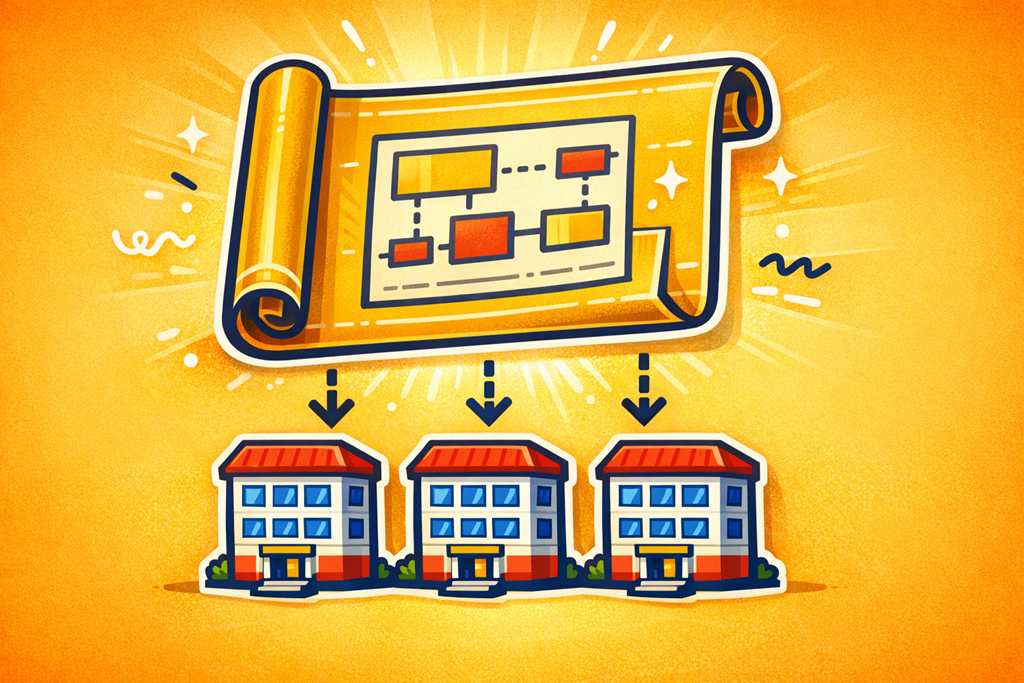
The MSPs creating margin in 2026 are running a different model. They treat BP as a platform to operate, not a bundle to install. That means one golden tenant specification, policy and configuration baselines as code, and a manage-by-exception approach where most work is standardized and only true client-specific needs are handled manually.
The Core Reframe
Old model: BP is a bundle of tools you sell and configure manually.
New model: BP is a platform you operate with repeatable controls, automation, and drift management.
This is not semantics. It changes your cost structure, risk profile, and staffing model. If your service desk touches every tenant for the same control updates, your operating model is brittle. If your team updates templates and pushes controlled changes across tenants, your model is scalable.
Why Standardisation Matters to MSP Economics
Across MSP environments, three recurring pain points appear:
- Ticket volume grows faster than seat count.
- Security inconsistencies appear between tenants and surface during incidents or audits.
- Service delivery depends on senior staff memory instead of documented, repeatable process.
Each pain point maps back to the same root cause: no formalized control plane standard. A standard does not remove client uniqueness. It separates universal BP controls (identity, device, threat, and messaging protections) from customer-specific exceptions.
Operational Blueprint: Building a Multi-Tenant BP Platform
1. Define the Golden Tenant Specification
Document the baseline configuration every tenant should inherit. Keep this explicit, versioned, and reviewable. Typical baseline areas include:
- Identity protection: MFA enforcement, legacy auth blocking, Conditional Access baseline policies.
- Endpoint posture: Intune compliance policies, configuration profiles, update rings, application control assumptions.
- Threat controls: Defender for Business onboarding, policy baseline, alert routing, and response ownership.
- Email and collaboration protection: anti-phishing, anti-malware, SPF/DKIM/DMARC alignment, external sharing defaults.
- Governance controls: role design, break-glass strategy, admin workflow, and change traceability.
2. Move Baseline to Code and Templates
Represent baseline controls as declarative templates and automation artifacts. Version them in source control and manage changes through pull requests. This gives your team:
- Repeatability across new tenant onboarding.
- Change history for control decisions.
- Rollback and peer review options before wide release.
- Reduced risk from one-off portal changes.
3. Implement Manage-by-Exception
Standardize the common 95% of BP control plane settings and explicitly document the 5% of client-specific requirements. Every exception should have:
- A business justification.
- A risk note.
- An owner.
- An annual review date.
Without this discipline, exceptions become hidden drift.
4. Add Drift Detection and Remediation Workflow
A platform model needs continuous control validation. Define what drift means for each control family, monitor for divergence, and route remediation tasks into service workflows. Your target state is not zero drift events. Your target state is rapid, low-friction detection and correction.
5. Measure Operational Outcomes
Set baseline metrics before rollout, then track improvement by month and quarter:
- Ticket volume per 100 seats.
- Time to onboard a new tenant.
- Percentage of tenants fully aligned to baseline.
- Mean time to detect and resolve drift.
- Security control coverage (for example, MFA and Conditional Access completeness).
Data Points Supporting the Platform Model
Metric
Reported Outcome
Ticket volume reduction
Up to 45% with standardized BP operations (Nerdio, January 2026)
Onboarding time reduction
About 60% with templated baseline approach (AvePoint, 2025)
Manual onboarding time
4-8 hours reduced to under 30 minutes with repeatable templates (Nerdio, 2026)
Compromised accounts without MFA
99.9% of compromised Microsoft accounts lacked MFA (Microsoft Security)
Three-year ROI
197% for standardized Microsoft 365 deployment models (Gartner TEI, 2025)
Tooling Reality: Free Baseline vs Scale Baseline
Microsoft 365 Lighthouse can be a solid starting point for smaller tenant counts. The challenge appears as tenant volume, exception complexity, and remediation needs increase. At mid-scale, MSPs typically require deeper baseline customization, stronger drift handling, and broader automation integrations than basic portal workflows provide.
The correct tooling decision is not free versus paid. It is capability versus future operating cost. A lower platform fee in year one can produce higher labor and security cost in year three if it cannot support your control model at scale.
Common Objections and Technical Rebuttals
“Every client is different, so we cannot standardize.”
Client business requirements differ. BP control plane fundamentals usually do not. Standardize identity, device, and threat baselines first, then document approved deviations. This preserves flexibility without losing repeatability.
“We do not have time to build this.”
You already spend the time, but in fragmented daily work. Standardisation converts distributed reactive effort into deliberate reusable engineering. The build period is finite. The efficiency and risk reduction are ongoing.
“Our senior engineer already knows the right setup.”
That is concentration risk. If key controls live in memory, absence, turnover, or workload spikes become security events. A written, versioned baseline is the minimum control for operational resilience.
A Practical 90-Day Execution Plan
Days 1-30: Baseline Definition and Gap Mapping
- Define your golden tenant control set.
- Map each managed tenant against baseline.
- Classify gaps as critical, high, medium, or low.
- Identify mandatory exceptions and assign owners.
Days 31-60: Automation and Pilot Rollout
- Convert baseline into templates or code artifacts.
- Pilot on a representative tenant cohort.
- Validate deployment safety, rollback process, and change approvals.
- Train service desk for exception-based operations.
Days 61-90: Full Rollout and Drift Operations
- Deploy baseline model across all eligible tenants.
- Activate drift detection and remediation workflow integration.
- Measure KPI deltas against pre-project baseline.
- Schedule monthly baseline governance review.
Leadership Takeaway
“The tenant is the new server.”
This framing captures the operational shift MSPs must make. In the server era, no mature provider hand-built every environment from memory. BP now requires the same discipline at the tenant layer. Standardisation is not a side project. It is the platform operating model that determines whether your MSP scales profitably and securely.
If your team still treats Business Premium as a bundle, you are paying a recurring tax in labour, risk, and inconsistency. If you run it as a platform, you create a repeatable system where growth does not automatically increase chaos.
References
- Nerdio, MSPs Standardize M365 Business Premium Deployment (January 2026).
- Microsoft Intune partners blog, #IntuneForMSPs validated partners (March 2026).
- AvePoint, MSP industry trends and operations insights (2025 context).
- Gartner, Total Economic Impact of Microsoft 365 (2025 context).
- CIPP project metrics, GitHub repository (2026).
- OpenIntuneBaseline metrics, GitHub repository (2026).
- Microsoft Security, Identity and MFA security guidance.


One thought on “Standardising Microsoft 365 Business Premium Across All MSP Tenants: From License Bundle to Operating Platform”