
Most MSPs I talk to are convinced their biggest constraint is time. Too much work. Too few people. No space to step back and “document everything” the way they know they should.
The uncomfortable truth? You don’t actually need more time. You already have the systems. You’re just not using them properly.
If you want to make progress with standardisation, scale, and eventually AI, step one isn’t buying another tool. It’s recording the work you’re already doing.
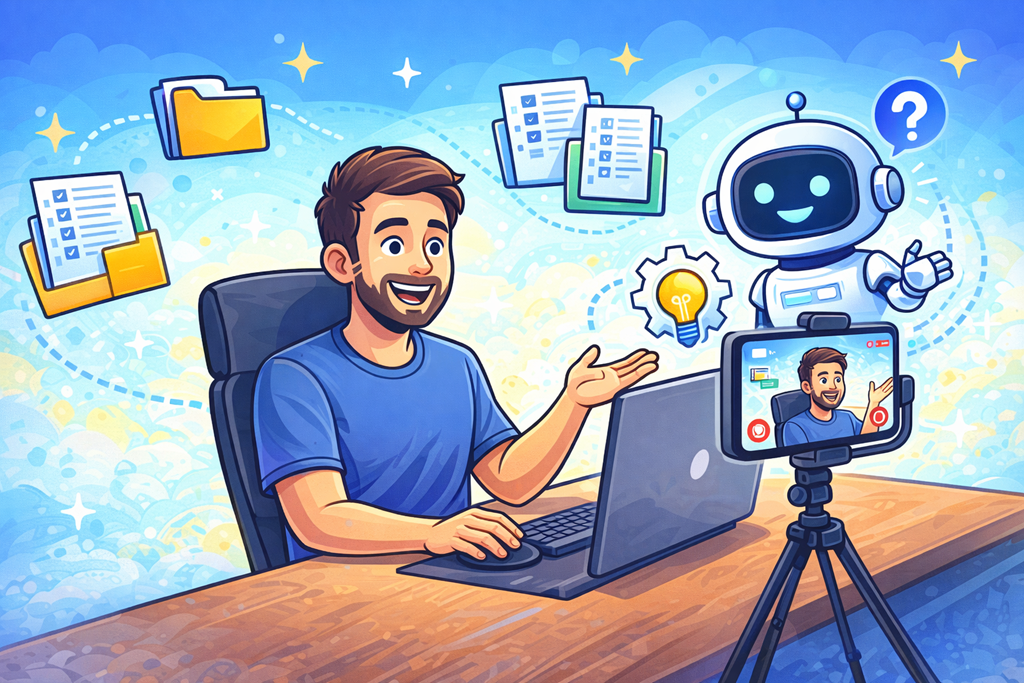
The Camcorder Method, Reinforced by AI
Years ago, we talked about the Camcorder Method: capture the work as it happens instead of trying to document it afterwards. With AI, that approach gets supercharged.
When you’re configuring a tenant, fixing a tricky issue, onboarding a client, or even handling an escalation, hit record.
- Screen recording
- Phone camera
- Meeting recording if you’re doing it live with a client or tech
The tool doesn’t matter. The habit does.
As you work, talk through what you’re doing and—more importantly—why. Explain the judgement calls. The checks you instinctively run. The things you don’t do, and why.
This is the stuff that never makes it into documentation, but it’s exactly what junior staff, new hires, and future-you need to understand.
From Recording to Playbook (Without Starting from Scratch)
Here’s where MSPs usually get stuck. They think recording is only half the job, and now they need hours to “turn it into a proper process”.
That used to be true. It isn’t anymore.
Take the recording transcript and give it to AI. Ask it to turn that raw thinking into a draft playbook, SOP, or checklist. Not a final version—a starting point that reflects how the work is actually done in your business.
Then use one of my favourite prompts:
“Ask me any questions that would make this process clearer or easier for the next person to follow.”
This flips the dynamic. Instead of you trying to remember everything you know, the AI actively looks for gaps, assumptions, and missing steps. You answer those questions once, and the documentation improves permanently.
This is exactly how senior staff think when they onboard someone: “They’ll probably get stuck here… they’ll ask me about this… they’ll miss that.”
Now you can capture that thinking without being interrupted mid-job.
The Stranger Test (Be Brutally Honest)
Here’s the litmus test I apply to every process document.
If a capable stranger from another MSP picked this up, could they execute it end-to-end without calling you?
If the answer is “probably not”, the process isn’t finished.
That doesn’t mean it has to be perfect. It means it can’t rely on tribal knowledge, hallway conversations, or “just ask Dave, he knows”.
Every time you have to jump in and clarify something, that’s feedback. Record it. Update the playbook. Feed it back into AI. Over time, the number of interruptions drops—and so does your personal bottleneck.
This is how you scale without cloning yourself.
Why This Actually Matters to the Business
This isn’t about documentation for documentation’s sake.
- It reduces risk when key people are away or leave
- It shortens onboarding for new techs
- It creates consistent outcomes for clients
- It gives you something solid to build automation and AI on later
AI doesn’t magically fix messy operations. It rewards clarity. If your processes only exist in your head, AI just amplifies the chaos.
Recording the work is the fastest way I know to get that clarity without stopping the business to “do documentation”.
Final Thought: Don’t Overthink Step One
If you’ve been putting this off because it feels too big, start smaller.
Record the next task you do that you’ve done a hundred times before. Talk it through. Transcribe it. Let AI help shape it.
You don’t need a transformation project. You need momentum.
Hit record. The rest follows.

