Need to Know podcast–Episode 149

Marc and I bring you up to date with the latest Azure and Office 365. Lot’s been happening so tune in for the latest information on what been happening in the Microsoft Cloud.

Take a listen and let us know what you think –feedback@needtoknow.cloud

You can listen to this episode directly at:

https://ciaops.podbean.com/e/episode-149-cloud-news/

or via Soundcloud here:

Subscribe via iTunes at:

https://itunes.apple.com/au/podcast/ciaops-need-to-know-podcasts/id406891445?mt=2

The podcast is also available on Stitcher at:

http://www.stitcher.com/podcast/ciaops/need-to-know-podcast?refid=stpr

Don’t forget to give the show a rating as well as send us any feedback or suggestions you may have for the show.

Resources

@marckean

@directorcia

Azure news from Marc

Azure VM pre checks

Improved Office 365 login experience

SharePoint page Team news now visible

New file viewers in OneDrive for Business available

Removal of restricted file characters in SharePoint

Recover deleted Groups in Office 365

Assigning multiple users to tasks in Planner now available

This show brought to you by:

https://cpem.io/tJ01Hzu2k.js


Azure CLI 2.0 on Windows Bash shell

I recently wrote how to install Azure CLI 2.0 on Windows 10:

Configuring Azure CLI 2.0 on Windows 10

However, another option now with Windows 10 is to use the Bash Shell. Here’s the process of how to install both Bash and Azure CLI 2.0 on Windows 10

image

You’ll firstly need to install the Bash shell on Windows 10. To do this navigate to Settings in Windows 10. Then select For developers as shown above. Now select Developer mode.

image

You’ll be prompted to turn on developer mode. Select Yes to continue.

image

Windows will firstly search for the appropriate package

image

and then install it.

image

When complete you should receive a message, as shown above, that indicates you may need to restart your PC. You don’t have to reset just yet.

image

Go to Control Panel and select the option to Turn Windows features on or off. From the list that appears, locate and select Windows Subsystem for Linux (Beta) as shown above and then select OK.

image

Once the changes have been made you will need to reboot your PC.

image

Once rebooted select the Windows Start Menu and type bash. Select the bash option from the menu that appears.

image

Hit Y to continue.

image

The bash shell will be downloaded from the Windows Store as shown above.

image

It will then be installed.

image

When that is complete, you’ll need to enter a bash shell admin user name and password. This doesn’t have to be the same as you PC login but make sure you remember the details.

image

The bash shell installation will complete as you can see above.

image

If you now return to Windows Start Menu and enter bash you will see the option has changed to Bash on Ubuntu on Windows.

image

Next step is to ensure the Ubuntu subsystem is up to date. To do this enter the following command at the bash shell:

sudo apt-get update

image

Next, enter the command:

sudo apt-get upgrade

Once that is complete enter the following command:

echo “deb [arch=amd64] https://packages.microsoft.com/repos/azure-cli/ wheezy main” | \ sudo tee /etc/apt/sources.list.d/azure-cli.list

image

Then:

sudo apt-key adv –keyserver packages.microsoft.com –recv-keys 417A0893

image

Then:

sudo apt-get install apt-transport-https

image

Finally:

sudo apt-get update && sudo apt-get install azure-cli

to actually install Azure CLI 2.0.

image

image

Now if you type:

az

at the command prompt you should see the Azure CLI appear as shown above.

Remember, Azure CLI is designed to be a cross platform tool. That means it works on both Windows 10 and Bash on Windows 10 as well as Mac, Linux, etc. This makes it a great way to manage Azure from any platform.

Configuring Azure CLI 2.0 on Windows 10

Azure CLI is a cross platform scripting tool that runs on Linux, Mac and Windows.

There are two versions of the Azure Command-Line Interface (CLI) currently available:

  • Azure CLI 2.0: Next-generation CLI written in Python, for use with the Resource Manager deployment model.
  • Azure CLI 1.0: CLI written in Node.js, for use with both the classic and Resource Manager deployment models.

What we’ll cover here is how to install version 2.0 on a Windows 10 machine. To do this you basically need to follow the following steps in this article:

Install Azure CLI 2.0
image

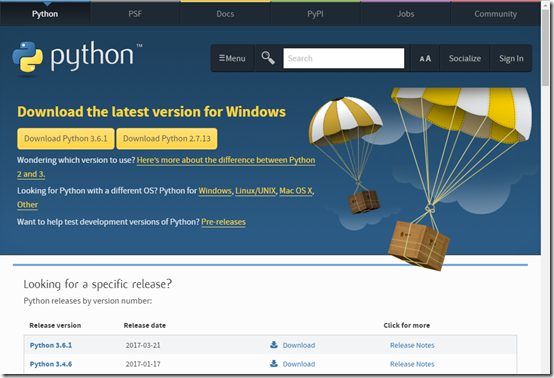
You’ll need to firstly download Python for Windows which you will find here:

https://www.python.org/downloads/

Select the most current version (here 3.6.1).
image

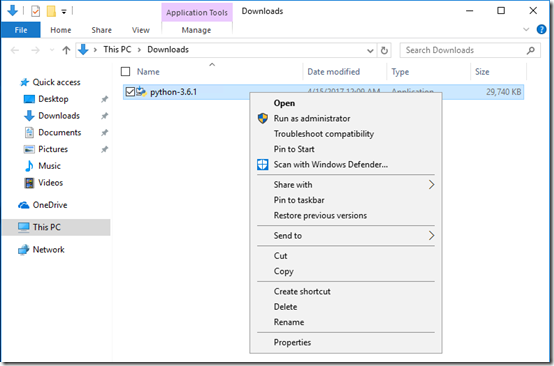
Once you have downloaded the file, right mouse click on the downloaded file and select Run as administrator.

Accept the UAC that appears.
image

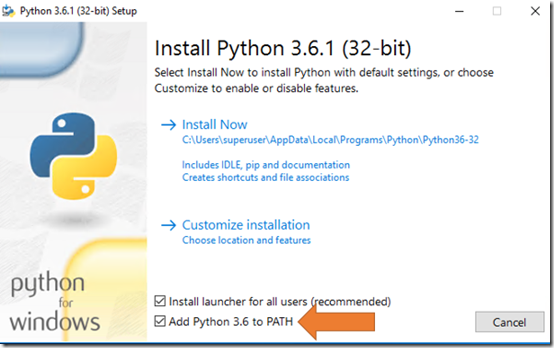
The install splash screen should now appear. Before you commence the install ensure the option to Add Python to PATH is selected at the bottom of the dialog as shown.

Select the Install now option to commence the installation.
image

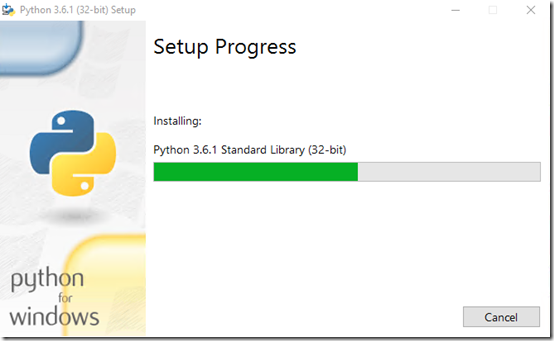
You should now see the installation progressing.
image

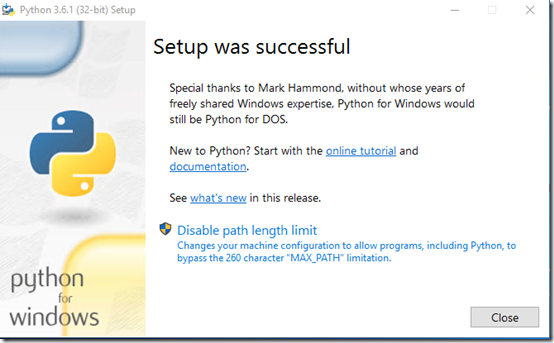
Select Close when complete.

image

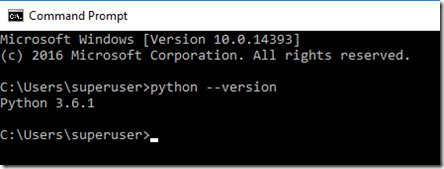
Open a command prompt and type:

python –-version

to which you should see the version number as shown above indicating that Python has install as expected.

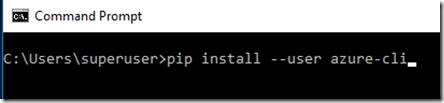
You now need to install the Azure CLI which you do using the command:

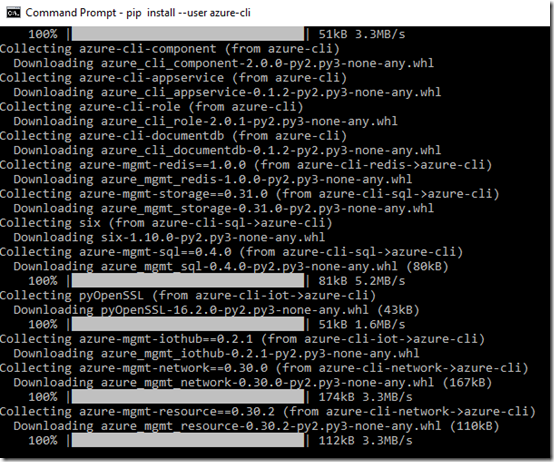
pip install –-user azure-cli
image

image

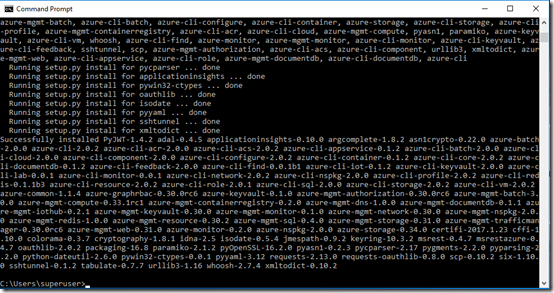
You should then see a range of package being downloaded as shown above.

This process will take a few minutes to complete.
image

When the process is complete, you’ll be returned to the command prompt as shown.
image

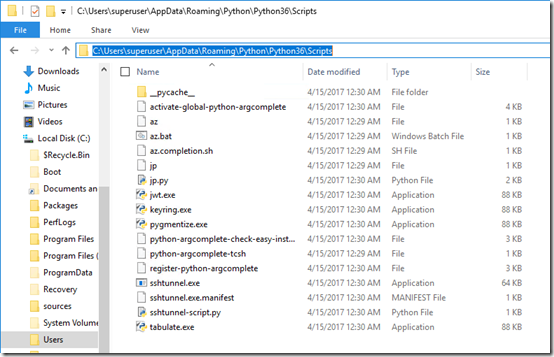
The command that you run to launch the CLI environment is az.bat. That has been installed in:

C:\Users\\AppData\Roaming\Python\Python36\Scripts

which unfortunately has not been added to the PATH environment. So you’ll need to add this for convenience.
image

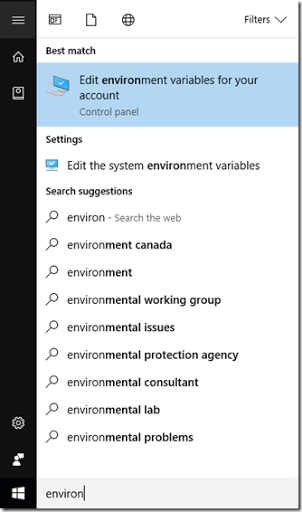
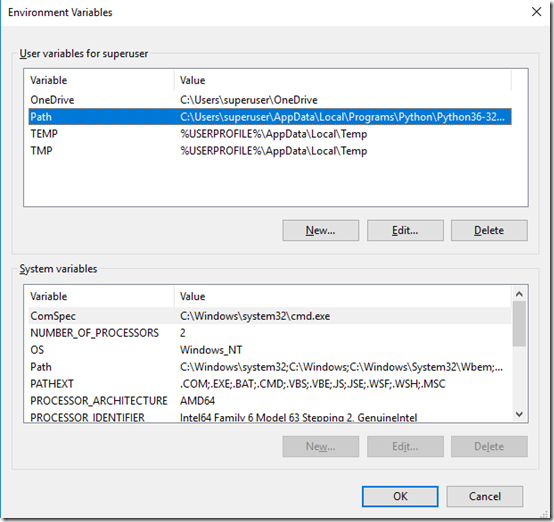
From the Windows 10 Start type environ and you should see the option Edit environment variables for your account at the top of the list as shown. Select this.
image

Select the Path line in the top box and then select the Edit button.
image

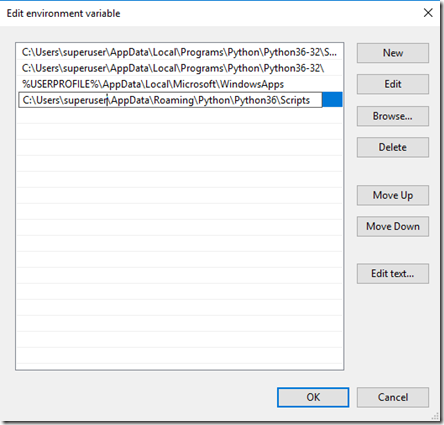
Select New and add the path to the az.bat file as shown above.

Select OK twice to save your changes and exit.
image

image

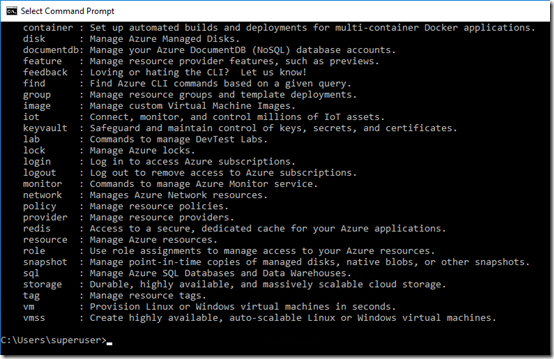
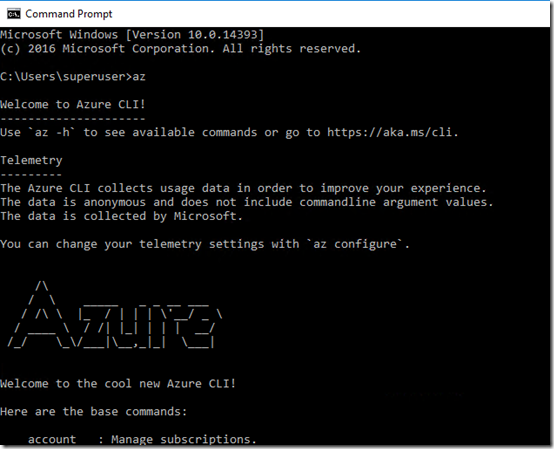
If you now go to the command prompt and type:

az

you should see the Azure CLI appear as shown above. You are now ready to use Azure CLI 2.0 on Windows to manage your Azure environment.

Setting up Azure email billing alerts

Azure billing is very different from Office 365. It is consumption based rather than fixed cost per month cost. That is you pay for what you use. The more you use per month, the more you pay. Azure is also typically a ‘post-paid’ service, that is you pay for your usage at the end of the month.

Using Azure services is becoming easier and easier which translates into higher charges. There is also the case where people consume Azure services not exactly understanding what they consuming. This can result in a type of ‘bill-shock’ where the expected charges can be above the anticipated amount.

One of the way to avoid any potential Azure ‘bill-shock’ is to set up email billing alerts in Azure to warn you when your Azure consumption exceeds some threshold. Here’s how to do that.

image

Open the Azure management portal and navigate to the Subscriptions option. Then select the appropriate Subscription from the list of those available and from the menu at the top of the selected Subscription page select Manage as shown above.

image

You should then see a summary of your current usage for that subscription as shown above. Email alerting is currently in preview so select preview features from the menu across the top of the page.

image

You should now see the Billing Alert Service as shown above. Select the try it now button on the left to enable the service.

image

You’ll be prompted to confirm your selection by clicking the check mark in the lower right of the dialog box that appears.

image

The page will pause and think for a few moments.

image

and then you should see that the Billing Alert Service is active as shown above.

image

If you now return to the subscriptions option from the menu across the very top, you should now see a new option on the menu for your subscription called Alerts as highlighted above. Select the Alerts option to continue.

image

Select the add alert option. You’ll notice that you get a total of 5 alerts you can configure.

image

Enter a name for the alert as well as the when the alert will fire. You can also nominate up to two email addresses this alert will be sent to.

image

You can alert for either Monetary credits (i.e. amount remaining) or Billing total (i.e. amount spent). In this case I’m going to select Monetary credits because I want to know when my monthly available amount is becoming depleted.

Select Save when complete.

image

You should now see the alert you just created listed as shown above.

image

If you expand the alert you’ll see all the details and be able to make changes. You’ll also see the delete option (garbage can icon) on the right.

You can now add any additional alerts you desire.

Now if your subscription triggers an alert you’ll receive an email notification. Remember, if you have multiple Azure subscriptions in a tenant you’ll need to repeat this process for every subscription you wish to monitor.

Lowering your Azure VM costs

Microsoft have announced a new ‘Hybrid Use Benefit’ method to potentially reduce the cost of VMs in Azure by allowing you the right to use some of your on-premises licensing in Azure VM’s.

The above video give you more information as does this page:

https://azure.microsoft.com/en-us/pricing/hybrid-use-benefit/

As you can see, the saving can be up to 40%! That’s pretty significant if you qualify.

Another tool that Microsoft has just announced to help you migrate to Azure is the:

Free cloud migration assessment

This assessment can help you:

  • Identify all the servers across your datacenter environment
  • Analyse your workload configuration
  • Estimate the initial cost benefits of moving to Microsoft Azure
  • View and export the results into a customized report

However, if you are just getting started with Azure check out this on demand webinar:

Getting Started with Microsoft Azure

Need to Know Podcast–Episode 148

Marc goes solo for this episode as he covers the recent Experts Live in Melbourne. He speaks with a bunch of guests all about the sessions that happened during the conference and their thoughts about the technology being discussed.

Take a listen and let us know what you think –feedback@needtoknow.cloud

You can listen to this episode directly at:

https://ciaops.podbean.com/e/episode-148-experts-live/

or via Soundcloud here:


Subscribe via iTunes at:

https://itunes.apple.com/au/podcast/ciaops-need-to-know-podcasts/id406891445?mt=2

The podcast is also available on Stitcher at:

http://www.stitcher.com/podcast/ciaops/need-to-know-podcast?refid=stpr

Don’t forget to give the show a rating as well as send us any feedback or suggestions you may have for the show.

Resources

@marckean

@directorcia

@daniel_apps

@onpremcloudguy

@orinthomas

@danielmar268

@pzerger

Experts Live

Conference wrap up from Marc

This episode brought to you buy:

https://cpem.io/tJ01Hzu2k.js

Need to Know Podcast–Episode 147

We speak with a few Microsoft Community Regional Directors whom we caught up with at a recent MVP event in Sydney. On this show you’ll hear from Troy Hunt, Adam Coogan and Greg Low and their thoughts about what’s been happening at Microsoft over the past 12 months. Some great insights from some of the leaders in Microsoft technologies today. You’ll also get a behind the scenes peek about this podcast as Marc and I speak about the presentation we gave to MVPs about this very podcast and how it all happens.

Take a listen and let us know what you think –feedback@needtoknow.cloud

You can listen to this episode directly at:

https://ciaops.podbean.com/e/episode-147-mvp-community-event/

or on Soundcloud here:

Resources

@marckean

@directorcia

@troyhunt

@adamcogan

@greglow

This show is brought to you by:

https://cpem.io/tJ01Hzu2k.js

Need to Know Podcast–Episode 146

We try some different things in this podcast. Firstly, our normal news segment we do from a local cafe. This means you’ll get the full experience of outside dining plus all the latest Office 365 and Azure news. Our content piece this week is from a live presentation I gave to a number of resellers on how different the world is today from what many believe.

Take a listen and let us know what you think – feedback@needtoknow.cloud

You can listen to this episode directly at:

https://ciaops.podbean.com/e/episode-146-al-fresco/

or on Soundcloud here:

Subscribe via iTunes at:

https://itunes.apple.com/au/podcast/ciaops-need-to-know-podcasts/id406891445?mt=2

The podcast is also available on Stitcher at:

http://www.stitcher.com/podcast/ciaops/need-to-know-podcast?refid=stpr

Don’t forget to give the show a rating as well as send us any feedback or suggestions you may have for the show.

Resources

@marckean

@directorcia

Azure news from Marc

Microsoft Teams now available in Education

Compliance challenges of Microsoft Teams

New Office 365 MVA course

Web SSO Portal Evernote set up tutorial

Office 365 video now supports Kiosk plans as view only

How SMB resellers can transform their business

Azure Logic Apps