
There’s a deceptively simple question I keep coming back to when I talk to business owners, especially MSPs:
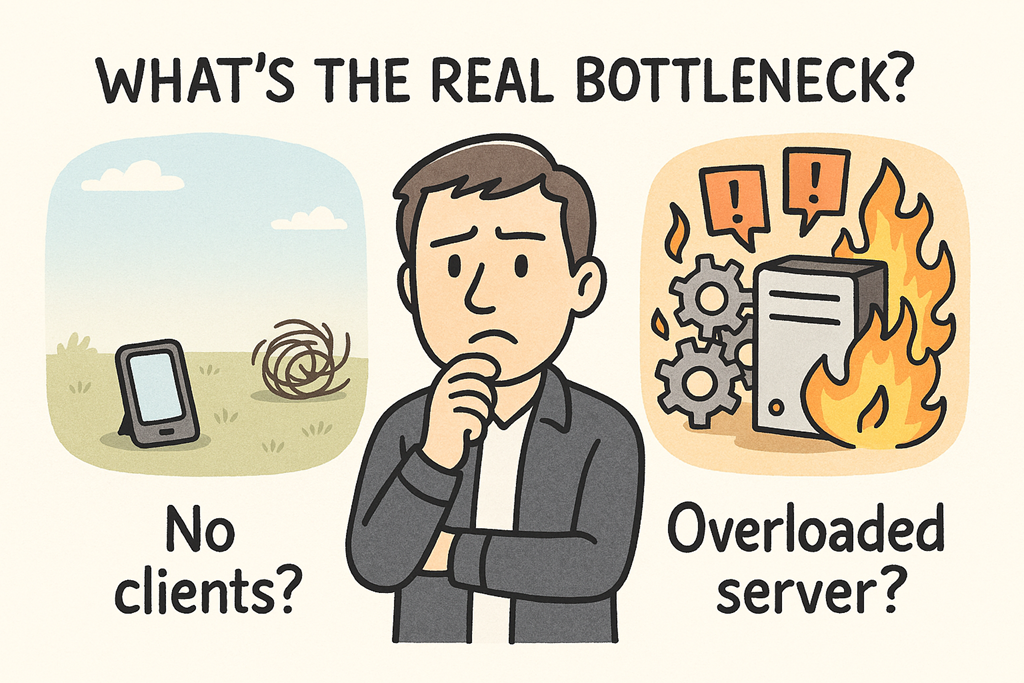
Am I demand constrained, or supply constrained?
In plain English:
Is your biggest problem “I can’t get enough clients”?
Or is it “If I had more clients, things would break”?
Most people think they know the answer. Many are wrong. And a surprising number have never stopped long enough to ask the question properly.
This matters, because these are two very different problems. Confuse them, and you’ll work very hard on the wrong thing.
Demand constrained: not enough clients
If you’re demand constrained, your bottleneck is sales and marketing. The phone isn’t ringing. Leads are inconsistent. Referrals have slowed. You’ve got capacity sitting idle.
The giveaway signs are obvious once you’re honest with yourself:
- You (or your team) have time on your hands
- Onboarding a new client feels exciting, not stressful
- You’re discounting, chasing, or “just seeing what happens”
- You spend more time tweaking services than talking to prospects
In this mode, polishing internal processes is mostly procrastination. Perfecting your PSA workflows or rewriting your SOPs for the fifth time won’t magically create demand. Neither will buying another tool “just in case”.
The uncomfortable truth?
If you’re demand constrained, you need to work on being seen, being clear, and being chosen.
That usually means:
- Sharpening your message so people know exactly who you help
- Saying no to being “everything to everyone”
- Talking to customers and prospects more than your tools
- Getting comfortable with selling, not hiding behind tech
Demand problems are uncomfortable because they expose mindset issues. Fear of rejection. Fear of being visible. Fear of being judged. That’s why so many business owners avoid them and retreat into “busy work”.
Supply constrained: growth would hurt
If you’re supply constrained, demand isn’t the problem. You could sell more. In fact, you probably already are. The issue is that growth feels fragile.
Adding one more client means:
- Response times slip
- The same fires keep reappearing
- Only a few people really know how things work
- You’re the bottleneck for decisions, approvals, or fixes
This is where things get dangerous. From the outside, the business looks successful. Revenue is up. The pipeline is full. But internally, it’s held together with duct tape and heroics.
If you’re supply constrained and you push harder on sales, you don’t get leverage — you get burnout.
This is the stage where “working harder” finally stops working.
The fix here isn’t more leads. It’s leverage.
That usually means:
- Documented, repeatable ways of delivering outcomes
- Fewer services, done better, not more options
- Clear standards instead of tribal knowledge
- Letting go of being the smartest person in every room
Supply constraints force you to confront control issues. If everything depends on you, growth will always feel unsafe.
The trap: fixing the wrong constraint
The real danger is misdiagnosis.
I regularly see MSPs who feel supply constrained, but are actually demand constrained. They blame process, tools, or staff when the real issue is inconsistent sales. So they over-engineer systems for a scale that never arrives.
I also see the opposite: businesses with strong demand that keep pushing sales harder, hoping revenue will magically fix operational cracks. It doesn’t. It just widens them.
Revenue hides problems. Scale reveals them.
You can’t outgrow a broken delivery model. And you can’t systemise your way out of obscurity.
Constraints change — your focus must too
Here’s the part most people miss:
Constraints move.
Early on, you’re almost always demand constrained. Later, if you do things right, you become supply constrained. That’s not failure — that’s progress.
The mistake is clinging to last year’s strategy because it once worked.
What got you from zero to one won’t get you from one to ten.
This is why the most successful business owners spend more time working on themselves than on their business. They’re constantly reassessing where the real bottleneck is — and adjusting their behaviour accordingly.
Not chasing shiny tactics. Not copying someone else’s playbook. But doing the honest internal work.
Ask the question. Answer it honestly.
So ask yourself, properly:
- If I doubled my leads tomorrow, would things improve or collapse?
- Where do I personally spend time because “it’s quicker if I do it”?
- What problem am I avoiding because it feels uncomfortable?
There is always a constraint. The job isn’t to eliminate it — it’s to identify it and work on the right thing at the right time.
Growth isn’t about doing more.
It’s about fixing what’s actually in the way.
And that starts with asking the right question.

