
Introduction
Artificial Intelligence (AI) is reshaping how we value and access human expertise. As AI expert Andrew Ng observed, “AI is the new electricity,” meaning it is transforming virtually every industry much like electricity did a century ago[5]. Traditionally, expertise – the deep knowledge and skill acquired through experience and education – has been a scarce and highly valued resource. Experts (such as master craftsmen, doctors, or financial advisors) commanded respect and high fees because their specialized knowledge was not easily obtained by others. When knowledge was hard to come by, it was perceived as more valuable[13]. Businesses, too, built competitive advantage on unique expert capabilities – for example, Toyota’s mastery of lean manufacturing or Nvidia’s skill in chip design[12][1]. In essence, expertise has long been a key differentiator that individuals and companies leveraged for success[1].
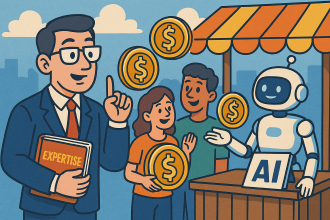
However, the rapid advancement of AI is fundamentally changing this picture. AI systems can now learn from vast datasets and perform complex tasks that previously required seasoned human experts. This has made knowledge and know-how far cheaper and easier to access[12]. As a result, expertise is increasingly becoming a commodity – a widely available resource – rather than the exclusive domain of a few. This article explores how AI is commoditizing expertise, examining its traditional definition and value, the role of AI in this transformation, examples across industries, the benefits and challenges involved, and implications for professionals, industries, and society’s future.
Defining Expertise and Its Traditional Value
What is “expertise”? In simple terms, expertise is a combination of deep theoretical knowledge and practical know-how in a specific domain[12]. An expert possesses extensive understanding of a subject as well as the ability to apply that knowledge effectively to solve problems. For instance, a surgeon’s expertise lies not only in medical facts but also in years of refined surgical skill; a software engineer’s expertise includes computer science theory plus coding experience. This blend of knowledge + experience + skill allows experts to perform at an exceptionally high level in their field.
Historically, expertise has been highly valued because it was relatively scarce. Developing true expertise often requires many years of education, training, and practice, so not many people achieve it in any given domain. Scarcity drives value – much like rare diamonds fetch a premium price, rare skills and knowledge have commanded premium salaries and fees[13]. Moreover, before the digital age, information was limited; experts were gatekeepers to vital knowledge. A few centuries ago, people had to rely on scholars, artisans or professionals for information and services that are readily available today. When knowledge was harder to access, society placed greater importance on those who possessed it[13].
In business, expertise traditionally served as a key competitive differentiator. Companies that cultivated unique expertise could outperform competitors. For example, firms like Toyota, Walmart and Procter & Gamble historically thrived by excelling in a particular area of expertise (manufacturing efficiency, distribution logistics, consumer marketing, respectively) that others could not easily replicate[12][1]. Similarly, professionals such as consultants or lawyers built careers on specialized expertise that clients paid top dollar to access. In short, expertise has long been synonymous with competitive advantage and professional prestige.
AI’s Role in Transforming Expertise into a Commodity
Artificial Intelligence is dramatically lowering the cost and barriers to obtaining expertise. AI systems – from machine learning algorithms to advanced “AI assistants” – can ingest and learn from enormous amounts of data, enabling them to mimic or even exceed human expert performance in certain tasks. As a result, knowledge and skills that once took years to acquire can now be accessed by anyone via AI tools at a fraction of the cost[2]. A Harvard Business School analysis notes that generative AI is “lowering the cost of expertise,” eroding one of the core factors that used to set firms and individuals apart[2]. If expertise becomes cheap and ubiquitous, it is no longer a unique differentiator – in other words, it turns into a commodity-like utility.
Several factors explain how AI is commoditizing expertise:
- Abundant Knowledge Data: In the digital era, humanity’s collective knowledge is recorded in databases, libraries, and online. AI can be trained on this global knowledge base, giving it access to far more information than any single human could master. The volume of specialized knowledge is growing exponentially, and AI helps keep up with this explosion[1]. For example, in biotech research, the number of papers is far beyond what a lone scientist can read, but AI can rapidly analyze such literature to extract expert insights[1].
- Advanced AI Models: Modern AI models (like deep neural networks and large language models) not only retrieve information, they simulate expert reasoning and decision-making. They can diagnose illnesses from medical images, write software code, draft legal documents, or translate languages – tasks that formerly required domain experts. These models encapsulate expert knowledge in their training and can apply it on demand.
- Decreasing Cost of AI: The cost of computing and AI model training has been falling, and AI services are increasingly affordable to use. The cost of using a top-tier AI (such as OpenAI’s GPT-4) has dropped by over 99% in the last couple of years[1]. What was once expensive proprietary expertise can now be obtained through low-cost or free AI applications. Organisations of any size can rent or utilize “expert” AI services cheaply, narrowing the gap between those with access to expert talent and those without.
- Instant, Scalable Access: AI-driven expertise is available on-demand, 24/7, and at scale. Instead of scheduling time with a specialist, people can query an AI chatbot or run an algorithm and get answers in seconds. AI systems can serve thousands of users simultaneously with consistent quality. This makes expert knowledge highly accessible to all, rather than bottlenecked by human availability.
To illustrate the differences between traditional human expertise and AI-powered expertise, consider the following comparison:
| Aspect | Traditional Human Expertise | AI-Powered Expertise |
|---|---|---|
| Accessibility | Limited and location-bound – requires finding or hiring an expert, often during working hours. | Broad and on-demand – available to anyone with an internet connection, anytime, anywhere. |
| Cost | High cost for expert services (salary, consultation fees) due to scarcity of skill. | Lower cost per use – AI tools automate expertise at scale, reducing marginal cost dramatically. |
| Scalability | Not easily scalable – one expert can serve only a limited number of people at once. | Highly scalable – a single AI system can serve many users simultaneously without quality loss. |
| Consistency | Varies by individual; human performance can be inconsistent or subjective. | Consistent outputs given the same input; no fatigue or mood variations (though may lack contextual nuance). |
| Personalisation | Personalised by an expert’s intuition and experience on a case-by-case basis. | Data-driven personalisation – AI analyses user data to tailor solutions, doing so rapidly across many cases. |
| Knowledge Scope | Often deep but narrow – experts specialize in one domain. | Broad and expanding – AI can be trained on multiple domains, possessing expansive cross-disciplinary knowledge. |
Table: Traditional human expertise vs AI-driven expertise in key dimensions. Human experts provide intuition, empathy and context that AI may lack, but AI offers speed, scale and breadth that no individual can match.
In essence, AI is democratizing expertise – taking it from the hands of the few and distributing it to the masses. Just as the printing press democratized access to information, AI is now doing the same for expert knowledge and skills. Even small businesses or individuals can leverage AI tools to perform tasks that once required teams of specialists[1]. This is fundamentally altering how we think about the value of expertise in society.
However, it’s important to note that not all expertise is fully replicable by AI (for example, complex strategic judgment or emotional intelligence remain human strengths). But within many domains, AI is undoubtedly eroding the exclusivity of expertise by making high-level capabilities more widespread.
Impact on Key Industries Where AI Commoditizes Expertise
The commoditization of expertise via AI is playing out in various sectors. Here are some notable examples across different industries:
Healthcare
AI is revolutionising healthcare by bringing expert-level diagnostic capabilities to clinicians and patients alike. Medical diagnosis and imaging analysis – tasks traditionally done by highly trained specialists – are now being automated. For example, AI algorithms can examine X-rays or MRIs for signs of disease with impressive accuracy. In one case, a machine learning model was able to detect breast cancer from mammogram images more accurately than a panel of six human radiologists[11]. Such AI diagnostic tools enable earlier and more accurate detection of conditions, potentially improving outcomes.
Importantly, AI is bridging gaps in healthcare access. In regions with shortages of specialists, AI-powered diagnostic systems act as “virtual experts,” bringing expert knowledge to underserved areas. As one industry expert noted, AI can “democratize access to accurate diagnostics and medical care,” helping populations that live in healthcare deserts[11]. For instance, an AI symptom checker or a triage chatbot can guide a patient in a remote village, providing advice that approximates what a doctor might say. By harnessing vast medical data – patient histories, lab results, medical literature – AI can assist general practitioners with specialist-level insights at the point of care. This means medical expertise is no longer confined to hospitals or clinics; it’s becoming available on any digital device. While human doctors remain crucial for treatment, empathy and complex decision-making, AI is now handling many rote expert tasks, from analyzing scans to suggesting diagnoses, effectively commoditizing portions of medical expertise.
Finance
The finance industry has seen a surge of AI tools that make financial expertise available to the general public. A prominent example is the rise of robo-advisors in wealth management. These are AI-driven platforms providing automated investment advice and portfolio management that was once the realm of human financial advisors. Robo-advisory services democratise investment management, making advanced strategies and financial planning accessible to all[10]. Even individuals with modest savings can now get tailored investment portfolios, risk assessments, and financial advice at low or no cost through apps. What’s happening is that the sophisticated knowledge of asset allocation, once offered only by pricey advisors to wealthy clients, has been encoded into algorithms available to anyone.
AI in finance also works at super-human speed and scale. Trading algorithms and risk assessment models can analyze market data in real time, something a human analyst could never do so broadly. This automation of financial expertise reduces costs – algorithms don’t earn commissions – and enables personalised advice at scale. Banks and fintech companies leverage AI to offer services (like loan approvals or fraud detection) that mimic an expert’s decision process almost instantaneously. For instance, credit decisions that used to rely on a loan officer’s expertise can be made by AI analyzing credit scores and economic data in seconds. The result is that many financial decisions and advices are no longer dependent on individual expert judgment; they’ve been standardized and commoditized via AI, available on-demand to customers. This has lowered fees (many robo-advisors charge a fraction of traditional advisor fees)[10] and broadened participation in financial markets. However, human financial experts still play a role for complex, personalised strategies – often focusing on higher-level planning while routine advising is handled by machines.
Education
Education is another arena where AI is turning expertise into a readily available utility. Traditionally, only students with means could afford personal tutors or specialised educational support. Now, AI-powered intelligent tutoring systems are providing one-on-one tutoring experiences at virtually zero incremental cost. For example, a large language model like ChatGPT can act as a personal tutor for any student with an internet connection. Research in education technology suggests that generative AI has the “potential to give every student a personalized tutoring experience on any topic,” serving as a scalable, affordable learning aid[9]. In the classroom, teachers are using AI tools for everything from grading assistance to lesson plan recommendations, effectively outsourcing some expert tasks to machines.
AI in education also empowers teachers by democratizing pedagogical expertise. Tools now exist that can generate high-quality curriculum materials, suggest instructional strategies, or adapt content for different learning needs – tasks that might have required a team of curriculum specialists or instructional coaches in the past. As one analyst put it, AI is evolving beyond just providing information to “democratizing expertise – empowering every teacher with tools once reserved for curriculum developers, instructional coaches, or special education experts.”[7] In practice, this means a classroom teacher can use AI to obtain expert-level suggestions for teaching a difficult concept, or to differentiate instruction for struggling learners, essentially having a “coach” on hand.
From the student perspective, AI tutors and educational chatbots offer expert help on demand. A student stuck on a calculus problem at 10 pm can get a step-by-step explanation from an AI tutor that has mastered vast math knowledge. This was unimaginable decades ago without a human tutor. Through AI, high-quality educational support is becoming a commodity available to anyone, not just those at elite schools or with private tutors. Of course, challenges remain – AI might provide incorrect information at times, and the guidance on using these tools effectively is still evolving – but the trend is clear: expert educational assistance is far more widely attainable due to AI.
Other Domains and Examples
Many other fields are experiencing similar shifts:
- Software Development: AI coding assistants (like GitHub Copilot) have absorbed knowledge from millions of software repositories and can generate code or suggest solutions to programming problems. This augments developers’ expertise and even enables novices to accomplish tasks that previously required veteran programmers. By having a tool with “expansive expertise” in many programming languages and frameworks[12], coding know-how is partly commoditized – developers everywhere can tap into a vast pool of coding expertise via an AI assistant.
- Content Creation and Creative Work: Creating high-quality graphics, videos, or written content once took significant skill and training. Today, AI-based tools allow amateurs to produce professional-quality content, lowering the barrier to entry in creative industries[1]. For instance, smartphone apps with AI filters and editing can make an ordinary video look studio-polished, and AI art generators can create illustrations without a human artist. This democratization of creative expertise means design and multimedia skills are more “commodified” – available through software – though truly original creative vision remains a human strength.
- Legal and Professional Services: AI is also making inroads into domains like law and customer service. Automated legal research tools can comb through case law and provide analysis in seconds, a task that occupied junior lawyers for hours. Chatbots handle customer inquiries with expert-like accuracy in many common scenarios (for example, troubleshooting tech support or answering tax questions), reducing the need for large support staffs. In each case, specialist knowledge is encoded in AI and delivered at scale, making the service more uniform and affordable.
Across these examples, the pattern is that AI systems leverage massive datasets and computational power to replicate elements of human expertise, and then provide it as a widely available service. This does not mean human experts are obsolete – rather, their role is shifting. But it does mean that the baseline capabilities in many professions have been elevated by AI and made accessible to non-experts.
Benefits of AI-Driven Commoditization of Expertise
The transformation of expertise into a more universally accessible resource comes with numerous benefits and opportunities:
- Wider Access to Knowledge and Services: Perhaps the greatest benefit is the democratization of expertise, allowing far wider access to expert knowledge and services than ever before. People who previously had little access to specialists can now obtain expert-level assistance via AI tools. For example, AI-driven apps can bring medical or legal advice to remote communities that lack professionals, and students globally can learn from AI tutors as if each had a personal teacher. In healthcare, this means improved diagnostics and care for underserved populations[11]; in education, it means personalised learning for students who would otherwise struggle alone[9]. Overall, society gains from a reduced knowledge divide – more people can benefit from what experts know.
- Cost Reduction and Efficiency: By automating expert work, AI significantly lowers the cost of many services. Routine tasks that once required paid expert hours can be done by AI in seconds. For businesses, this drives down operating costs; for consumers, it means cheaper (or even free) services. For instance, algorithms can manage investments for a fraction of the fee of a human advisor, and an AI legal tool can draft a basic contract without the billable hours of a lawyer. Lower costs make expert services more affordable to more people[10][2]. Additionally, AI systems work tirelessly and quickly – performing analyses, writing reports, or scanning data far faster than a human – leading to huge efficiency gains. Tasks that took days of expert effort might be completed in minutes by AI, saving time and boosting productivity.
- Scalability and Consistency: AI-driven expertise can scale almost limitlessly, which is a boon for large-scale needs. For example, a single AI customer support agent can handle thousands of queries at once, maintaining a consistent quality of response. This scalability ensures that help or knowledge is available exactly when and where needed, without queue times or scheduling constraints. Moreover, AI provides consistent outputs – unlike humans, it doesn’t have off days or cognitive bias in the same way. A diagnostic AI will apply the same criteria to every case reliably (though it may reflect biases in training data – see challenges). Consistency can improve quality control in processes like manufacturing or data analysis, where reliance on variable human expertise used to lead to inconsistent results.
- Augmentation of Human Capabilities: Rather than simply replacing experts, AI often augments human experts, allowing them to work more effectively. Professionals can offload tedious or time-consuming parts of their job to AI and focus on higher-level tasks. For instance, doctors freed from manually reviewing every scan can spend more time on patient care and complex cases; teachers who use AI to grade homework can devote energy to in-depth teaching. Businesses using AI copilots find their employees can handle a broader scope of work. This enhancement of productivity leads to what some call a “triple product advantage” – efficiency gains, a more productive workforce, and ability to focus on core creative competencies[1]. In short, when humans and AI collaborate, output and outcomes improve.
- Innovation and Knowledge Expansion: With AI handling routine expertise, human experts have more bandwidth to drive innovation. Also, when expert knowledge is widely accessible, it can be combined in new ways. A researcher in a small startup can utilize AI to get insights from fields outside their own expertise, potentially sparking cross-disciplinary innovations. We see this in biotech, where AI helps smaller firms design drugs or analyze genomic data on par with large pharma companies[1]. The commoditization of expertise lowers barriers to entry, allowing new entrants to compete and contribute ideas in fields previously dominated by a few experts or big players. This can accelerate overall progress and creative solutions to complex problems.
- Addressing Skill Shortages: In fields with talent shortages (like healthcare or cybersecurity), AI can fill the gap by handling tasks that there aren’t enough experts for. This helps alleviate bottlenecks in critical services. For example, if there are not enough radiologists in a region, an AI can step in to read scans, mitigating the shortage. Similarly, AI can monitor networks for security threats continuously, supplementing limited cybersecurity teams. By scaling expert functions, AI ensures essential work gets done even when human experts are in short supply.
In summary, commoditizing expertise with AI has the potential to create a more equitable and efficient society: knowledge is no longer a privilege of the few, and many processes become faster and cheaper. Companies benefit from new capabilities and consumers benefit from improved access and choice. These advantages, however, come paired with significant challenges that need to be managed.
Challenges and Risks of Expertise Commoditization
While the widespread availability of AI-driven expertise offers clear benefits, it also raises challenges and concerns on multiple fronts:
- Quality Control and Accuracy: Reliability of AI outputs is a key concern. AI systems are not infallible – they can make errors or produce “hallucinations” (incorrect answers that a human expert would catch). Blindly trusting an AI’s expertise can lead to mistakes, some with serious consequences (e.g. a misdiagnosis or flawed financial advice). For instance, in education, it’s noted that while AI tutors show promise, there is a “substantial risk of AI-generated fabrications,” meaning students could be misled by incorrect information if not carefully monitored[9]. Unlike a human expert who can be questioned and can explain reasoning, AI might not always provide transparency or rationale for its conclusions. This makes human oversight and verification crucial. As one AI expert warned, current AI models may confidently go beyond their remit – “LLMs love to freelance… Smart people with good AI often ‘fall asleep at the wheel.’” It’s important to use AI as a “thought partner, not a thought dispenser,” implying that users must apply their own expertise and critical thinking to validate AI’s output[2]. Ensuring quality means developing better AI explainability, as well as training users to double-check AI-provided solutions.
- Loss of Uniqueness and Value Erosion: If everyone has access to the same baseline of AI-provided expertise, then expert insights that were once special become commonplace. This can erode the value of human experts in the marketplace. For example, consultants have raised the point that if “everyone has the same insights, those insights are no longer valuable,” cautioning that clients won’t pay high fees for commoditized expertise[5]. Professionals who built their identity and income around exclusive knowledge may find demand for their services declining. This pushes human experts to redefine their value proposition, focusing on what goes beyond the AI’s common knowledge (such as proprietary insight, creativity, or personal connection). In essence, the “premium” on standard expertise is shrinking – an issue for those whose livelihoods depend on scarcity of their skill.
- Job Displacement and Workforce Impact: AI’s encroachment into expert domains contributes to fears of job displacement. If tasks that used to require dozens of skilled workers can be done by one AI, the workforce needs will change. We already see this in areas like customer support and basic legal work. Over time, roles like medical technicians, financial analysts, or even teachers could be partially displaced or require far fewer personnel because AI handles much of the load. Studies by economists and organizations warn that AI could potentially displace millions of jobs, not only blue-collar work but also white-collar expert roles, raising concerns about unemployment and economic disruption[8]. Entire industries might be restructured; for example, travel agencies have largely disappeared in face of AI-driven booking systems[1]. While AI will also create new jobs and augment others, the transition may be painful for those whose expertise becomes less needed. This risk requires proactive adaptation (addressed in the next section).
- Ethical and Bias Issues: Ethical considerations are paramount when AI starts acting with expert authority. AI systems can inadvertently perpetuate biases present in their training data. A commoditized expert that’s biased can cause widespread harm – “biased algorithms can promote discrimination or inaccurate decision-making” on a large scale[3]. For instance, if an AI medical system has mostly trained on data from one ethnic group, it might be less accurate for others, leading to unequal care. Additionally, unequal access to AI could exacerbate societal inequalities[3]. If advanced AI tools (and thus expertise) are only available to wealthy individuals or countries with infrastructure, the knowledge gap could actually widen for those left behind. Privacy is another ethical concern: providing AI with sensitive data (medical records, personal finances) in exchange for expert advice requires trust that the information will be handled responsibly. There are also questions of accountability – if an AI gives poor advice, who is liable? Ethically, as we rely on AI experts, we have to ensure they are fair, transparent, and used in a way that respects human rights and privacy. Policymakers and researchers are actively working on guidelines to prevent AI-related harms and bias, as will be noted later[3].
- Over-reliance and Skill Atrophy: A more subtle risk is that people may become overly reliant on AI and let their own skills wane. If an AI always provides the answer, individuals might stop learning or maintaining expertise themselves. For example, junior accountants who always use AI to find errors might not develop the same sharp auditing skills, or medical trainees might rely on diagnostic AI and lose practice in critical thinking. In education, experts caution that using AI too readily can “short-circuit critical student learning processes,” meaning if students outsource thinking to AI, they may not develop deeper understanding[7]. In the long run, society could suffer a form of “de-skilling.” Human expertise could degrade when not exercised, leaving us vulnerable if AI systems fail or if novel problems arise that AI hasn’t seen. Maintaining a healthy balance – using AI as support while still cultivating human talent – is a challenge we must manage.
- Security and Trust: When expertise is delivered via AI, new security concerns arise. AI systems could be targets of hacking or manipulation, which in turn could lead to incorrect outputs on a mass scale. There is also the matter of trust – convincing users to trust AI advice (when appropriate) is non-trivial, especially if the AI is a black box. Gaining public trust in AI “experts” will require transparency, proven accuracy, and a track record of safety. Any high-profile failures could make people rightfully skeptical of relying on AI for critical matters.
In sum, the commoditization of expertise through AI is a double-edged sword. It democratizes knowledge but also disrupts traditional roles. The key challenges revolve around maintaining quality and ethical standards, preserving the human element where it counts, and navigating the economic shifts that result. Addressing these issues is crucial to fully harness the benefits of AI-driven expertise without incurring undue harm.
Adapting to the New Expertise Landscape
Given the profound changes AI is bringing, how can professionals, businesses, and policymakers adapt to thrive in an era where expertise is abundant and commoditized? This section outlines strategies for various stakeholders to navigate the new landscape.
Professionals: Upskilling and Differentiating
For individual professionals, the age of commoditized expertise demands a proactive approach to remain relevant and valued. The strategy for workers is twofold: continuously upskill (especially in collaboration with AI) and focus on uniquely human strengths.
- Embrace Lifelong Learning (Reskilling/Upskilling): As AI takes over basic expert tasks, professionals should move up the value chain by learning new skills. This might mean developing technical skills to work alongside AI, or transitioning into areas that AI finds difficult (creative strategy, interpersonal roles, etc.). Experts advise that as AI becomes integrated into workflows, professionals must stay ahead by seeking out opportunities for reskilling or upskilling[6]. For example, a radiologist might learn to interpret AI outputs and focus on more complex diagnoses, or a teacher might train in using AI tools to better manage a classroom. A survey shows the majority of workers are willing to retrain to improve future career prospects[6]. By acquiring new competencies (like data analysis, prompt engineering, or AI oversight techniques), professionals can augment their expertise with AI instead of being replaced by it. Essentially, humans should learn to do what AI cannot, and also learn to use AI for what it can do – creating a complementary skill set.
- Leverage AI as a Tool, Not a Crutch: Experts who integrate AI into their work can greatly enhance their productivity and scope. The key is to use AI strategically. For instance, consultants have found that those who learn to effectively leverage AI will outperform (or even replace) those who do not[5]. This means incorporating AI for research, analysis, first drafts, etc., to save time – but then adding one’s own insight to deliver superior results. A lawyer might use an AI to quickly gather case precedents, then apply human judgment to craft the argument. By treating AI as an assistant, professionals can take on more complex projects than before. In contrast, those who ignore AI may find themselves outpaced by peers who are essentially “cyborg” experts (AI-empowered humans).
- Cultivate Unique Human Qualities: Since AI provides generic expertise to everyone, the human factor becomes the differentiator. Professionals should invest in skills that AI lacks: creativity, emotional intelligence, empathy, ethical judgment, leadership, and culturally nuanced communication. For example, doctors can emphasize bedside manner and patient trust, aspects an AI cannot replicate; teachers can focus on mentorship and inspiration; consultants can provide customised strategic vision rather than cookie-cutter analysis. In the medical field above, even as AI handles image diagnosis, doctors are advised to enhance their “human-centric” skills – like empathy and collaboration – to stay relevant[1]. Likewise, any professional should highlight personal experience, imagination and critical thinking in their work. These human elements – the “soft skills” and holistic thinking – will complement AI and provide value that a purely AI-driven service cannot. In short, being able to do what AI can’t (or doing it with a personal touch) is key to maintaining an edge.
- Develop Domain Expertise Further: Paradoxically, even as AI shares common knowledge, there is still value in being at the cutting edge of a field, where AI might not yet be up to date. Professionals should stay abreast of the latest advancements in their domain (which might involve working with AI!). Those who push the frontier (through research, innovation, or creative practice) will retain a level of expertise beyond the commodity level. Additionally, experts can channel their knowledge into improving AI (for instance, helping to train or refine AI systems), thereby taking on new roles such as AI oversight, AI ethics specialist, or data trainer, which are emerging as important new expert roles themselves.
By reskilling, collaborating with AI, and doubling down on human strengths, professionals can transform this challenge into an opportunity. In many cases, AI will automate the lower-level work and free up experts to focus on higher-level tasks – if they are prepared to step into those tasks. Those who adapt will find their work more interesting and impactful, while those who resist risk obsolescence in commoditized tasks.
Businesses: Rethinking Competitive Strategy
Organisations must also adjust their strategies in the face of abundant expertise. If every company has access to the same AI-driven knowledge, the question becomes: What will set your business apart? Companies need to identify new sources of competitive advantage beyond just having expert know-how, and they should integrate AI in ways that amplify their strengths.
- Focus on Unique Assets: When technical expertise is available to all via AI, businesses will differentiate themselves through other assets and capabilities. As one analysis notes, durable advantages like strong brand loyalty, customer relationships, proprietary data, and unique IP become even more critical in the AI era[1]. For example, two competing firms might both use the same AI tools (thus have similar technical expertise), but the one with a more trusted brand or a larger, richer dataset can outperform the other. Companies should invest in building these unique assets. Proprietary datasets, in particular, can feed AI models that deliver insights competitors cannot easily copy. Similarly, a loyal customer community or superior user experience can keep a company ahead even if everyone has similar technology. Rethinking value propositions is crucial: firms should ask, “What can we offer that an AI-enabled competitor cannot simply replicate?” The answer might lie in combining AI with proprietary content or delivering personalized service grounded in human connection.
- Embed AI to Enhance Efficiency and Innovation: Businesses should actively integrate AI throughout their operations to reap the efficiency gains and innovative capabilities it offers. Adopting AI can lead to a “triple product advantage” of better efficiency, productivity, and focus if done properly[1]. This could mean using AI for customer service, data analytics, product design, supply chain optimization – essentially any area where it can add speed and intelligence. Early adopters can gain a head start in productivity. However, merely doing the same things a bit faster is not enough; companies should also explore new business models enabled by AI. With AI handling much of the grunt work, organisations can restructure teams, break silos, and pursue projects that were previously beyond reach. For example, an architecture firm might use AI to generate dozens of design prototypes overnight, allowing architects to iterate more and take on more clients. Companies that infuse AI and continuously iterate their processes will stay competitive. Management must champion these changes; as experts warn, leaders cannot delegate AI transformation entirely – they need to be involved to overcome internal friction and drive cultural acceptance of AI[2].
- Evolve the Role of Experts in the Organisation: Businesses should reposition their human experts to work alongside AI. Rather than seeing AI as a threat to staff, leading companies treat it as a tool to supercharge their talent. This might involve retraining employees to use AI systems effectively. It also means redefining job roles – for instance, an engineer’s job might shift from manual drafting to supervising AI-generated designs and adding creative refinements. By doing so, the company ensures that its experts are focusing on tasks that truly add value (like custom solutions, client interactions, innovation decisions) while AI takes care of standardizable tasks. In industries like consulting, firms are encouraging consultants to use AI for research and initial analysis, but maintain that the final recommendations must include the consultant’s bespoke insights[5]. In essence, businesses should create a synergy between human expertise and AI capabilities, leading to output that is better than either could achieve alone.
- Maintain Quality and Trust: Offering AI-driven services requires maintaining client trust. Businesses should be transparent about how AI is used and put in place rigorous quality checks. For example, if a law firm uses an AI tool to draft contracts, it must have lawyers review and customise the output to ensure accuracy and instill client confidence. Companies that effectively combine AI efficiency with human assurance of quality will build trust with customers. This trust can become a competitive advantage in itself. There is also a branding aspect: positioning your product or service as “AI-enhanced” can be a selling point, but only if it genuinely improves the customer experience.
- Innovate New Services: The commoditization of expertise opens doors to new offerings. Smart businesses will ask: what new customer needs or markets emerge when expert knowledge is readily available? For instance, an insurance company might develop personalized micro-insurance products using AI risk assessment that would have been too costly to underwrite manually. Or educational companies might offer AI-driven personal mentors as a subscription service. By leveraging the widespread availability of expertise, companies can create products that were not feasible before (because they would have required too many scarce experts). Innovation will be a key differentiator – those who use AI to create novel value, rather than just streamline existing operations, will lead in the market.
In conclusion, businesses must rethink and refocus their strategies. They should double-down on the non-commoditized aspects of their business (brand, relationships, proprietary innovations) and fully embrace AI to stay efficient and inventive. Those that fail to adapt could find themselves losing their edge, as their once-unique expertise becomes something any competitor can purchase off-the-shelf.
Policy and Society: Navigating the Transition
Policymakers, educational institutions, and society at large also have roles to play to ensure that the commoditization of expertise by AI yields broad benefits and mitigates harms. Key considerations include:
- Education System Reform: To prepare future generations for a world where routine expertise is automated, education should emphasize skills that AI cannot easily replicate (creative thinking, problem-solving, teamwork, digital literacy). There is also a need to teach students how to effectively use AI tools – effectively treating AI as a fundamental skill. Just as computer literacy became essential, AI literacy must become a core part of curricula. This helps produce a workforce comfortable working with AI, and one that can continuously learn as technology evolves.
- Workforce Transition and Safety Nets: Governments and industries need to support workers affected by AI-driven shifts. Investment in reskilling programs is critical so that workers whose jobs are disrupted can transition to new roles. Policymakers are urged to expand flexible, next-generation training programs that prepare workers for the evolving demands of AI and the jobs of the future[4]. This might include subsidies for AI education, partnerships with tech companies for skill training, or incentives for companies to upskill rather than lay off employees. Some policy analysts suggest treating AI disruption similarly to past industrial transitions – offering pathways like micro-credentialing and vocational training for those in at-risk occupations[4]. The aim is to turn disruption into opportunity by helping workers migrate into new, fulfilling careers rather than simply being displaced.
- Lifelong Learning Culture: Beyond formal reskilling, a cultural shift towards lifelong learning will help society cope with rapid changes. This means encouraging mid-career professionals to continuously update their skills, perhaps by making educational resources more accessible (online courses, learning stipends, etc.). It also means valuing adaptability and curiosity as key traits in the workforce.
- Ethical AI Governance: Strong policy frameworks are needed to govern the use of AI especially as it takes on quasi-expert roles in sensitive areas. Governments should develop and enforce regulations around AI transparency, accountability, and fairness. For example, requiring that AI medical tools are rigorously tested and approved, or mandating disclosures when AI (rather than a human) is advising a consumer. Issues like data privacy, algorithmic bias, and safety need to be addressed through a combination of legislation and industry standards. We are seeing initial steps: governments are drafting laws (such as the EU’s upcoming AI Act) and executive orders to ensure “safe, secure, and trustworthy AI” in society[3]. Ongoing oversight will be necessary as the technology evolves. The ethical deployment of AI will help prevent misuse (like AI being used to manipulate or spread disinformation under the guise of expertise) and protect against systemic biases that could harm certain groups. Policymakers essentially must keep the playing field fair and the technology’s use responsible, to maintain public trust and maximize societal benefit.
- Ensuring Equity in Access: To truly fulfill the promise of democratized expertise, equitable access to AI tools must be a priority. This may involve investing in infrastructure (so that rural or less developed areas have internet and computing access), subsidizing essential AI services (maybe providing AI educational tutors freely to low-income students), and supporting open-source or public-interest AI projects. Without conscious effort, the risk is that wealthy individuals or nations gain huge advantages from AI expertise, while others lag behind. Policies that promote access and inclusion can help prevent an AI-driven knowledge gap.
- Public-Private Collaboration: Addressing these issues often requires collaboration between government, industry, and academia. For instance, tech companies can partner in workforce development initiatives, and governments can fund research into AI safety and societal impact. Open dialogues on how AI is affecting various sectors can lead to proactive measures rather than reactive ones.
Society has weathered technological shifts before, from the industrial revolution to the information age. The AI revolution’s effect on expertise is another significant shift that society can navigate with informed policies and a commitment to shared prosperity. By updating education, protecting workers, and guiding ethical AI use, policymakers can help ensure that the commoditization of expertise benefits all of society while minimising the downsides.
Future Outlook and Implications
AI’s commoditization of expertise is still in its early stages. Looking ahead, we can expect this trend to accelerate. AI models will continue to grow more powerful, more knowledgeable, and more integrated in our daily workflows. In the near future, it’s plausible that most professionals will have an AI “co-pilot” for their work – much like an assistant who provides instant expertise on demand. For example, emerging concepts include individuals having personal AI agents that learn their specific needs and help them in real time. Some experts envision new graduates entering the workforce with their own AI assistants “in tow,” essentially augmenting their capabilities from day one[2]. This could redefine what an entry-level employee can do, and it raises questions about how teams will collaborate when some members come with advanced AI companions.
We will also likely see new forms of human-AI collaboration that we haven’t yet imagined. As routine expertise becomes automated, human roles may shift to oversight, design, and exceptional cases. New hybrid roles will emerge, such as “AI ethicist,” “human-AI team manager,” or “AI-enhanced creative”, which blend expertise with managing AI outputs. The definition of expertise itself might evolve – perhaps being an expert will be less about memorising facts (since AI does that) and more about asking the right questions and applying knowledge in novel ways.
In industry, competition might increasingly revolve around who can best harness AI and who possesses unique resources (data, brand, creativity) that amplify AI. We could see a scenario where baseline services are all AI-powered and similar, and competitive edge comes from personalisation and trust. This might drive an even greater focus on customer experience and innovation beyond what AI offers.
There is also the possibility of expertise inflation – as basic tasks become automated, the bar for what counts as valuable expertise rises. Society may come to expect higher qualifications or more advanced problem-solving from human experts, because the simpler parts are handled by AI. Professions might split into a small number of super-specialized human experts at the top, supported by AI handling the rest. For instance, maybe a small cadre of diagnosticians handle the toughest medical cases while AI GP bots handle common ailments for everyone.
On the positive side, a future with commoditized expertise could be a more enlightened and efficient world: people everywhere can get advice and answers quickly, leading to better decisions in health, finance, and daily life. Innovation could blossom with everyone empowered by knowledge. Consider how the internet made information abundant – it led to an explosion of new content and connectivity. AI could do the same for applied expertise, potentially helping solve global challenges by distributing know-how widely.
However, the need for human wisdom will remain critical. If AI gives us answers, humanity still must decide what to ask and what to do with the knowledge. Ethical dilemmas will persist and possibly grow – we will need collective wisdom to manage AI’s impact (issues like employment, bias, and even psychological impacts of interacting with AI advisers). The importance of adaptability cannot be overstated: individuals and institutions must remain agile learners in the face of continuous AI advancements.
In conclusion, expertise becoming a commodity thanks to AI is a transformative development with far-reaching implications. It promises a future where knowledge is plentiful and accessible, which could drive tremendous progress and equity. Yet it also challenges us to rethink the role of human expertise, to safeguard quality and ethics, and to reinvent education and work for a new era. Those who anticipate and adapt to these changes will thrive, while those who cling to old models may struggle. By embracing AI’s capabilities and simultaneously reinforcing the irreplaceable qualities of human experts, we can ensure that this new age of abundant expertise is one that elevates society as a whole. The commoditization of expertise doesn’t diminish the value of knowledge – it multiplies its reach. The task now is to channel this reach for the greater good, steering through the disruptions and seizing the opportunities it presents[1]
References
[1] Strategy in an Era of Abundant ExpertiseHow to thrive when AI makes …
[2] AI Lowers the Cost of Expertise. How Does that Impact Business?
[3] Addressing equity and ethics in artificial intelligence
[4] Policy Solutions to Future-proof Workforces Against AI Displacement
[5] ChatGPT & AI for Consultants: What You Need To Know
[6] How to Keep Up with AI Through Reskilling
[7] AI in Education Can Democratize Expertise—But Only If Systems Evolve
[8] Human-Centered Artificial Intelligence and Workforce Displacement
[9] AI as Personal Tutor | Harvard Business Publishing Education
[10] Financial Robo-Advisory: Harnessing Agentic AI
[11] The Role Of AI In Democratizing Healthcare: From Diagnosis To … – Forbes
 CIAOPS